
"Engagement that Pays Off" – Six Success Stories from Viadrina
One year, six interviews, six very different paths. Between September 2025 and August 2026, the ERUA Student Engagement Coaches at Viadrina launched the Success Stories series. The idea behind it was simple. Students are often told that getting involved pays off, but they rarely get to see where it actually leads. This series shows exactly that: people who started out at Viadrina, joined projects, initiatives or committees, and today work in university leadership, in research, in politics and in business.
At a university with students from various countries, that is not a side topic. Anyone arriving in Frankfurt (Oder) or Słubice for the first time brings along one important question: what can this degree turn into, and how do you get there? The six portraits offer very different answers to that question.
The six interviews at a glance six interviews
"A student’s perspective changes the conversation" – Ira Helten (25 September 2025)
In April 2025, Ira Helten became the first student member of the Viadrina's Presidential Board, a position that exists at only eight German universities so far. Her path started in 2019, when she arrived knowing nobody and simply went to every student initiative meeting she could find. Through the Cultural Studies student council, Stuck e. V. and the Unithea theatre festival, it led to the AStA and to the semester ticket negotiations with the Berlin-Brandenburg transport authority. Her message: students are not only the future of the university, they can shape its present here and now.
"We created a community across borders" – Prof. Dr. Dagmara Jajeśniak-Quast (9 January 2026)
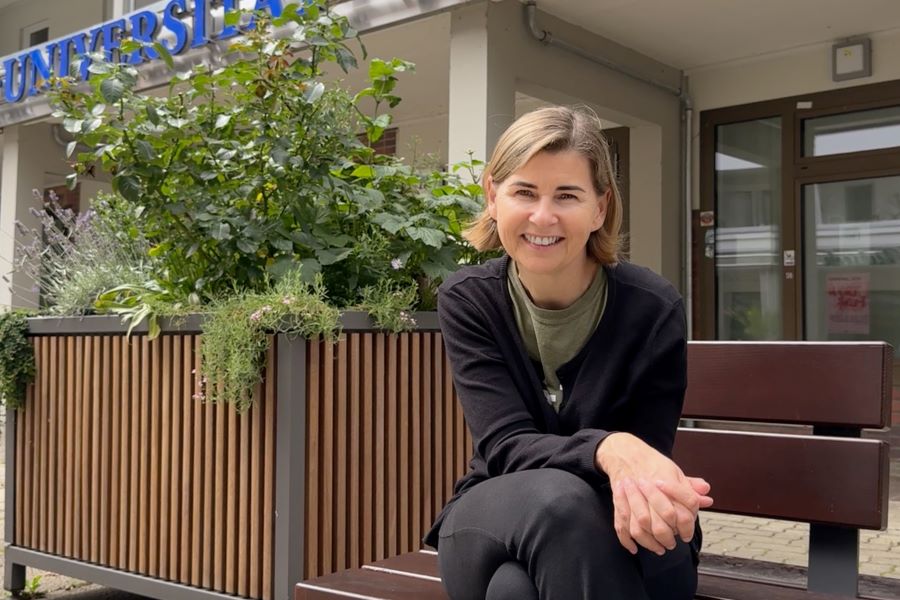 In 1992 she was one of the first roughly 300 students at the newly founded Viadrina, when the main building was still a construction site and lectures took place in cinemas and local schools. Today she is Professor of Interdisciplinary Polish Studies and heads the Viadrina Center of Polish and Ukrainian Studies. Her interview covers founding the Kraków Circle, learning English while working as a babysitter in Chicago, and the midnight walks onto the Oder bridge to celebrate Poland's EU accession, Schengen and the opening of the labour market. Her advice to students today: only half of your education happens in the classroom, the other half outside it.
"The Viadrina was never just a university, it was a home" – Julia Szuleta (13 April 2026)
Julia Szuleta came from a small town in Poland and began with a one-year intensive German course. Remembering what it feels like to be new in a foreign country turned into a tutoring role, then into leading the Incomings and Tutoring at European Student Network (ESN), and finally into the presidency of ESN Frankfurt (Oder). Alongside that she served as Director for Board Management at ELSA and worked as a student assistant in the Equal Opportunities Office. Her advice comes down to one line: take the opportunities that come up.
"The most valuable university experiences are not part of a master plan" – Philip Panek (29 May 2026)
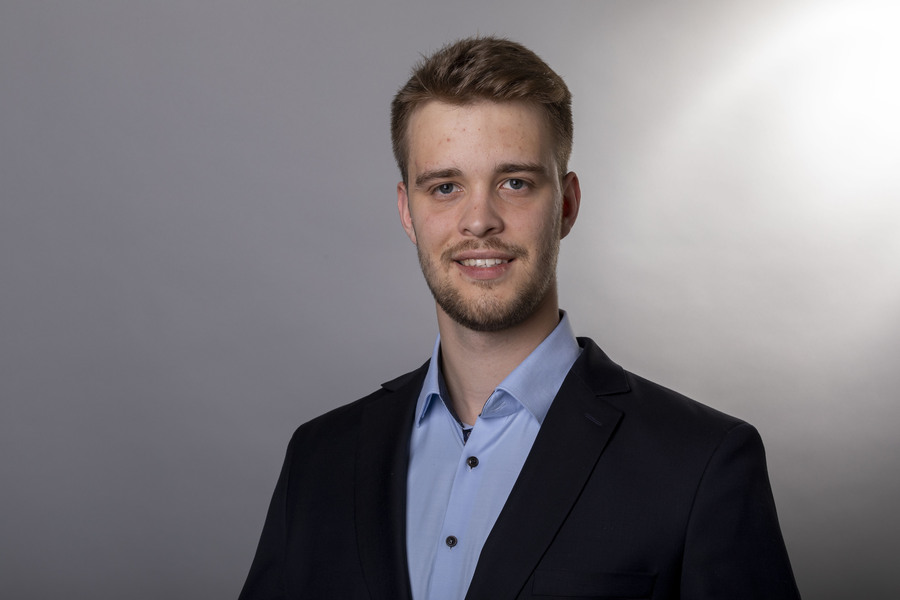 Raised in Germany by Polish parents, Philip Panek chose the German and Polish Law programme at the Viadrina and the Collegium Polonicum. Through the Senate, the Collegium Polonicum student council and the examination board he got to know the university from the inside, including the realisation that universities are run by people, not systems. He is now a research associate at the Viadrina Compliance Center. His experiences also shed light on how differently student participation can work on the German and Polish sides of the Oder.
"Change comes from the willingness to be there for others" – Mohammad Arafat Intisher (9 July 2026)
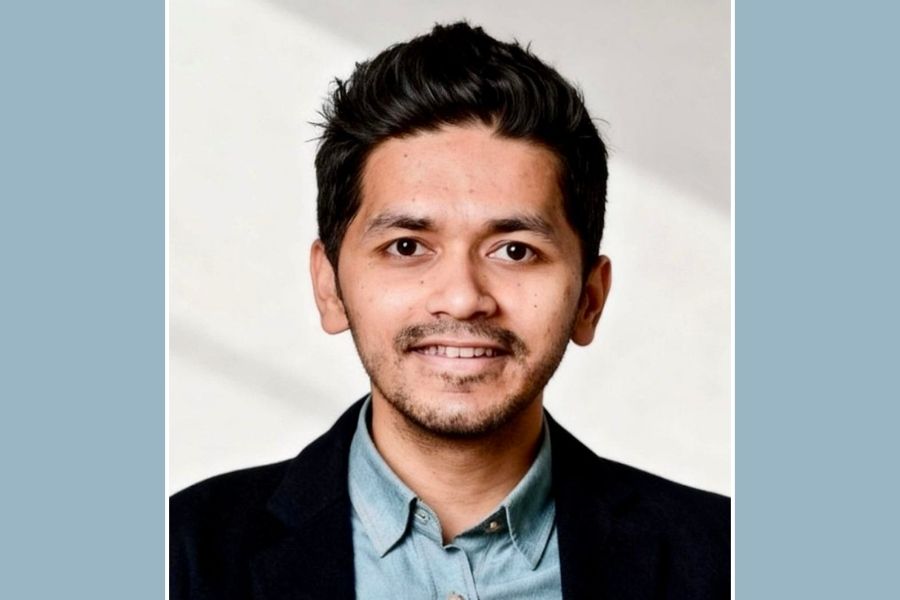 Mohammad Arafat Intisher completed the Digital Entrepreneurship master's programme at the European New School of Digital Studies in 2023 and served as Anti-Racism Officer in the AStA during his studies. Today he works as an Associate Engineer at Deutsche Bank. In the interview he describes how awareness campaigns, workshops and difficult conversations built precisely the skills he relies on professionally today: communicating across perspectives, leading under pressure, bringing people together around shared goals. Equally notable is who he thanks: the university's non-academic staff, from administration to maintenance and technical staff.
"Do not be afraid to try" – Sahra Damus (24 August 2026)
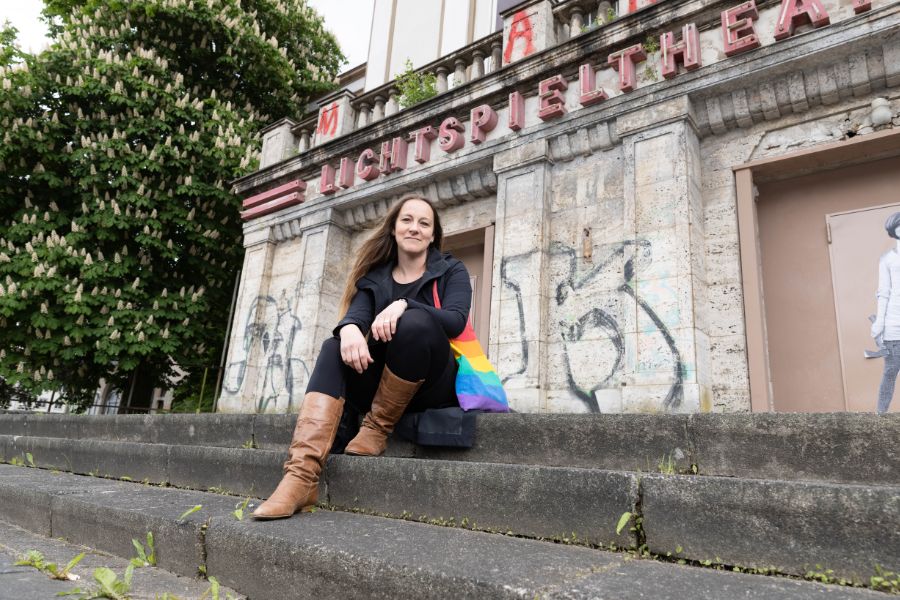 Sahra Damus studied Cultural Studies at the Viadrina from 2002 to 2008, served on the faculty council, in the AStA and in the student parliament, and took part in ViaMUN, which led to an internship at the United Nations in Vienna. With the AStA she helped launch the first bus connection across the Oder in 2008. Research, equal opportunities work, five years as a member of the Brandenburg State Parliament and a return to the Viadrina followed. She is now Sustainability Officer and works with ERUA. She also speaks openly about combining family, career and civic engagement.
Roads to success
Across all six conversations, some patterns emerge. The connections that ultimately led somewhere were rarely visible from the start. A Model United Nations project led to an internship with the United Nations in Vienna. A tutoring role grew into leading an international student network. Negotiations over a semester ticket resulted in the first bus connection across the Oder. None of these paths were particularly plannable. There is also the question of location: dual legal systems, cross-border infrastructure, multilingualism as a matter of regional policy — what counts as a sought-after specialism elsewhere is simply part of studying at Viadrina.
Where to start
The structures and networks that made this possible still exist: the faculty councils, student parliament, AStA, ESN, ELSA. Through ERUA, Travelling Seminars, Summer Schools and many more ways to get involved at seven partner universities across Europe have been added.
The first step was rarely the obvious one, and it rarely required any particular prior experience. What reads as a logical progression in hindsight usually grew out of something much smaller — an opportunity taken, an environment that made it possible, and a willingness to get involved before knowing where it would lead.
For those unsure where to start: Sahra Damus' advice was simply to ask someone. The groups and bodies mentioned above can be reached with just a few clicks.
The Success Stories series was initiated by the ERUA Student Engagement Coaches. The Student Engagement work package within the European Reform University Alliance (ERUA) plays a central role in fostering an active and participatory university culture. The Viadrina leads this work package within the alliance.
The Student Engagement Coaches at the Viadrina are funded through the DAAD programme "European University Networks (EUN) – National Initiative".
The following articles have been published in this series:
"Do not be afraid to try" – Interview with Sahra Damus
"Change comes from the willingness to be there for others" – Interview with Mohammad Arafat Intisher
"The most valuable university experiences are not part of a master plan" – Interview with Philip Panek
"The Viadrina was never just a university, it was a home" – Interview with Julia Szuleta
"We created a community across borders" – Interview with Prof. Dagmara Jajeśniak-Quast
"A student perspective changes the conversation" – Interview with Ira Helten
Share article: