
"The most valuable experiences at university don't come from having a master plan" – Interview with Philip Panek
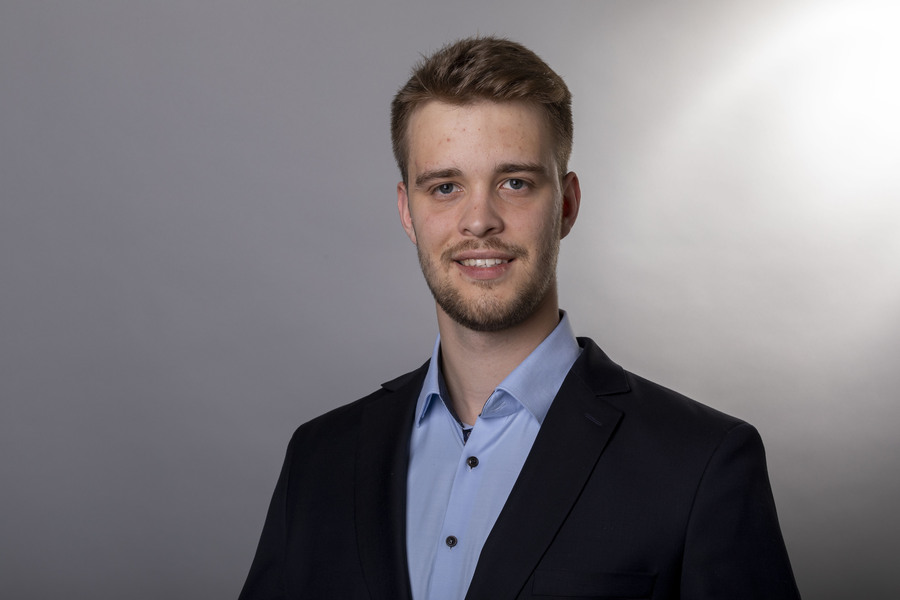
Philip Panek is a graduate of the German-Polish Law (GPL) program at European University Viadrina and Collegium Polonicum. He grew up in Germany to Polish parents and has always felt closely connected to both countries and legal cultures. With native-level German and Polish, he is particularly interested in cross-border legal work and the practical application of law.
Philip, what originally drew you to the German and Polish Law-studies?
My personal background was what originally drew me to studying German and Polish Law. Although my parents are Polish, I grew up and went to school in Germany, so I have always felt connected to both countries. As I speak both languages fluently and have always known that I want to live in Poland at some point, this programme felt like a natural choice. I was also interested in understanding the differences and similarities between the two legal systems.
Heide Fest
Looking back, what was the steepest learning curve when jumping between two different legal systems?
The biggest challenge was adapting to two very different academic and legal cultures. In Germany, I felt that the focus was much more on understanding and legal reasoning, whereas in Poland, memorisation and historical context played a much bigger role. Another challenge was switching to legal Polish, particularly with regard to writing and legal terminology.
You served in the University Senate and the Student Representative Council at Collegium Polonicum.What is one thing students would be surprised to learn about how the university actually run behind doors?
Students would probably be surprised to learn how long it can take a university to make even relatively small decisions. One proposal can pass through what feels like an endless number of committees, discussions and subcommittees before anything actually happens. What struck me most was the difference between Germany and Poland. In Germany, the process often felt much more formalised and, at times, impressively slow — it seemed as if there was a meeting for every step before reaching the next one. In Poland, discussions could be much more direct and sometimes genuinely funny to watch because the verbal sparring was so open. Despite this, results often appeared much faster. So, what students rarely see is that university governance is not some distant, untouchable system — it is a very human process shaped by personalities, disagreements and, sometimes, a surprising amount of theatre.
Having been active on both sides of the Oder, did you notice a difference in how Polish and German students approach student activism or university politics?
My initial impression was that student activism in Germany was more established and organised from the outset. At Viadrina, bodies such as the AStA, the student parliament and the faculty councils were already highly visible. In contrast, student representation initially seemed much less active on the Polish side. However, this changed once a few of us became active again and helped to revitalise it. In terms of style, I would say that the German side felt more formal and composed, whereas the Polish side was often more direct, emotional and energetic. At the same time, I got the impression that students there expected more concrete results from their representatives. Overall, I would say that the German approach was more institutional, while the Polish approach felt more immediate and dynamic. Honestly, both sides have something to learn from each other.
You are also a member of the Examination Board for the programs German and Polish Law and Magister des Rechts is a serious responsibility. What was the most eye-opening part of seeing the academic assessment process from the "other side"?
The most eye-opening aspect was not that the process was arbitrary or overly harsh, but actually the opposite. It was highly formalised and rule-based, and in my experience it was interpreted in a very student-friendly way. The human side of it also stood out to me. Even within a formal structure, it is clear that every vote can have a direct impact on an individual student. This makes the responsibility feel very real. These decisions are often made more carefully and sympathetically than students might assume.
You're currently a Research Assistant at the Viadrina Compliance Center. Why did you choose to work in this field?
During my studies, I got to know the people working at the Viadrina Compliance Centre. I applied for a position there and gradually grew into the field. It was the combination of legal analysis and practical relevance that made me stay. I find this intersection particularly interesting, especially since compliance is such an interdisciplinary field. Another thing I value greatly about working at the Viadrina Compliance Centre is the close connection to practice. It has given me the opportunity to engage with practitioners, attend conferences and work on my own individual research projects. This blend of academic work and real-world relevance is highly rewarding. I was also fortunate to be influenced by people deeply committed to the field, especially Prof. Dr. Bartosz Makowicz and Dr. Bartosz Jagura.
Between the Senate, the Council, the Boards, and your studies, your schedule must have been packed. What was your secret to staying organized?
Whenever things became intense, I switched to a more structured approach. I made to-do lists, stuck to routines and worked through everything systematically. What helped me most was always tackling the most difficult tasks first. My general approach was always the same: take every opportunity that comes your way and do everything with one hundred percent commitment.
You are also an active player for the USC Viadrina football team. Does football help you clear your head after a long day of legal analysis?
Football has played a very important role in helping me to maintain a sense of balance throughout my studies After hours of legal analysis, training provided a much-needed mental break, and I often found that I could return to my work with much greater focus afterwards. I like that football is much more direct and uncomplicated than the academic world. It gives me energy and helps me to release stress. I also believe that fair play matters beyond the pitch — the way you behave in those moments says a lot about your character.
If you could give one piece of advice to a first-year student who wants to follow in your footsteps and get involved in university life, what would it be?
Seize every opportunity that comes your way and don't wait for the perfect moment! Some of the most valuable experiences at university don't come from having a master plan, but from being curious, embracing new experiences and saying yes to opportunities. You don't need to know exactly where everything will lead. Sometimes you only realise later how much a certain role, project or experience has taught you. At the same time, if you decide to do something, do it properly. Commitment matters. University offers much more than lectures and exams, and some of the most formative experiences happen outside the classroom, for example through student initiatives, committees, sports or by taking on responsibility. So my advice would be to stay open and curious, and when you choose to get involved, give it your all.
The interview with Philip Panek ist part of a series initiated by the ERUA Student Engagement Coaches. The work package "Student Engagement" within the European Reform University Alliance (ERUA) plays a central role in promoting an active and participatory university culture. Viadrina leads this work package within the alliance.
The Student Engagement Coaches at Viadrina are funded by the "European University Networks (EUN) - National Initiative" programme of the DAAD.
The following articles have already been published in this series:
Jakub Małolepszy
Back to the news portal
Share article: