
“No peace lasts for ever” – Viadrina Debate on how society grows through crises
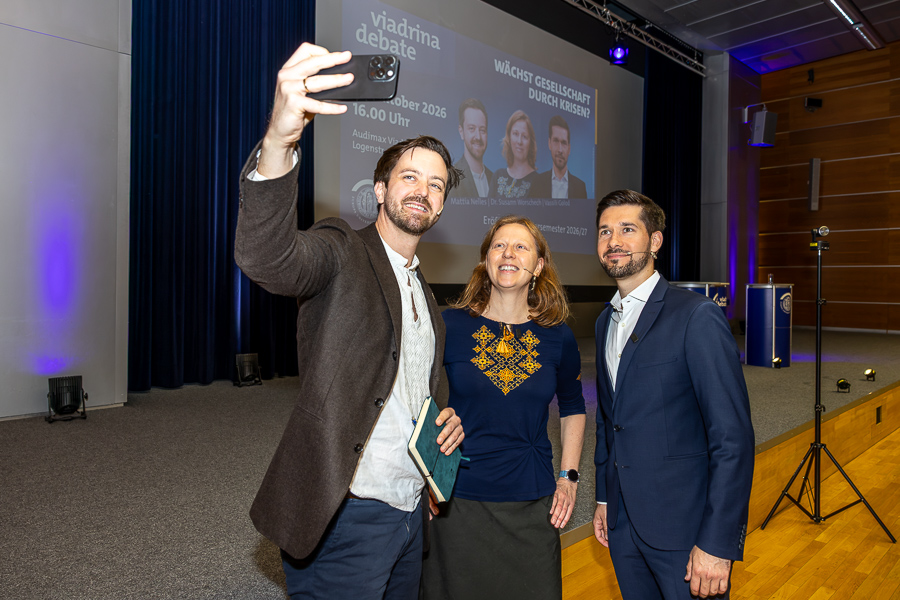
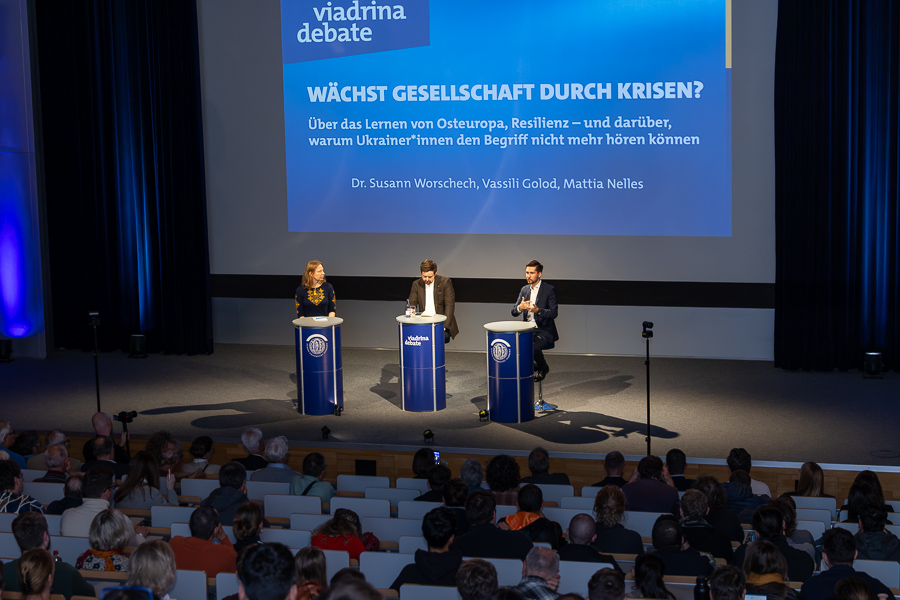
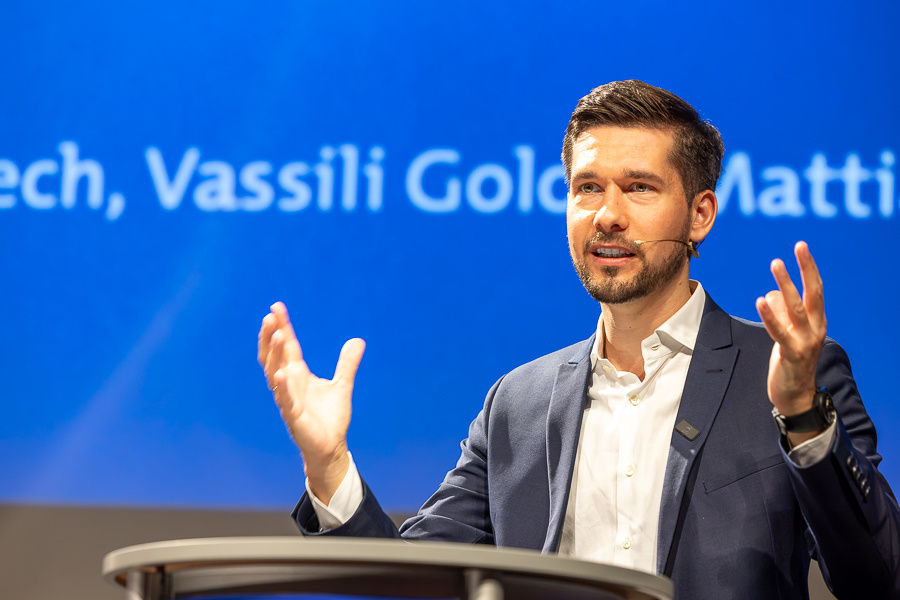
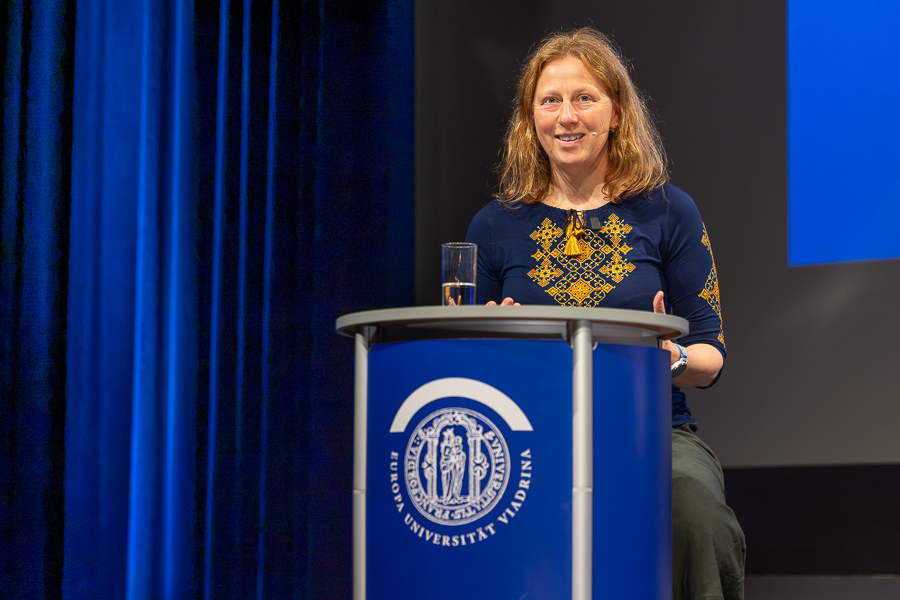
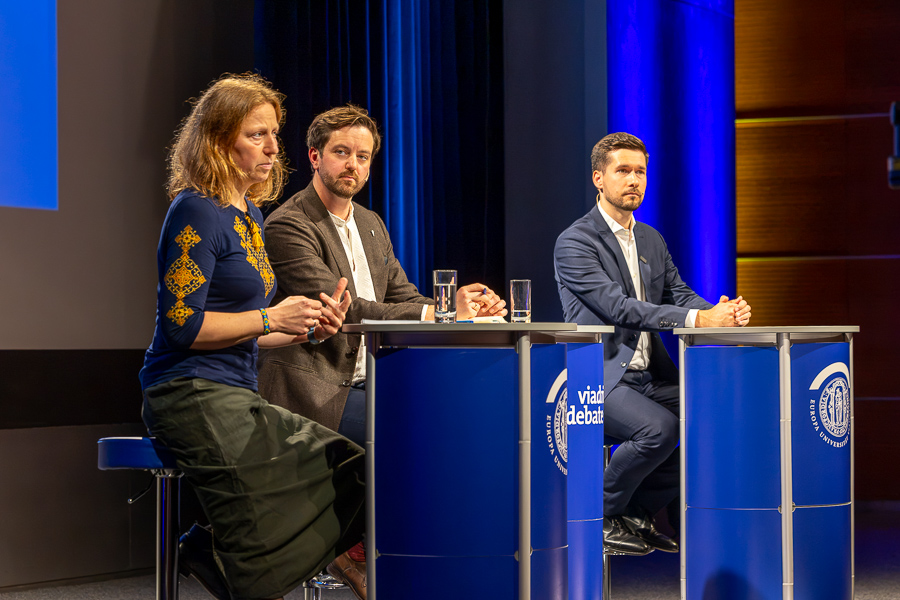
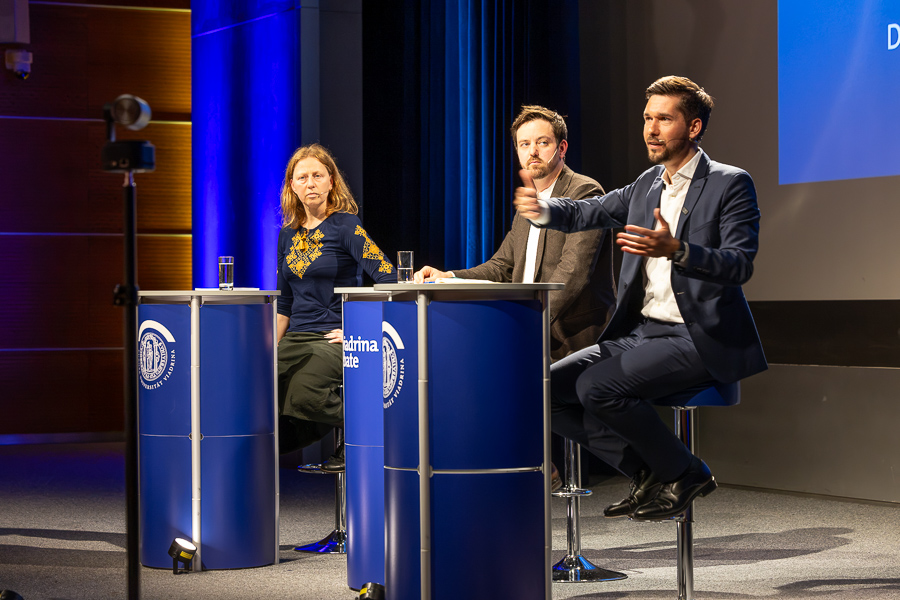
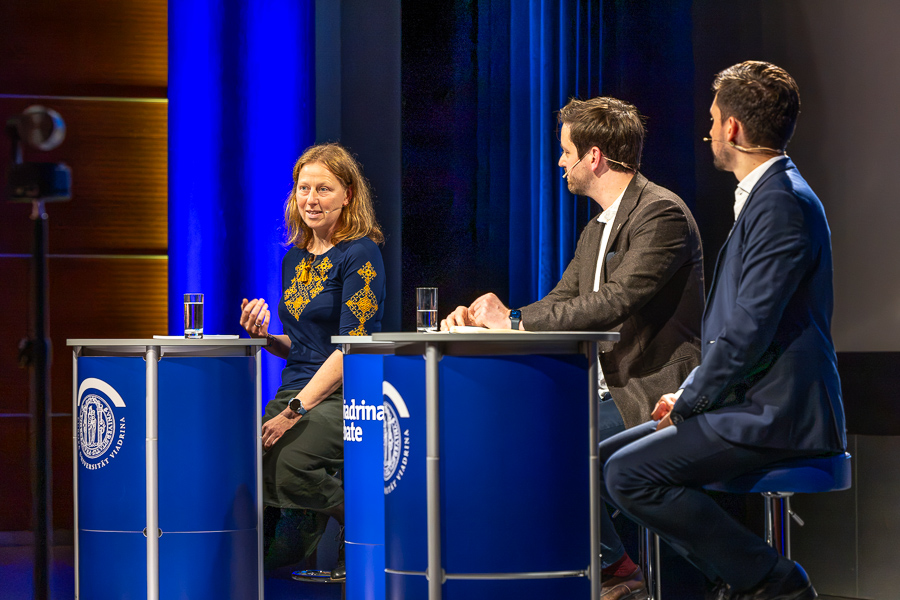
The Viadrina Debate on 14 October 2026 offered in-depth insights into contemporary Ukrainian society from the perspectives of journalism and the social sciences. ‘Does society grow through crises? On learning from Eastern Europe, resilience – and why Ukrainians can’t bear to hear the term any more’ was the title of the third instalment in the series. ARD correspondent Vassili Golod and Viadrina social scientist Dr Susann Worschech also spoke with presenter Mattia Nelles and the audience about how Western Europe can become more crisis-resilient and why it is worth looking to Ukraine for insights.
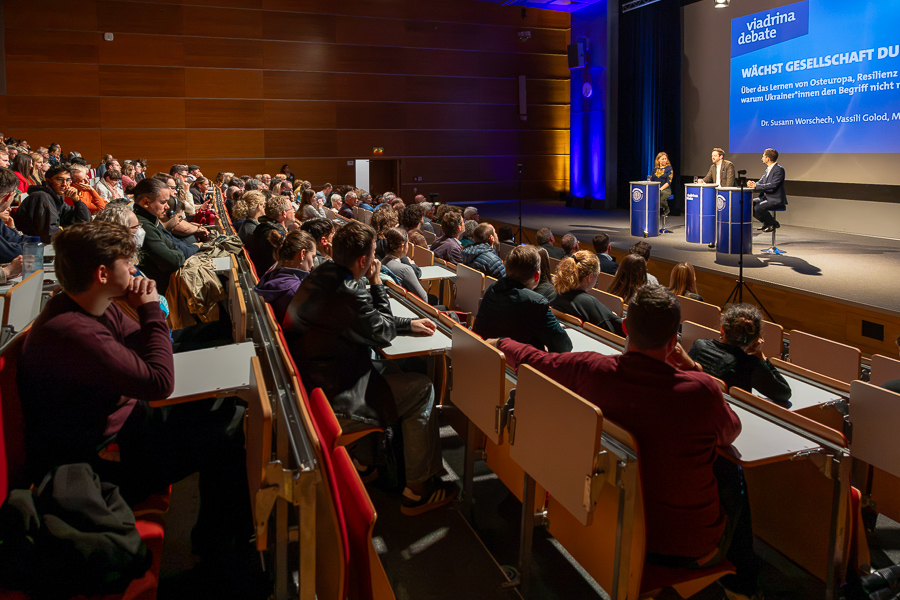
39 missiles fired over Kyiv on the night before the event, 120 jet drones, three power stations hit; an alarm that only goes off once the first missiles have already struck; an approaching winter in which, once again, Ukrainian families are holed up in their flats in temperatures close to freezing, often without electricity or hot water. These were just a few highlights that presenter Mattia Nelles and journalist Vassili Golod highlighted at the start of the Viadrina Debate regarding everyday life during the war in Ukraine. Yet they were enough to bring home to the audience in the Audimax what the word ‘resilience’ means in the everyday lives of Ukrainians. Not least because political anxiety is increasingly being added to personal losses and fears: “Oval Office moments”, says Vassili Golod, referring to Trump’s dealings with Putin and Zelenskyy. In his opening address, Viadrina President Prof. Dr Eduard Mühle speaks of “threatening times”, “in which a feeble-minded American president and an ageing former German Chancellor have just, in such a shocking manner, once again abandoned Ukraine for selfish, personal gain”. The fact that one need not even look as far afield as Washington or Moscow is demonstrated by the members of the BSW and AfD in the Saxony-Anhalt state parliament, who – at the same time as the Viadrina Debate – used their majority to pass a motion calling for an immediate halt to all aid to Ukraine.
Photo gallery
Resilience – an analytical perspective and everyday life in Ukraine
In light of this desperate situation, the much-praised resilience of Ukrainian society could easily become a metaphor for the assertion: “You’ll manage to get through it somehow,” warned Mattia Nelles. From a social science and analytical perspective, however, Susann Worschech sees good reason to explore the concept and its implications. “It offers us a theoretical lens through which we can better understand processes of change,” she is convinced. For her, it is interesting to ask: What constitutes a crisis that requires resilience? What is fundamentally threatened by it and must be protected? What can or should also change? In the case of Ukrainian society, she points out that the revolutions – and particularly the war launched by Russia in 2014 – forced it to reflect on what actually constitutes its identity, which language is spoken, how democratisation is envisaged, and how closely it identifies with Europe.
Vassili Golod and his colleagues in Ukraine regularly report on what this debate might look like, for example during protests in Kyiv against the weakening of anti-corruption authorities or the government reshuffle. “People are intelligent; they don’t want to overthrow the President, but they want to tell him when something goes against their interests,” says Golod, describing this as a “remarkable form of protest for a society at war”. He is convinced: “Ukrainian civil society is the answer to the question of why Ukraine is still standing at all” – a civil society which, according to Susann Worschech, is so active and strong precisely because state institutions and trust in them are so weak.
What can and must we learn from Ukraine?
The social scientist finds this particular understanding of citizenship particularly interesting from a current Western European perspective. In Western Europe, she notes, there is traditionally a high level of trust in institutions and, consequently, not such a great need for a strong civil society. “But if our institutions falter, if they are hijacked by anti-democratic forces, then there is simply no civil society that can organise itself so quickly, so anarchically and with such confidence in victory,” says Susann Worschech. For her, the most important lesson that should be drawn in this country from the war in Ukraine is: “In Central and Eastern Europe, and particularly in Ukraine, we see a very strong awareness that the ground can be pulled from under your feet overnight, and yet people carry on and carry on living. We must make this awareness clearer to ourselves: no democracy, no peace in Europe is eternal. We have not yet internalised this knowledge and translated it into practical action.”
Vassili Golod’s plea to acknowledge realities takes a similar line: “As someone who grew up in peace and was socialised in a peaceful environment, it is hard to imagine, but we must finally learn that there are states for which war and violence are perfectly normal means of asserting their own interests.”
Debate continued well past the end of the event
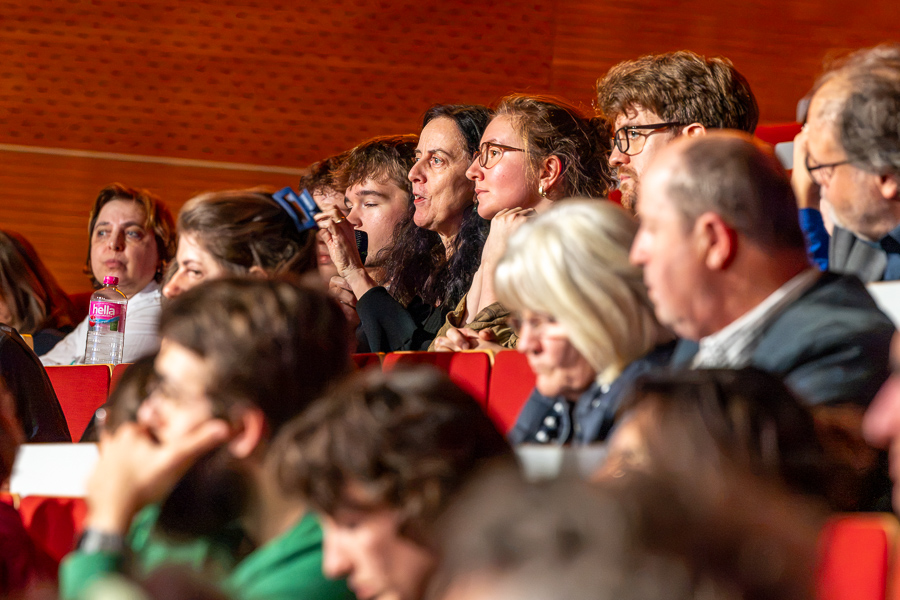
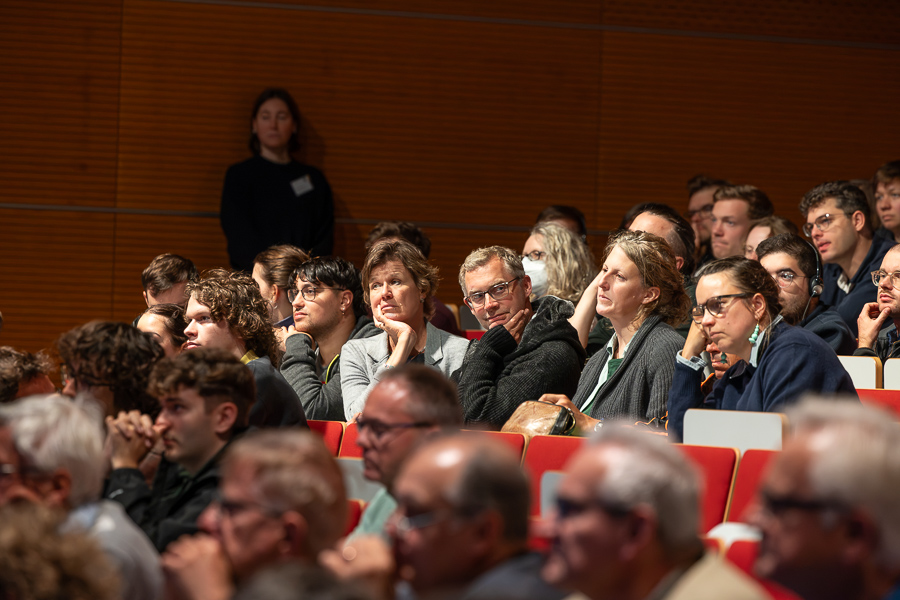
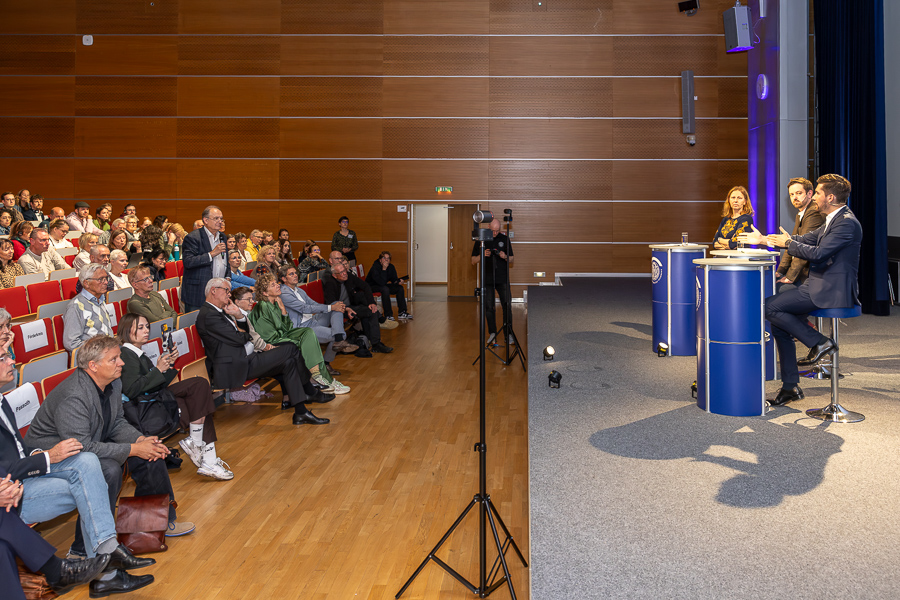
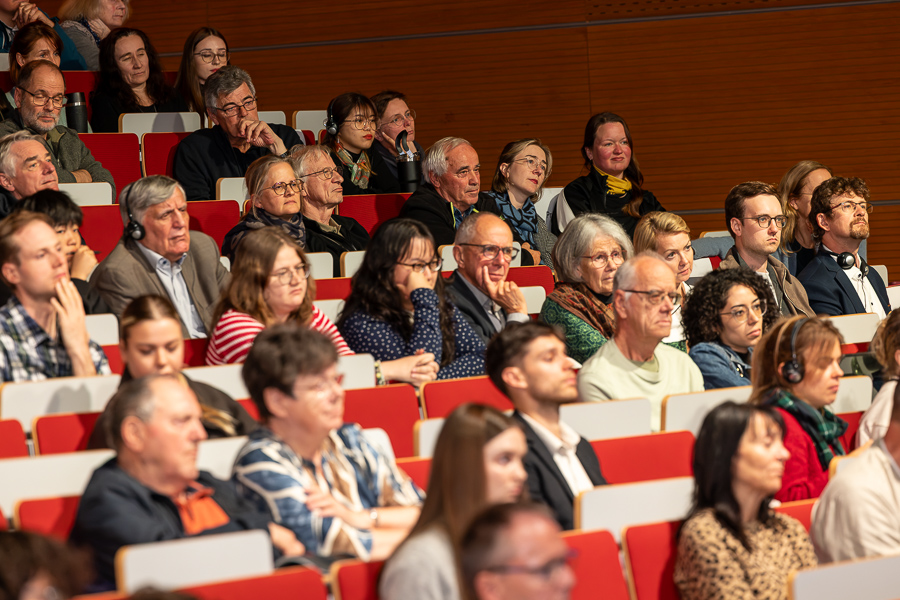
Vassili Golod never tires of explaining this reality time and again – both professionally as a journalist and in his private life. Naturally, he too prefers to speak with like-minded friends. “But isn’t it much more sensible to engage in a respectful conversation with people who hold a completely different view?” he asks. He is convinced that it is worthwhile to explain the context time and again, to take the time and to portray Ukrainian society in all its complexity. The second half of the Viadrina Debate offers both him and Susann Worschech ample opportunity to engage in precisely such a respectful exchange with those who hold different views. Alongside lecturers and students from Viadrina, numerous local residents had also gathered in the Audimax. They took the opportunity to compare their own views with the assessments of the experts on the podium.
Topics discussed included, amongst other things, natural gas imports from Russia, possible compromises on the path to peace, the historical role of NATO, and the Russian sham elections in the occupied territories. Susann Worschech and Vassili Golod addressed the questions and comments – some of which were characterised by misinformation – with conviction and a wealth of facts. Using the example of the sham elections – complete with weapons on display and transparent ballot boxes – for the Duma this summer, Susann Worschech draws parallels between East German and Ukrainian experiences: “In East Germany, of all places, we actually have an understanding of just how easily democratic processes and institutions can be exploited, instrumentalised and turned into a farce. I wonder where, particularly in East Germany, that understanding and memory of it have gone – and also any empathy for Ukraine and the situation in the occupied territories.”
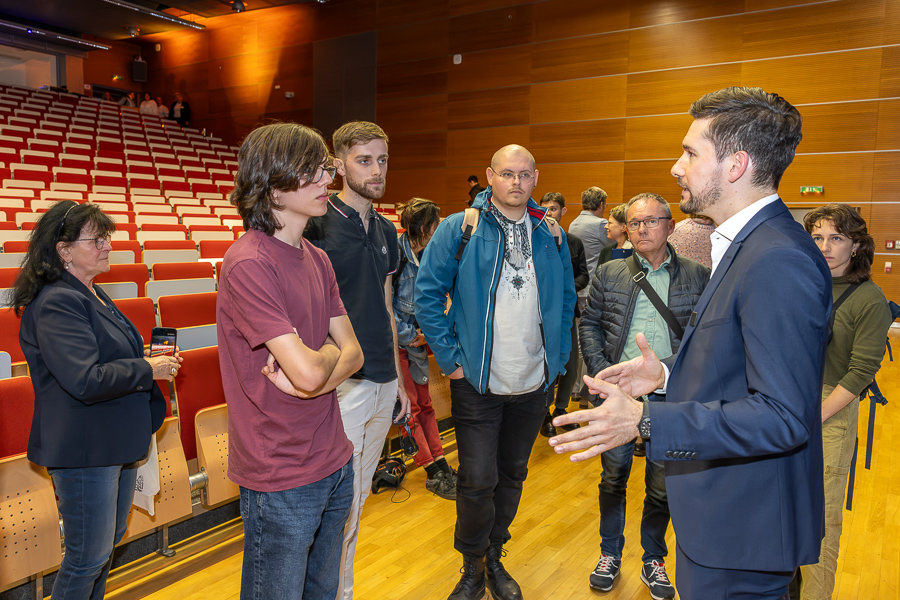
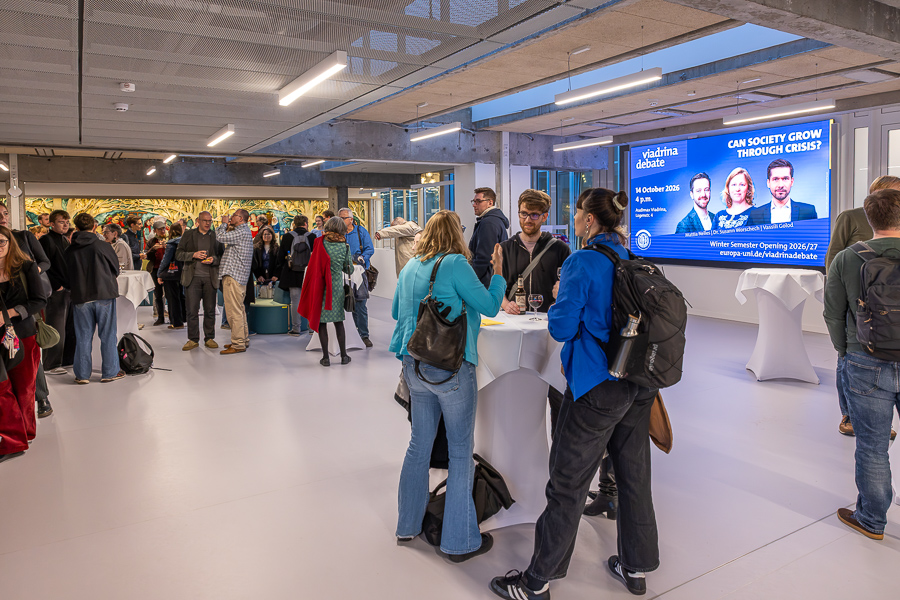
Long after the event had ended, guests at the debate continued to discuss matters with the experts. Many used the reception afterwards to talk about Vassili Golod’s advice on crisis resilience: “As a society, we can ask ourselves sooner: what can I actually do myself?” Instead of repeatedly criticising Friedrich Merz on social media, people could set up their own initiatives, write letters to MPs or simply seek out conversations outside their own bubble. “The answer also lies with each and every one of us,” said Golod.
Frauke Adesiyan, translated by DeepL and edited
Back to the news portal
Share article: