

Students explore traces of the ‘Holocaust by bullets’ in the Lublin region
From 15 to 20 June 2026, 15 students from Viadrina and Touro University visited sites associated with former Jewish life and the Holocaust in the Lublin region and spoke to eyewitnesses. The excursion was organised by the French non-profit organisation Yahad In Unum. It formed part of a seminar on the so-called ‘Holocaust by bullets’, which was jointly taught by Dr habil. Frank Grelka (Viadrina) and Prof. Dr Stephan Lehnstaedt (Touro University).
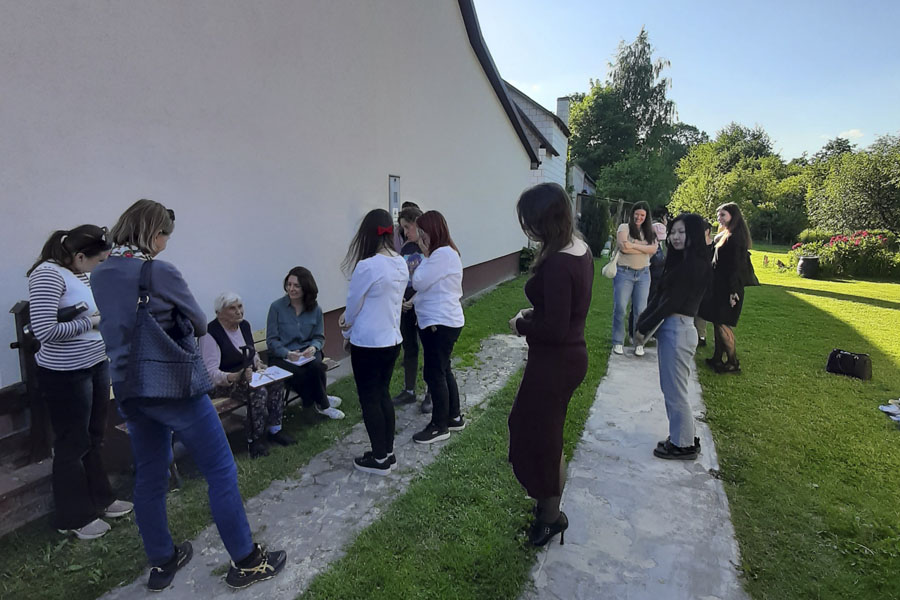
During the discussion with the students, the 98-year-old eyewitness Władysław M. suddenly recalled the first names of his former Jewish classmates. They lived in the nearby small town of Szczebrzeszyn. Władysław’s family was particularly close to one Jewish family; their daughter Hania, who was the same age, was one of his playmates. He gave a moving account to the 15 students from Germany, Poland, Ukraine, France, Russia, Israel and Japan of his memories of the period of the German occupation of Poland.
galerie-lublin-holocaust
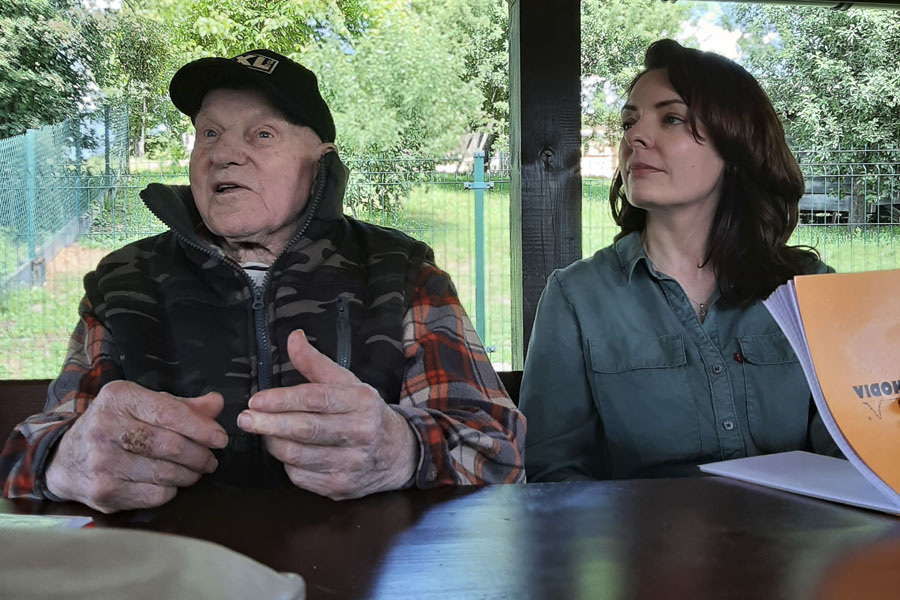
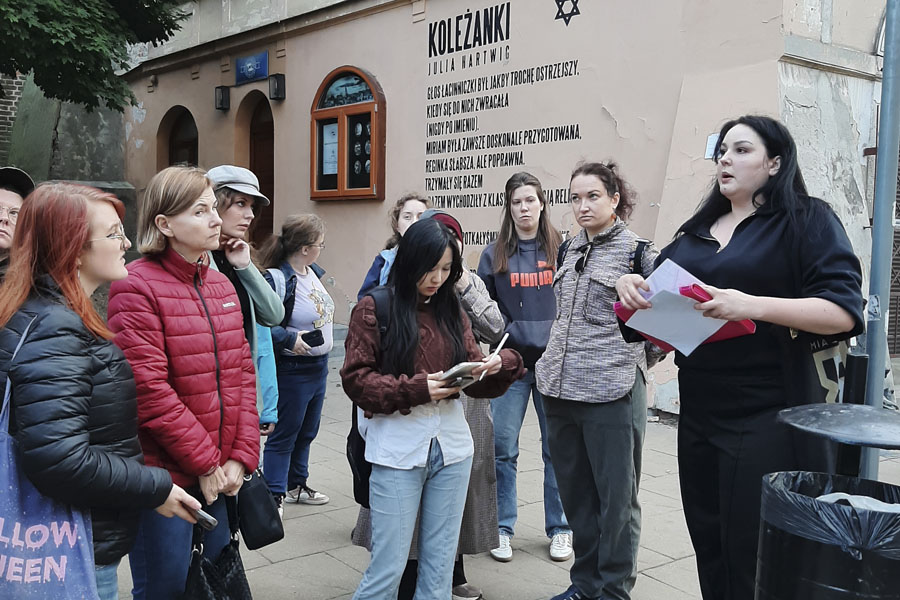
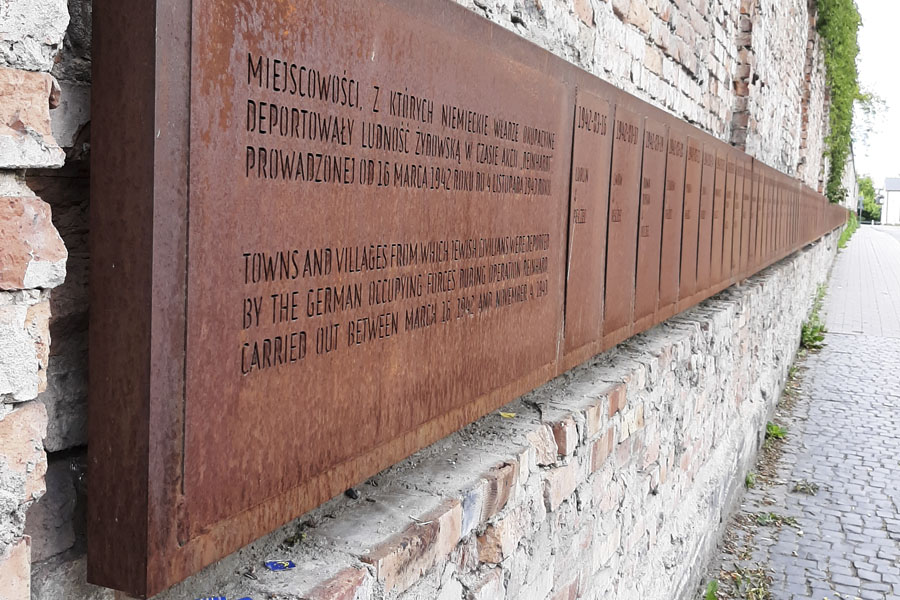
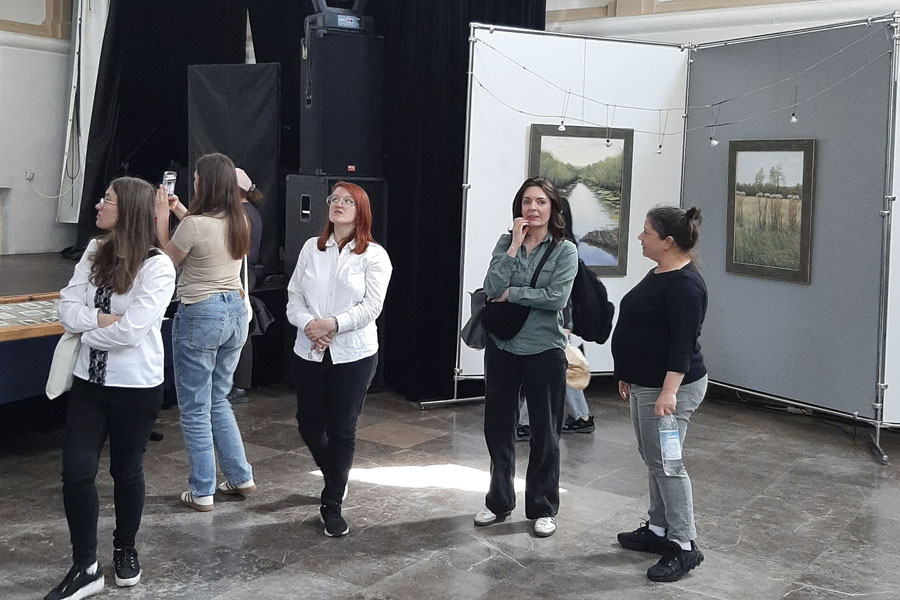
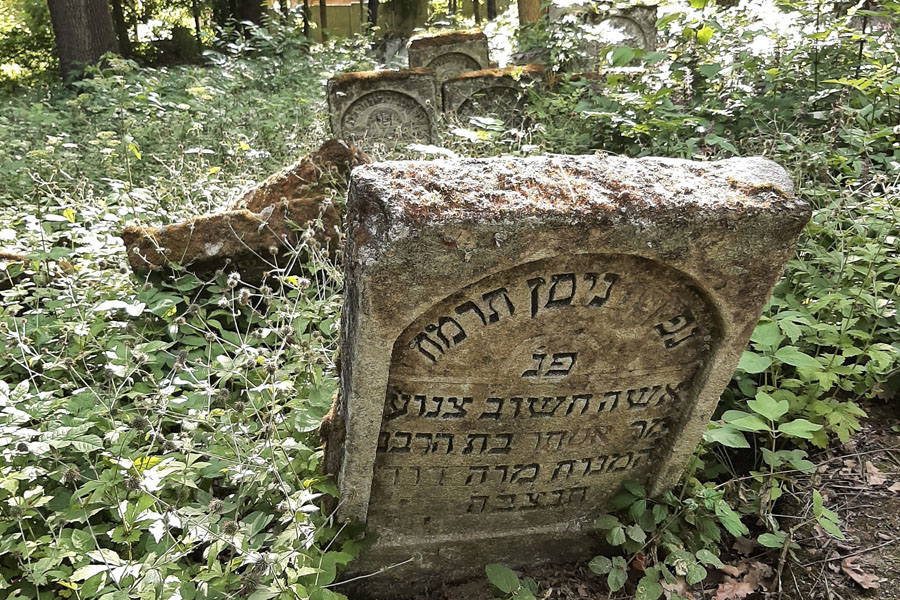
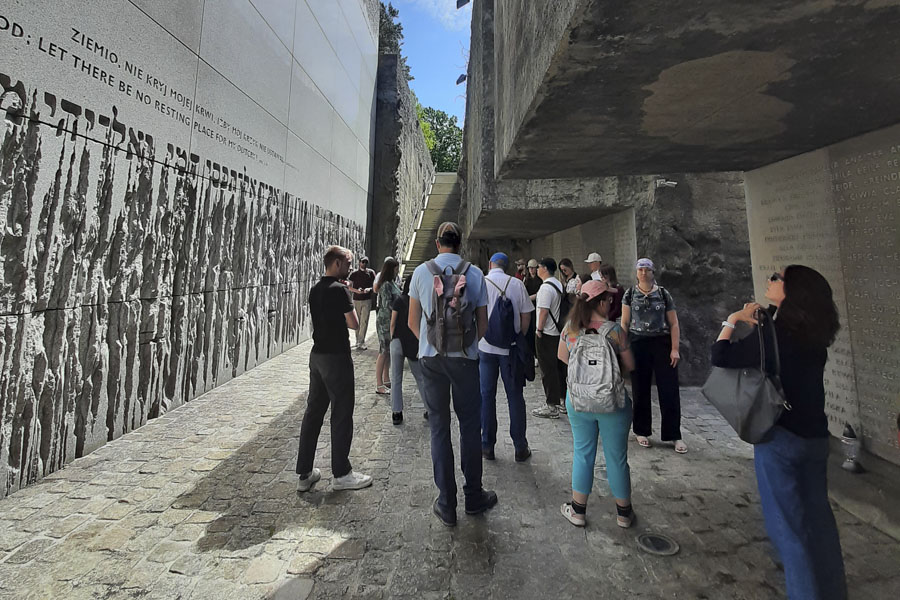
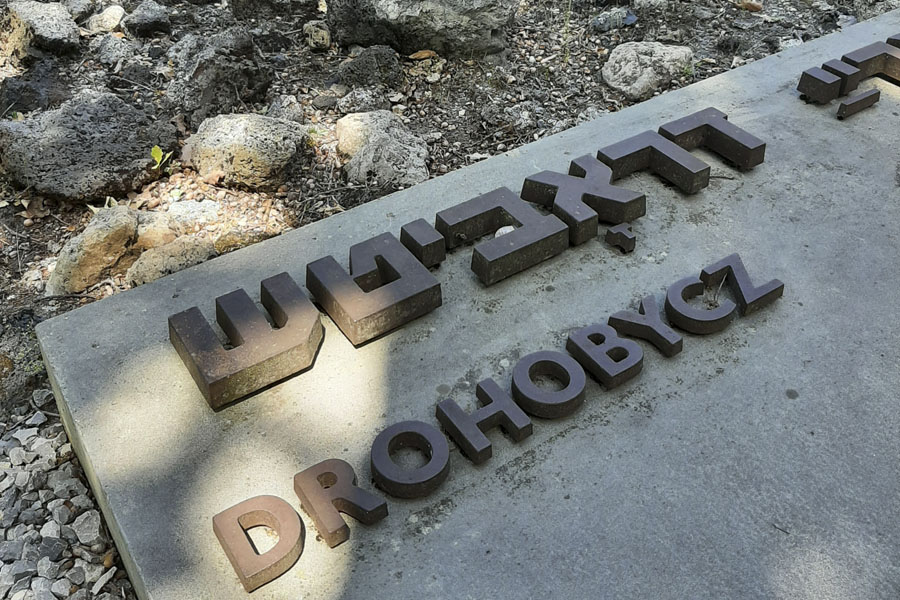
In particular, the outbreak of war on 1 September 1939 remains very much in people’s minds: the air raids on a nearby factory and the first encounter with German soldiers. Władysław M. also spoke of the murder of his Jewish neighbours, who were either shot or deported by the Germans to the Bełżec extermination camp. These events were not hidden from the non-Jewish population either. After meeting Władysław M., the students visited the town’s former synagogue, which is now a cultural centre, as well as the Jewish cemetery where the shootings had taken place.
“The aim of the ‘Holocaust by Bullets’ excursion is to show students that the Holocaust did not take place solely in the concentration camps, but affected an entire country, an entire region. A quarter of the six million Jews murdered died in mass shootings on the spot, in small villages, in full view of the non-Jewish population,” says Stephan Lehnstaedt, Professor of Holocaust and Jewish Studies at Touro University, who organised this excursion together with Dr Frank Grelka from the Viadrina Center of Polish and Ukrainian Studies (VCPU) at Viadrina University and prepared it as part of his teaching programme.
Visits to the Majdanek and Bełżec memorial sites provide students with a comprehensive experience of remembrance at the authentic locations: academic research, a wide range of educational activities, and commemoration through striking memorials. By contrast, the traces in the small town of Trawniki can only be found with the help of colleagues from Yahad In Unum. In particular, the conversation with Pani Zofia, another eyewitness, in her garden conveys to the students what happened here in the period before and during the German occupation.
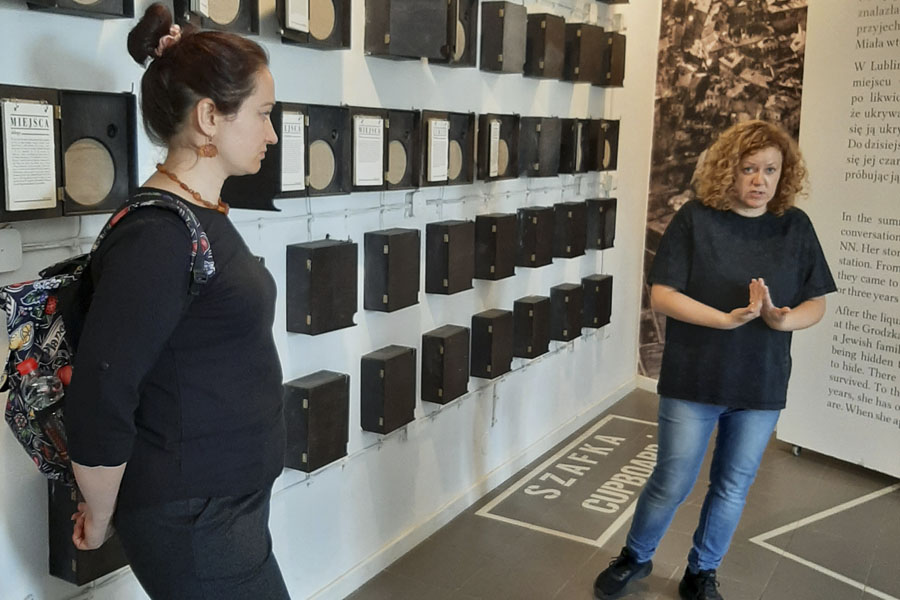
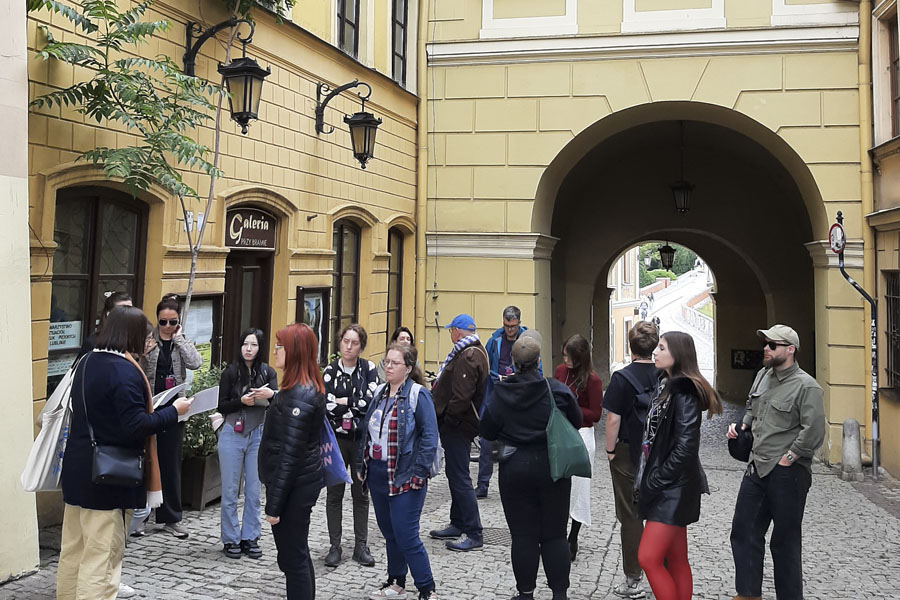
The Lublin-based historical initiative Teatr NN – Brama Grodzka illustrates how Holocaust remembrance has developed in Poland since 1989. Every house and every resident of the city’s lost Jewish community is documented; interviews supplement the documents. On foot, the students explore the traces of the extermination that run through the entire city, as well as the memorials to that very extermination: a street lamp that burns eternally, a poem on a building wall, Stolpersteine marking the outline of the former ghetto, a memorial at the so-called ‘Umschlagplatz’, from where the transports departed for the extermination camps.
Through the rare combination of the crime scenes, eyewitnesses and the crimes themselves, the study trip conveys one thing above all else: authenticity: “Seeing these places with my own eyes takes the knowledge we’ve gained from our university lectures to a whole new level,” says a student on the return journey to Frankfurt (Oder).
The excursion was financially supported by the Foundation for German-Polish Cooperation, the Viadrina Friends’ Association and the Faculty of Social and Cultural Sciences.
Susanne Orth
Back to the news portal
Share article: