
“This is linguistics live” – Seminar on goal celebrations in football
Watching football as a seminar assignment – for students of Prof. Dr. Cornelia Müller, this is currently part of everyday academic life. Referring to the ongoing Men’s Football World Cup, they are analysing bodily gestures in international football and asking themselves: What is authentic here, and what is staged? The students’ findings offer insights into a world between highly professional brand-building and private outbursts of emotion. Connecting teaching to students’ interests and lifeworlds is one of Cornelia Müller’s guiding principles.
Nico Schlotterbeck flexes his bare upper-arm muscle, Deniz Undav performs a few steps of a Yazidi dance, Felix Nmecha kneels down and symbolically places his crown on the pitch to dedicate his sporting success to God. The goal celebration gestures of Germany’s national players on the first matchday of the current World Cup alone would provide Prof. Dr. Cornelia Müller and her students with plenty of new material for analysis. In any case, the repertoire of footballers’ goal celebrations is almost impossible to grasp in its entirety – and, from a cultural studies perspective, highly fascinating.
seminar-football-gestures
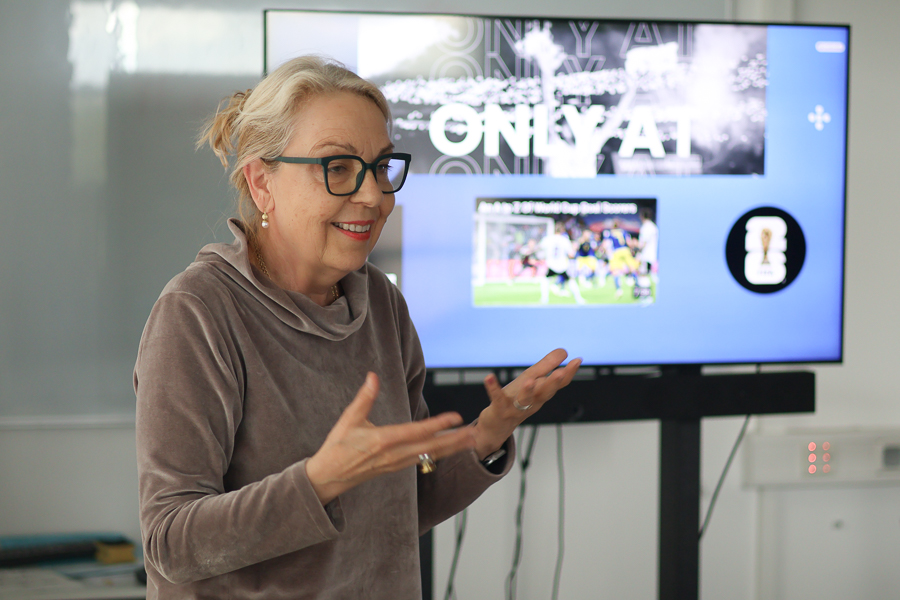
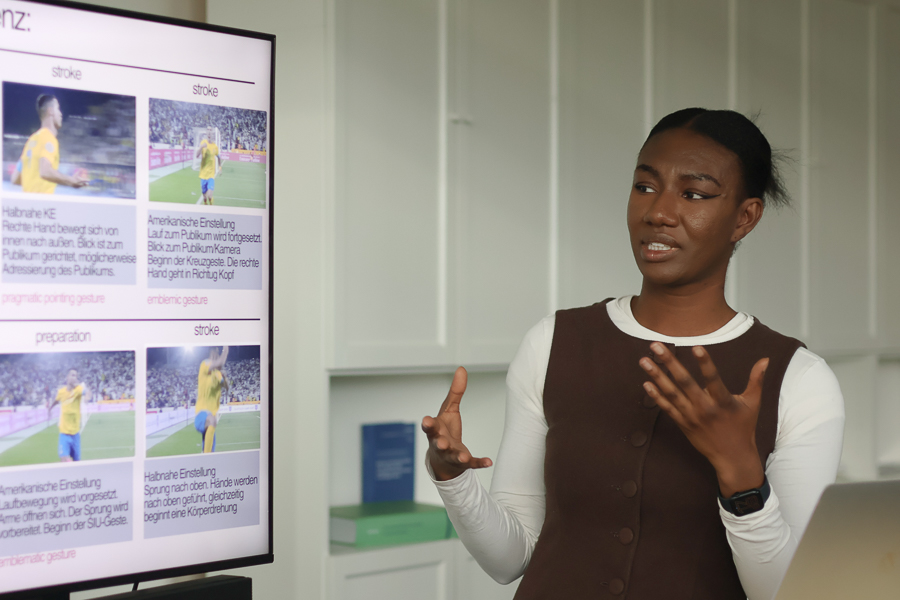
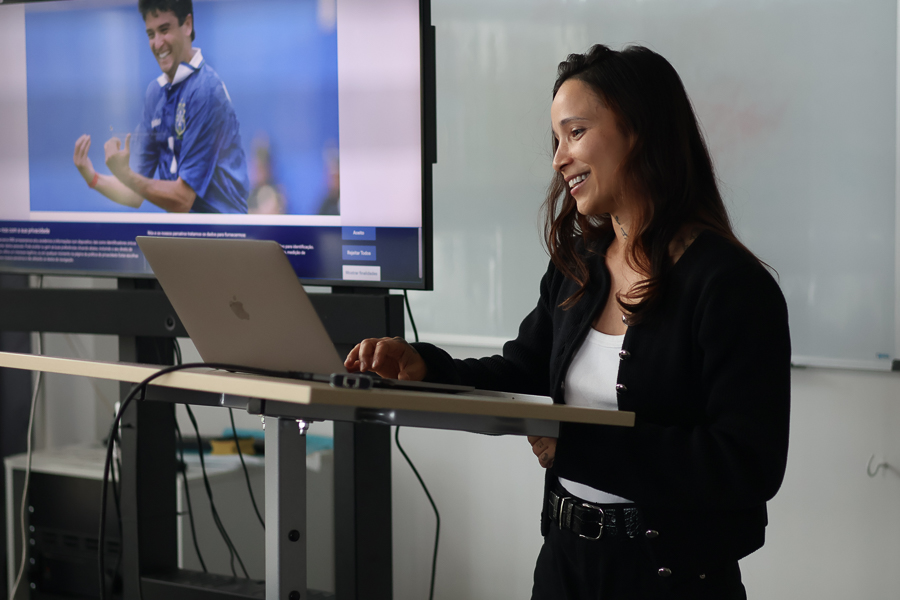
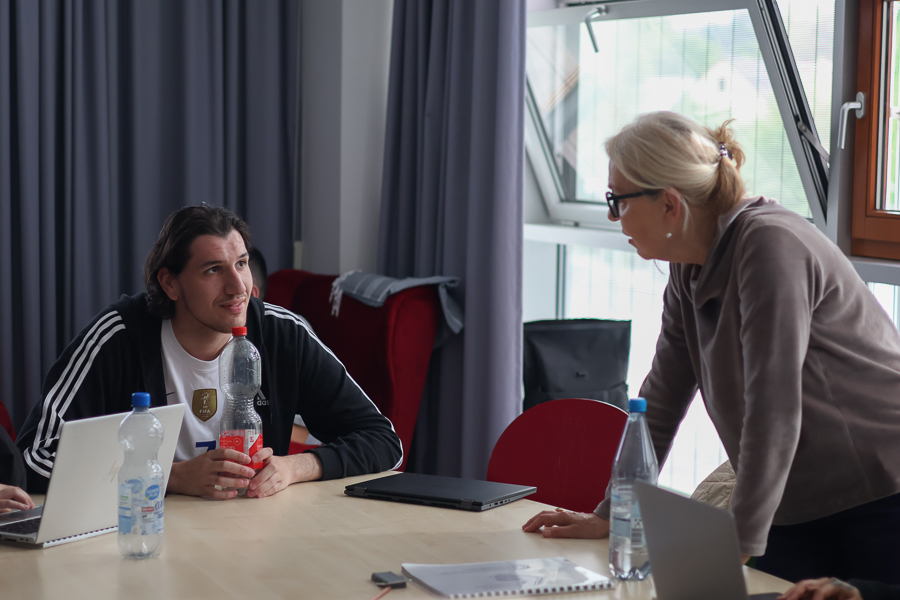
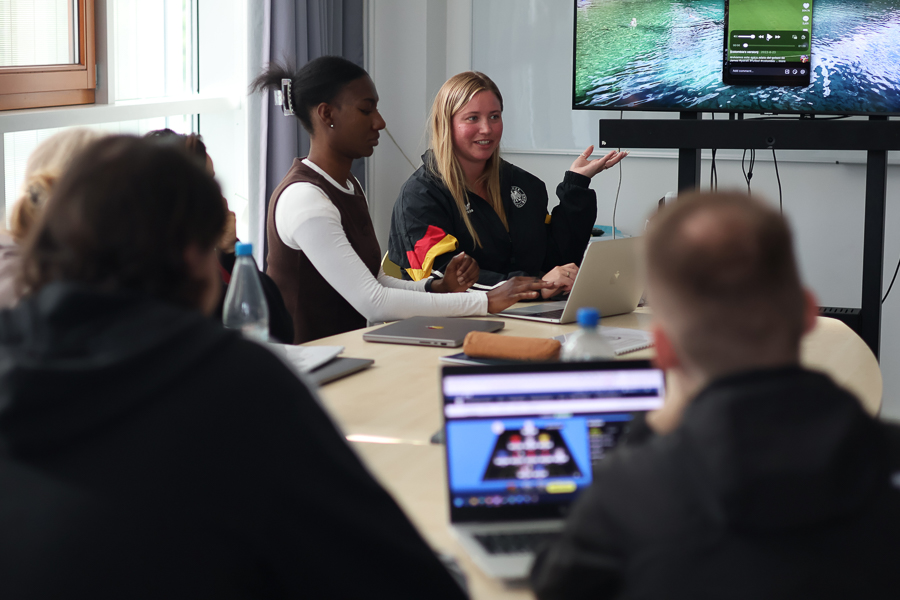
“What interests us is: Where do these gestures come from, how do they emerge, how are they taken up and changed?” says Cornelia Müller, explaining her interest in footballers’ celebrations. The expert in language use has long been studying the use of gestures – in dance, politics and on social media channels, for example. What makes football moments special, she says, is this: “Here, we are very close to the moment of emergence. This is linguistics live.” For her, gestures themselves are an expression of human beings as “symbol-making animals”. “We take pleasure in signs, we play with them and change them. This contributes to the formation of communities,” she explains. When footballers establish new celebration gestures, perform them repeatedly as a routine, or take them up and modify them, the audience is watching language come into being.
Bebeto’s baby, Ronaldo’s sign of the cross and Gyökeres’ mask
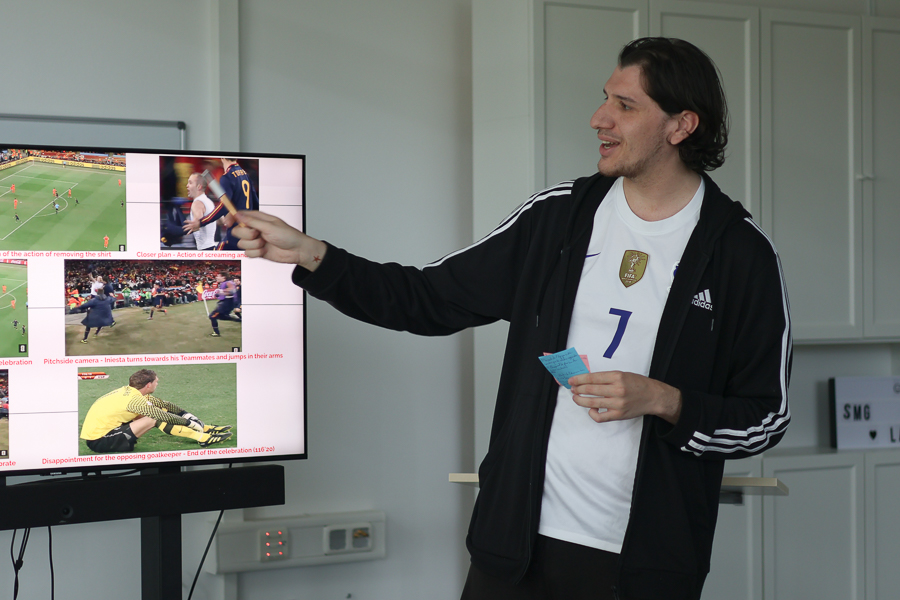
What she means by this is demonstrated by the students in a seminar session in which they present and explain videos of celebration scenes. Using a methodologically complex approach – a 20-second video sequence often contains more than 20 individual gestures – they show the complex processes behind what later often becomes an edited video on TikTok or a clip in Sportschau. PhD student Bruna Louzada has chosen a classic example: a scene from the 1994 World Cup quarter-final in Dallas, when Brazilian player Bebeto scored the 2–0 goal in the 62nd minute. Just a few days earlier, he had become a father, and he celebrated this with his goal celebration. As he ran towards the corner flag, he brought his hands together in front of his body with his forearms extended and rocked them back and forth. Two teammates joined him and gestured in a very similar way; the movement increasingly became the rocking of a baby, with the little head held in their hands. “Actually, in Brazilian gestures too, you would usually cradle a baby more to the side, with the head resting in the crook of the arm,” emphasises Bruna Louzada, who is from Brazil herself and saw the goal live at the time. Bebeto’s gesture was therefore something entirely his own, something previously unseen, and entered football history as “Bebeto’s baby”. Her example also highlights the importance of television staging for the interpretation and spread of goal celebration gestures. The commentator initially misinterpreted the movements of the three players and, in line with cliché, said: “It’s samba time.”
In her analysis, Silvia Otto examines the role of camera angles and editing in television broadcasts. She took a closer look at Cristiano Ronaldo’s self-celebration after scoring a goal for Al-Nassr FC in 2023. What makes this celebration special is that before Ronaldo performs his typical goal celebration, with its jump, half-turn and “Siuuuuu” shout, he makes the sign of the cross. A Catholic symbol in front of an Arab audience – the broadcasting channel evidently considered this inappropriate and cut it out of replays of the goal scene.
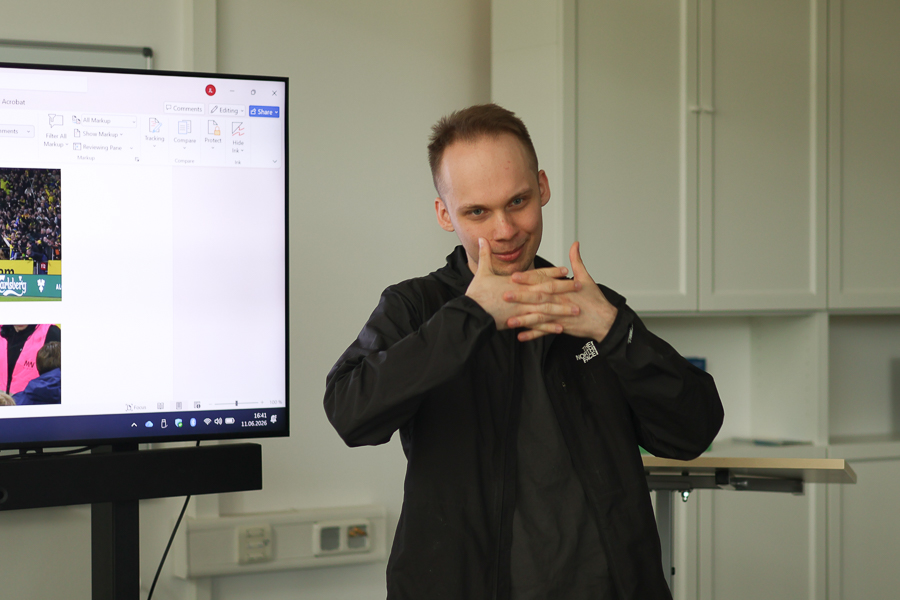
It may not yet be as well known as Ronaldo’s celebration, but it is already a registered trademark: the mask gesture of Swedish national player Viktor Gyökeres. With his thumbs pointing towards his ears, he interlocks the remaining fingers in front of his mouth and nose. It is a reference to Batman and his statement that no one took him seriously before he wore a mask. As student Jasper Lemmerz impressively shows through examples, Gyökeres has created an emblematic gesture with a fixed meaning, which he repeats goal after goal – unless things become too emotional. When he scored the decisive equaliser against Poland in the 88th minute during this year’s World Cup qualification, he pointed a finger towards the sky, ran, celebrated with his teammates – but the mask was missing. In his relief, he had evidently forgotten his trademark gesture, and later made up for it after the match in a social media-friendly moment with the fans in the stands.
Research as the discovery of everyday worlds
While her students present their analyses, Cornelia Müller keeps asking questions. What exactly is Cristiano Ronaldo actually saying in his iconic SIU gesture? What does Serge Gnabry’s stirring-the-pot gesture mean? Which codes are taken up in TikTok videos, and how? This is not an exam, but a genuine interest in what the students contribute to the seminar. “For me, it is an incredible joy to share in their experiences and their knowledge,” says the professor. She deliberately plans her seminar topics in such a way that they connect with the students’ lived realities. The fact that, as a professor, she sometimes takes on the role of learner in her courses is, for her, a natural part of her understanding of research: “For me, research is an evidence-based process of discovering everyday worlds – and not only my own.” This basic understanding shapes the Department of Language and Media Studies, of which she is a member, as well as the new Master’s programme of the same name, which will be offered for the first time from the winter semester 2026/27.
Translated by DeepL and edited
Back to the news portal
Share article: