

“We need to think more carefully than before” – Roksana Rybicka, a digital changemaker, encourages the critical use of AI
Roksana Rybicka is one of 15 students from across Germany who have been selected for the DigitalChangeMaker initiative run by the Hochschulforum Digitalisierung (HFD). In this role, she will speak at the University Future Festival in Berlin and Graz on 22 and 23 June 2026, discussing, amongst other things, how AI is changing the way we study. She is studying law and Digital Entrepreneurship at Viadrina University, works as a writing tutor at the Center for Teaching and Learning, and is founding two start-ups in the field of artificial intelligence. In this interview, she explains what her mission as a Digital Changemaker is and why AI does not take over our thinking.
Roksana, what makes you a Digital Changemaker?
I applied for this programme run by the Hochschulforum Digitalisierung because I’ve already done so much work on AI and writing, AI and thinking, and also on participation at universities, that I thought to myself: ‘Yes, this is right up my street.’ My role as a Digital Changemaker at Viadrina means that I bring the students’ perspective to the table when it comes to the use of AI.
galerie-rybicka
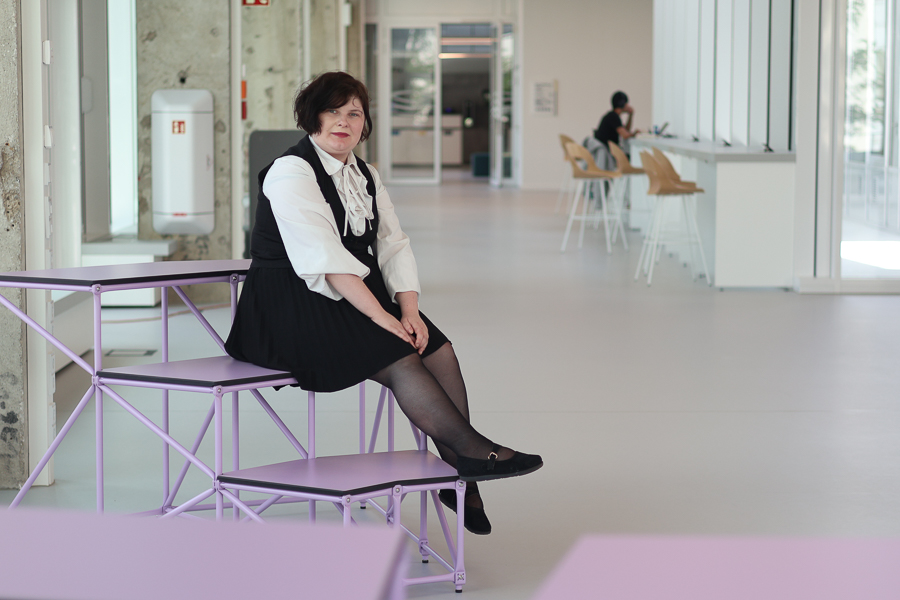
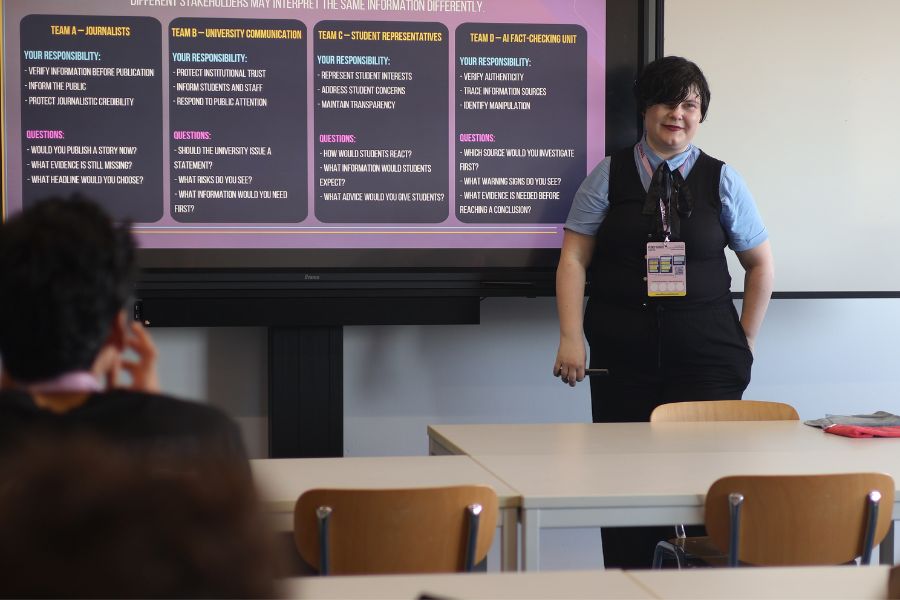
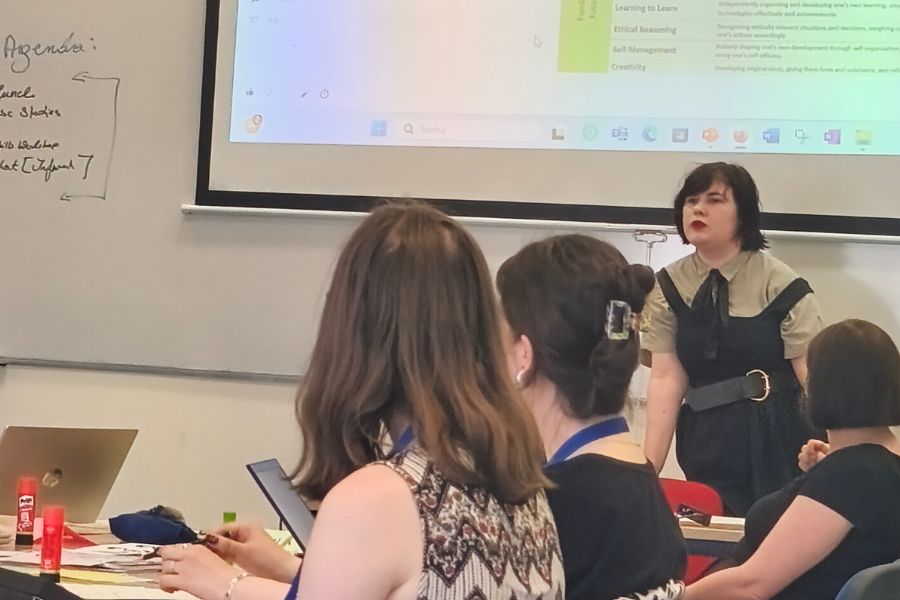
Roksana Rybicka led several workshops at the European Writing Centres Association’s Peer Tutor Day.
‘Digital Changemaker’ also sounds as though it involves helping to shape digital transformations. Is part of your commitment also about ensuring you aren’t left behind?
Yes, that’s a major aspect of it. Together with the other Digital Changemakers, I want to help students help themselves when it comes to AI literacy. We’re developing a Germany-wide initiative – the AI Change Lab – where students can acquire the basic skills. The aim is for them to develop their own AI strategy. For me, ‘changemaking’ means encouraging people to take a slightly more critical approach to AI.
How did you personally become interested in technology and digitalisation?
Ever since I was little, I’ve been really into IT. When I was twelve, I built my first PC. I’d actually applied to study IT, but for various reasons – including family ones – I ended up at this small but excellent university, Viadrina. Although there’s no IT programme here, there is a law programme, and I specialised in media law, digital law and data protection law. What also attracted me at the time was the opening of the European New School of Digital Studies (ENS). And so I decided to take Digital Entrepreneurship as a second study course.
So much has happened in technology since you built your first computer. How do you manage to stay up to date?
I just spend a lot of time in this bubble. I go to conferences and talks, and I’m keen to keep developing my skills. AI is my hobby and the focus of my start-ups – I have two start-ups in this field. On the one hand, I’m developing an app designed to teach people future skills. It’s a bit like Duolingo, except that users learn critical thinking, writing and some AI skills as well. I’m also working with a team on a company that connects AI talent with interesting roles and projects.
Despite your enthusiasm, you’re anything but uncritical of AI. What worries you most?
I see a danger in AI taking away our own human voice. AI can be an assistant, a sparring partner. I can use it to validate an idea, perhaps because I’m too shy to discuss it with a human being. But if AI starts to blindly replace us as human beings, that’s very problematic. And I keep saying this in relation to writing processes too. It makes a difference whether AI helps me discuss my ideas, or whether it speaks on my behalf. It becomes dangerous when humans effectively become tools of AI. That’s why I think it’s great that we’re increasingly scrutinising AI, and that there’s growing transparency about how it works, what it can do and what it can’t.
Another aspect of AI I’m very critical of is fairness, because not everyone has the same access to AI. Not everyone can use premium versions of the programmes. And not everyone has the skills one should be mindful of when working with AI. Of course, artificial intelligence will also bridge certain gaps – for example, when it comes to varying levels of language proficiency. It can also help people feel that they are being heard. So I see a wonderful trend, and at the same time, a whole host of questions are arising.
To ensure that students use AI effectively in their writing, you’re also involved as a tutor at the Center for Teaching and Learning (ZLL). What sort of questions do students bring to the consultations?
The main question students ask is about finding their own voice. Everyone uses AI in some way; that’s not the issue. The crucial point is: where does the student’s independent work actually end, and where does the AI begin? Another important question is whether the use of AI complies with the AI guidelines. A very simple example: when paraphrasing other people’s texts, you must state that the paraphrase was produced using AI. At the same time, the question arises: if I paraphrase my own work, do I need to state that, or not? After all, I don’t do that when I use the spell-checker.
Are you concerned that skills are being lost through the use of AI in writing?
Writing involves other important skills: critical thinking, selecting the right sources, gathering information, reading, understanding, coding, sorting … What’s more, you have to question and double-check everything the AI spits out. That actually creates extra work if you do it properly. So we still have to think for ourselves, even more so than before, I’d say.
Do you have a mission in your work, whether as a writing tutor or as a digital changemaker?
My personal mission is to help people understand the world a little better. I want to encourage them to help themselves in these times of change.
Where do you see yourself in the future?
I want to complete my master's degrees, finally pass my state examination, and then see what happens. I can well imagine staying in academia. I realise how important it is for committed young people to shape not only academic discourse but also discussions around AI and writing.
Frauke Adesiyan
Back to the news portal
Share article: