
Master of Compliance and Integrity Management
The study programme

The postgraduate Master of Compliance and Integrity Management (MACIM) study program is a unique feature of Viadrina in the German university landscape, characterised by a strong interdisciplinary and practice-oriented approach to Integrity and Compliance Management.
The program is conducted entirely in English.
MACIM at a glance:
- Postgraduate executive education program
- Full university master's degree within one-year studies
- Interdisciplinary curriculum incl. e.g. law, management, communication, psychology
- Study alongside current job, lectures only on chosen Fridays / Saturdays
- Limited to 20 students per year, close supervision, individualization of study content
- Coverage of current developments, e.g. ESG, Integrity, Whistleblowing, Sustainability
- Distinguished lecturers from world leading universities, corporations and NGOs
- Benefits of comprehensive compliance networks and the organizer's alumni program
If you have any further questions, you can also contact our team directly.
For detailed information about the study program, please refer to our MACIM flyer.
Study MACIM
Discover the MACIM Program

Are you interested in advancing your career in compliance, ethics, and integrity management? We warmly invite you to join our Master of Compliance and Integrity Management (MACIM) program.
We are always happy to answer your questions and provide detailed information about the curriculum, study format, and admission process.
You are also warmly invited to arrange an individual consultation session with our team at any time.
To schedule a meeting or ask any questions, please contact us directly at:
👉 macim@europa-uni.de
We look forward to hearing from you!
Key Facts
The MACIM is a postgraduate and tuition-based study course that leads to the academic degree of Master of Compliance and Integrity Management (MACIM) and can be completed on a part-time basis.
The study course is linked to the Viadrina Compliance Center, an interdisciplinary unit of the European University Viadrina, which has been successfully dealing holistically with the research fields of Ethics, Compliance and Integrity in organisations since 2010 and has thus made a name for itself in Germany and worldwide.
Through the postgraduate Master's program, students will acquire in-depth knowledge in the field of Compliance and Integrity Management as well as the ability to apply this knowledge in professional practice and research. In the course of their studies, students will acquire the skills and abilities to develop, implement, test and continuously improve the Compliance and Integrity Management System in any type of organisation, taking into account current developments in the areas of digitalisation, environmental protection, sustainability, governance and social aspects.
These goals are achieved through the three-stage teaching approach:
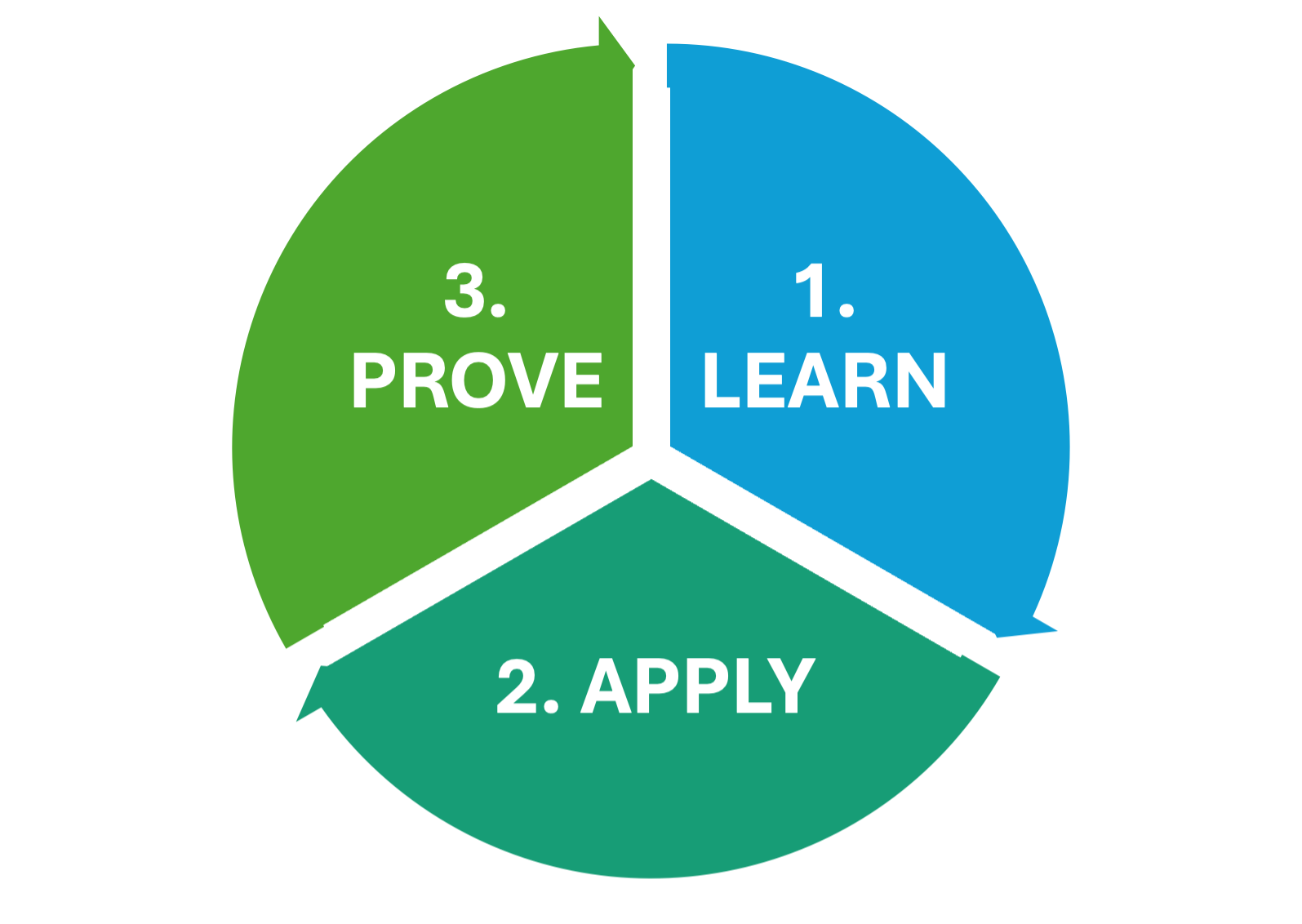
1. LEARN: The curriculum consists of specialised modules in which all theoretical and practical knowledge and skills required for the implementation and operation of effective and efficient Compliance and Integrity Management (CIM) are learned along a practical management cycle.
2. APPLY: As part of a presentation, students develop new models and methods based on what they have learnt, which have a strong practical relevance. This takes place as part of an in-depth module with distance learning lecturers.
3. PROVE: As part of the master's thesis, students demonstrate the theoretical and practical knowledge and skills they have learnt and provide proof of qualification for a management position.
The program lasts two semesters and is divided into five modules, four of which are designed as compulsory basic modules and one as a compulsory elective module with independent study and a presentation. The combination of face-to-face and online teaching, which is always offered on Fridays and Saturdays, enables working people to take part in the program. The program concludes with the completion of a Master's thesis. This enables students to complete a Master's degree in just two semesters!
Structure and Course of StudiesThe degree program is not only characterised by its innovative curriculum and strong practical focus. The program also teaches soft skills that are highly relevant to compliance and integrity management. The entire Integrity and Compliance Management cycle has been integrated into the degree program and distributed across the existing modules.
The program thus covers the practical design, implementation, testing and improvement of such a system. This is complemented by specialisation options and insights into various industries, including the public sector.
We were able to attract more than 50 highly qualified lecturers from research and practice for the varied teaching format, enabling us to effectively implement the concept of the degree program. While the sound theoretical foundations are taught by professors, renowned experts take over the modules on practical implementation and specific management tools. The teaching is rounded off by further guest lectures from well-known personalities. The small group of a maximum of 20 people enables excellent networking with each other and with the lecturers.
Meet our lecturers:
-
Nicola Allocca | Chair Anti-Corruption Committee | OECD | Italy
-
Elizabeth Andersen | Executive Director | Basel Institute on Governance | Switzerland
- Markus Bamberger |Chief Compliance Officer | Bosch | Germany
-
Dr. Andreas Büttner | Head of Compliance | Siemens Healthineers | Germany
-
Geert Delrue | AML/CFT Trainer ex. Criminal Commissary | LEXDURA | Belgium
-
Dr. Kyrill Farbmann | Compliance Director | McDonald’s | Belgium
-
Dr. Johannes Gilch, LL.M. | Lawyer & Legal Counsel | Law Pilots | Germany
-
Florian von Götz | Chief Compliance Officer | Axel Springer SE | Germany
-
Karsten Griesshammer | Executive Director, Head of Global Security & Protection | BioNTech SE | Germany
-
Dr. Marie von der Groeben | Chief Compliance Officer | Deutsche Telekom | Germany
-
Gabriela Gutierrez | Group Head of Ethics, Compliance and Investigations | VEON | Netherlands
-
Prof. Dr. Christian Hauser | Professor of General Business Administration and International Management | Swiss Institute for Entrepreneurship (SIFE) | Switzerland
-
Prof. Dr. Branislav Hock | Associate Professor in Economic Crime & Compliance | University of Portsmouth | UK
-
Dr. Victoria Hurth | Independent Pracademic and Project Leader ISO37011: Purpose-Driven Organisations | UK
-
Peter Jonas | Director Certification | Austrian Standards | Austria
- Kai Karsten | Head Group Integrity & Compliance Programs | Volkswagen AG | Germany
-
Michael Kayser | Compliance Manager | DB Engineering & Consulting | Germany
-
Dr. Benedikt Knothe | Chief Compliance Officer | Siemens Healthineers | Germany
-
Katleen Linke | Compliance Learning Expert | SAP SE | Germany
-
Prof. Dr. Bartosz Makowicz | Director | Viadrina Compliance Center | Germany
- Dr. Rainer Markfort | Chairman of the Working Group “DICO Innovativ” | German Institute for Compliance – DICO | Germany
-
Dr. Thomas Meiers | Chief Compliance Officer | BayWa AG | Germany
- Ann-Katrin Menner | Attorney-at-law | Germany
-
Akif Mert | Chief Compliance Officer & Head of Legal | Allianz | Germany
-
Dr. Anna-Maija Mertens | Managing Director | German Institute for Compliance – DICO | Germany
-
Sandra Middel | Head of Group Compliance | Clariant | Switzerland
-
Farzana Mohomed | Head of Program Management - Corporate Compliance and ESG | NEOM | Saudi Arabia
- Natalia Iturregui García de Motiloa | Head of International Compliance | Inditex | Spain
-
Christian Mühl | Senior Director Compliance | GSK Deutschland | Germany
-
Prof. Dr. Konrad Ost | Vice President of the Federal Cartel Office | Germany
-
Prof. Dr. Guido Palazzo | Professor of Business Ethics | University of Lausanne | Switzerland
-
Ghizlane Pandey | Head of Compliance, DPO, Investigator, Project Manager | Freelance | France
-
Prof. Dr. Lisa Marie Ranisch | Professor of Sustainable Business Management and Applied Ethics | Germany
- Nadège Rochel | Global Ethics & Compliance Leader | UCB | Italy
-
Jan Schreiner | Head of Corporate Audit, Chief Audit Executive | MAN Truck & Bus SE | Germany
- Dr. Andreas Schweinberger | Head of Compliance and Regulation | EnBW | Germany
- Astrid Senninger | Head of Corporate Regulations Management | Infineon Technologies AG | Germany
-
Prof. Dr. Jürgen Stock | Former Secretary General at INTERPOL | Germany
-
Maria Thestrup | Chief Ethics, Risk and Compliance Officer | Gavi, the Vaccine Alliance | Switzerland
-
Prof. Dr. Alexander Trautrims | Professor of Supply Chain Management | University of Nottingham | UK
-
Prof. Dr. Wim Vandekerckhove | Professor of Business Ethics | EDHEC Business School | France
- Sabine Winkler | Senior Compliance Expert | ALPLA Group | Austria
-
Prof. Dr. Hans-Michael Wolffgang | Director of Institute of Customs and International Trade Law | University of Muenster | Germany
-
Prof. Dr. Sonja Wüstemann | Professor of Business Administration | European University Viadrina | Germany
-
Dr. Uta Zentes | Head of Compliance, Attorney-at-law | Federal Republic of Germany - Finance Agency | Germany
The study course is aimed both at university graduates from all disciplines who wish to pursue the profession of a Compliance/Integrity Manager in companies and other organisations or who are or will be working in a consulting environment; are or would like to become active in a consulting environment, as well as Compliance/Integrity Managers who are already in employment and would like to refresh, deepen, systematise and professionalise their knowledge and skills.
The course content is designed in such a way that the study program is also ideally suited for representatives of the public sector who deal with Compliance-related issues (for example in the area of combating White-Collar Crime or as Anti-Corruption Officers).
Application and Admission
After three successful editions, the MACIM program will be offered again in the winter semester of 2026/2027. Furthermore, for the first time, it will be conducted entirely in English. There are 20 places available in the fourth edition; the decisive factor is receiving applications from people who meet the recruitment requirements.
The application period for the 2026/2027 winter semester has now closed.
If you are interested in reserving a place for the next edition, please contact us by email at: macim@europa-uni.de.
Please submit all documents as PDFs by email only. These should include:
- Letter of motivation for the study course (in English; maximum 1 A4 page);
- Current curriculum vitae;
- Certified copy of all university degrees held, together with certified academic transcript for all subjects and grades (bachelor's degree, diploma, state examination, university entrance qualification if applicable, etc.);
- Evidence of at least one year's relevant professional experience;
- Proof of competence in the English language*: language certificate (English proficiency at B2 level or higher), at least four years school education in English; or equivalent evidence, for example, professional work experience in English.
* German language proficiency is not required for the MACIM program.
If you have any further questions about the admission process or the required documents, our team will be happy to answer them.
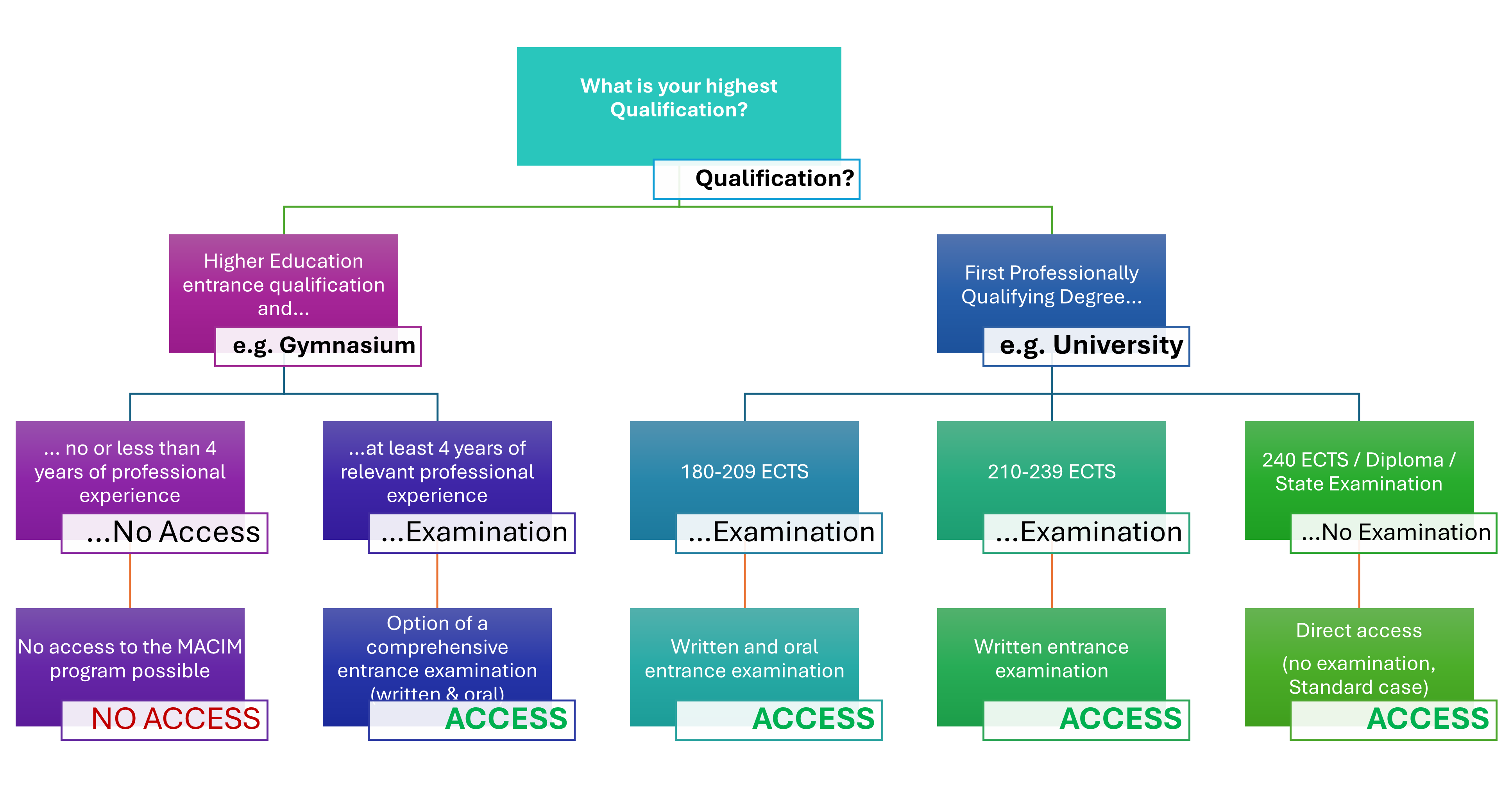
The Master's degree program in Compliance and Integrity Management is designed as a part-time and continuing education study course. Admission to the MACIM Master's program generally requires (1) a first professionally qualifying degree (e.g. Bachelor's, Diplom, state examination) with at least 240 ECTS points and (2) at least one year of professional experience. If the first professionally qualifying degree is missing or has fewer than 240 ECTS points, admission can be granted upon passing the entrance examination.
Access and admission are otherwise governed by the Framework Regulations for Admission to Studies at the European University Viadrina Frankfurt (Oder).
The number of students in each edition of the program is limited to 20 in order to ensure the appropriate quality of teaching in a small group.
The entrance examination is required if either the first professionally qualifying degree is missing or if it has fewer than 240 ECTS points. Depending on the requirements, it can consist of a written, an oral or both parts (see overview below). The written entrance examination takes the form of an essay of 18,000 characters. The topics are assigned by the examination board, the deadline is two weeks. The oral part of the entrance examination lasts 30 minutes and is based on the essay or on previously determined topics.
The following table shows whether and which entrance examination is required:
The tuition fee is 13,000 EUR plus semester contribution (approx. 140 EUR); payment is generally made in a single instalment before the start of the course.
In exceptional cases, payment in instalments can be agreed. If financing is to be provided by a company, please contact us before applying to discuss the arrangements. Further details can be found in the fee regulations.
On the website listed below you will find key infromations to support your arrival and settling at European University Viadrina and in Frankfurt (Oder). The page provides guidance on topics such as VISA, travel and arrival procedures, health insurance, and other important matters.
Guide for International Students...Graduation day
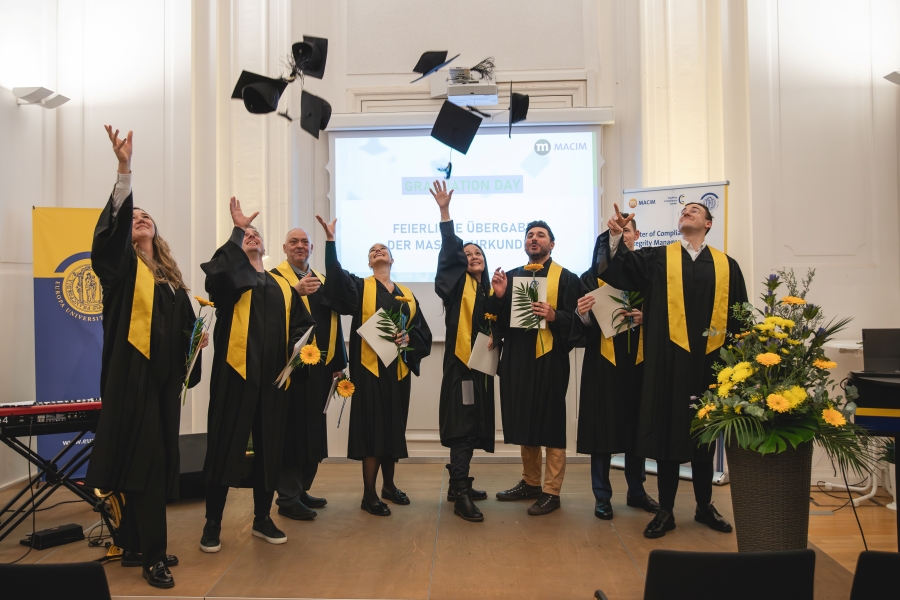
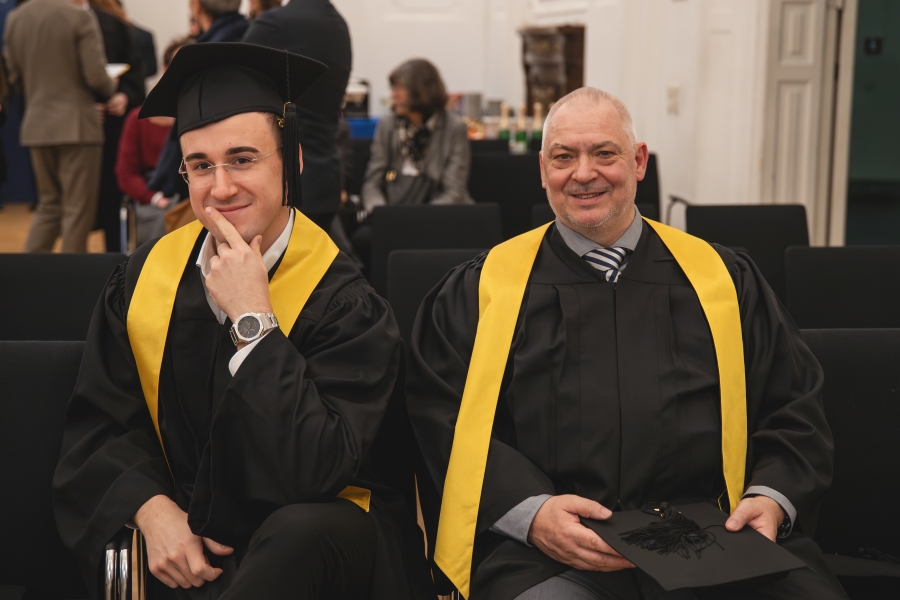
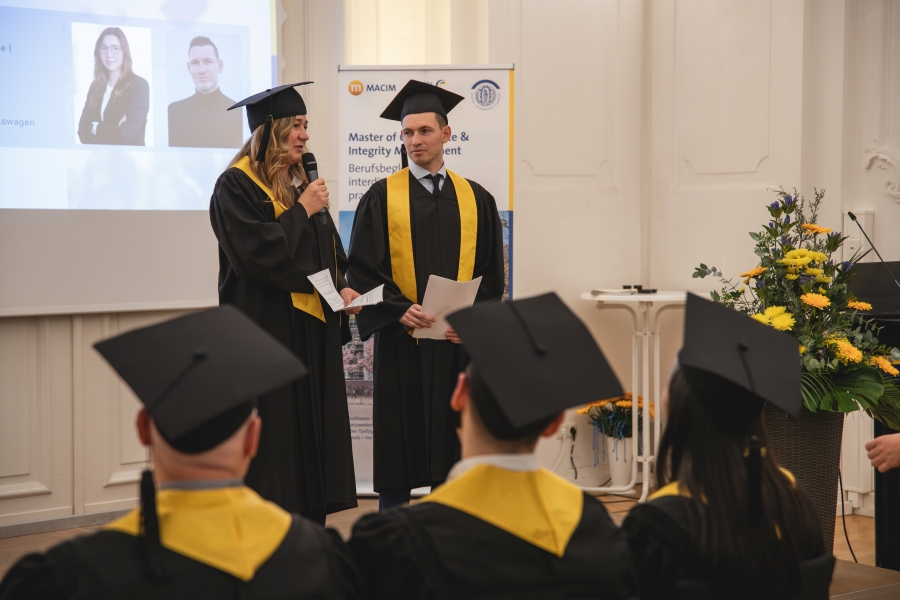
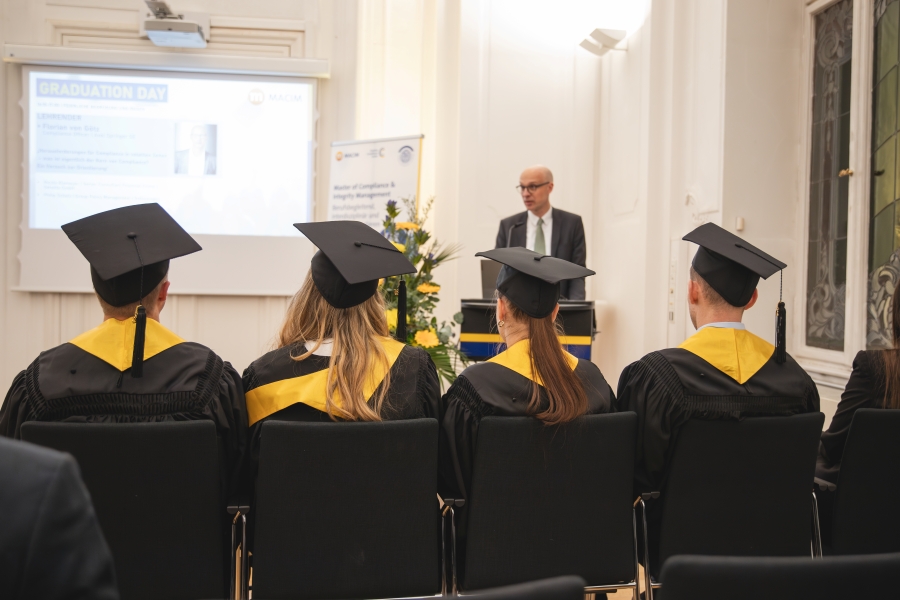
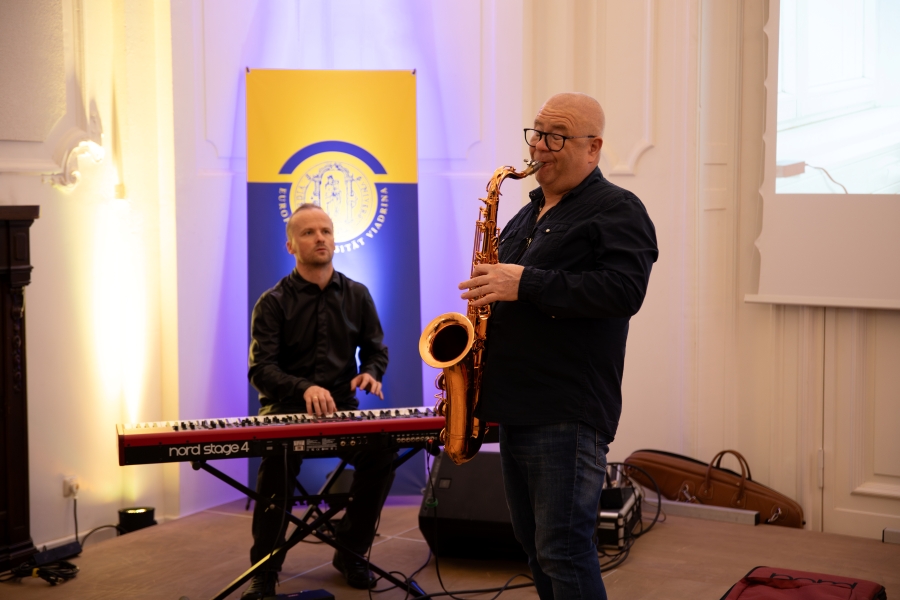
A look back at our graduation day!
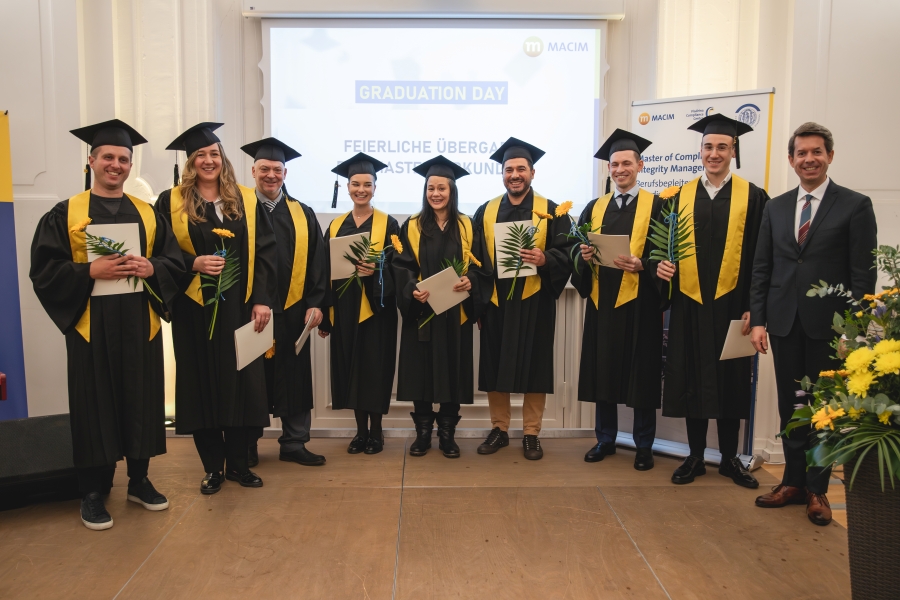
On 27 November 2025, we celebrated an unforgettable evening with our graduates from the first year of MACIM. It was a special moment to celebrate the successful graduation and look back on the past year together.
Congratulations once again to our graduates – you have made it and can look back on your achievements with pride! We are very proud of you and your impressive development.


MasterClass

The new event series “Compliance & Integrity Master Classes” designed by Viadrina Compliance Center aims to complement the ongoing teaching within the Master's program “Compliance & Integrity Management” at the European University Viadrina Frankfurt (Oder). As part of the monthly webinars, MACIM Teachers, leading international experts from academia, industry and NGOs are invited to deliver a lecture on chosen current challenges in integrity and compliance. The new event series is not just an excellent teaching format, but also provide compliance officers with high-quality expert updates on the latest compliance topics. After the lecture of an expert on the announced topic, there will be time for questions and answers. Following the event, there will be an opportunity to talk to current and former master students and learn more about the master's program. The master classes are open to the public, however a free registration is required.
We look forward to meeting you virtually at the Compliance & Integrity Master Classes!
Prof. Dr. Bartosz Makowicz
[Head of Studies]
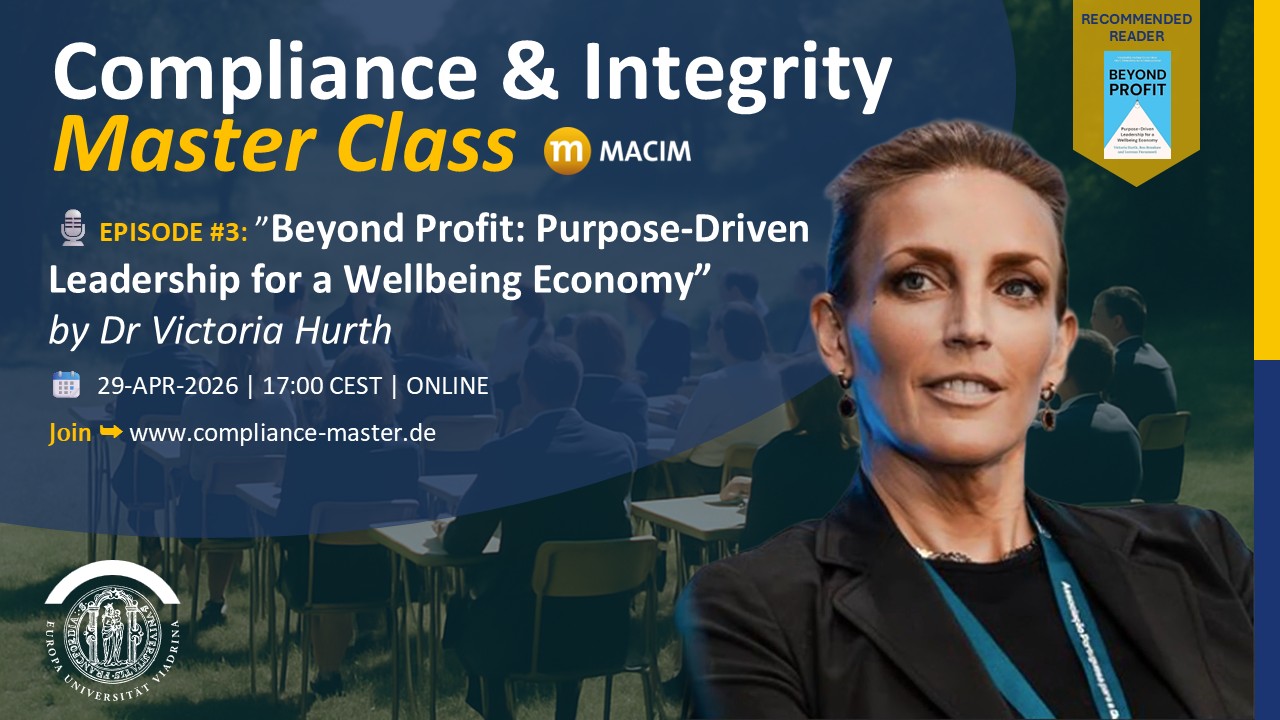
Unfortunately, due to organizational reasons, this event has to be canceled!
Recommended Reader:
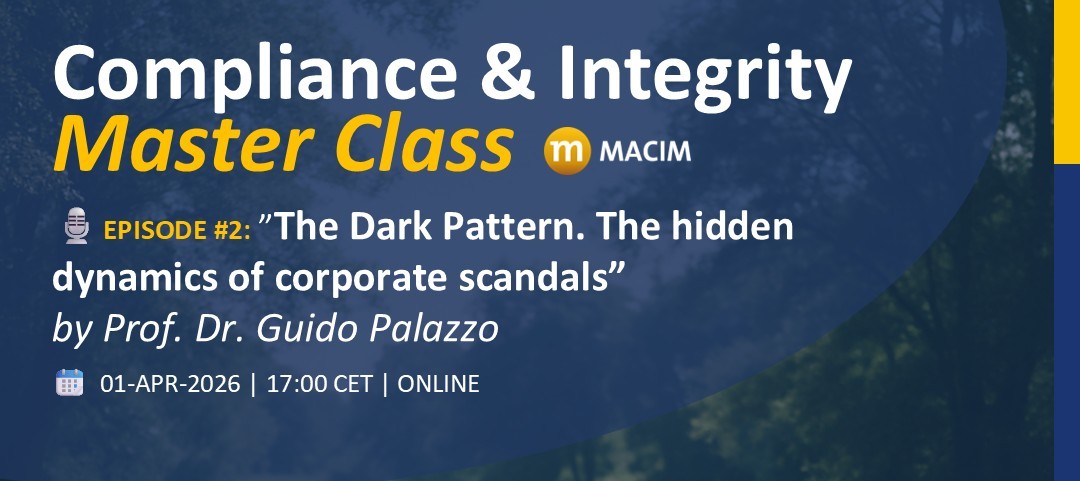
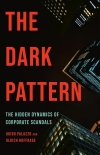
Why "Good People" Do Bad Things: The Dark Pattern of Corporate Scandal
When a major corporate scandal breaks, the first instinct is to look for villains. A documentary gets made. Two or three executives are cast as the bad apples. And the story ends there. But what if that story is fundamentally wrong?
That was the central provocation of our recent webinar with Prof. Guido Palazzo from HEC Lausanne, co-author of the book Dark Pattern. Drawing on decades of research into the largest corporate failures of the past quarter century (Wells Fargo, Boeing, Volkswagen, Theranos). Palazzo argued that the "bad apple" narrative isn't just incomplete. It is actively misleading.
The uncomfortable answer, Palazzo argued, is that most of those people were not criminals at all. They were ordinary employees, operating inside systems specifically designed through culture, leadership, incentives, and language to make ethical behaviour impossible.
The nine building blocks of the dark pattern
Palazzo dentified nine recurring elements present across virtually every major scandal. Together, these elements create what they call a "dark pattern" as a kind of slow-motion ethical collapse that unfolds not because people are evil, but because the environment gradually destroys their ability to see right from wrong. He highlighted five of them:
1) Rigid ideology = An absolutist focus on shareholder value that crowds out every other consideration (quality, safety, people).
2) Toxic leadership = Management by fear. When dissent leads to humiliation or dismissal, problems stop being reported until it's too late.
3) Unrealistic goals = Impossible targets, combined with a culture of fear, make "whatever it takes" the only available strategy.
4) Ambiguous rules = When official policy says "integrity" but the boss says "get the contract and I don't care how," people learn which rule is real.
5) Language games = War rhetoric and cult-like messaging frame the situation as exceptional and exceptional situations don't require normal rules.
The Volkswagen diesel scandal illustrates how these blocks interact. Engineers could not meet the emissions targets in the time given. They knew. But the CEO was described by employees in a 2005 internal survey as running the company like "North Korea, minus the concentration camps." He yelled, threw objects, fired people arbitrarily. So engineers did not go to him. They found another solution the infamous software cheat which ultimately cost the company billions.
The concept of ethical blindness
Underlying all nine building blocks is a phenomenon Palazzo calls ethical blindness: the gradual erosion of an individual's capacity to perceive that what they are doing is wrong. This is not rationalisation. It is not hypocrisy. It is something more disturbing as a slow transformation of perception, driven by the surrounding culture, until the person genuinely cannot see the harm they are participating in. This is why individual ethics training is insufficient on its own. The dark pattern does not recruit people who lack values but it reshapes the values of the people already there.
The next frontier: Silicon Valley and techno-utopianism
Palazzo closed with a warning about what he sees as the emerging next stage of the dark pattern: the ideology he calls techno-utopianism, now taking hold across major AI companies and their investors. The core belief is that artificial intelligence will deliver paradise for humanity, and that democracy, regulation, and oversight are obstacles standing in the way of that future. When leaders genuinely believe they are saving civilisation, Palazzo argued, the conditions for ethical collapse are already in place. The rigid ideology is present. The sense of exemption from normal rules follows naturally. The language of war, of destiny, of a higher mission is already well established.
His prediction is, we will see significant scandals emerge from within the AI industry in the coming years. OpenAI, in his assessment, is among the highest-risk candidates.
Turning the pattern around
The session closed with a practical question: what does the opposite of the dark pattern actually look like? For Palazzo, flipping toxic leadership means building a genuine speak-up culture not as a slogan, but as a structural reality. This means protecting those who raise concerns, training leaders to listen rather than perform, and fundamentally reconsidering who gets promoted into leadership in the first place.
He was candid about how rare this is in practice. In every major scandal, there were individuals who tried to speak up. They were fired, demoted, or silenced. And everyone else watched.
The compliance management system, he agreed, has a critical role to play but only if it is backed by visible, daily leadership behaviour. A video message from the CEO affirming company values, followed by a manager demanding results at any cost, does not create an ethical culture. It creates ambiguity. And ambiguity, as the dark pattern shows us, is its own kind of danger.
Recommended Reader:
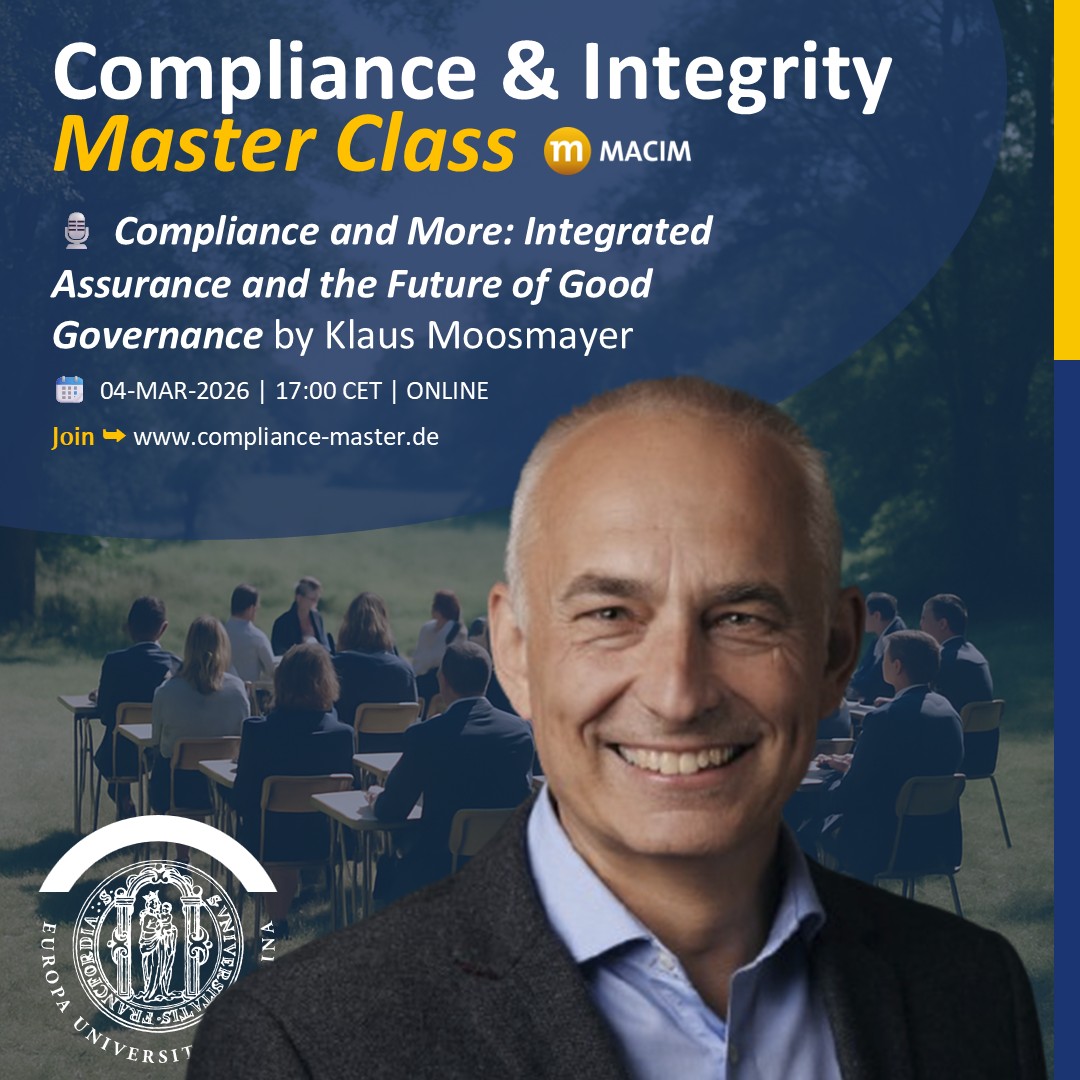
The first MACIM Master Class brought together practitioners, academics, and students to discuss the evolving landscape of governance, risk, and compliance. The session focused on the concept of Integrated Assurance and its potential to strengthen trust and improve governance structures within organizations.
The Master Class was delivered by Klaus Moosmayer, one of the most recognized international experts in corporate compliance and integrity management. His insights drew on extensive professional experience in global governance structures and corporate compliance leadership. Mr. Moosmayer currently serves as Member of Advisory Board at Deutsche Bank and previously held the role of Chief Ethics, Risk & Compliance Officer at Novartis and Chief Compliance Officer at Siemens, where he played a key role in the transformation of the company’s compliance and integrity framework.
Below, we summarize the key take-aways from the lecture:
Trust under pressure
According to the Edelman Trust Barometer 2025, 61% of respondents globally have a sense of grievance, believing that government and business make their lives harder and serve narrow interests. This growing skepticism highlights the importance of credible governance structures and effective assurance systems within organizations. At the same time, experts increasingly warn of “governance gaps.” While traditional governance models provide clear role definitions and oversight structures, they often lack cross-functional coordination and effective knowledge transfer between different functions.
In many organizations, governance is formally structured across three lines: the board at the strategic level, the executive management responsible for implementation, and the vertical risk and compliance functions that provide oversight. However, this structure does not always ensure integrated perspectives or coordinated action.
Growing regulatory complexity and questioning the rule of law
Over the past two decades, the regulatory landscape has expanded significantly. What once focused primarily on anti-corruption and antitrust compliance has developed into a complex framework that now includes human rights due diligence, ESG requirements, sanctions regimes, export controls, data protection, and artificial intelligence governance. At the same time, the rule of law is increasingly being questioned in parts of the world, which creates additional challenges. In such an environment, adherence to rules becomes not only a legal requirement but also a cultural and leadership issue within organizations.
The challenge of organizational silos
Despite the growing complexity of regulatory requirements, many organizations still operate with fragmented governance structures. Risk management, compliance, legal, internal audit, ESG, and strategy functions frequently work independently in separate silos. This fragmentation can lead to duplicated processes, inefficiencies, and inconsistent risk assessments across the organization.
Integrated Assurance as a holistic approach
The Master Class highlighted Integrated Assurance as a potential solution to these challenges. Rather than creating another layer of bureaucracy, Integrated Assurance promotes collaboration, horizontal governance structures, and a shared understanding of risks across functions. A central element of this approach is the integration of risk management, compliance, and governance processes, enabling organizations to reduce duplication while improving the quality and consistency of oversight.
The Assurance Leader or Business Steward instead of Compliance Officer
As governance models evolve, so too does the role of the compliance professional. The traditional perception of compliance officers as “corporate police” is increasingly outdated. Instead, the emerging profile is that of an Assurance Leader or Business Steward as a professional who combines technical expertise with strategic thinking, collaboration skills, and the ability to influence organizational culture while maintaining independence and the capacity to challenge. Such a role could also be positioned at executive board level, providing a cross-functional perspective on governance, risk, compliance, and
integrity issues. This broader overview enables more integrated reporting, coordinated decision-making, and strategic oversight across the organization.
Leadership and incentives for change
Implementing an integrated assurance model requires strong leadership support. A clear tone from the top, a formal mandate, and genuine cross-functional cooperation are essential for overcoming organizational silos. However, organizational change is often influenced by economic considerations. Many stakeholders focus primarily on financial metrics, cost efficiency, and budget allocations. For this reason, legislative incentives and clearer regulatory expectations may play an important role in accelerating the adoption of integrated governance models.
Integrated Assurance was identified as a promising framework for strengthening trust, improving coordination between governance functions, and preparing organizations for the challenges of modern regulation and technological transformation.
We would like to thank Mr. Moosmayer for his highly exciting and forward-looking lecture!
Yearbook for Global Ethics, Compliance and Integrity
Key Facts:
- 638 Pages
- 33 Articles
- 49 Authors
The Yearbook 2025 for Global Governance, Compliance & Integrity offers an up-to-date overview of recent and most significant developments in the interdisciplinary area of organizational governance, compliance and integrity management. The 2025 edition focuses – but is not limited to – on ESG, new approaches in compliance & integrity management, AI compliance and anti-bribery as well as supply chain compliance, whistleblowing and internal investigations. The exceptional concept of this publication offers exclusive insights both from practical and theoretical perspectives presented by over 50 experts from all over the world.
The series was inaugurated by Professor Bartosz Makowicz in 2018 and has since become a recognised compendium of knowledge for scientists, practitioners, and interested parties in the latest developments in governance, compliance, and integrity, as well as the influence of AI on these areas.
Table of Contents
Introduction
Integrated Governance and Compliance Approach – This is the Way Forward! | Prof. Dr. Bartosz Makowicz
Chapter 1: Trends and Challenges in Sustainable Governance
Exploring the Future of Global ESG Disclosures and Reporting Requirements | Jeannine Lemker, Mariola Lisewska, and Meriem Debbih
ESG in a Global Context | Bethany Jackson, Anita Punwani
Not only must have but natural evolution – why well organized ESG should be treated as a next level of mature GRC system in a production company | Piotr Janecki
Sustainable Reporting in the Digital Age: Examining Global ESG Evolution, Non-Financial reporting landscape and the Empowering Role of AI | Shujath Bin Ali, Kalapurakkal Suresh Aravind
Chapter 2: Compliance Management from Organizational and Global Perspective
The Compliance Conundrum: Winning Hearts or Forcing Hands? | Nick John Weir
Law Practice and Compliance Officer Practice | Pedro Trovão Do Rosário
Managing Compliance Risks in Overseas Subsidiaries and Affiliated Companies | Joan Meyer, Matthew Ridings
Navigating EU Product Safety and Product Liability Law Reform | Claus Köhler, Nicole Vossius
EU Law on Companies' Liability and the Role of Compliance | Anna Hlebicka-Józefowicz, Gniewomir Wycichowski-Kuchta
Regulatory Compliance under Australian Financial Services License Obligations | Akif Mert
Chapter 3: Shaping Corporate Culture based on Integrity and Business Ethics
Cross Sectoral Challenges for Integrity and Compliance, Typical Cultural Clashes Among Silos Cultured Areas in Multinational Corporations | Juan Gregorio Nazar de Boulin, Maria Eugenia Gil
Practical Implementation of Business Ethics in Compliance Management Systems | Piotr Chmiel
Business Ethics: It's Employee Management, Not Philosophy | Meric Bloch
Ethics and Leadership Practice in Financial Institutions in a Time of Changing Regulatory Landscape | Yasmine Sadek
Managing a Corporate Ethics Program: Development, Risk Management and Evaluation | Stanisław Zygmunt Strejmer
Corporate Integrity in Brazil: An Analysis of Ethos Indicators | Marcela Greggo, Ana Lucia de Melo Custódio
Chapter 4: AI Compliance and Financial Compliance
Governance of AI: Compliance, Ethics, and Standardisation are but a Distant Dream | Nada Kakabadse, Andrew Kakabadse
The Use of AI in Compliance Management: A Practical Balancing Exercise | Simina Suciu
Revolutionizing Compliance Management: Integrating AI, Blockchain, and 100% Sampling for Robust Data-Driven Strategies | Rajeev Thykatt
New framework for Compliance in Late Payments in Commercial Transactions | Ruben Bahamonde
Combating Crypto Assets Money Laundering in Decentralized Finance (DeFi) | Ana Cristina Perdomo Gomez
Chapter 5: Anti-Bribery Compliance
Strategic corruption: A Lurking Danger for Our Democracy | Mickaël Roumegoux Rouvelle
Anti-Corruption in Times of Crisis and AI - New Chances and Challenges | Carlos Lelo Filipe
Risks of Corruption and Anti-Corruption Compliance in Sport | Eduard Ivanov
Foreign corruption at Swiss companies – New Findings on Risks and Counter-Strategies | Christian Hauser, Martin Hilti, Marc Herkenrath, Ramona Stampfli, and Jeanine Bretti Rainalter
Chapter 6: Foreign Trade Compliance – Focus on Supply Chains and Sanctions
Compliance with the CS3D: A New Era of Corporate Responsibility | Antonio Giuseppe Di Pietro, Andrejs Klisans
Trustful relationships with the Global South for effective supply chain due diligence | Susanne Friedrich
Human Rights Impact Assessment in the energy sector and the CSDDD Directive | Adam Domagała, Anna Tomiczek
From Guidelines to Reality: (Re-)Insurer’s Journey through Russian Oil Sanctions | Alexander Leonhardt
Chapter 7: Whistleblowing and Internal Investigations
The Role of Whistleblowing in Integrated Governance | Andrew Samuels
The Whistleblowing System in Portugal, Two Years After its Regulation | Alex Sander Pires
It is here to stay - Artificial Intelligence in Internal Investigations | Christian Miege
A Roadmap to Certification of Association of Corporate Investigators ("ACI") | Patrick Wellens
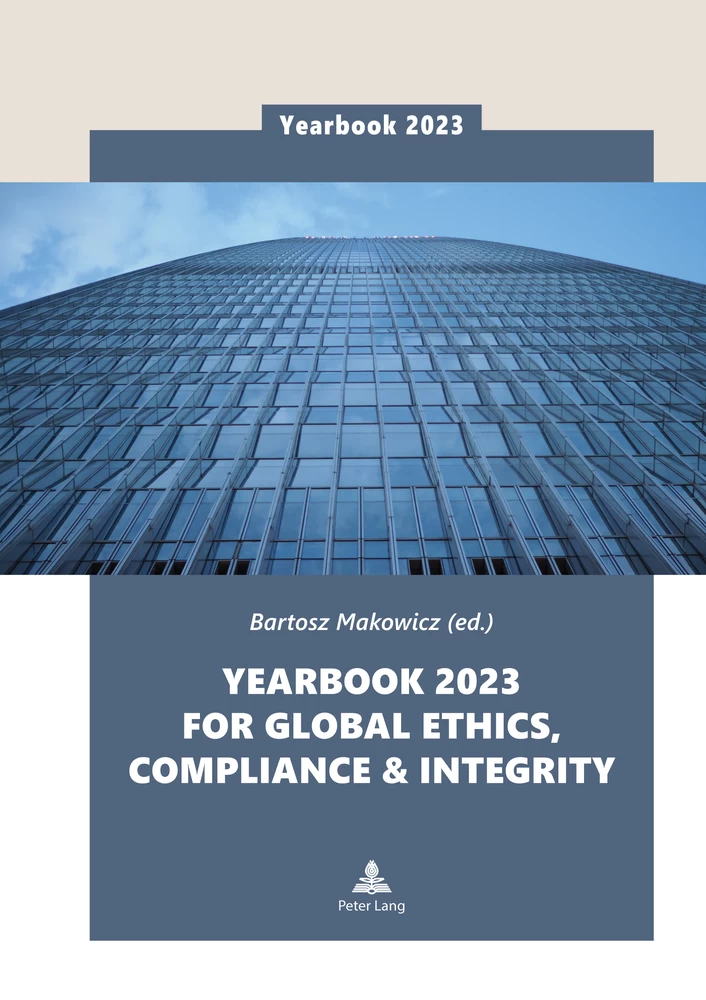
Key Facts:
- 542 Pages
- 36 Articles
- 54 Authors
The Yearbook 2023 for Global Ethics, Compliance and Integrity offers an up-to-date overview of the most recent and significant developments in the interdisciplinary area of organizational governance, ethics, compliance andintegrity management. The topics covered by the 2023 edition include the new concept of ESG, new approaches to compliance & integrity management, anti-money laundering and anti-bribery as well as whistleblowing and internal investigations. Uniquely, this publication offers exclusive insights from both practical and theoretical perspectives. This year’s edition also reflects the influence of the Covid-19 pandemic and Russian war in the Ukraine on governance and compliance. In each chapter, the Yearbook provides a comprehensive selection of views and in-depth analysis applicable to all kinds of organizations. It presents current challenges, development tendencies, new trends and modern management tools. The Yearbook provides excellent insights into the topics covered for both practitioners and researchers.
The Yearbook 2023 is edited by Professor Bartosz Makowicz and supported by the KBA Nota-Sys Integrity Fund. We thank the Fund for its kind support!
Table of Contents
Introduction
Ethics, Compliance and Integrity in Times of Multidimensional Crisis | Prof. Dr. Bartosz Makowicz
Chapter 1: Environmental Social Governance (ESG)
The Benefits of Using ISO 37000 to Establish an Integrated System of Governance for ESG | Mariola Lisewska, Axel Kravatzky
A Purpose With a Future for a Future With Purpose | André Körtgen
Current Challenges in ESG Global Agenda | Fernanda Nan
The Place of Risk Management in Environmental and Social Governance (ESG) | Anita Punwani
The New Star Theory of Fraud and Behavioural Sciences | Vicente Humberto Monteverde
Chapter 2: Compliance Management: New Approaches & Challenges
Effective Compliance Systems: Between Command and Control and Bonds of Trust | Humberto Mota Filho
Regulatory Oversight and Monitoring Responsibilities of Compliance Functions Under Swiss Supervisory Regulations | Akif Mert
How the Legal System Undermines Compliance and Ethics Programs | Joseph E. Murphy
How Do You Eat an Elephant? Tackling the mammoth task of implementing a global compliance program | Farzana Mohomed, Bastian Halbach
Successful Compliance Awareness and Training | Michael Kayser
Combatting Corporate Crime by Means of Evidence-based Compliance | Markus Pohlmann, Sebastian Starystach, and Laura Sophia Hauck
Behavioural Compliance – Approaches to Evidence-based Compliance Management | Bernd Michael Lindner, Maren Grandel, and Carina Schmölz
Compliance in Sports |Carlos Lelo Filipe
Compliance and the Rule of Law, a Perspective of the European Banking Sector | Yasmine Farag
Compliance Management Systems (CMS) as the Standard in Health Care | Anna Różalska
The Cybersecurity Compliance: A fresh look at compliance in cyberspace | Marek Piotr Stolarski
Chapter 3: Integrity & Ethics
Integrity: The Secret Ingredient of an Effective Compliance Program | Silvija Vig
Integrity Pacts: An Essential Tool for Clean Procurement | Monica Guy, Vanessa Hans
“Let’s Talk About Integrity” – The Managers’ Integrity Dialogue | Regina Hoermanseder
Nudging Corporate Compliance and Integrity – Based on an Ethical Compass | Maja Petrushevska, Andreas Suchanek
Ethics and Compliance: The Revolution Ahead | Philippe Montigny
Ethical Leadership in Business Organizations: An Ethics & Compliance Perspective | Oana Raluca Bănățeanu, George-Mihai Popa, and Cristian Ducu
Compliance, Ethics and Enforcementl | Piotr Chmiel
Chapter 4: Anti-Bribery & AML
Empowering Women Through Education to Fight Corruption | Getrude Mhlanga
What Anti-Bribery Compliance Function? | Jean Pierre Méan
The Role of Ethics and Compliance in Preventing Typical Corrupt Practices | Eduard Ivanov
Combating Corruption – A Corporate Social Responsibility: Building Social Action Business Coalition | Pawan Kumar Sinha, Mallika Mahajan
The Sixth Anti-Money Laundering Directive: harmonizing Anti-Money Laundering and Counter Financing Terrorism and tax evasion standards within the European Union | Ghizlane Pandey
Chapter 5: Whistleblowing & Internal Investigations
How Can ISO 37002 Help to Manage Whistleblowing in Europe? | Wim Vandekerckhove
Anonymity vs. Confidentiality. How to Protect Whistleblowers? | Joanna Ochremiak, Angelika Ciastek-Zyska
Whistleblower Awards: Overview, Trends and Ethical Debates | Elena Kashirina, Kyrill Farbmann
Whistleblowing in Germany: Where We Started and Where We Are Headed | Sebastian Oelrich
Whistleblowing and the U.S. False Claims Act | Mary Ellen Verdu, Richard E. Wokutch
Integrity@Inside: A Blockchain-backed Intra-Organizational Approach for Reporting Misconduct | Petra Maria Asprion, Frank Grimberg, and Hermann Grieder
Professionalising Corporate Investigators in a New Era of Ethical Scrutiny for Organisations | Mary Eastwood Jones
Opportunities and Challenges of Big Data and Artificial Intelligence in Ethics and Compliance Investigations | Christian Hauser, Michael Beier, Eleanor Jehan, Marco Schmid, and Albert Weichselbraun
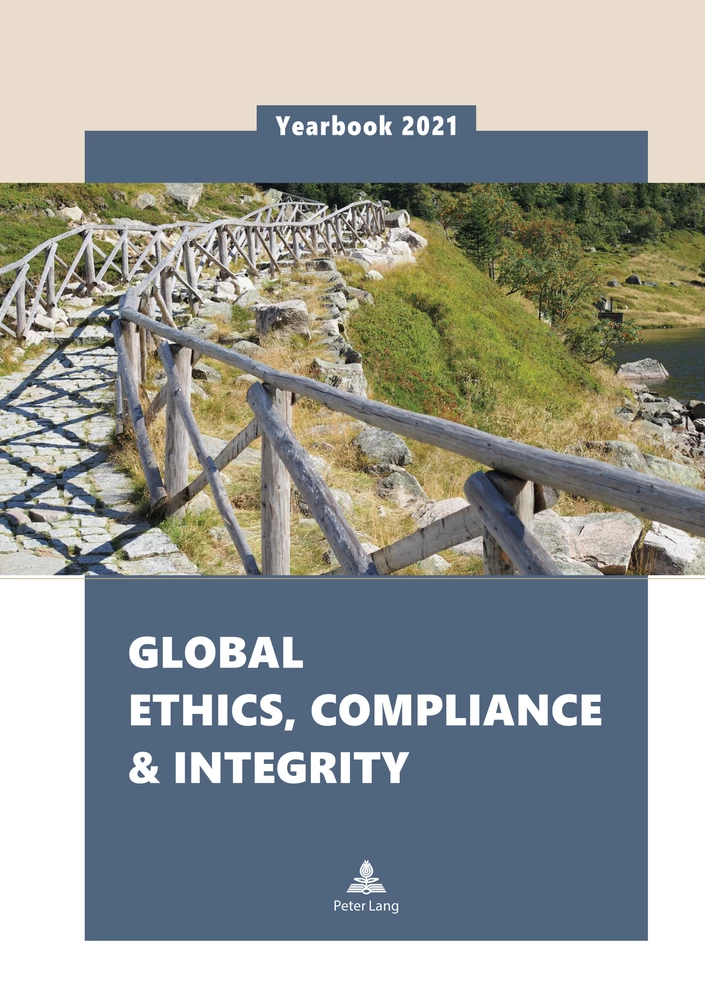 Key Facts:
- 564 Pages
- 41 Articles
- 56 Authors
The Yearbook 2021 for Global Ethics, Compliance & Integrity offers an upto- date overview of the recent and most significant developments in the interdisciplinary area of organizational Ethics, Compliance & Integrity Management. The 2021 Yearbook focuses on (but is not limited to) integrity and ethics and consists of 40 highly valuable articles submitted by 55 experts. The authors include excellent ethics, compliance and integrity professionals, scholars and advisors from 20 different countries. As conceived, the publication offers exclusive insights both from practical and theoretical perspectives. This year’s edition consists of seven carefully arranged chapters dealing with governance and compliance management, integrity management, organizational ethics and culture, anti-bribery management, whistleblowing, the challenges of digitalization, and - last but not least - corporate incentives and sanctions. In each chapter, the yearbook provides a comprehensive range of views and expertise regarding Ethics, Compliance and Integrity in all kind of organizations.
Table of Contents
Introduction
Why Ethics, Compliance and Integrity Matter More Than Ever? | Prof. Dr. Bartosz Makowicz
Chapter 1: Governance & Compliance Management
International Guidance for the Governance of Organizations | Carolynn J. Chalmers, Victoria Hurth, and André Jacquemet
Compliance and Integrity – Competence Package | Alexander Matuk
Keeping One’s Eyes Open When Selecting Business Partners | Regina Hoermanseder
Tailoring Compliance Program in Fast Growing Small and Mid-Size Companies | Mariola Lisewska
A New Kid in Town: The Compliance Officer | Victor Gómez Martín
The New Compliance Manager is a Change Manager | Alexander Ghazvinian
Business in the Gray Zone – Dealing with Compliance Dilemmas in High-Risk Regions | Quirin Kissmehl, Anna Zubrod
Money-Laundering Prevention Systems in Peru | Carlos Wiesse
Chapter 2: Integrity Management
The Importance of an Effective Integrity System to Business Success | Marcelo Zenkner
Towards Developing an Integrity Risk Monitor (IRM): A Status Report | Christian Hauser, Anina Havelka, Sandro Hörler, and Albert Weichselbraun
Integrity as a Management Tool | Mirjam Durrer, Stefan Hunziker, Anjuli Unruh, and Antje Würzburg
A Culture of Integrity as the Fundamental Basis of Compliance Programs | Vivian Andrade, Roberta Codignoto
How to Amplify Integrity and Accountability Through the Voice of Business | Richard Bistrong
Integrity Programs: Drivers for Private and Public Sectors and Main Challenges | Fernanda Nan
Integrity Crisis? | Anatoly Yakorev
Chapter 3: Organizational Ethics and Culture
The Importance of The Human Factor in Compliance Programs | Carlos Lelo Filipe
Utopian Islands of Ethics & Compliance | Patrick Henz
Driving Compliance Culture through Top Management Teams | Peter Ruhwedel, Marieluise Schaper
The Compass of Integrity, Ethics & Compliance in Indian Boardrooms | Shweta Bharti, Sukrit Kapoor
Getting To The Heart Of Culture By Connecting Dots | Jane Mitchell
Ethics, Compliance & Culture | Dhruv Goyal
How Is It Possible To Maintain an Ethical Environment in Business? A Democratic Governance and Compliance Agenda | Humberto Mota Filho
Chapter 4: Anti-Bribery Management
Update on ISO 37001 – Anti-Bribery Management Systems | Jean Pierre Méan
What do Corrupt Organizational Cultures Have in Common? | Alison Taylor
The Reputational Risks of Corruption | Marc Y. Tassé
Anti-Corruption Beyond Illusions: The Pressing Need to Make a Difference | Nikos Passas
History of Anti-Corruption Compliance in Russia | Anatoly Kilyachkov, Anatoly Yakorev
Justifying Corporate Bribery through Islam and Cultural Traditions in Indonesia: A Phenomenological Approach | Nobuyuki Chikudate, Nadiatus Salama
Chapter 5: Whistleblowing Management
ISO/DIN 37002 – Whistleblowing Management Systems – A Best-practice Approach | Michael Kayser
A New Dawn for Employee Disclosure in the EU – A Summary, with Some Advice for Legislators, Governments and Employers | Philip Brennan
Whistleblowing – To Blow or Not to Blow | Martin Woods
Whistleblowing in Public and Private Sectors: The Romanian Case | Cristian Ducu, Mihai Popa
Chapter 6: Challenges of Digitalization
New Compliance Challenges in the Wake of Digital Transformation: Current Fraud Reports and Scenarios from the Asian Financial and Insurance Sector | Akif Mert
Interdisciplinary Approach to Compliance as Entrepreneurial Response to the Reality of “IoT” and the Challenges Presented by “VUCA” | Piotr Janecki
Privacy Compliance: A View from Brazilian General Data Protection Law (LGPD) | Marcelo Crespo
Legal Developments in 2019 on Taiwanese Regulations regarding Virtual Currencies | Hung Ou Yang
Chapter 7: Corporate Incentives and Sanctions
Corporate Criminal Law in Austria | Maximilian Wellner
The Planned German Corporate Sanctions Law – History and Future | Martin Petrasch
The Italian Regulation on Corporate Criminal Liability | Antonio Giuseppe Di Pietro
Enhancing Compliance Culture through Punitive Sanctions – Notes from Poland | Hanna Maria Malik
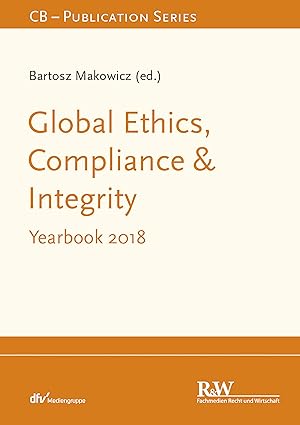 Key Facts:
- 288 Pages
- 42 Articles
- 44 Authors
This work marks the start of a series of publications that will keep the global compliance community up to date on the latest developments in compliance, business ethics, and integrity in organizations at the global level and in various countries around the world. The first issue contains over 40 individual contributions from compliance experts from various countries and international organizations (including the OECD, World Bank, G20, and others), which have been divided into several thematic sections: cross-border and cross-cultural compliance management (including aspects of ethics and integrity), cross-border anti-corruption, cross-border standardization and communication, whistleblowing and internal investigations, and compliance in international trade. The issue is rounded off with articles on the compliance challenges of the future. The work thus offers a comprehensive, up-to-date, and expert overview of global expertise and trends in the development of compliance, ethics, and integrity in various types of organizations at the national and global level. In order to meet this requirement, the work is published entirely in English. This yearbook is the first in a series of annual publications designed to inform the global expert community of the latest developments and future challenges in the area of ethics, compliance, and integrity in different organizations (corporations, associations, public administration, etc.). This first edition contains over 40 individual contributions by professionals representing various disciplines, countries, and international organizations. It is divided into several thematic chapters, including cross-border and cross-cultural compliance and ethics management, cross-border anti-bribery systems, global standardization and intercultural communication, whistleblowing and internal investigations, as well as international trade compliance. The yearbook is dedicated to compliance and ethics professionals, officers and managers, company directors, consultants, authorities, prosecutors, judges, scholars, and any other interested persons.
Table of Contents
Chapter 1: Introduction
Prof. Dr. Bartosz Makowicz
Chapter 2: Challenges and Future of Compliance
The Future of Compliance | Dr. Reiner Markfort
Some Challenges for Cross-Border Compliance Across Europe | Pierre-Antoine Badoz
Key Recommendations of B20 Cross-Thematic Group Responsible Business Conduct & Anti-Corruption | Dr. Klaus Moosmayer
Chapter 3: Cross Border Ethics, Compliance and Integrity
Compliance, Culture and Integrity in Global Perspective | Anatoly Yakorev
Compliance Culture and Governance | Philip Brennan
Compliance Across Cultures: Towards an Increased Awareness of the Self and the Others | Christin Grothaus
How Ethics Can Support Effective Compliance and Anti-Corruption Programmes | Ousmane Diagana
How to Implement a Culture of Integrity in International Groups | Tobias Teicke
Culture and Value, Easily-forgotten Paths to Deep Compliance | Prof. Dr. Han-Kyun Rho
Compliance, Culture and Morality | Shahzad Khan
Contributing to Sustainable Development Goal 16.5 and Strengthening Compliance with the Alliance for Integrity | Noor Naqachbandi
Penalties or Rewards – How Should Legislators and Justice Support a Sustainable Compliance Culture? Insight from a German Perspective | Dr. Sophie Luise Bings
The Nordic Model of Governance | Helena Sjöholm
A Culture of Integrity as a Chance for Sustainable and Stable African Entrepreneurship | Tom Brown
Chapter 4: Cross Border Anti-Corruption Aspects
Towards a holistic approach of business Integrity and the fight against corruption | Nicola Bonucci
Self-Regulation and Compliance: A Perfect Marriage | José Zamarriego
Promoting a Fair Business Environment in ASEAN: UNDP's | Elodie Beth, Liviana Zorzi, and Alex Consea-Pietscheck
Preventing Cross-Border Bribery through Effective Compliance Measures | Christine Uriarte
The National Crime Agency: Advice for SMEs on How to Protect Your Business from Bribery and Corruption | Ingrid Leonard
China's New Definition of Bribery Is Anti-Competitive | Henry Chen
Grand Corruption in Malaysia: How Money Is Laundered and Who Is Facilitating It? | Cynthia Gabriel
Cross-border Compliance, Corporate Governance and Culture in Russia | Anatoly Yakorev
Chapter 5: Compliance Standardization – Global and National Perspectives
ISO 19600 – An Open and Flexible Standard in a Regulated Context that also Offers Benefits at International Level | Prof. Dr. Peter Fissenewert
Introducing Compliance to the Shop Floor – ISO 19600 and Germany | Michael Kayser
Cross Border Compliance – Standardisation Experience from Austria | Dr. Barbara Neiger
Cross-Border Compliance Standardisation – A Swiss NGO Perspective | Dr. Daniel Lucien Bühr
Chapter 6: Cross Cultural Compliance Communication and Other Methods
Cross-Cultural Compliance and Communication – the thyssenkrupp Experience | Will Phua
Lessons on Cross-Cultural Compliance Communication | Vincent Pepito F. Yambao, Jr.
Compliance communication in crossborder cases | Prof. Dr. Peter Fissenewert
"Integrity Has No Borders": Collective Action on Business Integrity in ASEAN | Thomas Thomas
Compliance & Third-Party Due Diligence | Leas Bachatene
The Role of Middle Management in CMS | Dr. Oskar Filipowski
Compliance in and for Africa: perspective of a SME | Meinhand Remberg
Chapter 7: Whistleblowing and Internal Investigations
How to Act in Cases of Cross Border Fraud | Geert Delure
Dealing with Compliance Cases at Siemens | Marcin Szczepański
Conducting a cross-border compliance investigation and a crisis | Nico Zwikker
"Whistleblower protection" – legal threats and challenges in Poland | Marcin Gomoła
Romanian Whistleblowing Regulations: From Exemplary to Incomplete | Dr. Raluca- Isabela Oprişiu
Chapter 8: International Trade Compliance
Current Challenges in International Trade Compliance | Gabriel Kurt
Managing Customs Compliance in International Trade | Prof. Dr. Wiesław Czyżowicz
The Nexus between Export Compliance and Anti-Corruption Controls | Lino Arboleda
Customs in the Era of Terrorism | Prof. Dr. Achim Rogmann
China's Current Export Control Scheme and Draft New Law – An Overview | Deming Zhao
Roundtable-Interview
 |
Akif Mert | Solvd GmbH (a company of Allianz Group) | Chief Compliance Officer & Head of Legal
|
|
|
Dr. Barbara Badoino | Novartis | Head of Corporate Ethics, Risk & Compliance |
|
|
Gabriela Gutiérrez Soto | VEON | Global Head of Ethics, Compliance & Investigations |
 |
Juliana Oliveira Nascimento | Sompo Brazil | Head of Risk, Compliance and Actuarial |
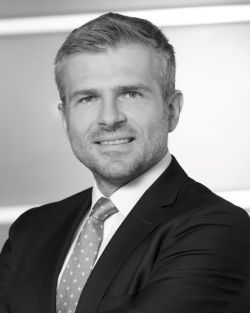 |
Marcin Szczepański | Siemens Energy Poland | Head of Compliance |
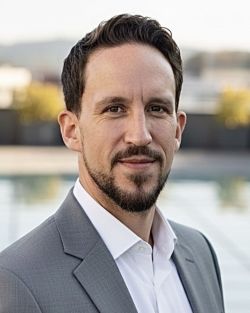 |
Max Schmiechen | HORNBACH Holding AG & Co. KGaA | Head of Compliance |
|
|
Michael Paik | McDonald’s | Managing Counsel / Senior Director, Global Compliance |
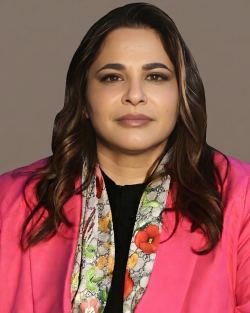 |
Farzana Mohomed | AD Ports Group | Chief Compliance Officer |
|
|
Nadège Rochel | ETHICS – International Society of Healthcare Ethics and Compliance Professionals | Vice Chair of the Strategic Committee |
 |
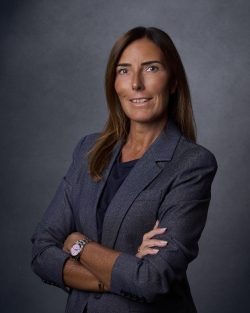
Nina Stoeckel | Boehringer Ingelheim | Global Chief Compliance Officer |



Introduction (Prof. Dr. Bartosz Makowicz)
The role of compliance officers in organizations has never been more important than it is today. This is due in particular to the ever-increasing regulatory burden, the growing complexity of our globalized world, and the highly turbulent geopolitical times in which we live. Added to this is the rapid development of AI, which, while offering significant advantages, also creates new compliance risks and challenges traditional professions. We invited ten outstanding international experts to a roundtable interview to get to the bottom of the current state of the global development of the compliance profession. To that end, we will explore four thematic areas in the following discussion. First, we will attempt to address the question of who exactly is a compliance officer today and what they do. Is it even possible to develop a globally recognized job profile for this profession? In the second step, we’ll discuss the ideal educational path. Should a compliance officer have studied law, business administration, or something else entirely? How do they acquire the practical experience and skills required of them? The third chapter focuses on the current challenges and opportunities facing the profession of compliance officer. And, in the final chapter, we’ll take a crystal ball in hand and look into the future. In which direction will the compliance profession evolve? Will it be replaced by AI, or will its role become even more prominent? Which risks will gain the upper hand, and how can compliance officers address them? I cordially invite you to our Compliance Roundtable!
1. Who is a Compliance Officer today?
Bartosz: In the first chapter of the discussion, we will examine whether it is possible to define the role of a compliance officer. The task is not an easy one as increasingly higher demands are being placed on their skills, knowledge, and expertise. Let’s start with a general question: Who is a compliance officer today? How would you explain your job to a child in three simple sentences? Nadège, what do you think?
Nadège: A compliance officer today is a culture architect: someone who helps organizations do the right thing by helping them building the right culture. We are not just policy keepers or risk mitigators: we are guardians of trust, defenders of values, and builders of resilient organizations. To a child, I'd say: we are superheroes. Not because we wear capes, but because we build trust, protect people, and pave the way for stronger more ethical companies and societies. And when the whole company lives by those values, it becomes a place everyone is proud to be part of.
Bartosz: Nina, you work in the pharmaceutical industry—do you have a similar understanding of the compliance role?
Nina: In my opinion, a compliance officer today is a guardian of integrity and trust. The role goes beyond rules to helping people make good decisions in complex situations, guided by values, laws, and our responsibility towards society. At Boehringer, Compliance and Integrity works closely to the business to support sustainable growth, speak up, and a strong ethical culture. What would I say to a child: “I help people do the right thing at work. We play fair and treat others with respect. And if something feels wrong, I help to fix it.”
Marcin: I agree on that! Compliance officer today is a trusted partner for the business, protecting company’s reputation and enabling to structure successfully business projects even in the challenging conditions.
Bartosz: Thank you for that contributions, let’s move to Juliana from Brazil; we’ve heard a lot about culture, values, and the support provided by compliance officers, so their job clearly goes far beyond simply ensuring compliance with regulations. How do you see this from your unique perspective?
Juliana: I would say, the contemporary compliance officer is a strategic executive who operates at the convergence of governance, risk management, corporate ethics, ESG, and sustainable value creation. Their role transcends regulatory compliance, positioning themselves as a strategic business partner in anticipating risks, influencing decisions, and strengthening trust with senior management and other stakeholders. In a dynamic and highly regulated global environment, their role is essential to ensure resilience, strategic direction, and organizational reputation. I would explain my job to a child in much the same way as the previous speakers: I help people do the right thing every day. I make sure everyone treats each other with respect, acts with integrity, and follows the rules. And I help solve problems when something does not happen correctly.
Bartosz: Now, I’d like to ask Max if there are any industry-specific requirements for compliance officers. Max, what are the unique characteristics of compliance profession in your industry?
Max: In our industry, we are faced with a number of ‘classic’ issues: anticorruption, competition law, data protection, and fostering a functional compliance culture within a multi-branch business model. Issues relating to sanctions and ensuring a fully compliant supply chain are also of great importance. In my view, a distinctive feature of the compliance profession in Germany is the fact that, despite constant development over the last 20+ years, it is still evolving. Furthermore, compliance is shifting from a regulatory function towards an integrated cultural function. For this reason, compliance officers are, more than ever, ambassadors for an organization’s values rather than merely rule guardians.
Bartosz: To quickly wrap up, when drafting the professional profile of a compliance officer I see a whole host of responsibilities expected of a single person. These include very important aspects such as fostering a positive work culture, ensuring compliance with rules, providing support, and even serving as a linchpin within the organizational structure. It makes me wonder: what qualities and personal skills must such a person possess to do the job? Farzana, let us know your perspective that is interestingly based on a cross-cultural experience.
Farzana: It’s definitely a challenging job! I’d highlight four key qualities. First, adaptability: I often look at compliance through the lens of my “nomadic” career; having moved from roles in South Africa to Europe and now the Middle East, I’ve learned that adaptability isn’t just a soft skill—it’s a survival mechanism for global supply chains. Second, something I would call cultural intelligence: Having worked across these diverse geographies and operating contexts, I’ve learned compliance is rarely about the “what” and almost always about the “how.” The skill is translating global standards into local reality—without diluting the core of integrity. Third, active listening: If you want to be a business enabler, you must understand commercial pressures and operational constraints. Listening is what lets you design controls that protect the business while still allowing it to move. And last but not least, resilience: You need resilience and principled courage to be the lone voice in the room—and still find a way to deliver results without sacrificing integrity.
Bartosz: Thank you so much for sharing your perspective, which is largely based on your global experience! Gabriela, now I’d like to hear from you about what you think are the essential skills.
Gabriela: I highly agree to what Farzana mentioned! At its best, compliance sits at the intersection of judgment, courage, and trust. Across different markets and high-pressure environments, I’ve learned that the real impact comes from listening, influencing, and inspiring in a way that is pragmatic, not judgmental…and human also. That requires both confidence and empathy. Influence matters more than authority, and credibility is built through consistency and repetition. Ultimately, the role is about holding the tension between business realities and principles — without losing either.
Akif: If I may add one more thing, I would say that relationship management & communication are key skills; Plus, agility to respond quickly to new regulations, incidents, but also new risks resulting from new technology.
2. Educational Paths and Skills
Bartosz: The discussion so far has shown that the role of the compliance officer has now become well-established, yet the specific responsibilities vary widely. The range of hard and soft skills required for the job is also quite diverse and huge. This raises the question to be addressed in the second chapter of this roundtable: how does one learn all of this? Barbara, I would like to start with you; as Head of Corporate Ethics, Risk & Compliance at Novartis you’ve risen to the very top of the compliance hierarchy — would you say that any particular educational background is the best one to have make a successful compliance career?
Barbara: There is no single “best” degree. The most effective compliance leaders combine legal awareness, strong knowledge of the business they operate in, and human judgment. Let me explain you, what this combination means: law builds rigor, risk interpretation, and regulatory discipline; business education strengthens decision‑making, value creation, and understanding of trade‑offs and communications enables influence, alignment, and behavioral change. What ultimately differentiates senior compliance officers is not their degree, but their deep understanding of the business model and value chain, and their ability to translate rules into practical, business‑relevant, and ethical decisions.
Bartosz: Akif, you are representing a regulated industry, is the perception there similar? And same question to Michael regarding your industry branch.
Akif: To answer that question, I’d like to take a brief look back at the history. While in the beginnings of Compliance a legal background was common, nowadays the educational background can differ, varying from business administration to psychological studies. Soft skills of compliance officers are increasingly becoming crucial in practice and diverse educational backgrounds help tackling multiple facets of the role of a compliance officer. There are also further, post-graduate studies available in the field of compliance, to complement existing education with compliance-specific knowledge.
Michael: I would say the background in law and business is the most common and practical starting point for compliance professionals and will likely help you get that first compliance officer role. That said, the field also benefits from a broader mix of backgrounds and expertise, such as in data analytics and communications. Ultimately, compliance officers need to partner with their business stakeholders to influence culture and ethical behavior, and the best preparation blends technical knowledge, industry expertise and sound judgment and credibility.
Bartosz: Based on what you’ve said, a compliance role seems like a typical interdisciplinary task that can’t be learned through any specific — or at least conventional — degree program. So, it seems that experience and a variety of skills play a big role here, rather than the main education background. Which brings us back to the soft skills that we addressed already partially at the beginning. Let’s dig deeper on that. What are the top three skills every compliance officer should have? I would like to ask this question to Farzana, Gabriela and Nadège.
Farzana: If I distill 25 years of global experience into a practical “compliance trinity,” it comes down to three capabilities: First, strategic risk integration: Seeing compliance as part of long-term sustainability — not a checklist. It’s the shift from “Is this legal?” to “Is this effective, sustainable, defensible, and right for our stakeholders?”. Second, data literacy: Modern compliance runs on data — screening tools, third-party due diligence platforms, transaction monitoring, and AI analytics. The skill is spotting patterns early and turning signals into decisions before they become incidents. And third, as already mentioned before, communication and influence: Compliance succeeds through adoption, not authorship. You need to translate complex regulation into simple, actionable guidance that resonates from the shop floor to senior leadership—and drives behavior change.
Gabriela: It is difficult to summarize in only three, but let me try. First, judgment — understanding not just the rule, but what truly matters in context. Listening carefully, asking difficult questions, and not being afraid to challenge assumptions. Second, “speaking business” — understanding not only how decisions are made across geographies and cultures, but truly understanding the business itself and the realities of different markets. Third, influence — the ability to shape outcomes without formal authority. Having built and transformed compliance programs globally, I’ve seen that relevance drives effectiveness. For me, the real skill is not simply knowing the rule — it’s knowing when it matters most.
Nadège: First, empathic storyteller: the ability to put yourself in someone else’s shoes, to speak their language and make ethics feel genuinely relevant. I always say: “make Compliance sexy”, ethics and compliance are your product and you should be able to sell it to your organization. Second, behavioral intelligence, so understanding why people act as they do is far more powerful than any policy ever written and allow you to implement interventions impacting how people behave. Your program is effective, you can measure it, and therefore you can defend your seat at the table. Third, courage: the willingness to say the difficult thing, hold your ground, and defend what's right under pressure. Not always easy to do, it is the hidden side of our role.
Bartosz: So, the compliance officer needs to know and be able to do quite a lot. Most of you have mentioned communication skills above all else, but having an overview of how the business is affected and an understanding of day-to-day operations are also important. Now, I’d like to focus on the day-to-day work: What you do, somebody mentioned that already, is also “translating” abstract rules into understandable language. To do that, however, you have to stay up-to-date with changing regulatory framework, how can you that? Let’s start with Nina representing pharmaceutical industry which is highly regulated.
Nina: I combine structured regulatory monitoring with strong personal networks. We systematically track relevant laws, guidance, and enforcement trends across key jurisdictions, supported by digital tools. Equally important is regular exchange with peers, industry groups, and close dialogue within the business. Regulations only become meaningful when they meet real projects, innovation, and practical challenges. Staying close to these realities helps translate regulatory change into clear, proportionate, and workable guidance.
Bartosz: Michael is it similar in your industry?
Michael: Yes, kind of. I would say it is similar. Staying current with a constantly changing regulatory landscape requires a mix of structured habits and continuous learning. I rely on a combination of industry alerts, regulator publications, and professional associations to track emerging regulatory risks and enforcement trends. I also regularly engage with external counsel and peers at other companies. Further, I support my team members in engaging in these same behaviors so that they too are proactively staying current and can flag any changes that are relevant to our business.
Bartosz: Thank you for that! Before we get to the current challenges, I’d like to ask Barbara another question regarding the professional career as compliance professional; Barbara, you recently took over the function of the Head of Corporate Ethics, Risk & Compliance at Novartis. What advice would you give to compliance professionals looking to advance their careers or take on more senior roles?
Barbara: I would say: move from being a rule expert to a business leader, develop a deep understanding of the business model and value chain, focus on enabling decisions, not policing behavior, build credibility through clarity, consistency, and calm leadership—especially in moments of ambiguity or crisis. And remember: senior roles are earned by trusted judgment, not technical mastery alone.
3. Current Opportunities and Challenges
Bartosz: Now that we’ve more or less established what the compliance profession entails today, what educational paths are available, and what soft skills compliance officers should possess, I’d like to discuss with you some of the challenges — as well as the opportunities — for the compliance profession. I’d like to start with a phenomenon that affects all of us: What role does AI already play in your day-to-day work? Let’s start with Juliana, Nadège and Michael.
Juliana: Artificial intelligence is profoundly redefining the compliance profession, enhancing the capacity for analysis, monitoring, and data-driven decision-making. In my experience, the application of AI stems from its use in predictive analysis and risk mitigation, through the evaluation of use cases, in addition to supporting day-to-day activities. It is important to highlight that the responsible adoption of AI requires transparency, accountability, bias mitigation, and human oversight. In this context, I believe in the concept of augmented artificial intelligence, characterized as the result of the countless human capabilities enhanced by artificial intelligence. Recent studies also highlight that AI risks are multidimensional, regulatory, reputational, and social requiring robust governance structures aligned with ethical principles and ESG.
Nadège: I agree on that and would even go further saying that AI is already a good partner: accelerating research, drafting, and data analysis, answering basic questions so I can invest more time where it matters: judgment, human connection, and culture. I see it as an amplifier, not a replacement. The ethical compass, the trust a colleague places in me to ask a question, the courage to call out ethical dilemmas, those remain irreducibly human and cannot be replaced by AI.
Michael: Like many compliance professionals, I am on a continuously evolving AI journey. I use AI as a productivity and quality tool for day-to-day work—drafting correspondence, organizing and summarizing information, triaging my inbox, and conducting targeted research. I’m also exploring how AI can support higher-value compliance work while keeping the appropriate level of human review, judgment, and accountability. Finding the right balance between AI-enabled efficiency and strong oversight is an ongoing process, but the potential is great.
Bartosz: It seems that AI already plays a major role in the compliance profession, but certain areas should remain the preserve of humans. You’ve mentioned many advantages but what about the challenges? Max, what is your opinion on that?
Max: I can tell you something about challenges of AI. To name just a few: its fundamental use, as well as the exponentially growing range of applications that must comply with regulations. But also, its potential for misuse, for example in fraudulent activities at the expense of organizations – keyword (Deep) ‘Fake President’ 2.0 (still a thing) – and we are still only at the beginning. Furthermore, there is the question of to what extent compliance is accessible to AI, as good compliance is still very much a “people business”. Gut instinct and a moral compass versus the hunger for efficiency and digitalization require a balanced assessment.
Bartosz: Max, thank you very much for your thoroughly sobering input. Indeed, on the one hand, the many benefits of using AI are counterbalanced by the question of what new compliance risks AI creates and how these can be managed; thus, it can be described as a double-edged sword. But let’s leave AI aside for now. I’d like to return to communication and culture as a key issue and ask Juliana specifically how do you motivate members of your organization to report misconduct, as we all know this is another quite challenging issue.
Juliana: Encouraging the reporting of misconduct requires the intentional construction of an organizational culture based on trust and transparency. Leadership must act as an example, reinforcing zero tolerance for retaliation and a genuine commitment to integrity. The structuring of accessible, confidential, and effective reporting channels should be combined with clear communication about the positive impact of reporting. Reporting should have as its main focus the protection of the organization and its values. In addition, continuous training, recognition, and engagement programs strengthen the sense of collective responsibility and encourage the active participation of employees.
Bartosz: Thank you very much. I asked about this because people often underestimate how important whistleblowing systems are, and they can only work if the right speak-up culture is established in the organization. Let’s move on to the next challenge, which has already been mentioned several times. The age-old dilemma for compliance officers is that they often have to get involved in upcoming lucrative deals in order to prevent a compliance issue. The question is how do you balance the need for compliance with the need for business growth and innovation? Or maybe they are not opposites? Let’s see what Nina, Max and Marcin think on that.
Nina: Compliance and growth are not opposites. Good compliance enables sustainable innovation. The key is early involvement, focusing on principles rather than checklists, and understanding the business context. Our role is not to eliminate all risk but to support informed and responsible decision making. When compliance and business work together early, clear guardrails create confidence, trust, and better long-term decisions.
Max: On the one hand, organizations must operate in compliance with upcoming regulations; at the same time the focus is on risk appetite and risk management in order to remain competitive and innovative. Compliance has to work more closely with the business. But not to find ‘loopholes’, but to contribute to supporting the business with a full understanding of the organization itself. Further we mustn´t overlook the current “zeitgeist”. Society is more skeptical than ever. That is why fostering integrity and ethical conduct is of great value. In my view, the trust placed in an organization has a significantly longer half-life than individual innovations or revenue growth.
Marcin: Our company has implemented compliance system in accordance with the FCPA guidance i.e. compliance is implemented in adequate manner, which responds to the identified compliance risks and provides reasonable assurance for the company i.e. 100% assurance is possible only when the business is stopped.
Bartosz: Thank you very much for this input; I’m sure we’ll all learn a great deal from it. Before we move on to the future of compliance—and thus to the final section—I’d like to ask Akif, Farzana, and Gabriela what are generally the most common compliance mistakes or pitfalls? I’m intentionally directing this question to the three of you, since you represent a variety of industries.
Akif: I would say at least from a risk perspective, not understanding the compliance risks associated with the industry, business model or product/service offering of the company. Considering the second line and control nature of the compliance role, a lack of cross-functional oversight with no or limited stakeholder involvement can be detrimental.
Farzana: Throughout my career across multiple industries—IT, construction, and the maritime, ports, and logistics sectors—I’ve seen the same pitfalls surface regardless of the industry. First, the “Paper Program” fallacy: Designing beautiful policies at headquarters that don’t reflect daily operations. Whether it’s in the office, on a construction site, or on a vessel, if the people doing the work can’t implement the control, the program only exists on paper. Second, missing the “last mile”: This is where execution either holds or breaks. A control designed in a vacuum often fails to translate to the realities of the office, the port, a remote construction project, or a third-party IT environment. If a control isn’t workable for the person on the ground, it effectively doesn’t exist. Third, siloed compliance: Risks rarely announce themselves in one place; they emerge in the gaps between functions. When compliance operates in isolation from HR, Procurement, or Operations, critical signals stay fragmented until they become incidents. And, fourth, check-the-box thinking: Treating compliance as a cost center or a hurdle to bypass. This misses the fundamental truth that, done well, compliance is a trust engine that accelerates sustainable growth.
Gabriela: A common mistake is assuming that structure equals effectiveness. Policies and frameworks are necessary, but they do not guarantee outcomes. Some of the most iconic enforcement cases involved organizations with seemingly strong compliance structures in place — yet they still failed. Another pitfall is creating distance, when compliance operates as a separate function rather than being embedded in decision-making. Lack of clear accountability also weakens impact. And importantly, once confidentiality or independence is compromised, even unintentionally, trust erodes — and without trust, compliance cannot succeed. As I often say, you can design the perfect framework, program, or Speak Up system — but if people do not trust it, it will not hold.
4. Future
Bartosz: Now we’re moving on to the final round to discuss the future. We’ve clearly seen that a compliance officer must be an all-rounder. We know what the biggest challenges are right now, and we also know what the most common mistakes in compliance work look like. But what will the future hold? It will come as no surprise that I’d like to start by talking about AI. It was already clear in the previous round that AI is playing a huge role in compliance work. And yet it has only been part of our daily lives for a few years. Where will this lead us in the future? Does the compliance profession have a future?
Michael: Absolutely, yes. At its core, compliance is about influencing human behavior – shaping culture, building trust, and helping people make the right decisions in real time. AI can support that work, but it can’t replace the interpersonal skills that drive compliance culture. Employees respond best to real people who can listen, empathize, make a connection, and advise. Technology may streamline tasks and enhance analytical capabilities, but the heart of compliance remains very human driven.
Nadège: I agree with Michael; In today’s uncertain and challenging world, ethics and compliance has never been more essential. AI will automate controls, detect anomalies, and process data at scale. But it cannot build trust, inspire ethical courage, or navigate the grey zones that define our work. The compliance officer of tomorrow is not a rule enforcer, they are a culture architect, a behavioral designer, a strategic partner. Don't define yourself by enforcement cycles. Define yourself by the culture you shape. Our role is not shrinking, it is shifting.
Nina: The compliance profession has a strong future, but it will change. AI will automate many routine and data heavy tasks, which is a positive development. It frees up time for what technology cannot replace: judgement, ethics, context, and leadership. In the future, compliance officers will spend less time checking rules and more time shaping culture, guiding ethical decisions, and advising leadership. Compliance will remain a people profession, supported by AI, not replaced by it.
Farzana: Let me make it quite clear: The profession isn’t disappearing; it’s entering its most sophisticated era. AI will handle the “science” of our jobs — the mechanical workload of scanning vast datasets and providing real-time monitoring, sanctions screening, anomaly detection, and processing high volumes of third-party and transactional data. This is a gift because it frees us from the administrative weeds. The hardest part of compliance — the “art” — cannot be replicated by machines. In my experience as Co-Chair for the Integrity and Compliance Task Forces at the B20 in Brazil and South Africa, the challenge was to brainstorm and socialize innovative ideas for G20 nations to implement. That required navigating political nuance and building human trust. AI can generate a report, but it cannot socialize a new idea or build the consensus required for sovereign nations to adopt new frameworks. In a world governed by algorithms, the human “moral compass” becomes more valuable, not less. AI will not replace the compliance officer, but the compliance officer who uses AI will replace the one who doesn’t.
Bartosz: Gabriela, what do you think on that? Is AI going to replace compliance officers?
Gabriela: I love this question because it is both professional and deeply personal to me. As a mother of two young boys who will grow up in a world where AI will inevitably shape their lives, I think about this often. For me, compliance is not being replaced — it is being redefined. AI will transform how we detect and process risk, but it cannot replace judgment, ethics, or accountability. If anything, it raises expectations. The role is shifting from control to insight — from enforcing rules to shaping decisions. The key is not to use AI only for efficiency, but to make it compliance’s co-pilot, allowing us to have greater impact and better judgment. The future of compliance is not less human — it is more human, under greater scrutiny, but also with greater capacity.
Bartosz: There seems to be a consensus and the key message is: humans remain in charge. This is also consistent with the understanding of the role of AI in governance that we adopted in ISO TC 309 “Governance of Organizations” when developing this particular standard: based on that, a governance system is, and should remain, a human-driven system. This does not preclude the use of AI to increase effectiveness and efficiency. Marcin, aside from AI, do you have any other thoughts regarding the future of compliance?
Marcin: In my opinion the future of compliance generally depends more on the legislative framework than AI, whereas AI seems not to have potential to replace but to complement and to improve the compliance function. Why legislation is so important? According to the 2nd rule of thermodynamics, all systems tend to become less organized (i.e. entropy increases), without additional energy / stimulus inflow – the same with Compliance – without supportive legal acts like FCPA or UK Bribery Act, compliance system may become a window dressing system kept only from the communicational reasons, being similar to the greenwashing activities.
Bartosz: In fact, a legal framework—or at least an incentive system, such as we see in many countries—would certainly give a boost to compliance development in some countries. However, the implementation of the EU Anti-Corruption Directive, which was just published in the Official Journal of the EU on May 11th, will undoubtedly bring about some changes as well; that would be however a topic for another round table. Now, I would like to use my crystal ball for another purpose and ask you following question: What will be the top three compliance risks of the future?
Marcin: As for now it seems, that “traditional” anti-corruption is and will be in the foreseeable future the backbone and the core of all existing Compliance systems – mainly because of existing legislative acts like FCPA and Uk Bribery Act. From my perspective the 2nd risk seems to be Trade Compliance & sanctions, mainly because of tough legal requirements in various countries as well as governmental agencies put in charge of their execution - current political situation gives not too much hope, that these requirements will be ceases in the foreseeable future. 3rd one seems to be AI, especially how to balance opportunities offered by the implementation of AI with the necessity for Compliance officers to be in close personal; contact with the business and other stakeholders.
Max: I agree on that, corruption will continue to be a key risk. Also, as described, AI is still in its infancy, and because of its exponential growth, every compliance officer is advised to grow their knowledge of this area (beyond mere familiarity with the AI Act). We must understand the technology to engage with it on equal terms. Nevertheless, the human factor must also be mentioned. In their frenzy for digitalization, it is all too easy for organizations to lose sight of their people and company culture. That is why I consider issues such as psychological safety and its absence to be massively underestimated.
Bartosz: It’s interesting that you both mentioned corruption as both a past and future risks, and AI right after that. I largely agree with that, especially in light of the EU directive mentioned bevore. Juliana, how do you see it from the perspective of South American countries?
Juliana: The three most critical compliance risks in the future from my perspective will be concentrated in interconnected dimensions. First, risks associated with artificial intelligence, including algorithmic bias, lack of transparency in automated decision-making, and misuse of data; therefore so far I agree with Max and Marcin. Second, integrity risks in global value chains, encompassing corruption, human rights violations, and environmental impacts. Third, increasingly complex conflicts of interest in digital and decentralized environments. These challenges will be intensified by the pace of technological innovation, requiring predictive, integrated, and data-driven approaches.
Bartosz: That's interesting. Thank you for sharing that perspective. Akif, what does the outlook look like for the regulated industry? Do you have a similar prediction for the future compliance risks?
Akif: Compliance risk areas are constantly evolving and require ongoing review of regulatory developments (incl. enforcement areas), technological shifts and societal developments. The regulatory scrutiny on combatting financial crime is considered to remain for an extended period of time. The impact and use of AI are already significantly shaping businesses and its operations; this requires ongoing monitoring, especially in the field of sophisticated fraud schemes (i.e. synthetic identity fraud), now generated with the help of (Gen)AI. Lastly, the increasing number of cases of non-financial misconduct should remain on every Compliance Officer’s radar, especially in times of geopolitical developments and crisis.
Bartosz: Now that we’ve discussed that the compliance profession is here to stay—and that AI won’t change that—as well as what the key compliance risks of the future will be, I’d like to conclude this discussion by asking Barbara: What areas of knowledge should every compliance officer keep in mind to be well-prepared for the future?
Barbara: In today’s fast‑moving, digitally enabled environment, remote versus on‑site work is no longer the primary differentiator for compliance. What truly changes the risk landscape is how work gets done across global teams, cultures, and operating models, often at speed and with increased autonomy. The biggest compliance challenges arise from reduced practical visibility into decision‑making and informal behaviors as work becomes more decentralized, inconsistent cultural norms and risk perceptions across regions, leading to uneven interpretation of expectations and from weaker informal controls and escalation signals, which traditionally relied on proximity and day‑to‑day interaction. We address these challenges by first, establishing clear accountability and ownership, ensuring responsibility for risk and compliance is explicit and location‑agnostic; second, using simple, principle‑based guidance, enabling consistent judgment and ethical decision‑making in complex, real‑world situations and, third, leveraging data, analytics, and digital tools to strengthen monitoring, detect early risk signals, and support continuous, integrated assurance. Ultimately, in a global and hybrid operating model, trust, transparency, and consistency of standards matter far more than physical proximity in sustaining an effective compliance culture.
Summary
Bartosz: What a great discussion, thank you so much for these insightful contributions! Let me summarize briefly. The role of a compliance officer is difficult to define, but our experts around the world — regardless of their background or industry — describe it in very similar terms: a compliance officer must be a true all-rounder, possessing interdisciplinary training and years of experience, as well as an understanding of both people and organizations. They must be skilled communicators, understand what values and culture are, and help shape them. They serve as an interface to many other areas within the organization. The future outlook is promising, with growing demand for skilled professionals. AI and machine learning are transforming the compliance profession, enabling enhanced risk detection, automated reporting, and predictive analytics. However, human being will remain in center. As the role evolves, compliance professionals must adapt, leveraging technical, business, and soft skills to drive business growth and success in a quickly changing landscape. Dear All, thank you so much for being part of this roundtable!
Testimonials
MACIM is a must for compliance officers! I was particularly impressed by the practice-orientated teaching of the content, top lecturers, numerous case discussions, the wide range of topics and the valuable exchange of ideas. For me, MACIM is an excellent study program for all compliance officers.
Maike Scholz

Maike Scholz
It was very special to be taught so many different areas of compliance at first hand by a large number of renowned lecturers and to learn how compliance & integrity is practised in the various organisations.
Madeline Bäker

Madeline Bäker
MACIM is an absolute gem among continuing education compliance study programs! The design of the program manages the balancing act between legally sound fundamentals and practice-oriented approaches. All in all, it's an experience I wouldn't want to miss.
Sven Kistner

fotWitoldCholewa
The interdisciplinary concept of MACIM and the insight into compliance & integrity in the various sectors are important to me. The practice-orientated exchange with the lecturers and students is also absolutely valuable.
Claudia Stübler

fotWitoldCholewa
FAQ
Frequently asked questions for potential students
Yes! We start with the first lectures in October, finish with the submission of the master's thesis in July / August and award the certificates at the handover ceremony in October!
Yes, the programme is primarily aimed at professionals and is designed for this group, i.e. courses only take place on Fridays and Saturdays, on a total of 31 days a year, of which only 10 days are in attendance at the university.
All students are welcome at the Viadrina. We realise that living and working locations are very different. The course locations have therefore been mixed – some in person, some online. According to the programme schedule, the face-to-face courses take place in Frankfurt (Oder). This applies to three weekends in the winter semester and two in the summer semester. The remaining courses take place online.
The examination load is limited. There are four written final module examinations, a presentation followed by a discussion and the master's thesis! These examinations are spread over the whole year.
A detailed schedule of lectures will be published shortly on our website.
No. We take a universal approach, i.e. MACIM graduates are able to carry out Compliance and Integrity Management in all types of organisations.
No, MACIM is designed to meet the specific knowledge and skills requirements of compliance officers, which is why disciplines such as law, communication sciences, business administration, psychology, ethics and others are brought together in a well thought-out curriculum. MACIM is thus typically interdisciplinary in nature, which is why students with different backgrounds can also be admitted.
The answer is quite simple! As long as there are still places available, anyone with a first professionally qualifying degree (e.g. Bachelor) and at least one year of relevant professional experience will be admitted.
If you don't have both, it will be difficult. If you do not have a first professionally qualifying degree, but do have many years of relevant professional experience, this may be recognised. The same applies to missing or non-relevant professional experience; exceptions are also possible here.
In principle, yes, a compliance-related PhD with the aim of obtaining a doctorate is possible. Details are regulated by the doctoral degree regulations of the respective faculties.
The MACIM study program is a university degree awarded by the European University Viadrina.
The tuition fee is 13,000 EUR plus semester contribution (approx. 140 EUR).
Payment of the study fees can be made in instalments.
The MACIM programme can be taught in German or English. Depending on the year group selected, the language of instruction will therefore be German or English. In the 2026/27 academic year, all classes will be held in English.
Yes, this is possible. Please note directly in your application that the fee is paid by the employer and provide the full details of your employer. Please make sure that the person who receives the fee notice is informed accordingly and that the payment is made on time, as the possibility of your enrolment depends on this. As an option, the fee notice can also be issued to you, with the result that you can have the fee reimbursed internally by your employer. Please clarify internally which of the two solutions is best for your specific case.
The MACIM is a fully-fledged university Master's degree that is identical to an LL.M. or MBA. The designation of the Master's degree depends on the predominant study content. For example, if legal content predominates, an LL.M. is awarded, whereas an MBA is awarded if business content predominates. In the case of Compliance and Integrity Management, in addition to legal and business management skills, knowledge of communication science, psychology, ethics and other areas must also be mastered. Due to the interdisciplinary nature of the programme content, an original Master's degree is therefore awarded.
Scholarships, stipends, or other forms of financial assistance may be available from external sources. These cannot be provided by the Viadrina European University or the MACIM program itself.
Applicants in need of financial assistance are strongly advised to make their own efforts and inquiries (especially with relevant public institutions, NGOs, foundations, and private bodies in their own country). Wherever possible, the Viadrina and the MACIM program will assist applicants to obtain external financial support, for example, by providing information and/or suggestions, or through a letter of support confirming admission or enrolment in the programme.
Study documents
To the documents

Heide Fest/Viadrina
Further links
Viadrina Compliance Centre
- European University Viadrina, Große Scharrnstr. 59, 15230 Frankfurt (Oder)
- +49 (0) 1512 0044744
- +49 (0) 335-5534-16-6785
- macim@europa-uni.de
Head of degree program
Prof. Dr. Bartosz Makowicz