
The Viadrina in pictures from 1991 to 2025
1991-1995
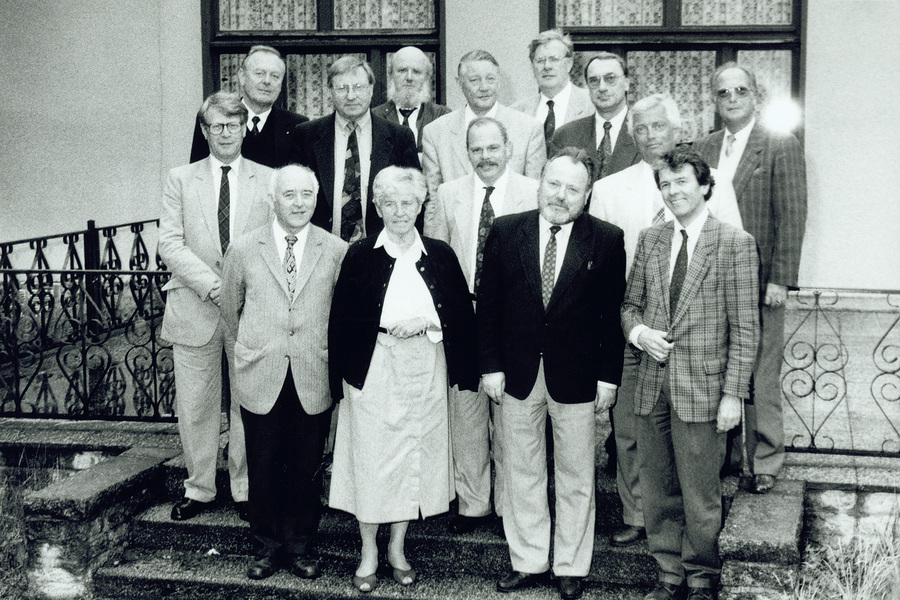
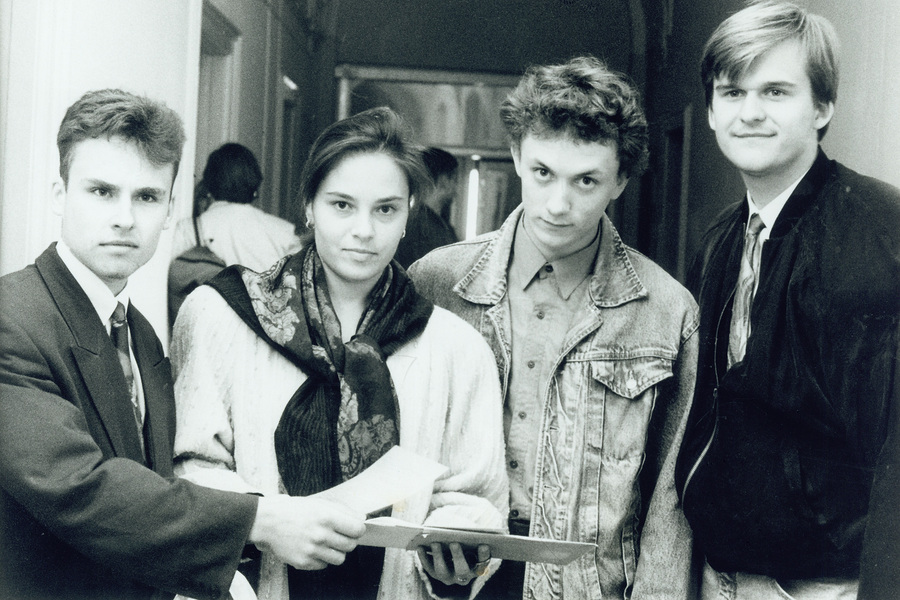
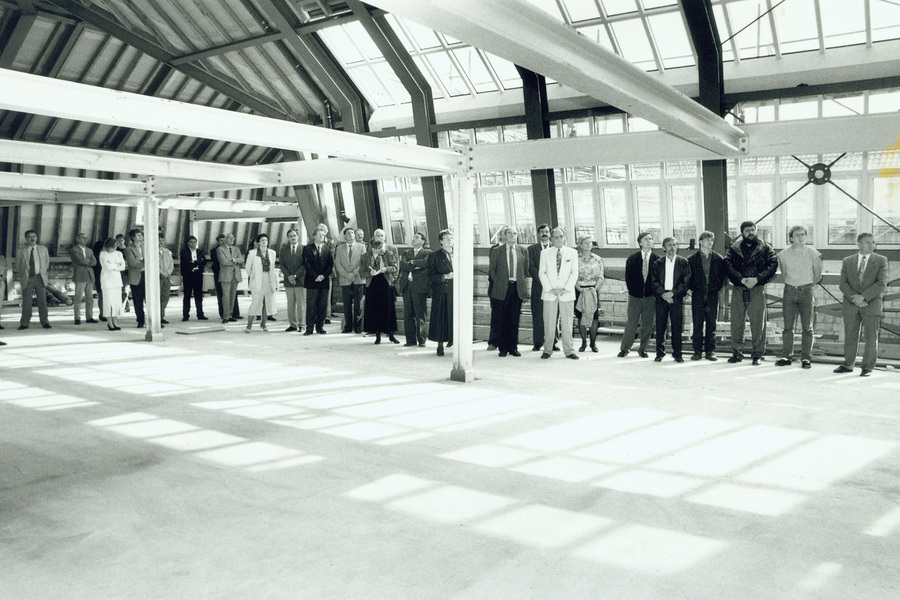
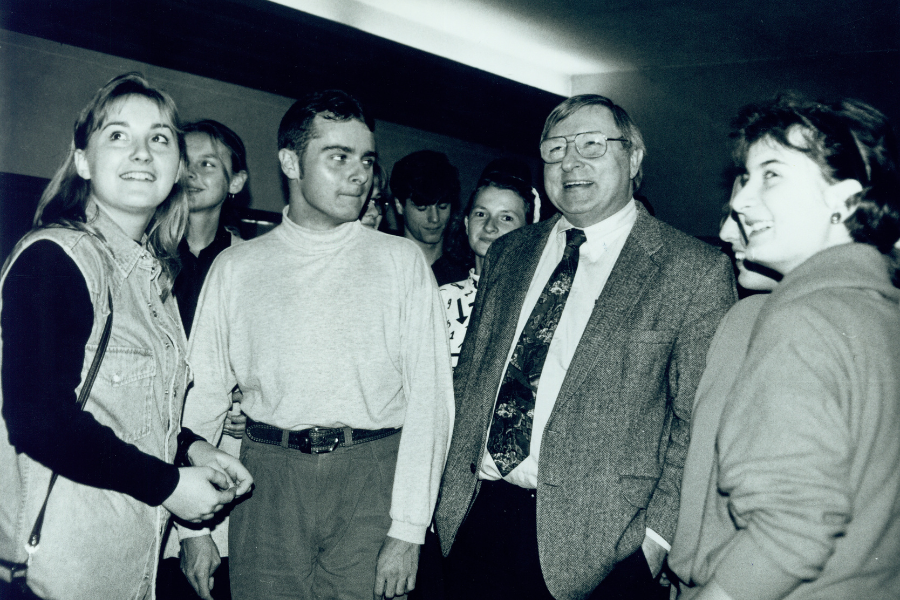
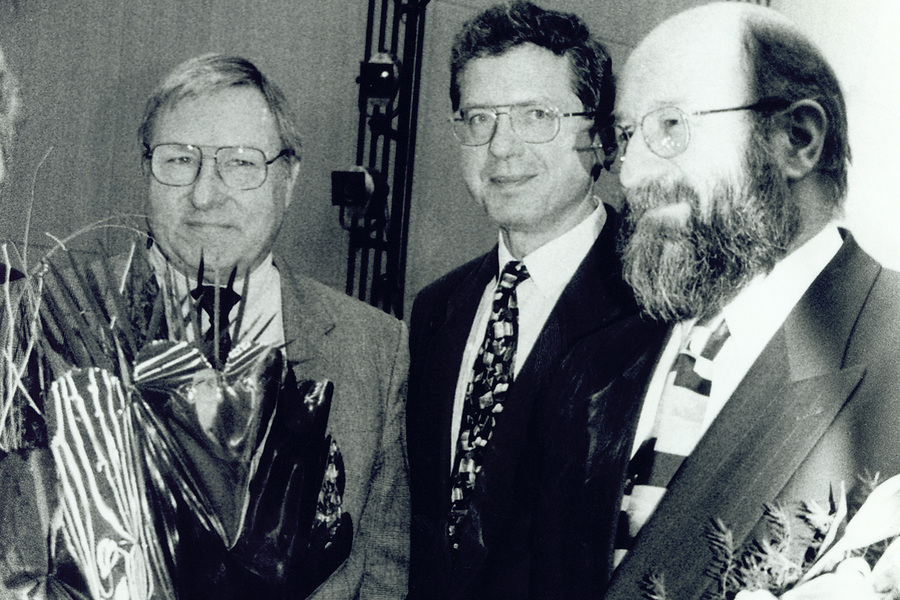
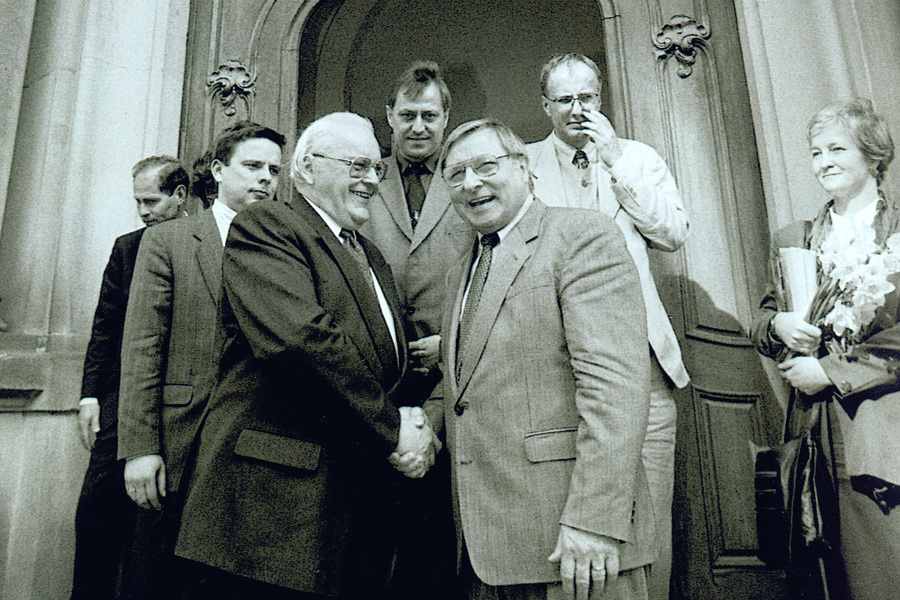
On 24 May 1991 the founding senate is appointed with 15 international university experts and one female expert. The group convenes for its first constituent meeting on 6 September 1991 in Frankfurt (Oder) and decides on the official name „European University Viadrina”. In 1992 and 1993, the founding senate met regularly at the former Angelenhof holiday resort near Briesen, including in May 1993, when this photo was taken. The members of the founding senate are:
from left to right, back row: Prof Dr Hermann G. Grimmeiss, Prof Dr Hans N. Weiler, Prof Frédéric Hartweg, Prof Dr Rudolf von Thadden, Prof Dr Toni Hochmuth, Jürgen Schlegel, Karl Josef Schmücker
from left to right, middle row: Judge Prof David A. O. Edward, Prof. Dr Waldemar Pfeiffer, Prof. Dr Dr h.c. mult. Knut Ipsen
from left to right, front row: Prof Dr Karol Jonca, Prof Dr Ilse Kunert, Prof Dr Karl-Heinz Rädler, Dr Klaus Anderbrügge
(not in the photo: Dr Jerzy Drewnowski, Prof Dr Joachim Starbatty)
You can read a report on the founding period at Angelenhof in transcript #4 (pages 10 to 15).
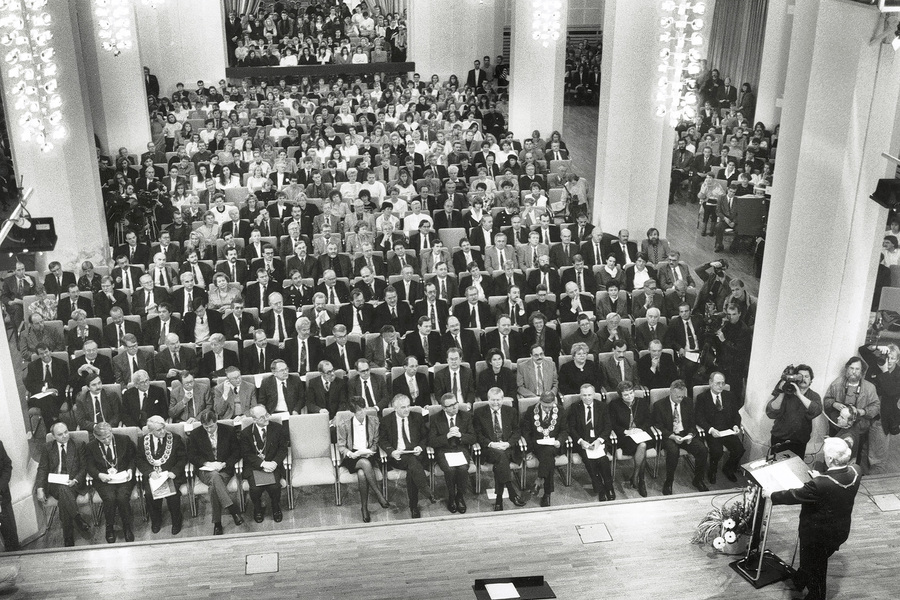
The concert hall „Carl Philipp Emanuel Bach” is fully crowded when the European University Viadrina is officially opened on 6 September 1991. Speeches are given by Brandenburg Minister Manfred Stolpe, Founding Rector Prof. Dr Dr Knut Ipsen, Polish Minister of Education Prof. Dr habil. Robert Głębocki and Frankfurt's Lord Mayor Dr Wolfgang Denda. Manfred Stolpe began his speech with the words: „This is an important day for the state of Brandenburg! And it is also an important day on the way to a common European house. After 180 years of interruption, the honourable Viadrina in Frankfurt an der Oder is hereby re-established.”
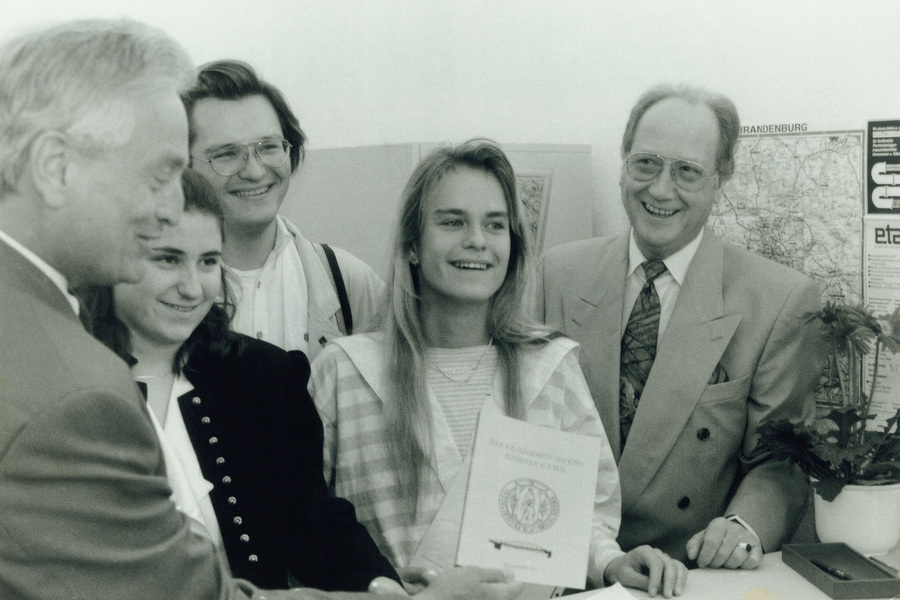
The enrolment period for the first academic year begins on 21 September 1992. Ilka Helbig (2nd from right) is welcomed as the first student of the newly founded Viadrina by founding rector Prof. Dr Dr Knut Ipsen (left) and Chancellor Karl Josef Schmücker (right). As no women were enrolled at the old Viadrina, which was closed in 1811 and moved to Breslau, Ilka Helbig is the first female student in Frankfurt University's history. In this article in the Märkische Oderzeitung from 25 April 2006, Ilka Helbig remembers her admission: „The first in 500 years“.
This group is also among the first students at the new Viadrina to enrol for their studies in September 1992. Enrolment is in law and economics; the admission's office is initially located in the Oderturm. In the first year of study, around 470 students enrol at the Viadrina. When the third faculty, Cultural Studies, was added in 1993, the number rose to more than 1,000 students.
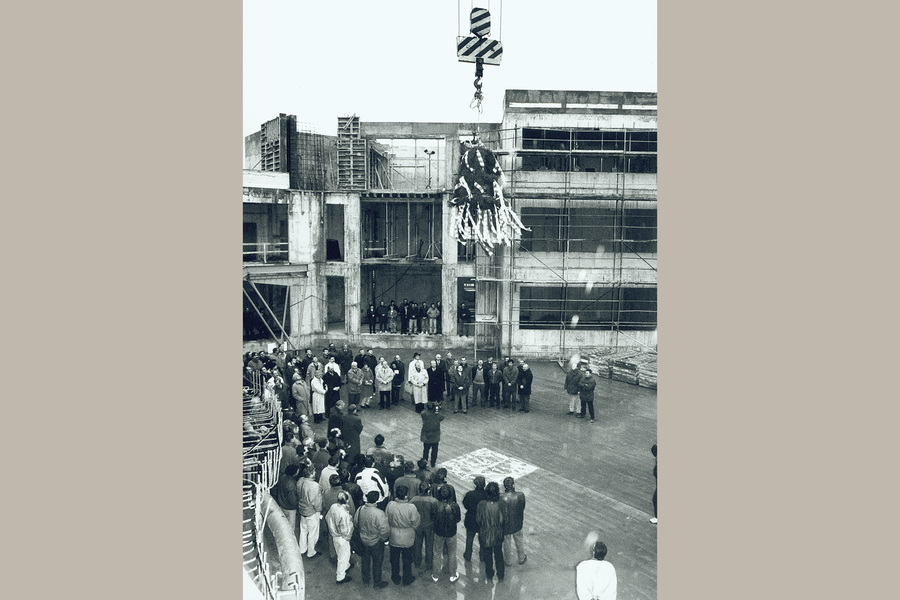
On 21 September 1993, the topping-out ceremony is celebrated in the main building, the future premises of the university library. The former inner courtyard and the attic are reconstructed for the library. The library then moves into the new premises in December 1993. The basic equipment is financed by the then North Rhine-Westphalian Minister President Johannes Rau with a donation.
More than 200 foreign students begin their studies at Viadrina in the 1994/1995 winter semester. Rector Prof. Dr Hans N. Weiler welcomes them on 10 October 1994 at the beginning of an orientation week. At the end of the week, the students explore East Brandenburg and visit Wriezen, Lebus, the Seelower Höhen and Bad Freienwalde, among other places.
Peter Stahl (right) is inaugurated as Chancellor in January 1995; among those congratulating him are the then Mayor of Frankfurt Detlef-Heino Ewert (centre) and Viadrina Rector Prof. Dr Hans N. Weiler. Peter Stahl takes over the business from the first Viadrina Chancellor Karl Josef Schmücker. In January 2007, Christian Zens follows after twelve years of Peter Stahl being in office.
Federal President Roman Herzog (front left) visits Viadrina on 24 April 1995 and is welcomed by Rector Prof. Dr Hans N. Weiler. The President appeals to the students in the large auditorium, which is filled to capacity, to make their contribution to the further construction of the "European House": „You must come together, you must stick together for your whole lives and not drift apart again at the first wind - even if it is a stormy wind.
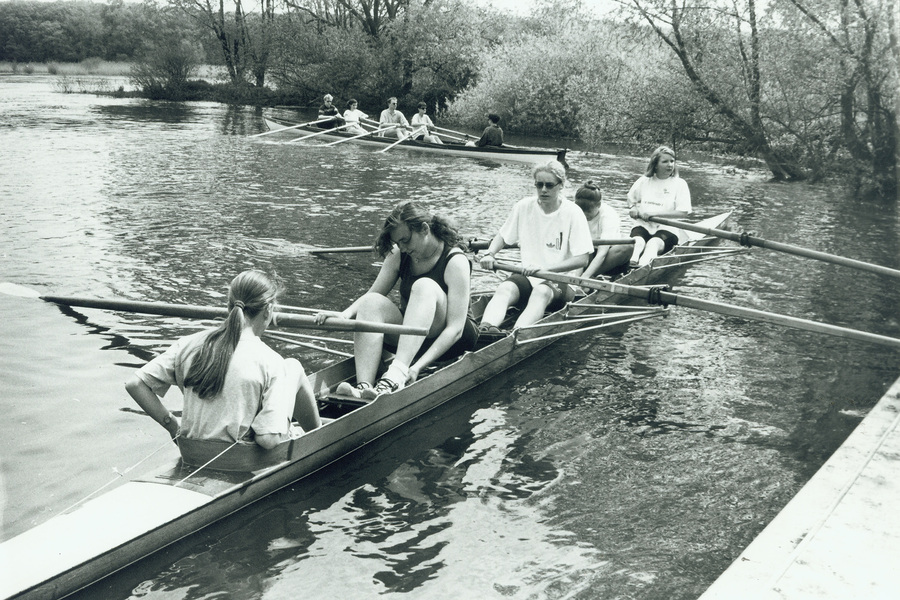
On 17 June 1995, an international student rowing regatta with teams from Poznań, Witebsk, Weimar and Bulgaria takes place at the German-Polish Oder Festival. Members of the university sports club USC Viadrina and the AStA are also rowing.
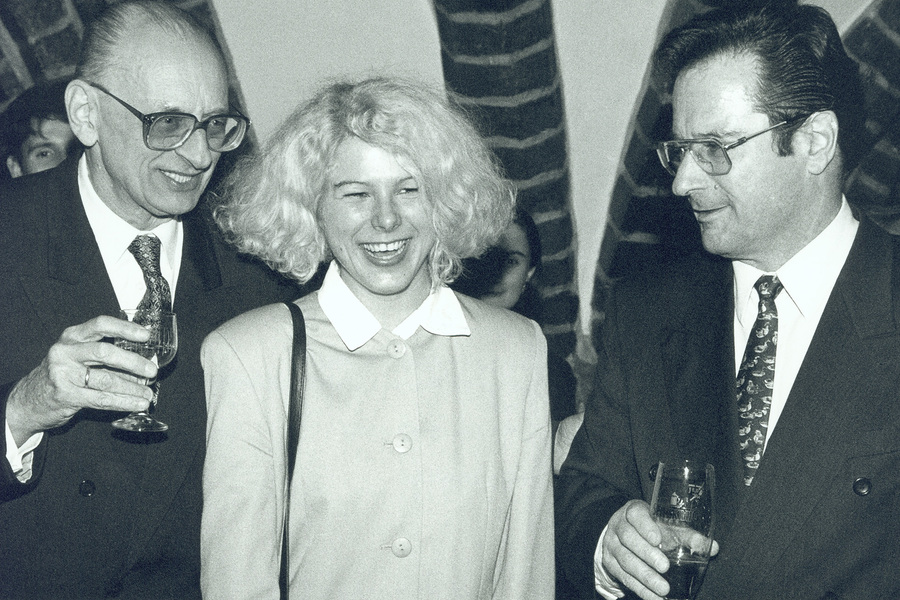
The Viadrina and the Collegium Polonicum Słubice – the joint teaching and research institution with the Adam Mickiewicz University of Poznań – receive the German-Polish Prize on 22 November 1995 awarded by the Foreign Ministers of Poland and Germany, Władysław Bartoszewski (left) and Klaus Kinkel (right). For the first time, an institution rather than a person is being honoured.
Student Agnieszka Kalisiewicz receives the DAAD prize for foreign students and an invitation to Brüssel from Foreign Minister Klaus Kinkel as part of the event.
1996-2000
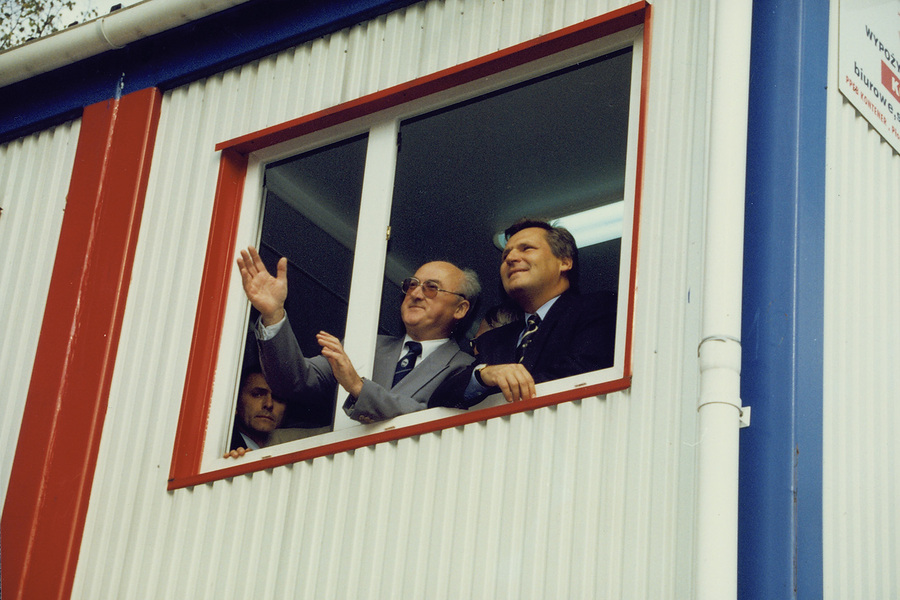
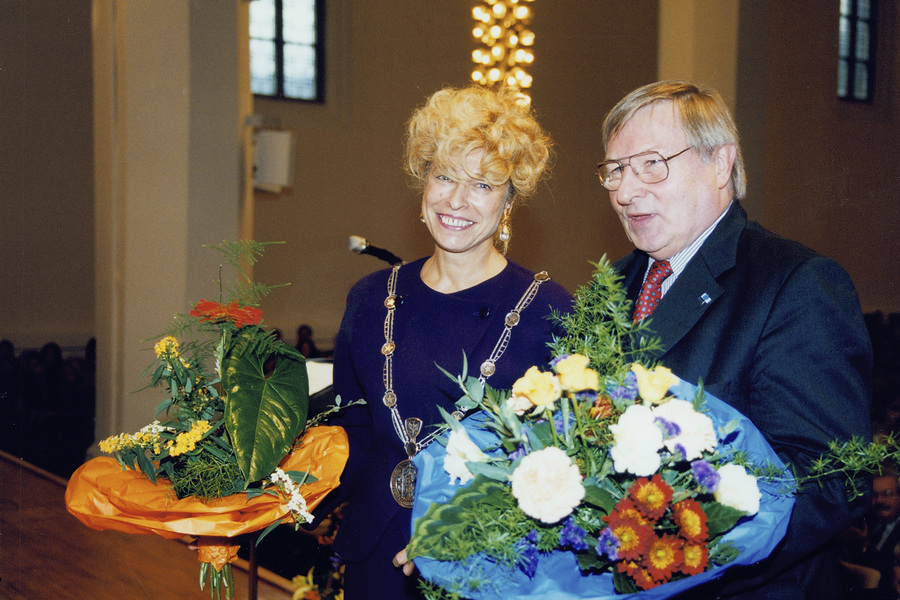
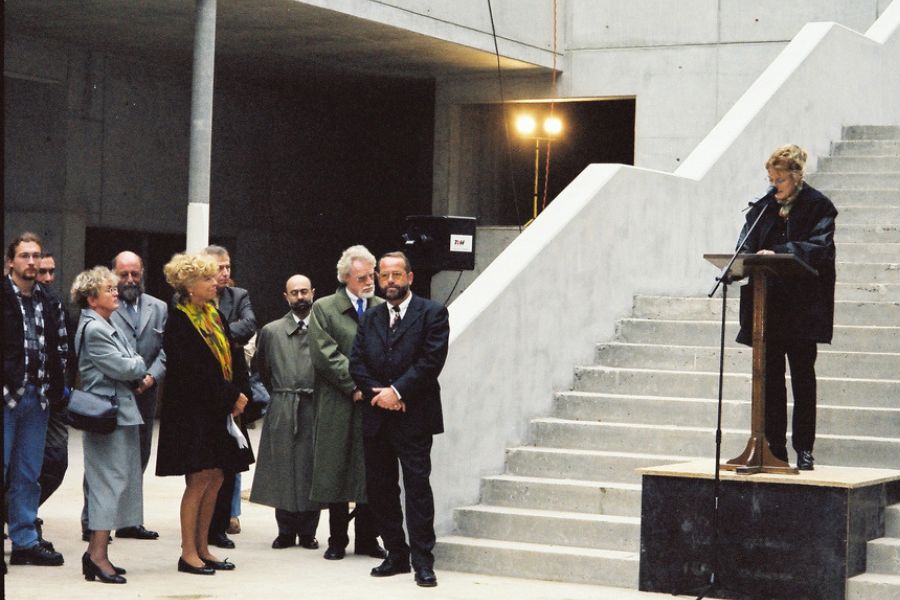
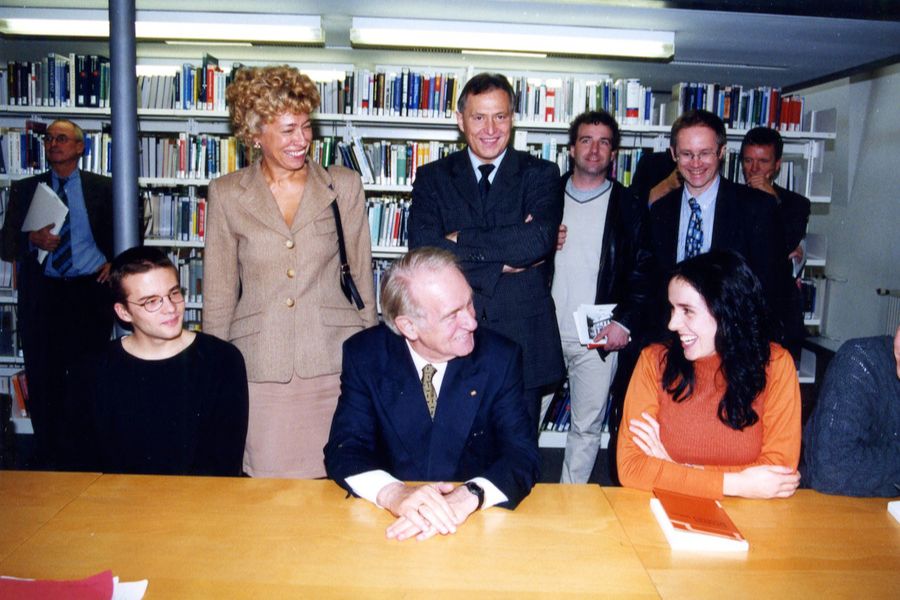
At the opening of the V. Academic Year, Polish President Aleksander Kwaśniewski (right) visits Viadrina on 15 October 1996 and gives a speech. Before the festive event in the concert hall, he visits the construction site of the Collegium Polonicum in Słubice. Together with Prof Jerzy Fedorowski, Rector of Adam Mickiewicz University in Poznań, he observes the progress from a container.
Ceremony for the first construction phase, ground-breaking ceremony for the second: on 19 November 1996, Prof. Dr Stefan Jurga, newly appointed Rector of the Adam Mickiewicz University of Poznań, celebrates the Collegium Polonicum in Słubice with his guests. The main building was opened in June 1998 and the entire building complex was finally inaugurated in February 2001.
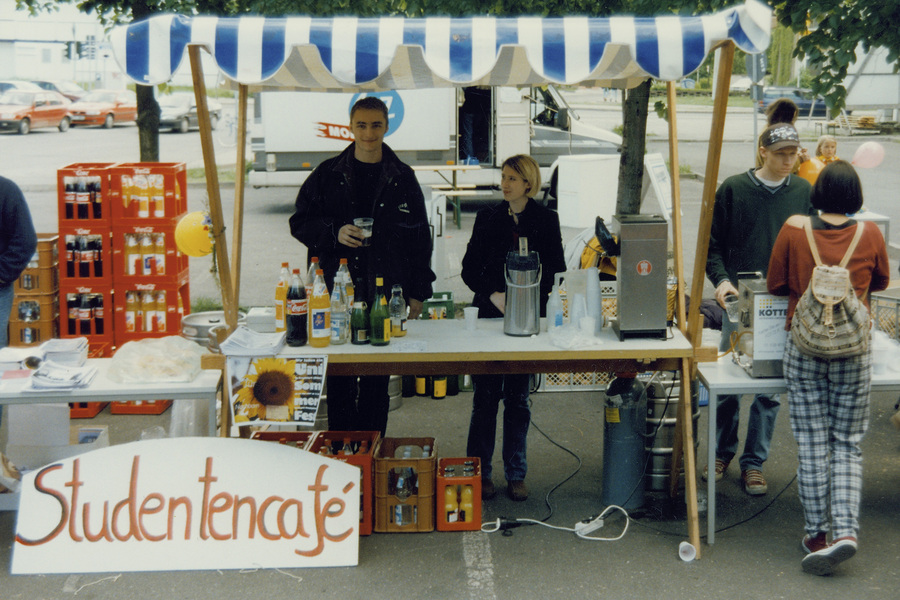
Under the motto „We invite our neighbours”, the first university summer festival took place on 24 May 1997, to which students and prospective students as well as all citizens from Frankfurt and the region were invited. Short presentations, information stands about studying, sports and games, exhibitions, music and gastronomy entertained the guests in the inner courtyard of the Viadrina main building.
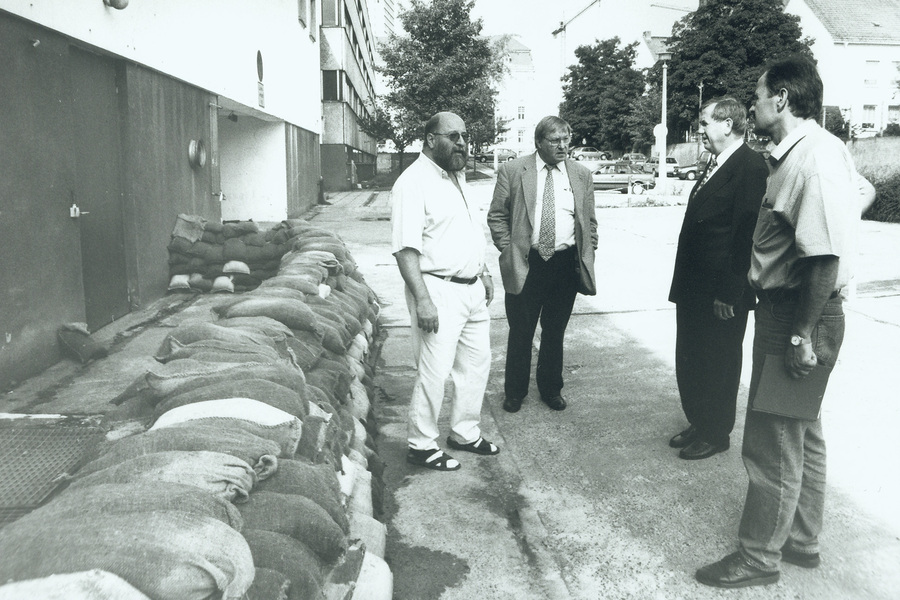
The European University defies the Oder flood that floods parts of Frankfurt in the summer of 1997. "The university is functioning”, said the Rector of the Viadrina, Prof. Dr Hans N. Weiler (2nd from left), on 22 July 1997. The Rectorate, administration and teaching staff continue to work, and the library also remains open– albeit with restrictions. For weeks, the three university buildings located close to the Oder are secured with sandbanks, especially the neuralgic points. For Polish Viadrina students who have left for the crisis regions of their home countries, upcoming examinations are being postponed until autumn; many are staying with their fellow students on the German side of the Oder. Later, Viadrina collects donations for the University of Wroclaw, which has suffered losses totalling 2.5 million Deutsche Mark.
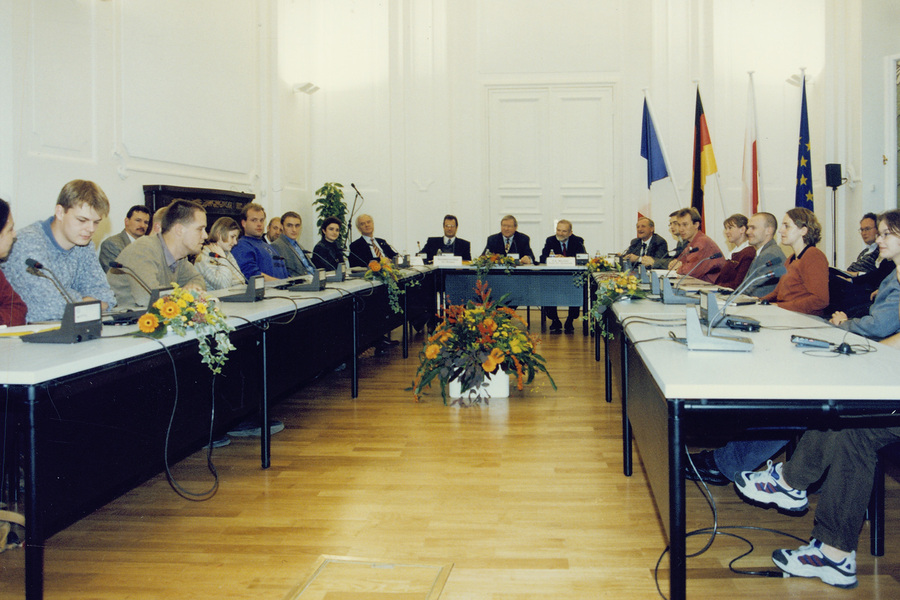
Ministerial meeting on 19 November 1997 between Germany, France and Poland in the Viadrina's premises: German Foreign Minister Klaus Kinkel, French Foreign Minister Hubert Védrine and Polish Foreign Minister Prof. Dr Bronisław Geremek were present. The latter told the students that the success of projects such as the Viadrina would show whether the shared political ideals would be realised or ruined. „If you work in the German Bundestag, the Polish Sejm or the French Assemblée nationale after your studies, Europe's fate is in good hands“, he emphasises.
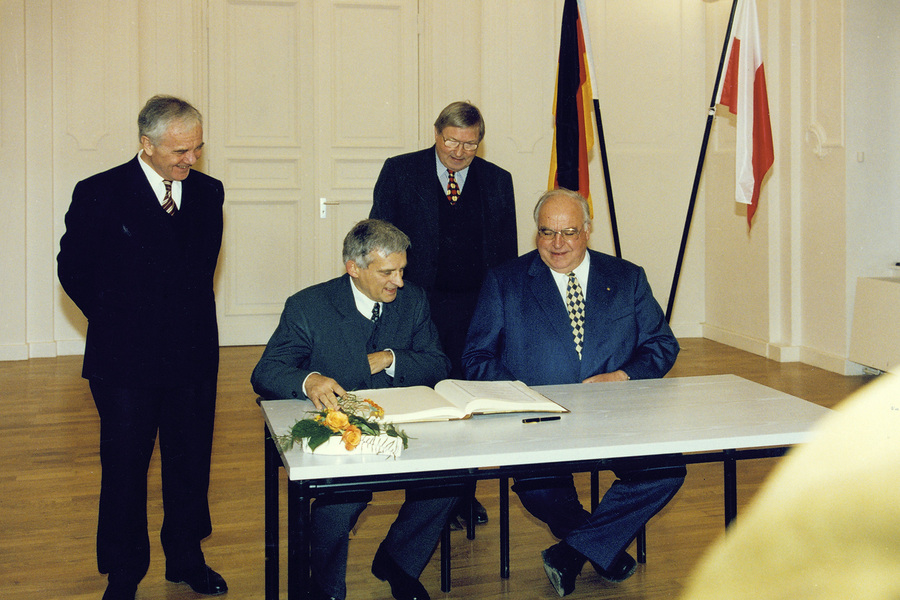
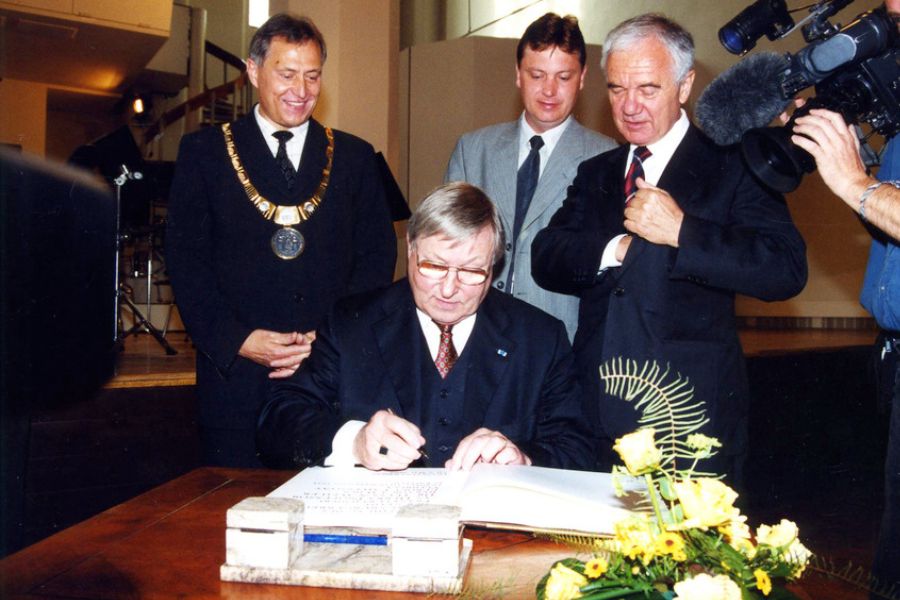
Federal Chancellor Dr Helmut Kohl and Poland's Prime Minister Prof. Dr Jerzy Buzek (seated right and left) sign the university's guest book on 4 December 1997. After a discussion with Rector Prof Dr Hans N. Weiler (back right), both politicians give speeches. Helmut Kohl speaks on "Germans and Poles - partners in the common house of Europe"; Jerzy Buzek talks about "Poland in Europe from the perspective of the Polish-German border region".
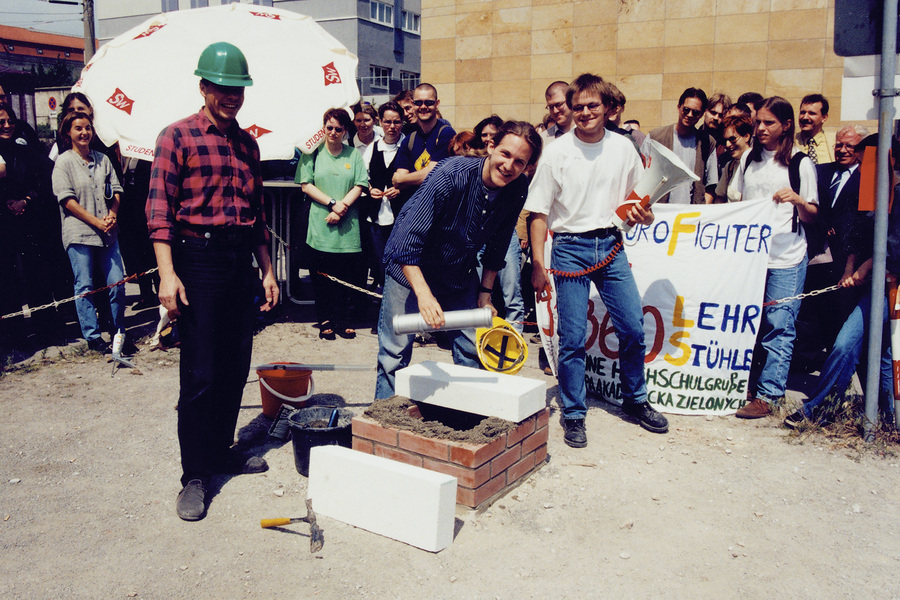
Protest action by the Juso university group on 27 May 1998: The students themselves simply lay the foundation stone for the canteen next to the Oder, the start of construction had been postponed several times. They want to send out a signal against the education crisis. The official laying of the foundation stone will take place a year later.
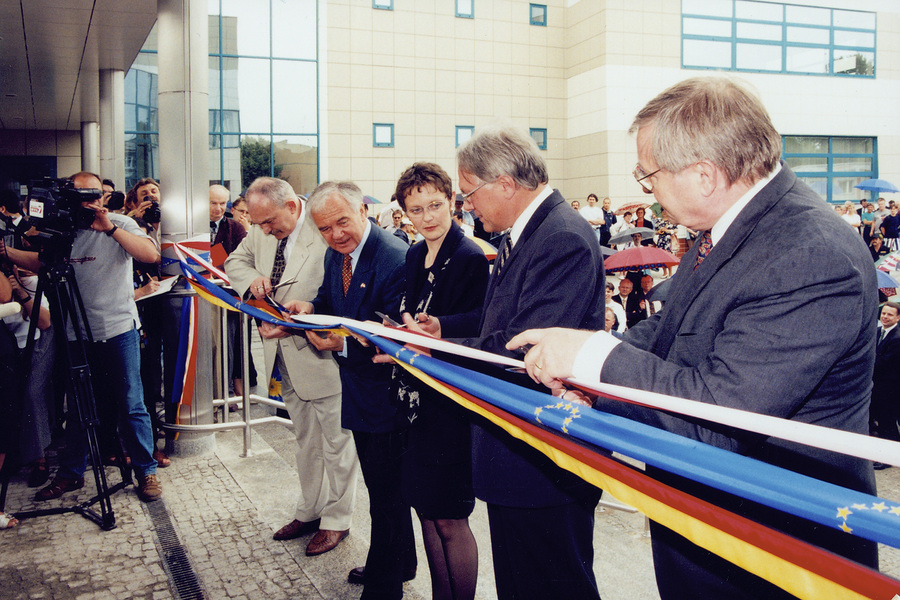
On 10 June 1998, the main building of the Collegium Polonicum in Słubice is ceremoniously opened to great public interest. The symbolic ribbons in the national colours of Germany, Poland and the EU were cut by Viadrina Rector Prof. Dr Hans N. Weiler, Prof. Dr Stefan Jurga, Rector of Adam Mickiewicz University Poznań, Federal Youth Minister Claudia Nolte, Brandenburg Minister President Dr Manfred Stolpe and Poland's Education Minister Mirosław Handtke (from right to left).
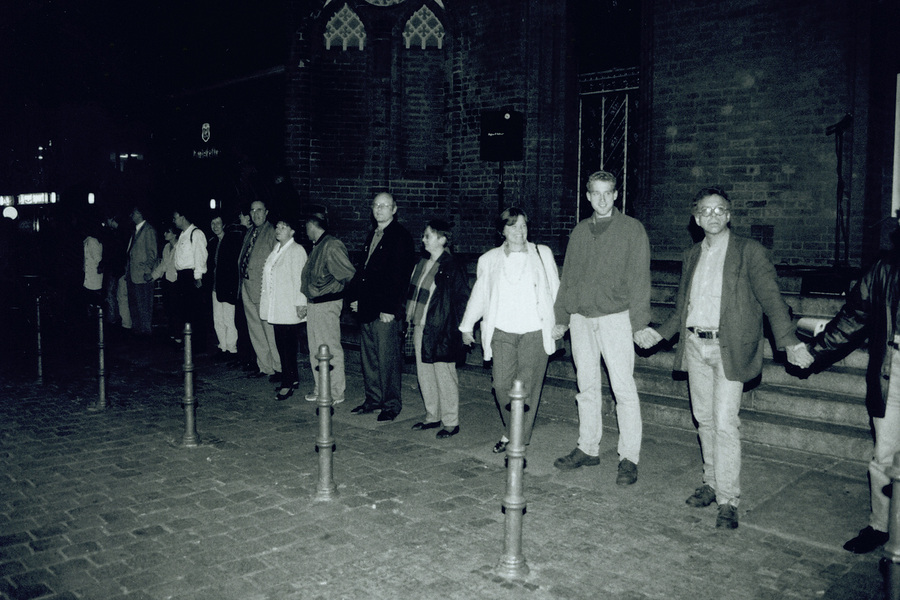
On the occasion of the elections to the Frankfurt City Council, around 1,000 Frankfurters symbolically protect the town hall from the entry of right-wing extremists with a human chain on 25 September 1998. Based on an initiative from the Viadrina, the "Platform against the Right – for Tolerance, Humanism and Human Rights; against Right-Wing Radicalism, Racism and Anti-Semitism" was created in Frankfurt (Oder). Employees and students work together with associations, clubs, organisations, parties and the church to organise campaigns against right-wing extremism.
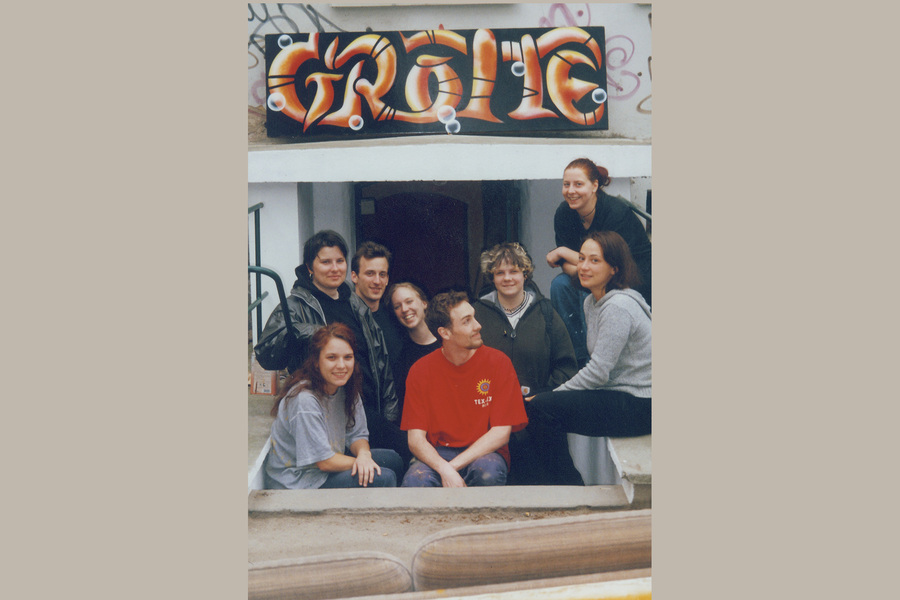
Around 30 students run the Grotte student club 1999 and they are looking for more committed people. In 1993, with the help of the newly founded „Studentenclub Frankfurt (Oder) grotte e. V., a non-commercial venue for parties and culture was opened in the basement of Lindenstraße 7. Since then, the basement rooms in the Haus der Künste have been repeatedly transformed into a student club with a changing name: After the Grotte, the club became Basswood 7, BASSement and finally, in 2018, Stuck.
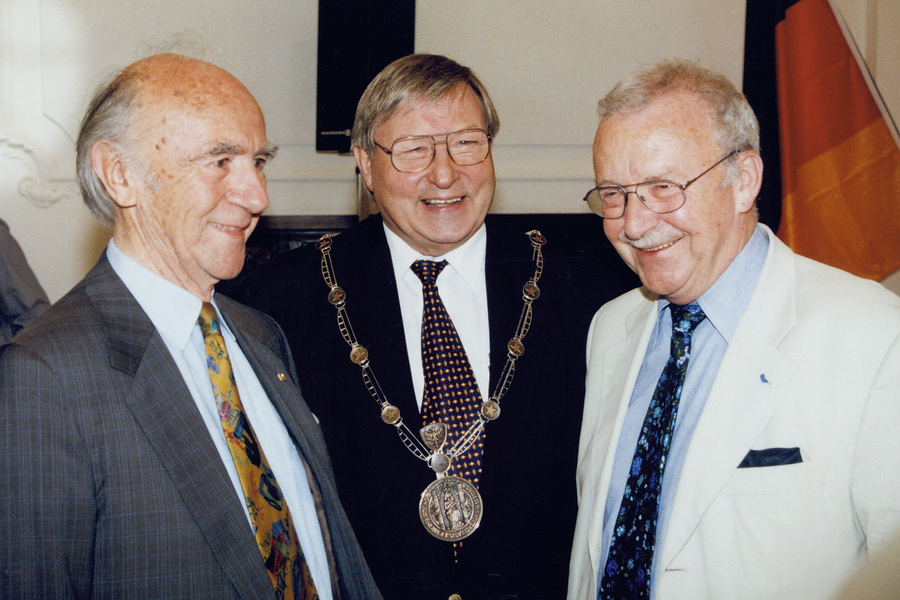
The translator and writer Karl Dedecius (left) will receive the first Viadrina Prize on 8 July 1999 for his efforts to promote German-Polish understanding. The prize is sponsored by the publisher of the „Märkische Oderzeitung”, Claus Detjen (right), who launched it together with Rector Prof. Dr Hans N. Weiler. The prize is financed by the Viadrina Prize Foundation, which was initiated and generously endowed by Claus Detjen.
Since 1999, the Board of Trustees of the European University Viadrina Frankfurt (Oder) has awarded the Viadrina Prize to German and Polish individuals who have rendered outstanding services to German-Polish understanding. On the occasion of the Viadrina Prize ceremony, a sponsorship prize is also awarded to honour student initiatives.
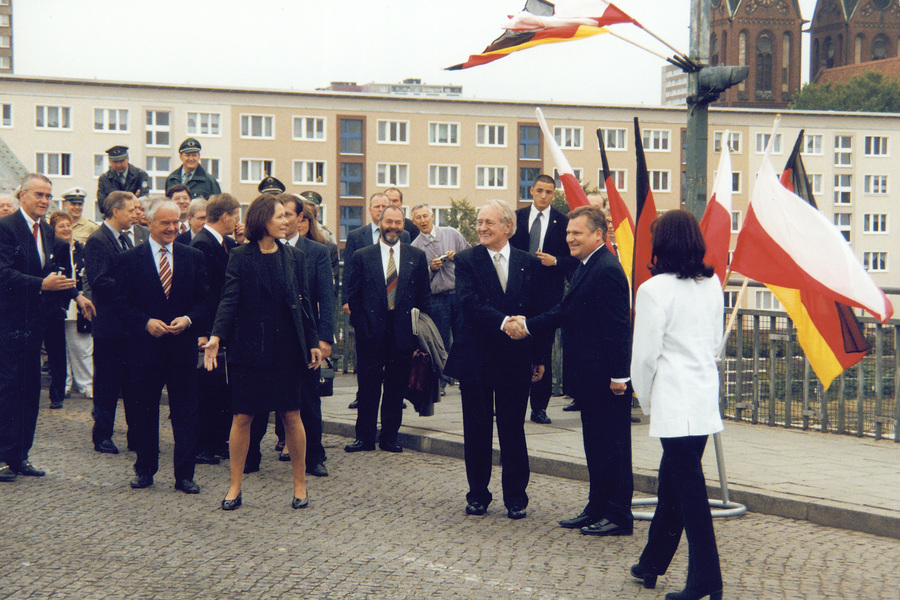
On 1 September 1999, the beginning of the Second World War is commemorated 60 years ago. To mark the occasion, Federal President Johannes Rau and Polish President Aleksander Kwaśniewski meet on the city bridge and shake hands. Rau strides from the German side, Kwaśniewski from the Polish side, to the centre of the bridge that marks the border between Germany and Poland. The handshake is followed by a visit to the Collegium Polonicum in Słubice.
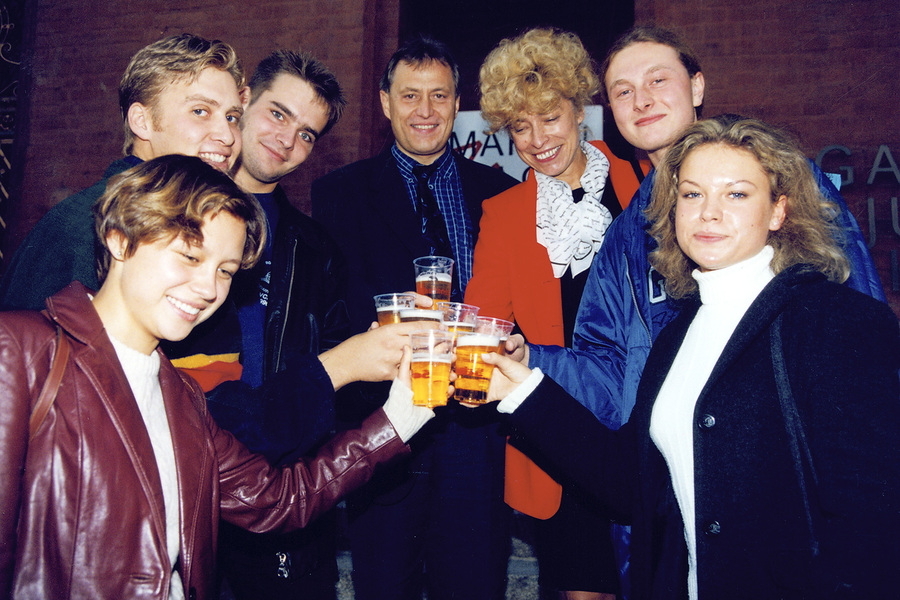
As one of her first official acts, the new Viadrina President Prof. Dr Gesine Schwan welcomes the students to the start of the semester together with Frankfurt's Lord Mayor Wolfgang Pohl on 6 October 1999. The head of the city invited the students to the town hall and offered free beer and pretzels. 900 students start their studies at the Viadrina in the winter semester 1999/2000 - more than ever before.
President succeeds Rector: On 11 October 1999, the first Rector of Viadrina, Prof. Dr Hans N. Weiler, hands over his office to Prof. Dr Gesine Schwan. He welcomed his successor at the ceremony in the Frankfurt Concert Hall with the words: "You are boarding the bridge of a now seaworthy three-master, which is considered a small but well-built and unmistakable ship among its peers".
The city of Frankfurt is honouring a scientist, world citizen and European - a man of the first hour - emphasised Mayor Wolfgang Pohl (left) on 3 May 2000 during the ceremony for the awarding of honorary citizenship to the now retired first Rector of the Viadrina, Prof. Dr Hans N. Weiler.
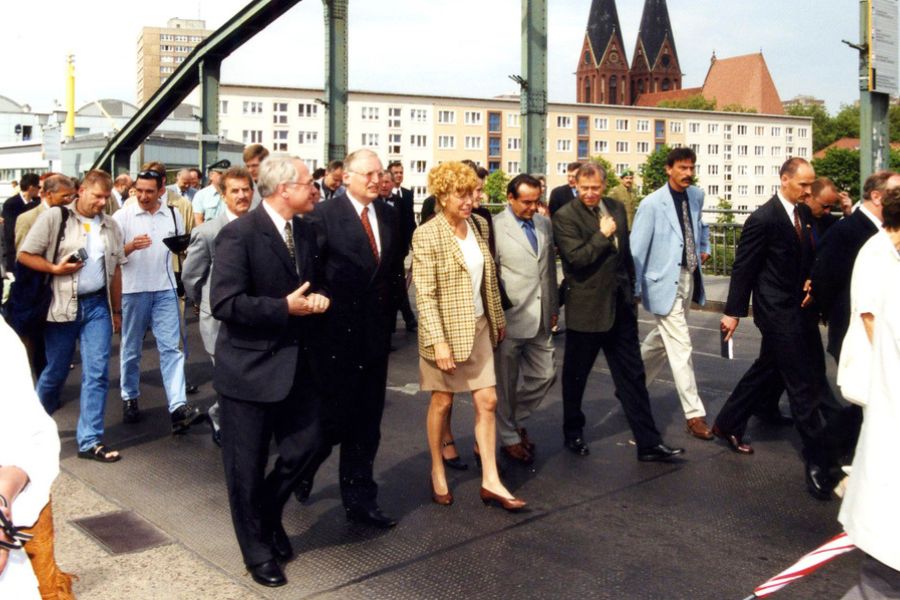
EU Commissioner Günter Verheugen (front 2nd from left) takes part in a round table discussion on EU enlargement to the east at the Collegium Polonicum in Słubice on 9 May 2000. He was greeted on the city bridge by the Rector of Adam Mickiewicz University, Prof Dr Stefan Jurga (front left), and University President Prof Dr Gesine Schwan. Verheugen describes the location as one of the most important places with a convincing symbolic power for the unifying Europe, where the border will one day disappear. Verheugen will become an honorary professor at Viadrina in February 2010.
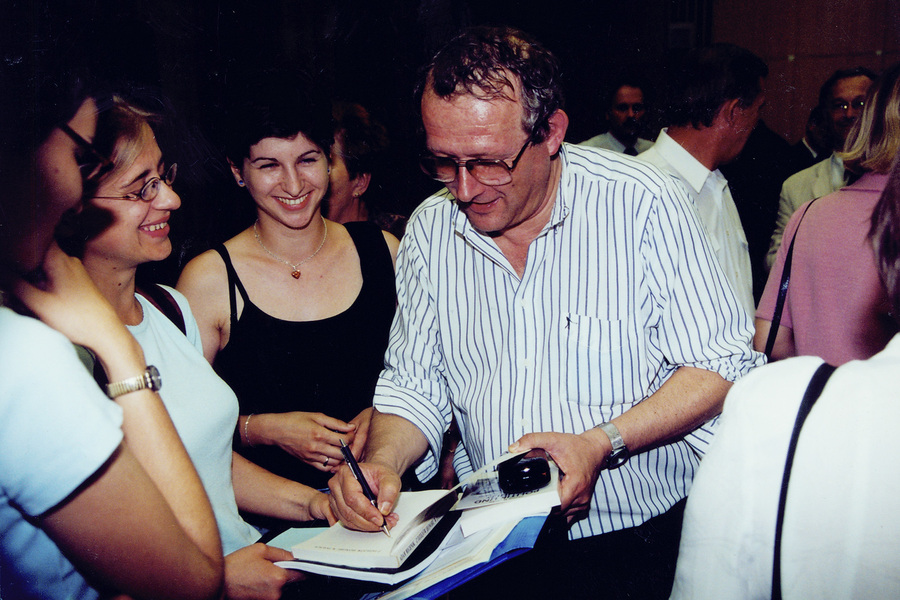
The journalist and editor of the Polish daily newspaper „Gazeta Wyborcza“ Adam Michnik will receive the second Viadrina Prize on 22 June 2000. With his CV and his journalistic persuasiveness, Michnik is a trailblazer for the further development of German-Polish relations in the European spirit, laudator Claus Detjen, Chairman of the Board of Trustees of the University Sponsors' Circle, explained the choice of the prizewinner.
On 20 October 2000, the European University celebrates the topping-out ceremony for the new hall and canteen on Fischerstrasse, located directly on the banks of the Oder. The building complements the ensemble of the main building, the low-rise building (later the Audimax) and the Logenstraße hall of residence and forms a counterpart to the Collegium Polonicum on the Polish bank of the Oder.
In honour of Marion Gräfin Dänhoff, who celebrated her 90th birthday at Viadrina in 1999, the building will be named Gräfin-Dönhoff-Gebäude four years after the topping-out ceremony.
2001-2005
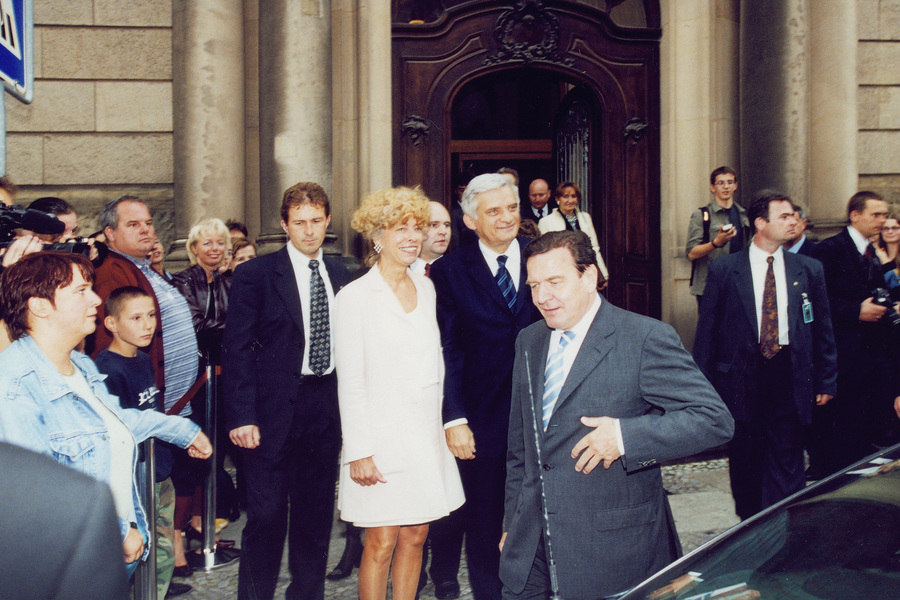
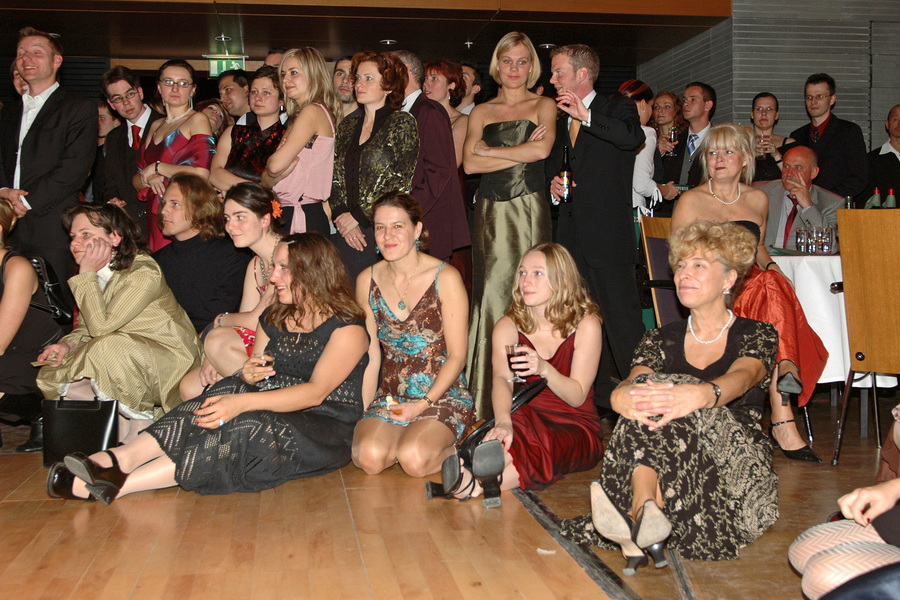
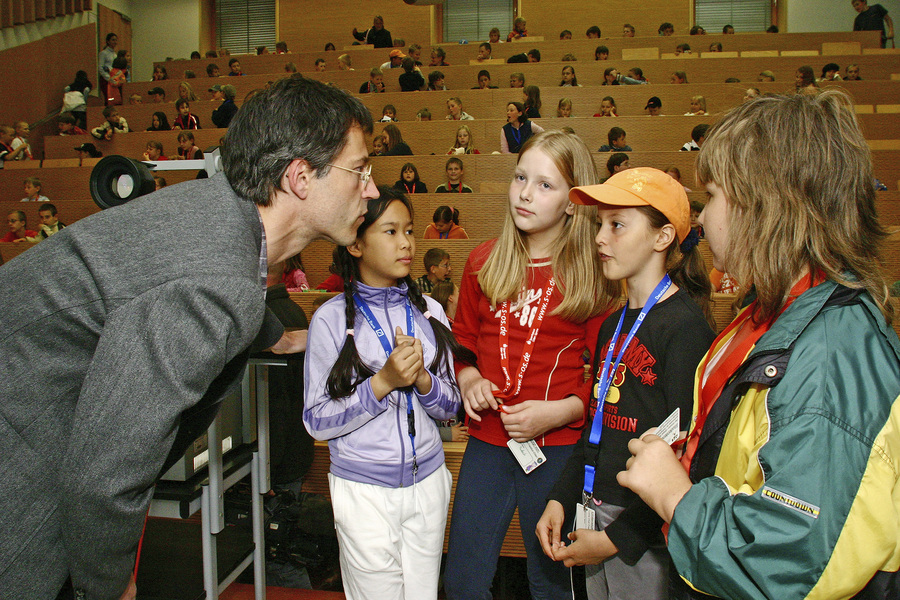
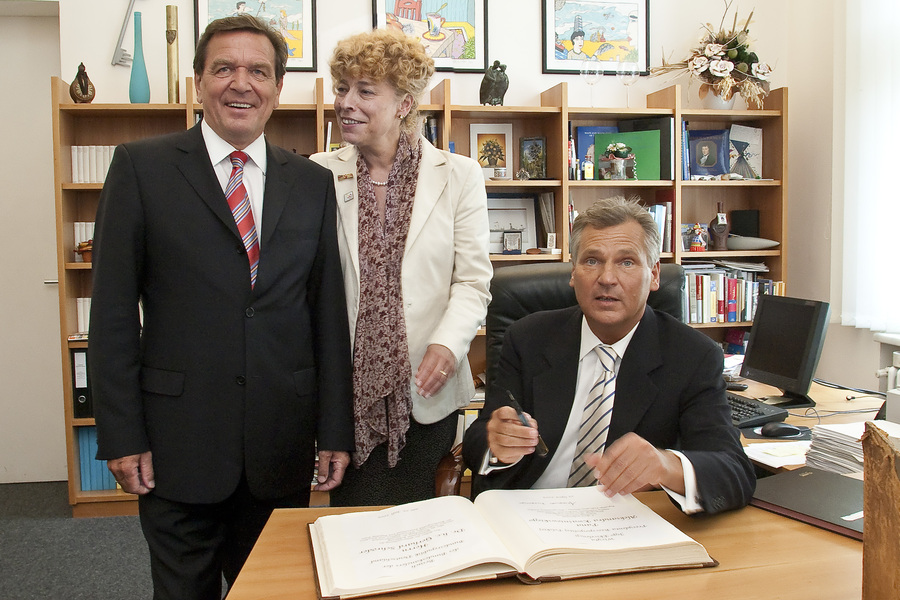
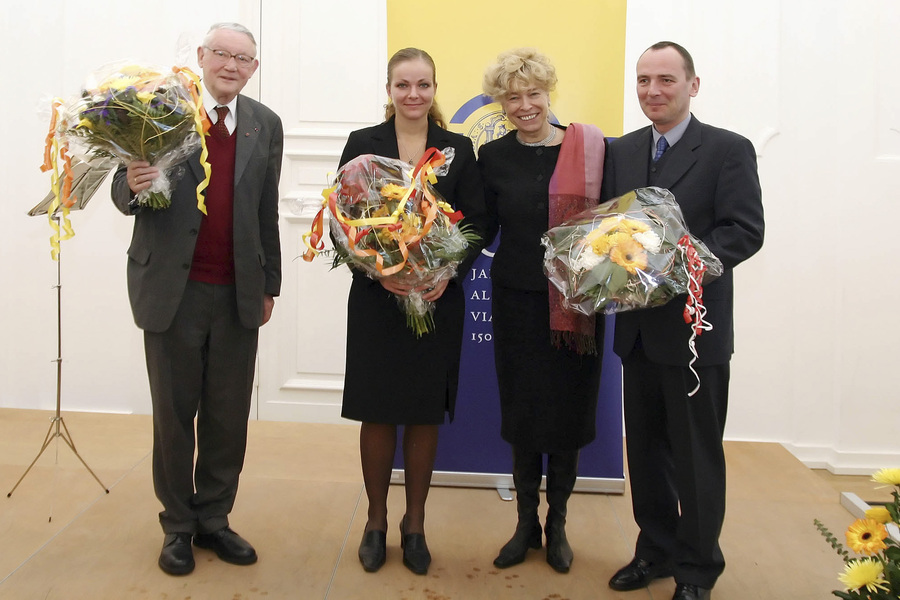
On the occasion of the 10th anniversary of the German-Polish Neighbourhood Treaty, German Chancellor Gerhard Schröder and Polish Prime Minister Jerzy Buzek visit Viadrina on 18 June 2001. Students took advantage of the visit by the high-ranking politicians to organise a protest to draw attention to the Viadrina's lack of funding - and symbolically handed Gerhard Schröder the shirt off their backs.
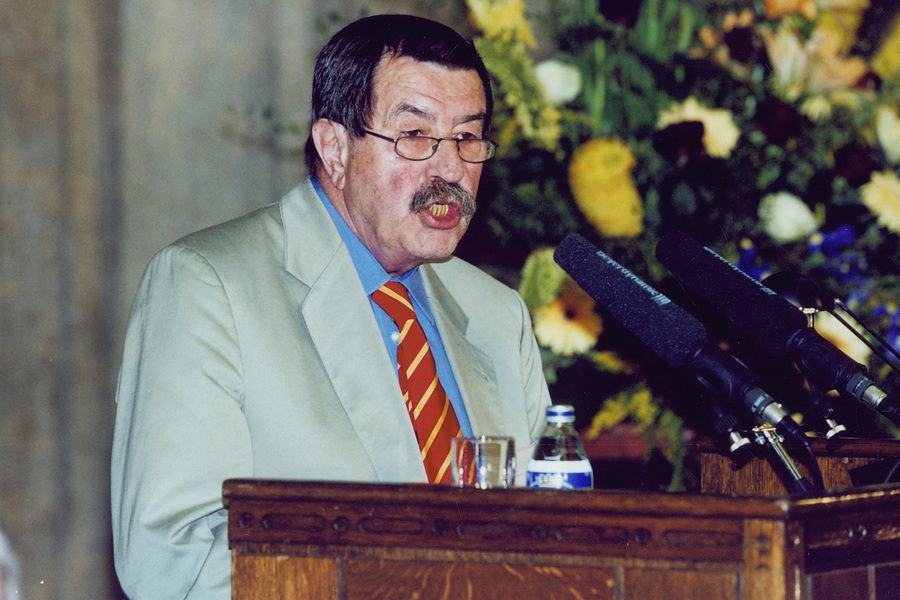
Nobel Prize for Literature winner Günter Grass receives the Viadrina Prize on 13 July 2001. His acceptance speech and the laudatory speech by Adam Michnik, editor-in-chief of „Gazeta Wyborcza“, turn into a moving appeal to live German-Polish relations with an awareness of history. „The desired good neighbourly relationship (...) requires energy and bridges that do not only consist of rhetorical stunts”, said Grass in his speech. The previous evening, the writer had already been celebrated with prolonged applause after a public reading from "Mein Jahrhundert".
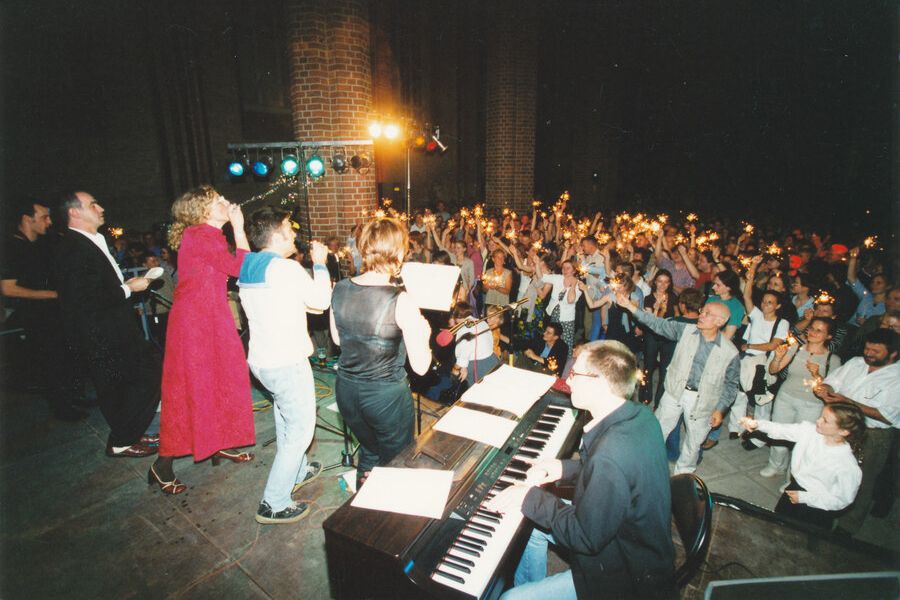
The ten-year anniversary of Viadrina is be celebrated with discussions, concerts and an official ceremony from 13 to 15 July 2001. Among other things, the Viadrina Alumni Network is founded to mark the occasion. The public highlight of the celebrations is a party in and around the main building and St Mary's Church, which is crowned with a midnight fireworks display. The audience celebrates the Viadrina band KUWI-Stars with Janine Nuyken and Dr Peter Rosenberg in St Mary's Church.
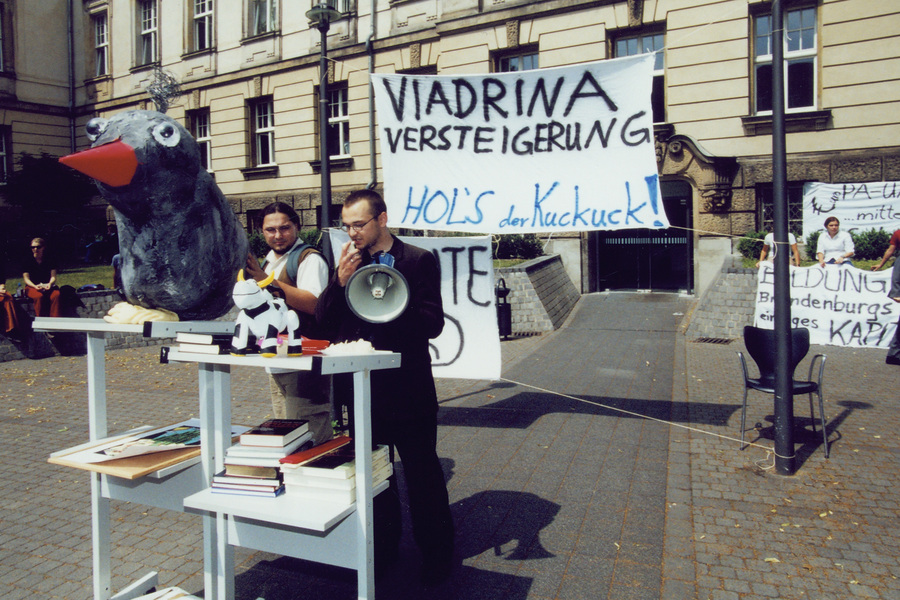
In July 2001, a satire by students causes quite a stir in the media. A press release issued by the General Student Committee (AStA) stated that the Viadrina was bankrupt and would be put into receivership; an auction was staged in the courtyard of honour. President Prof Dr Gesine Schwan clarifies: The European University is not broke, but it is drastically underfunded.
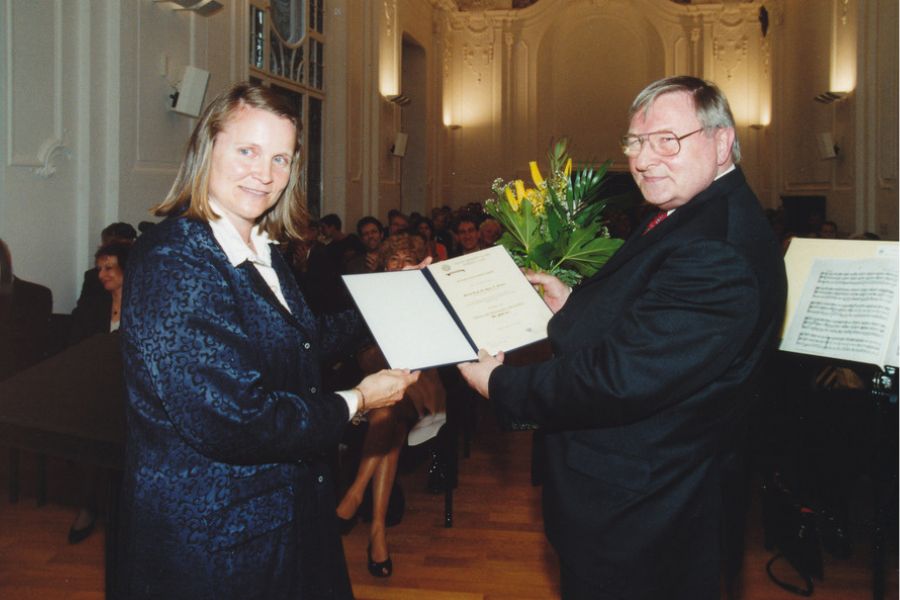
From Stanford University in California, Prof Dr Hans N. Weiler came to Frankfurt (Oder) in 1991 to help build up the young Viadrina as a member of the founding senate and from 1993 to 1999 as the first rector of the European University. On 14 May 2002 Prof. Dr Anna Schwarz, Dean of the Faculty of Cultural Studies, presented him with an honorary doctorate from the Faculty of Cultural Studies in the Senate Hall. Hans N. Weiler promises to continue to accompany the faculty critically, because: „For me, criticism is and remains the best way to show respect for academic colleagues and institutions.”
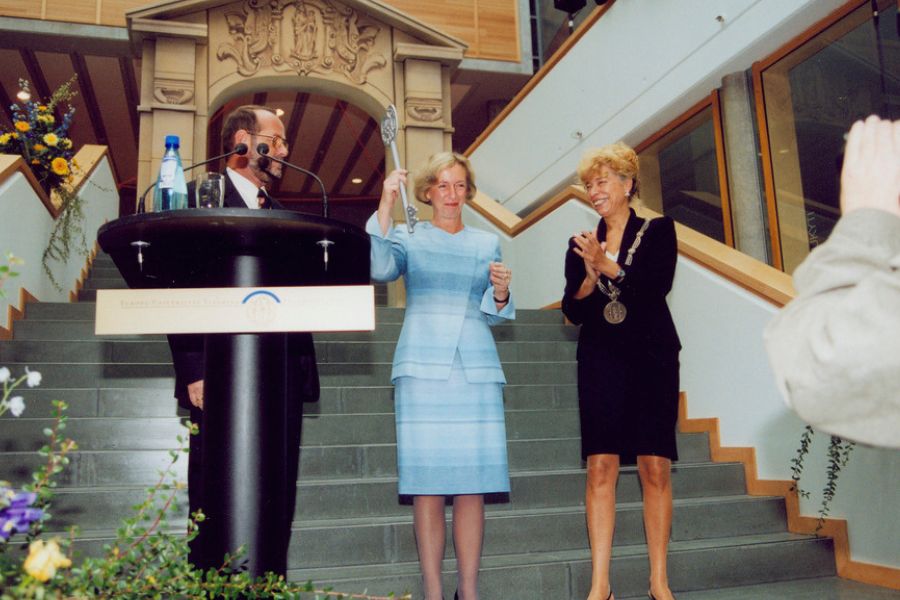
The light-flooded atrium, the large open staircase and the perimeters of the upper floors are fully occupied when the Head of the State Building Office, Michael Tschauder, and Brandenburg's Minister of Science, Prof. Dr Johanna Wanka, hand over the symbolic key to University President Prof. Dr Gesine Schwan on 14 October 2002. Dr Johanna Wanka handed over the symbolic key to the hall and canteen building to University President Prof. Dr Gesine Schwan on 14 October 2002. After three years of construction, the building, which has a total of 3,000 seats, can now be used by the university. Around 25 million euros have been invested, half by the federal government and half by the state. The unusual building was designed by the architect couple Yamaguchi-Essig. One and a half years later, the complex will be given its current name, the Gräfin-Dänhoff-Gebäude ”.
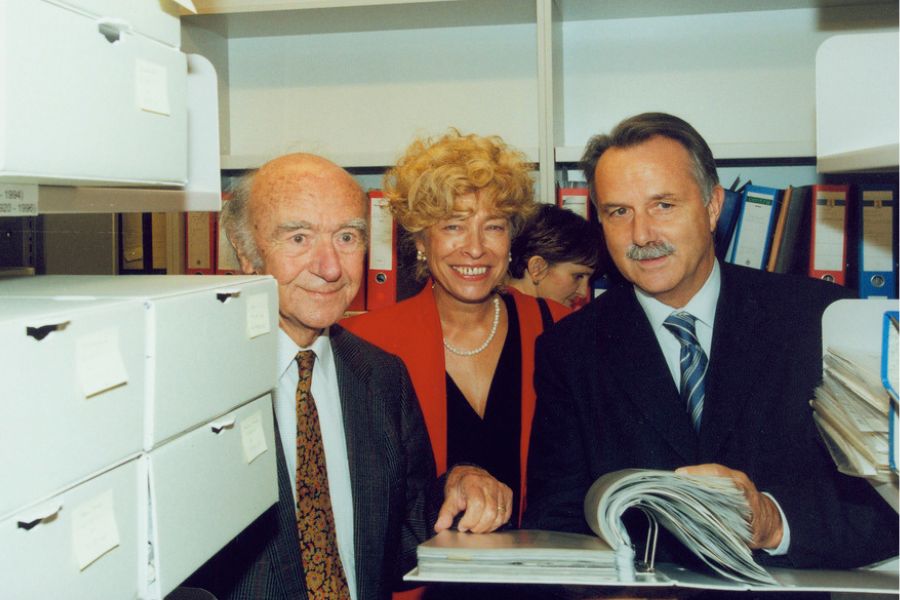
„The life's work of a German, a Pole, a European and a world citizen is now accessible to the public.” With these words, Viadrina President Prof. Dr Gesine Schwan thanked the writer and translator Karl Dedecius (left) on 17 October 2002. The Dedecius archive will be presented to the public at a ceremony in the library of the Collegium Polonicum in Słubice on this day - in the presence of the President of the Stiftung Preußischer Kulturbesitz, Klaus-Dieter Lehmann (right). 81-year-old Dedecius explains the choice of location for his archive: „Frankfurt (Oder) and Słubice are exactly the right place! The joint work of Poles and Germans here seemed to me a good prospect that the collection would not become a monument.
In addition to autographs, correspondence and manuscripts, the archive contains posters, pictures, photos, typescripts, documents, around 1,000 books, video tapes, cassettes, newspapers and newspaper cuttings. There is also a desk, typewriters with German and Polish keyboards, suitcases and documents.
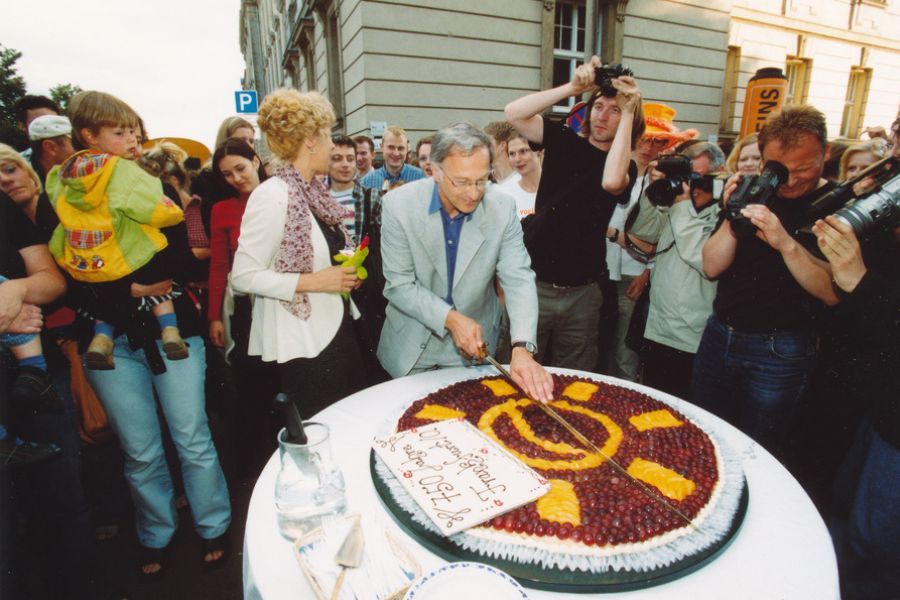
The city of Frankfurt (Oder) is celebrating its 750th birthday in July 2003 and the Viadrina is joining in the celebrations. A gift to the city is the summer party on 3 July 2003, at which the student project group „siebenart” presents Lord Mayor Martin Patzelt with a huge birthday cake, which he distributes to the guests together with University President Prof. Dr Gesine Schwan.
At the city's big anniversary parade on 13 July, students from 68 countries will present their university with their self-made giant hats, one of many contributions with which the Viadrina is enriching the anniversary.
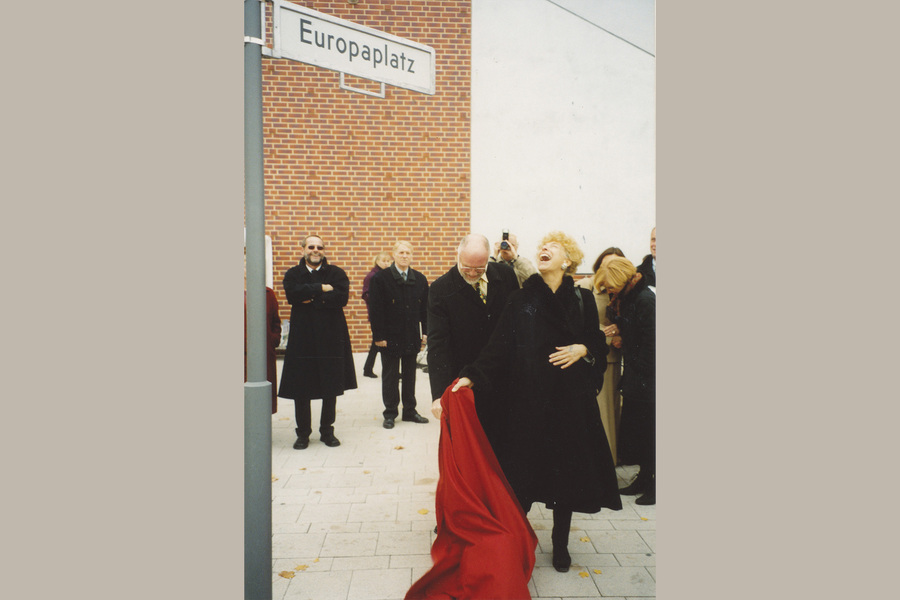
The campus is taking shape: The square in front of the Hörsaal-Mensa complex will receive the name „Europaplatz” on 23 October 2003 with a sweeping symbolic gesture by University President Prof. Dr Gesine Schwan. The newly designed open space also includes a tram stop. Additional trams will run between Westkreuz and Europaplatz to make everyday life easier for students.
A few weeks later, the topping-out ceremony will be held on the opposite side of the „Flachbau” (later the Audimax building).
The former GDR civil rights activist and politician Markus Meckel receives the fifth Viadrina Prize on 19 November 2003. Alongside University President Prof. Dr Gesine Schwan, he is congratulated by Polish Ambassador Dr Andrzej Byrt (left), who gives the laudatory speech, and prize donor Claus Detjen (right). In his speech, Detjen explained that in Meckel, the jury had chosen a prizewinner who was used to stony ground and who had the courage to stand up to popular opinion.
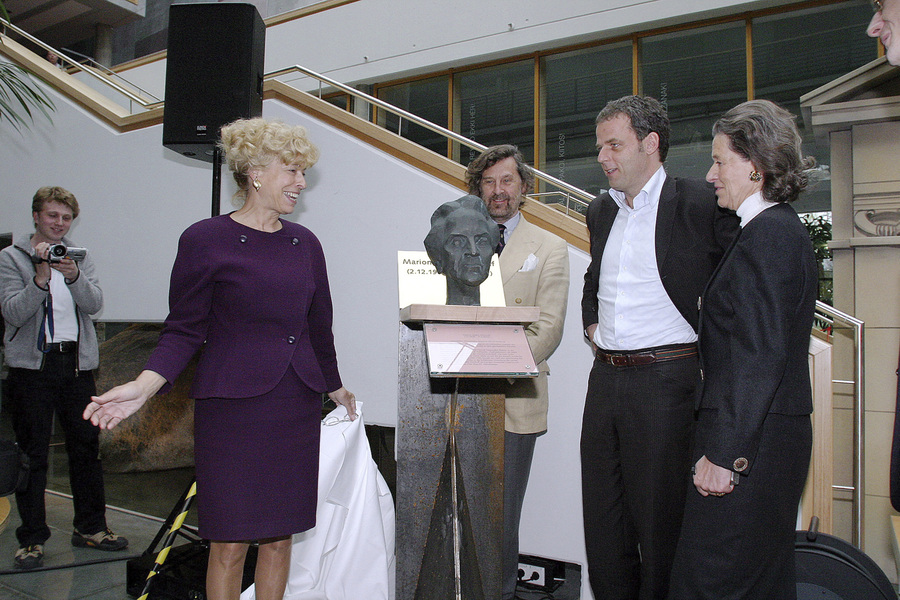
On 19 April 2004, the Gräfin-Dönhoff building, previously known as the Mensa-Hörsaal complex, receives its name. Members of the Dönhoff family are guests (here alongside University President Prof Dr Gesine Schwan, Christian Graf Hatzfeld, Philipp Dönhoff and Karin Gräfin Dönhoff, from left to right). On this day, the ZEIT Foundation presents Viadrina with a bust of Marion Gräfin Dönhoff, which was created six years earlier by Manfred Sihle-Wissel.
Gesine Schwan emphasised in her speech that Viadrina wanted to honour the memory of Marion Dönhoff and in particular her commitment to German-Polish understanding by naming it after her.
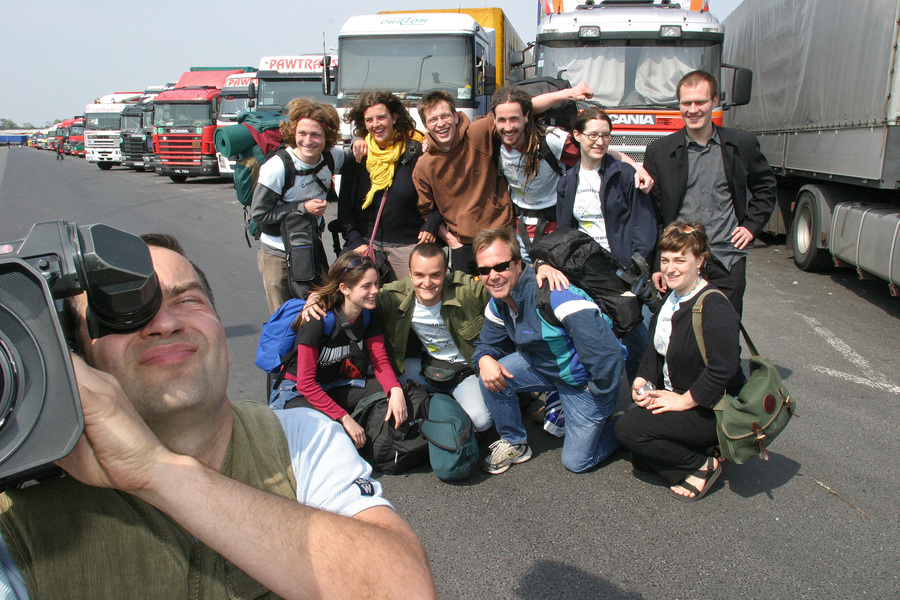
Hitchhiking through the enlarged European Union: On 29 April 2004 – around 36 hours before the EU's Eastern enlargement – ten students set off to travel to the new member states; their destinations: Poland, Hungary, the Baltic states, Slovakia and the Czech Republic. „Countdown Europe – Hitchhiking Europe” is the name of the project initiated by Prof Dr Timm Beichelt. The five teams will be reporting live on their mobile phones about their travel experiences including at a big celebration to mark Poland's accession to the EU in the twin cities of Frankfurt (Oder) and Słubice. Timm Beichelt explains his unusual seminar idea: "Culturally, the motto for the next few years is not 'unification', but 'getting to know each other'. And that is exactly what the project should make possible.
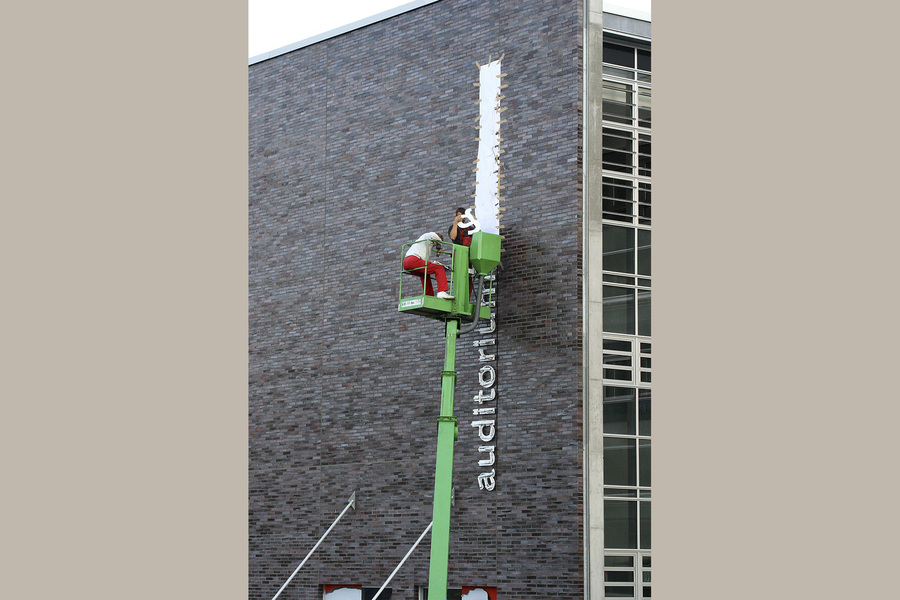
In the late summer of 2004, final work is carried out on the façade of the Auditorium Maximum. After two years of extensive reconstruction, the building is inaugurated for the opening of the 2004/2005 winter semester. The result is a university building with around 3,300 square metres of usable space, including the eponymous large auditorium Auditorium Maximum with 530 seats. Around nine million euros were invested in the conversion; 115 companies were involved in the construction, 105 of them from the Brandenburg/Berlin region.
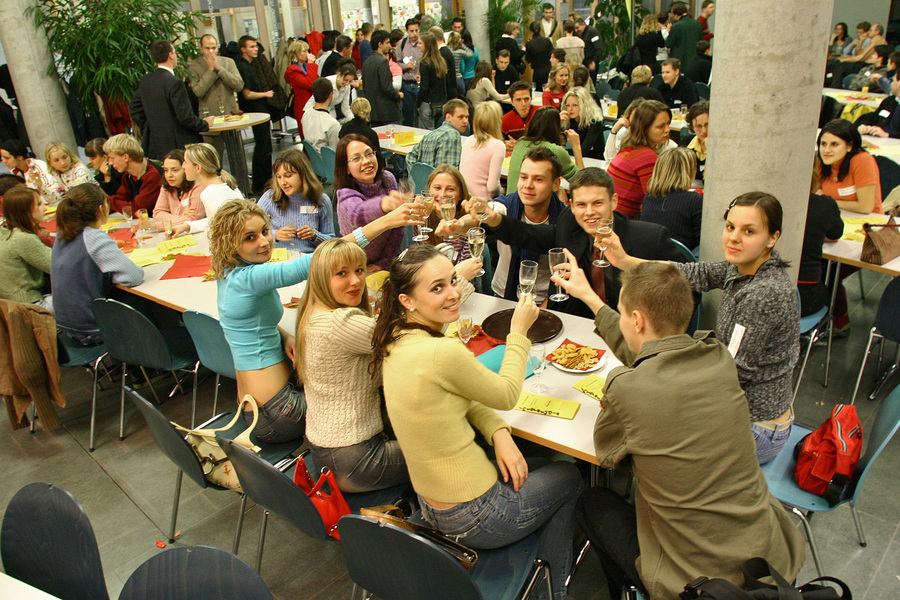
In the foyer of the Gräfin-Dönhoff building, students from the European Humanities University Minsk (EHU) toast each other on 20 October 2004. They accepted the invitation of the European University Viadrina. In the 2004/2005 winter semester, around 40 Belarusian students will be able to complete their humanities studies at the Viadrina, after the EHU in Minsk was forced to close unexpectedly in summer 2004. Among others, Prof. Dr Karl Schlügel is pleased about the acceptance of the EHU students at the Viadrina for very specific reasons, as he emphasised at a discussion event in November 2004. For the university, the admission meant a growth and Europeanisation boost.
On 5 November 2004, Viadrina and the city society celebrate the tenth Uniball. University President Prof. Dr Gesine Schwan not only watches the programme from the edge of the dance floor, but is later willingly invited to dance along by the ViaDivas. The Viaphoniker and the KUWI stars, among others, also entertain the audience.
More than 900 children attend the first children's university at the Viadrina in summer 2005. On four lecture afternoons, they follow the invitation of a parents' initiative and listen to lectures on why theft is punished and how to carry out a physics experiment, among other things. To kick things off, Dr phil. Karsten Weber (left) from the Faculty of Cultural Studies will talk about the question: "Why aren't all people rich?".
Financial support: Federal Chancellor Gerhard Schröder and Polish President Aleksander Kwaśniewski meet at Viadrina on 25 July 2005. The occasion is the signing of a „Joint Declaration on strengthening the co-operation between academics, researchers and students of the Federal Republic of Germany and the Republic of Poland“. The Federal Government is providing 50 million euros for the Polish-German Science Foundation to intensify German-Polish scientific cooperation; the Republic of Poland is providing five million euros.
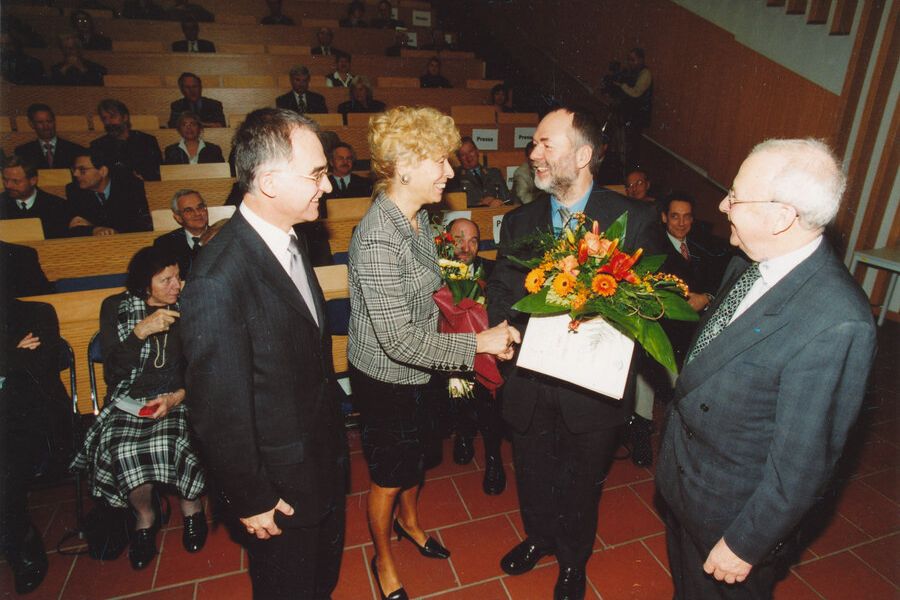
The historian Prof. Dr. Rudolf von Thadden is honoured with the seventh Viadrina Prize on 21 November 2005. He can be seen in this photo together with the student and prizewinner Sarina Schewczyk, Viadrina President Prof Dr Gesine Schwan and laudator Włodzimierz Borodziej (from left to right). Rudolf von Thadden, who was involved in the establishment of Viadrina as a member of the founding senate, was honoured for his multifaceted commitment in the context of German-Polish understanding. In his acceptance speech, he emphasised „that the desire for different worlds of life does not necessarily presuppose the existence of common worlds of memory“. However, the ability to listen and remember is indispensable: listening to biographies, understanding perceptions, taking experiences seriously.
2006-2010
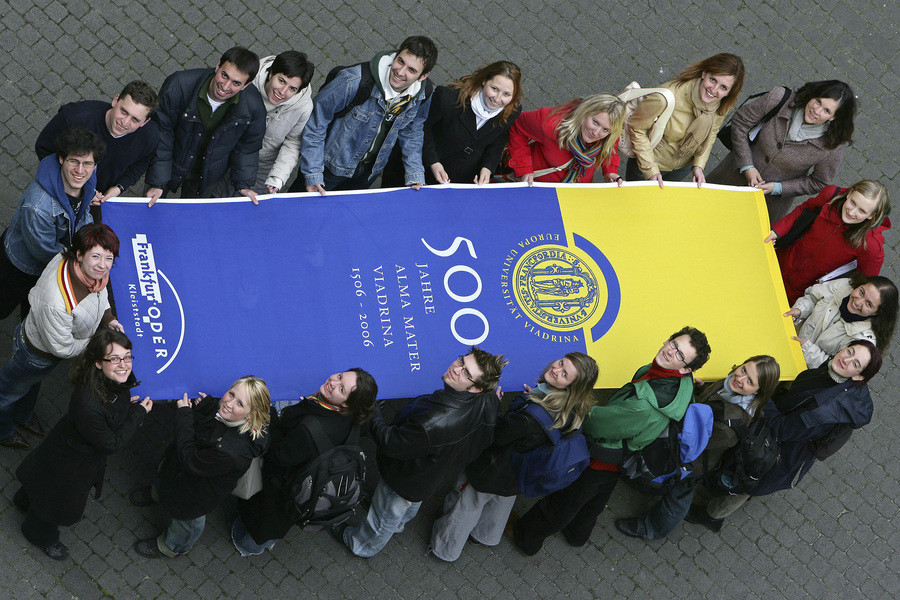
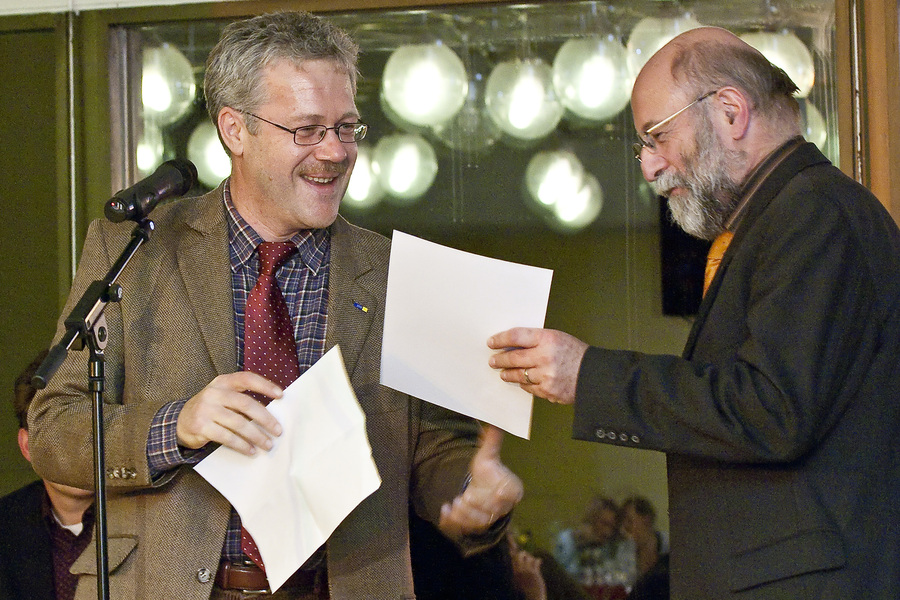
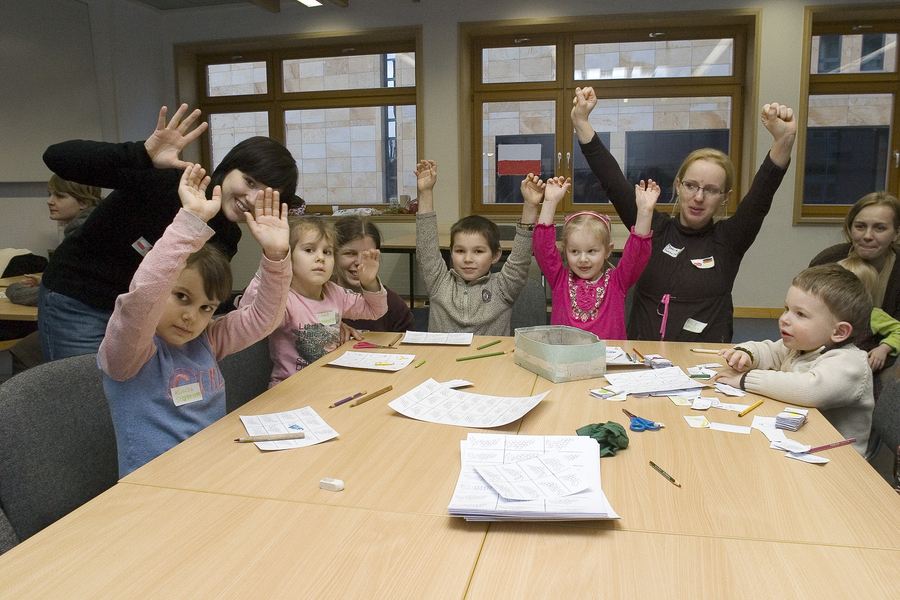
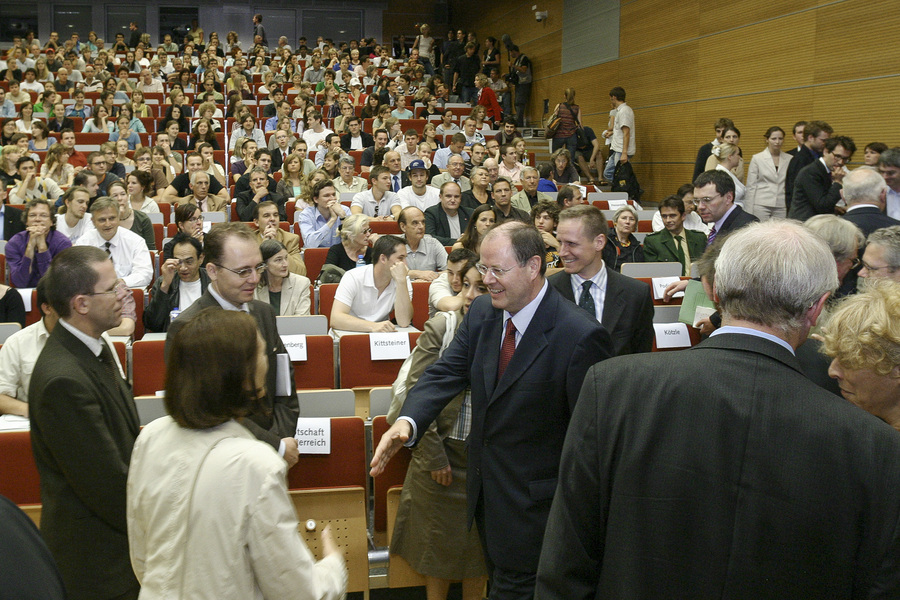
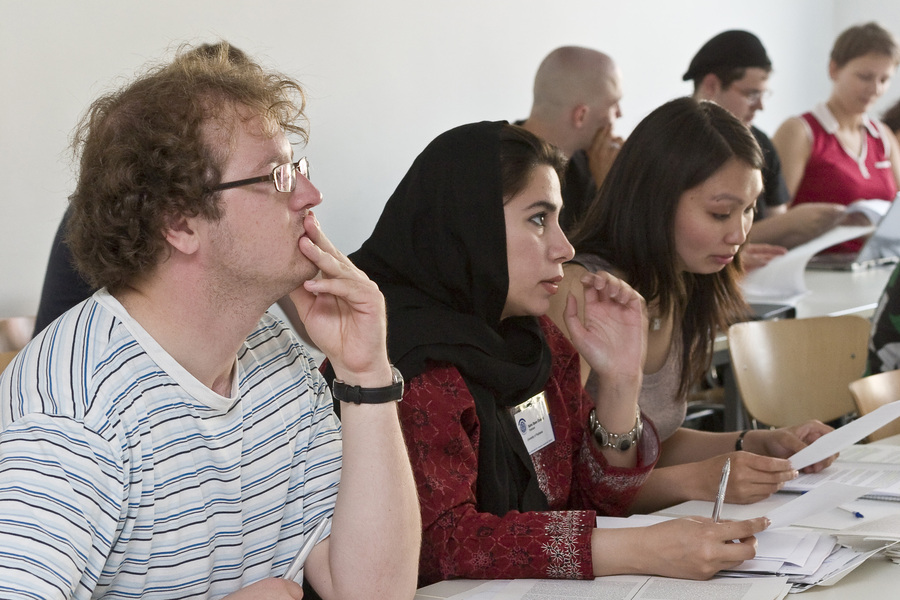


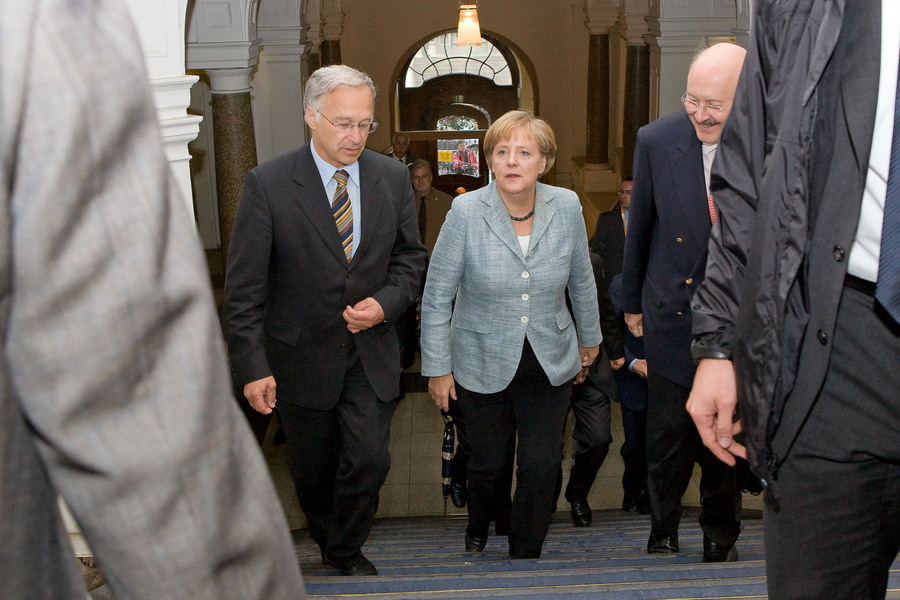
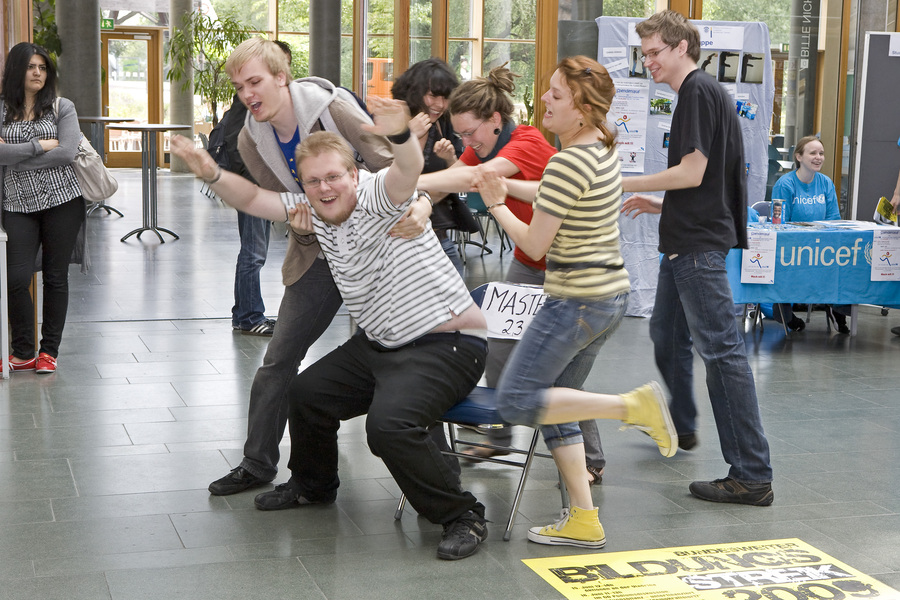


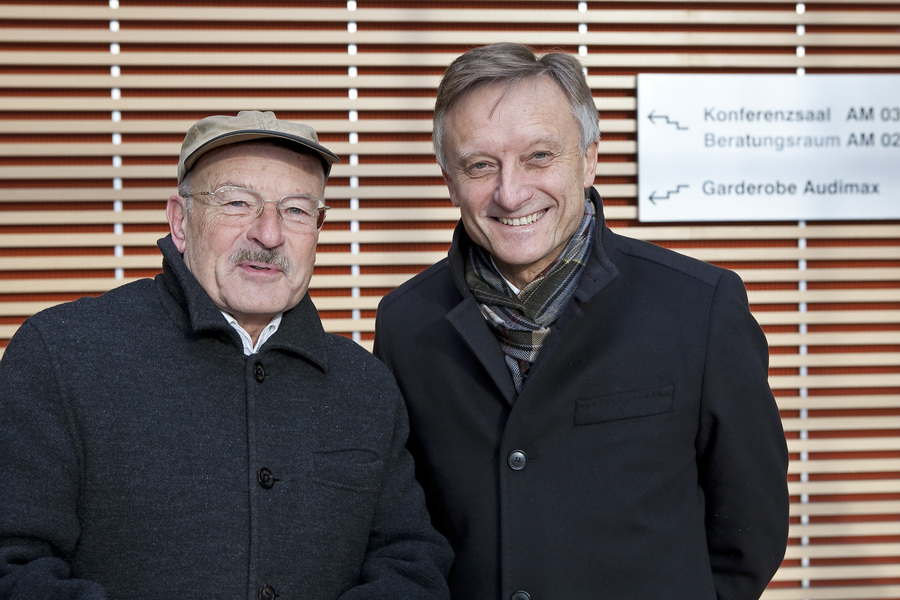
The Viadrina celebrates its 500th birthday on 26 April 2006, having already existed as the first Brandenburg state university Alma Mater Viadrina from 1506 to 1811 and then again as the European University Viadrina from 1991. That is why the 15th birthday is being celebrated at the same time. In addition to the ceremony in the concert hall, the university is celebrating the anniversary with exhibitions, a lecture series "University and City", special publications and flags throughout the cityscape.
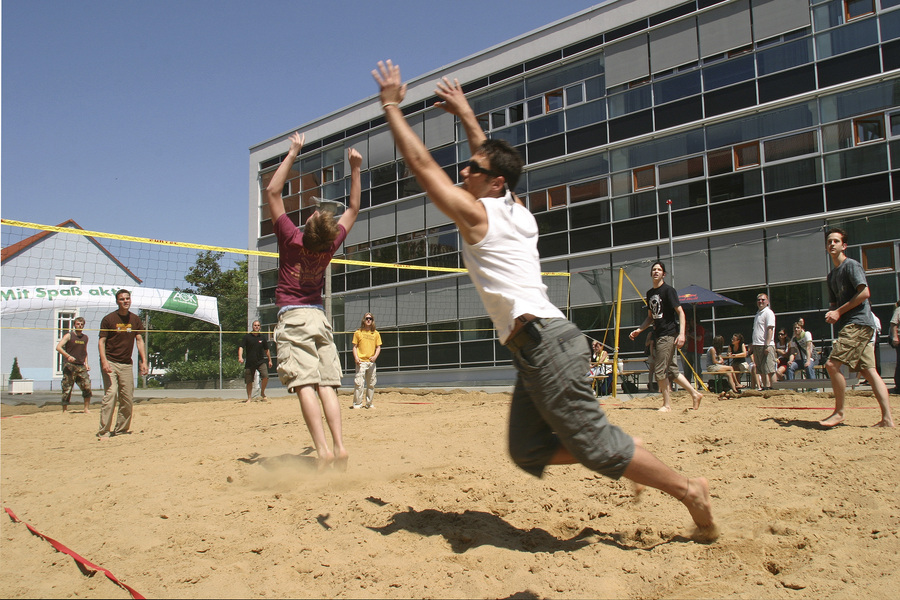
In summer 2006, 1,000 tonnes of sand turn the campus into a beach volleyball and badminton court. On the initiative of the sports officer from the AStA, the Große Oderstraße is repurposed for several weeks under the motto „Live the Campus”. The aim: to demonstrate how attractive life on campus can be.
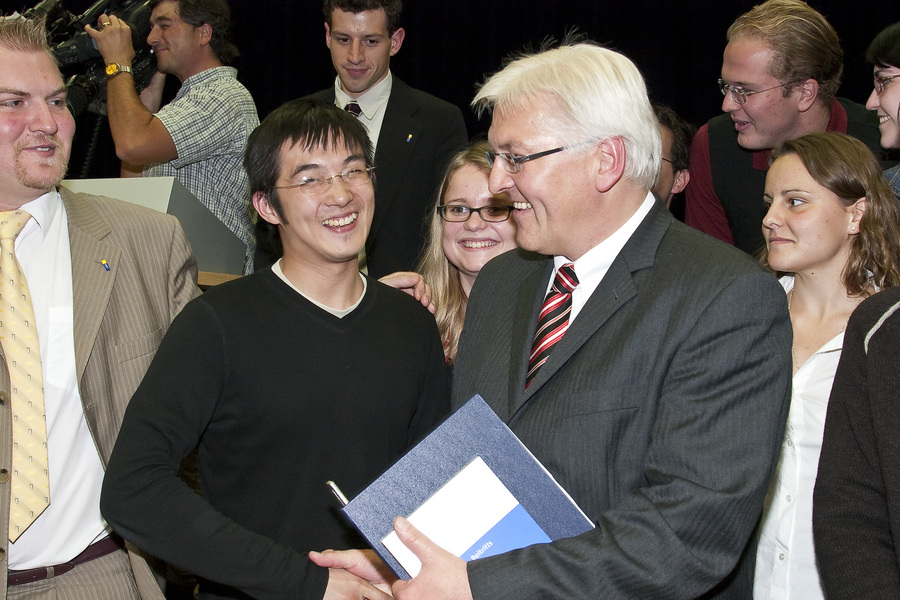
„As you know, the Viadrina project is very close to my heart. The Viadrina University is a fantastic success. It shows how encounters and co-operation in a Europe of open borders can work extremely well. It is therefore also a shining example of German-Polish relations”, with these words Federal Foreign Minister Frank-Walter Steinmeier opened the Academic Year 2006/2007 on 26 October 2006. The visit is also memorable because the politician arrives two hours late due to a current political appointment – waiting time which, among other things, student Melanie Piontek fills with a quickly organised saxophone solo.
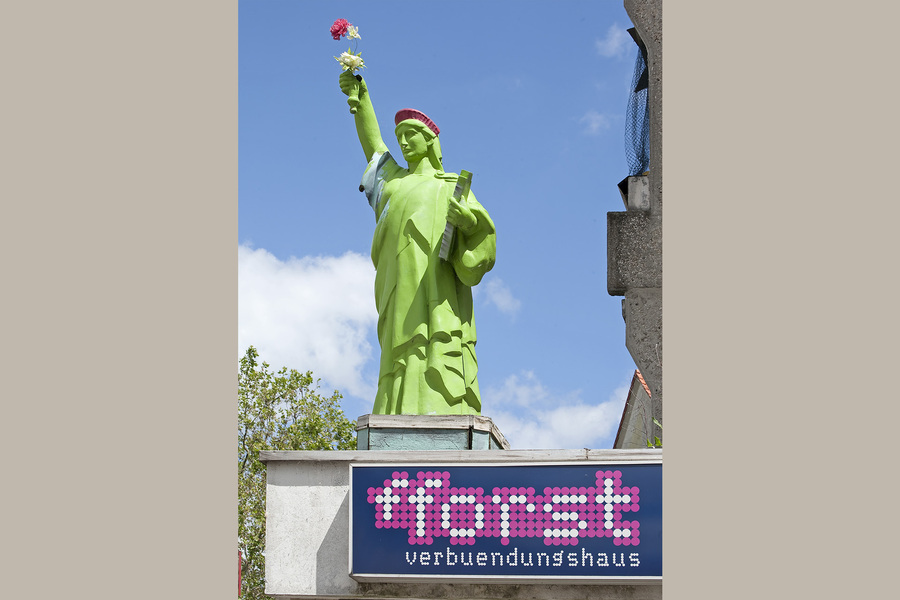
The sponsorship prize, which is awarded at the Viadrina Prize ceremony, goes 2006 to the "Verbuendungshaus fforst" for the housing project "Intercultural Slab"; a prefabricated building directly on the German-Polish border, which the students have brought back to life with the support of Frankfurt Wohnungswirtschaft WOWI and together with existing tenants.
On 13 December 2006, the long-serving Chancellor of the Europa-Universität, Peter Stahl (r.), is bid farewell as he retires. After twelve years, he hands over the reins to his successor Christian Zens.
In an unusual student project of the Viadrina's cross-border foreign language centre, German and Polish children on both sides of the Oder are learning the language of their neighbour; the project is presented to the public on 27 February 2007. Once a week, students from the European University Viadrina Frankfurt (Oder) visit nurseries in Germany and Poland and speak the language of their neighbours with the children. A total of 13 daycare centres are involved, seven in Germany and six in Poland.
On 3 July 2007, the Viadrina is the venue for a keynote speech on European policy. To mark the end of the German EU Council Presidency, Federal Finance Minister Peer Steinbrück will speak to an audience of 500 in the packed Audimax on 3 July 2007 at the Viadrina. „Nowhere does the European idea manifest itself so strongly, so tangibly, as here in Frankfurt and at its European University Viadrina. Here on the Oder, on the former edge and in the centre of today's united Europe, you can literally feel how European integration happens on a daily basis, how it is developed and how the growing together of European neighbours is progressing," says Steinbrück.
From 18 June to 6 July 2007, the „Viadrina Summer University” takes place, focusing on the topic of „Religion and Modernity”. 23 participants from ten countries will be exploring the role of religion in modern societies. In 2005, the summer university was held on the topic of „Oppositional Cultures”, in 2006 on the topic of „Border Cultures”.
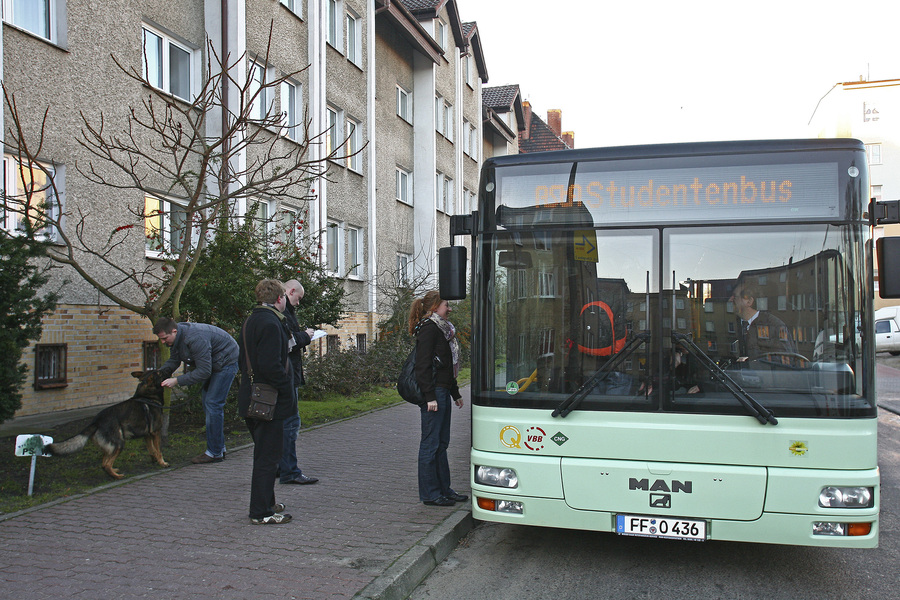
In a self-financed pilot project, the General Student Committee (AStA) of the Viadrina is organising a bus service between the border towns. From 28 January to 8 February 2008, the bus will run daily between 8 am and 6 pm, transporting students between Słubice and Frankfurt (Oder) to the university campuses and halls of residence. The AStA wants to draw attention to the need for cross-border public transport. Four years later, the lobbying work had an effect: a regular bus route was established for the cities.
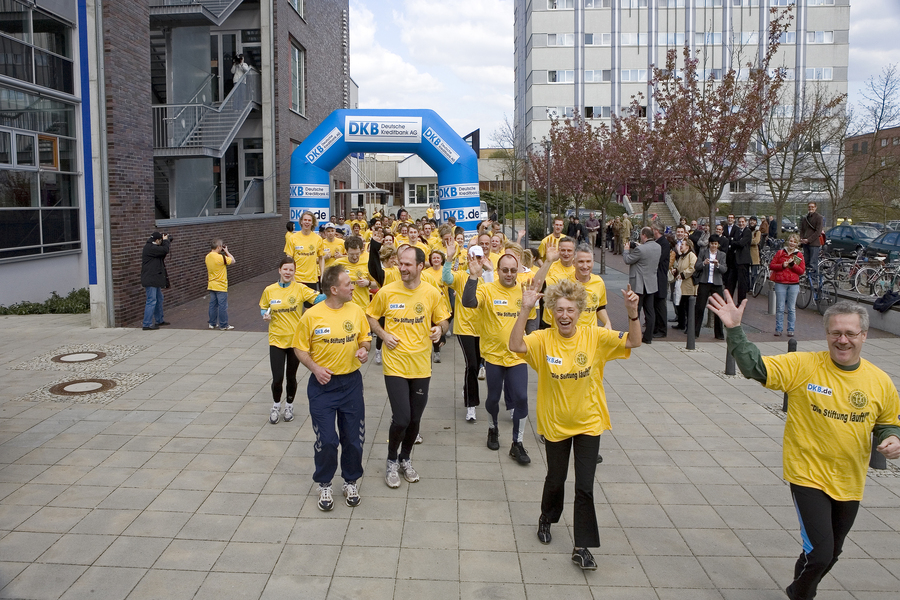
With effect from 1 March 2008, the European University Viadrina Frankfurt (Oder) is a foundation university. And on 21 April 2008, the new foundation status will be celebrated for a whole day. "Know more, decide more" is now the new motto, said University President Prof Dr Gesine Schwan in her speech. In the afternoon, dozens of university members and supporters don yellow T-shirts to show their support: „The foundation is running“.
The first Viadrina musical with the title „BRATS” celebrates its premiere on 7 May 2008 and brings to light the unexpected talents of the students – and also: three full performances in the Audimax, goose bumps and the best entertainment.
After the last of her four farewell speeches, Viadrina President Prof. Dr Gesine Schwan will be picked up from the Collegium Polonicum in Słubice on 9 July 2008 and accompanied by students to the farewell party at the Verbuendungshaus fforst in Frankfurt (Oder). On the way there, she has to write a message in a bottle and throw it into the Oder from the city bridge. What text is in the message in a bottle remains her secret.
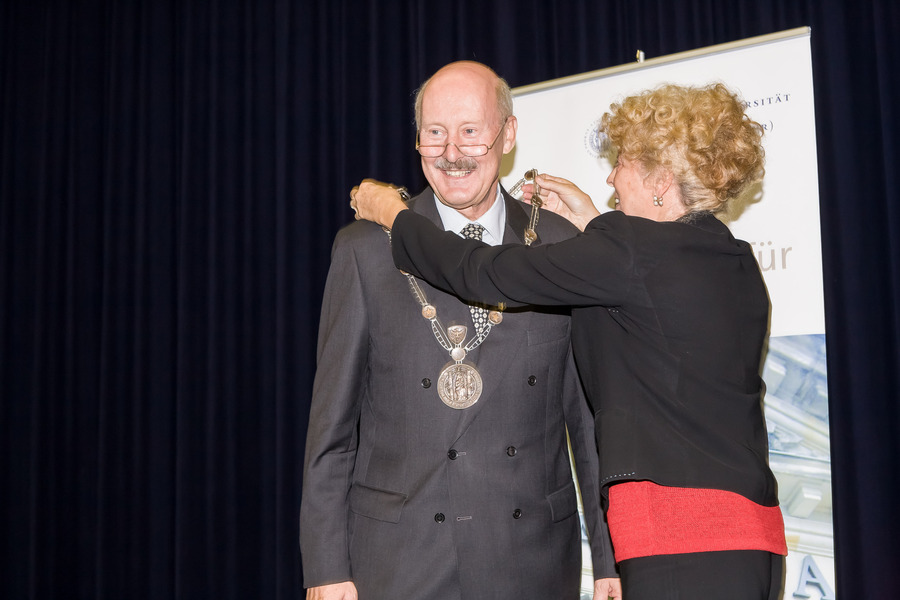
At the handover on 13 October 2008, the new President of Viadrina, long-time diplomat Dr Gunter Pleuger, receives the chain of office from former President Prof. Dr Gesine Schwan. „You will not regret your decision,” she said to her successor in office at the opening of the Academic Year.
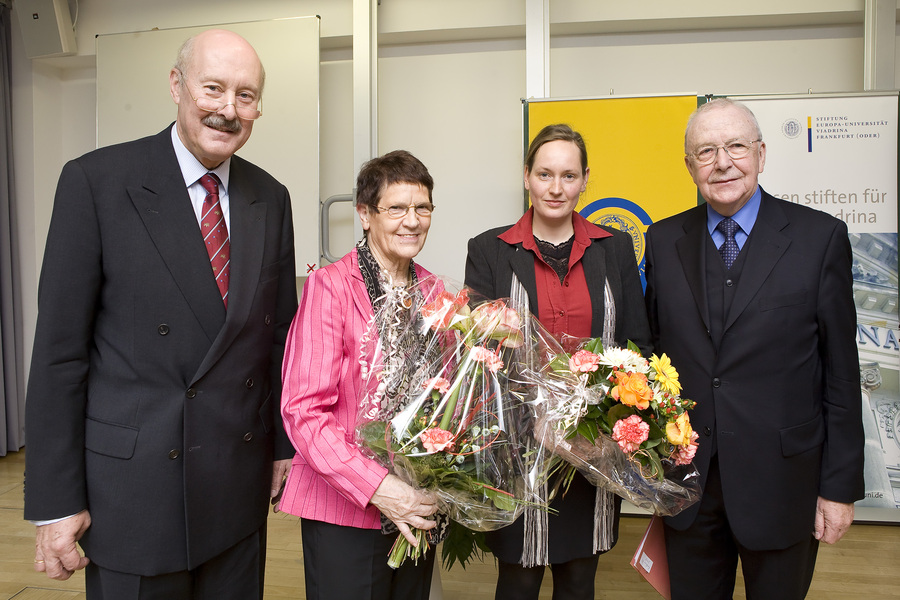
The tenth Viadrina Prize will be awarded at a ceremony on 26 November 2008 to former Bundestag President Prof. Dr. Rita Süssmuth and the magazine „polenplus”. The Polish journalist Adam Krzemiński honours Süssmuth's commitment to German-Polish relations: „As patron of the German-Polish societies and the magazine 'Dialogue’, Mrs Süssmuth is one of the best addresses for those who care about the German-Polish neighbourhood, who have been fighting against prejudices and clichés for decades, for tolerance, discussion and dialogue;for tolerance, openness to discussion and empathy, not only among these neighbours, and - last but not least - see the Weimar Triangle as a real opportunity for Europe.”
Federal Chancellor Angela Merkel pays a visit to the European University on 3 June 2009 and signs the Viadrina's guest book and the city's Golden Book. She will then give a speech on the European elections on Frankfurt's Rathausplatz
.Students at Viadrina are taking part in the nationwide education strike week in June 2009 with original actions. They are complaining about underfunding, de-democratisation and the schoolisation of education, among other things with a symbolic „trip to Jerusalem”, in which they fight for coveted university places. A flash mob made it into the national media, in which students in the foyer of the Gräfin-Dänhoff building dropped to the floor in response to a signal and an obituary for education was read out.
In recognition of its intensive efforts to be family-friendly, the European University was awarded the certificate „Family-friendly university” by „berufundfamilie gGmbH” in August 2009. The university library, canteen and halls of residence are equipped with furniture and toys for children; a breastfeeding and quiet room, a planned parent-child room and the possibility of emergency childcare make everyday working life easier for students and staff with children. In June 2009, Viadrina's first children's festival will be celebrated on Frankfurt's Brunnenplatz.
The groundbreaking ceremony for the start of construction of the meeting place between the university buildings on 7 September 2009 (from right to left): Brandenburg's Minister of Economic Affairs Reinhold Dellmann, student Annett Bachstein, Student Union Director Dr Ulrike Hartmann, City Economic Affairs Officer Peter Edelmann, architect Jens Henningsen, construction company boss Klaus Buchwald and University Chancellor Christian Zens shovelling. The newly designed square will be inaugurated in October 2010, with open spaces and grass terraces replacing the multi-lane thoroughfare and car park.
In recognition of his services to German-Polish understanding, Tadeusz Mazowiecki, Poland's first non-communist head of government since 1945, will be honoured with the Viadrina Prize 2009 on 30 November 2009. „The spirit of tolerance and the contribution to building a European architecture of peace: Tadeusz Mazowiecki corresponds to this in a special way, as he symbolises the humanity that the then Polish government under his leadership showed to the GDR refugees in the Warsaw embassy,„ said Dr Gunter Pleuger, President of the Viadrina Foundation. Gunter Pleuger, President of the European University, welcomed the award.
On the Oder Bridge: Foreign Ministers Dr Guido Westerwelle (2nd from left) and Radosław Sikorski with the mayors of the border towns Martin Wilke (right) and Ryszard Bodziacki (left). On the occasion of the 20th anniversary of the German-Polish Border Treaty, 40 years of the Warsaw Treaty and 60 years of the Görlitz Agreement, Viadrina, in cooperation with the Foundation for German-Polish Cooperation, is hosting the conference „Oder-Neiße Border: From Dividing to Connecting“ on 2 and 3 November 2010.
At the Viadrina Prize ceremony on 1 December 2010, Polish Ambassador Marek Prawda (right) said: „This year the jury has decided in favour of an artist who fits into this circle of exceptional personalities in a very special way; a man who can be considered an exceptional artist, history mediator, social critic and film diplomat in equal measure: the director Volker Schlöndorff.
The Oscar-winning director had already wowed the Frankfurt audience the evening before: at a film evening with an audience discussion, the director’s cut of The Tin Drum” had just been released.
2021-2025
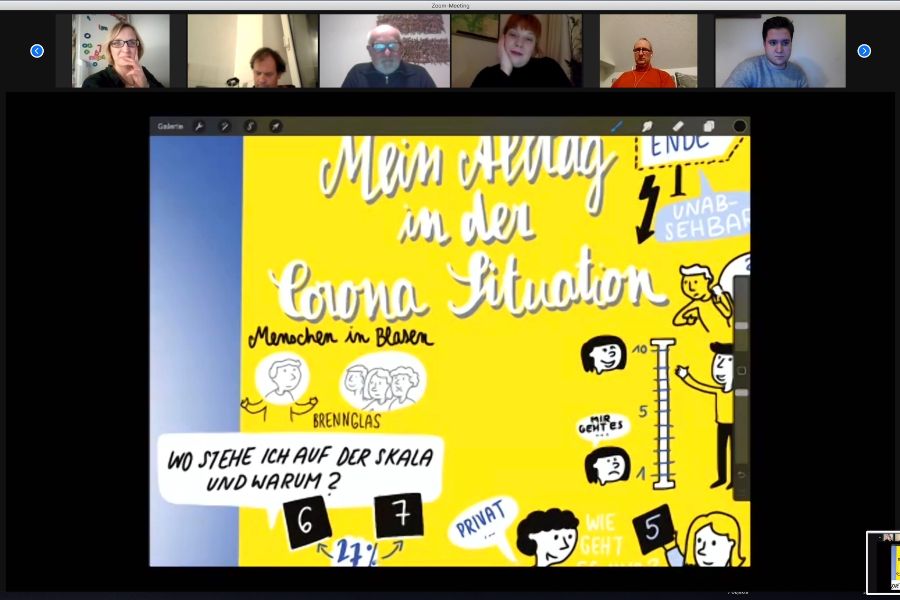
„How do you see it?“ is the topic on 24 February 2021. The Viadrina invites you to an open online exchange on the topic of Corona. We are looking for professional and private experiences with the pandemic. What is the everyday situation like for others? What is going well, what less so? Around 80 interested people, mainly from Frankfurt (Oder), are taking part in the digital round table.
On 28 October 2021, a second edition of the online dialogue will take place on the topic „Against each other – Next to each other – With each other? How do we want to live together in our twin city?“.
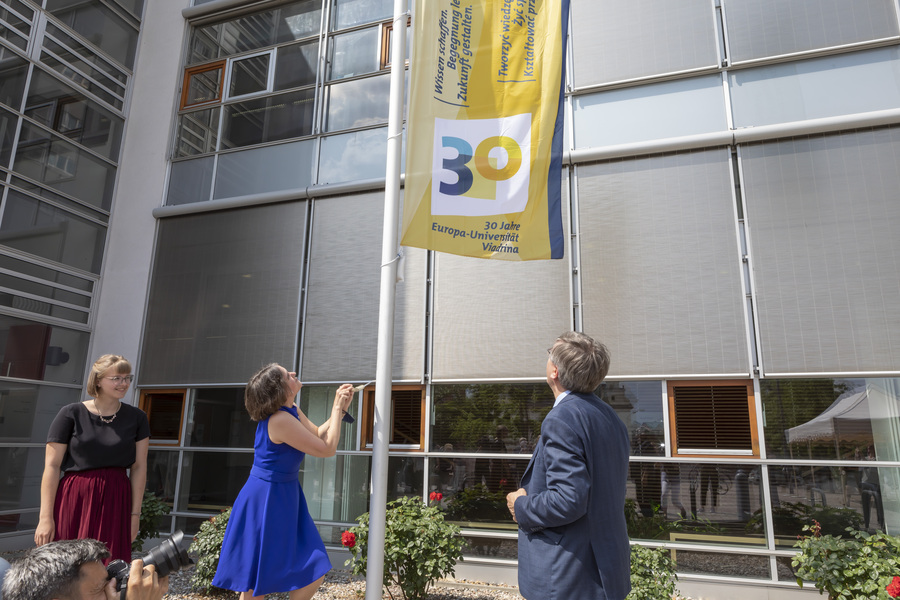
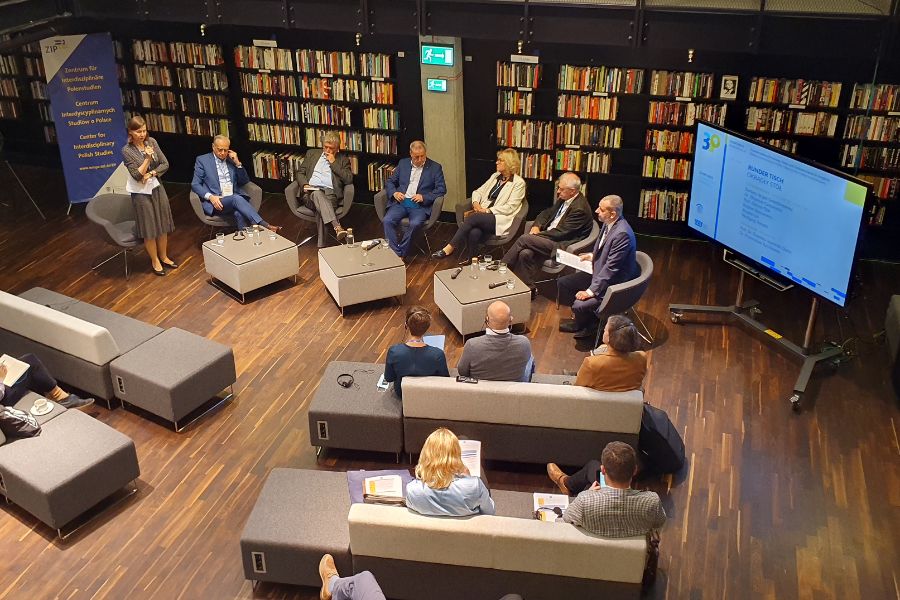
Viadrina is celebrating the 30th anniversary of its founding on 15 July 2021 with flags in many places in the twin city, an online panel discussion and a photo exhibition. The ceremony with a panel discussion on the role of the European University in science and society marks the start of a variety of activities with which Viadrina will reflect on its history and its future role until October 2022 - the date on which the first students came to the Oder 30 years ago.
On the occasion of its tenth anniversary, the Centre for Interdisciplinary Polish Studies is holding its annual conference on 23 and 24 September 2021 in Gdansk, where social scientists, historians, political scientists and economists will compare the transformation processes in Poland and East Germany at the birthplace of the Solidarność movement.
On the occasion of its actual birthday in June, the centre's team in Frankfurt's city centre took over the sponsorship of a drinking fountain in front of its new home in the pedestrian zone of Grosse Scharrnstrasse, thus demonstrating its roots in the city.
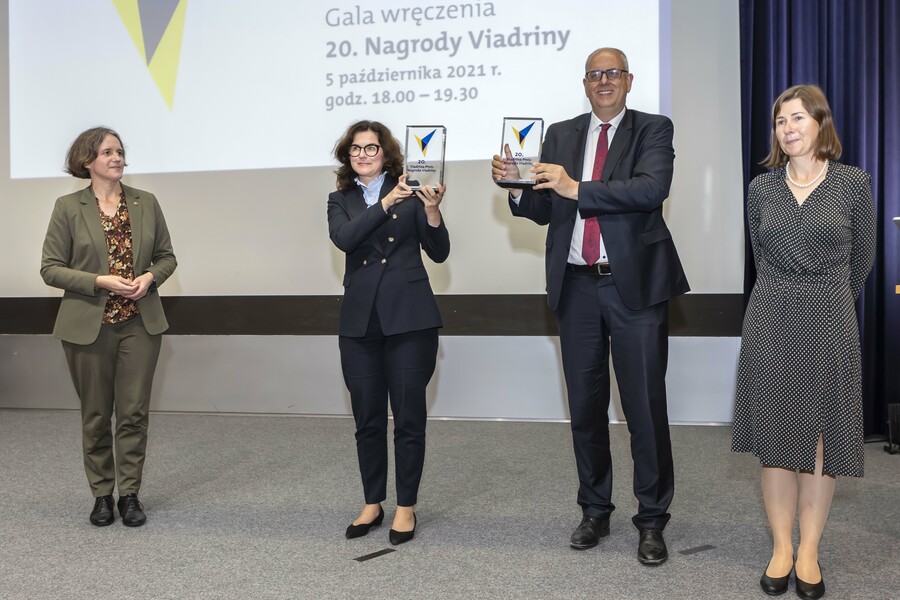
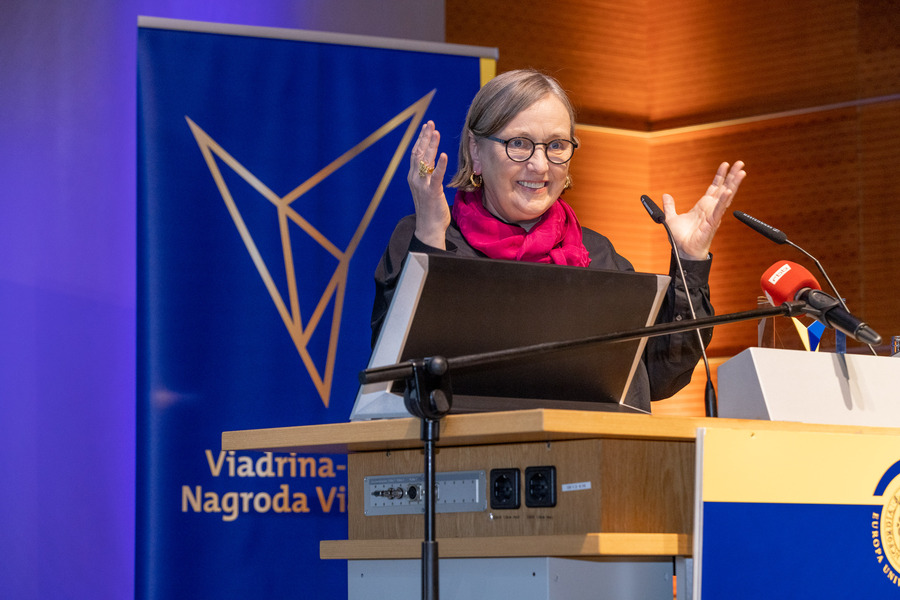
The 20th Viadrina Prize will be awarded to the city partnership between Gdansk and Bremen on 5 October 2021. Aleksandra Dulkiewicz, Mayor of Gdansk, and Dr Andreas Bovenschulte, Mayor of the Free Hanseatic City of Bremen, will accept the award. The award ceremony commemorates the memory of Paweł Adamowicz, the former mayor of Gdansk who was murdered in January 2019. „This award is an honour for his work – a giant on whose shoulders we stand“, said Bovenschulte in his speech, which Piotr Adamwicz – the brother of the murdered man – visibly moved, followed from the front row.
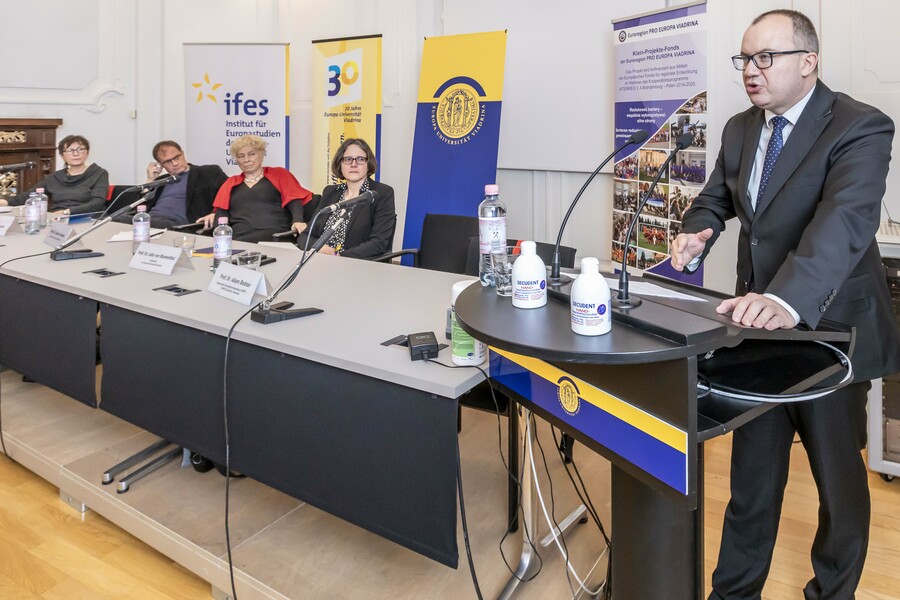
An impressive example of the culture of debate at Viadrina is offered by a discussion evening with Dr Adam Bodnar on 3 November 2021. Shortly after the Polish Constitutional Court decided to place Polish law above European law, the discussion with Prof Dr Gesine Schwan and Prof Dr Timm Beichelt will revolve around the big, pressing question: How to deal with illiberal and autocratic governments in the European region?
On this evening, the Polish government's recently retired human rights ombudsman, Adam Bodnar, denies the current Polish government any respect for the principles of the rule of law and yet does not appear hopeless.
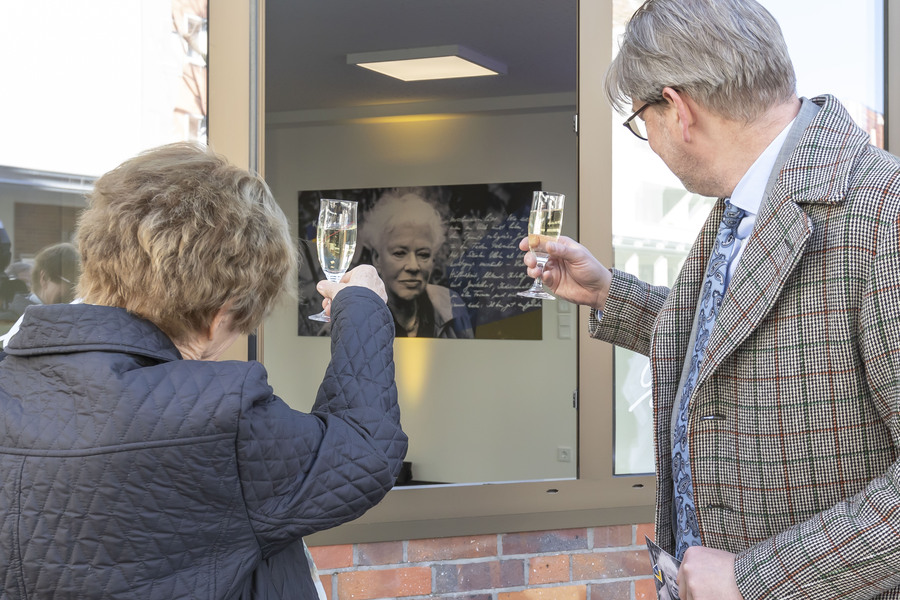
Since 21 March 2022, the Viadrina seminar room on the ground floor of the building at Gro en Scharrnstraße 23 a has borne the name Karin Wolff. The Viadrina thus honours the translator of Polish literature and advocate of German-Polish understanding. The emeritus Viadrina literary scholar Prof. Dr. Christa Ebert said in her laudatory speech: "I can imagine the unhappy and astonished look on her face when she heard of the honour that her name - Karin Wolff - would adorn a seminar room at the Viadrina, which she secretly cherished but frequently decorated.“
A group of Viadrina employees suggested the name as part of an internal university competition.
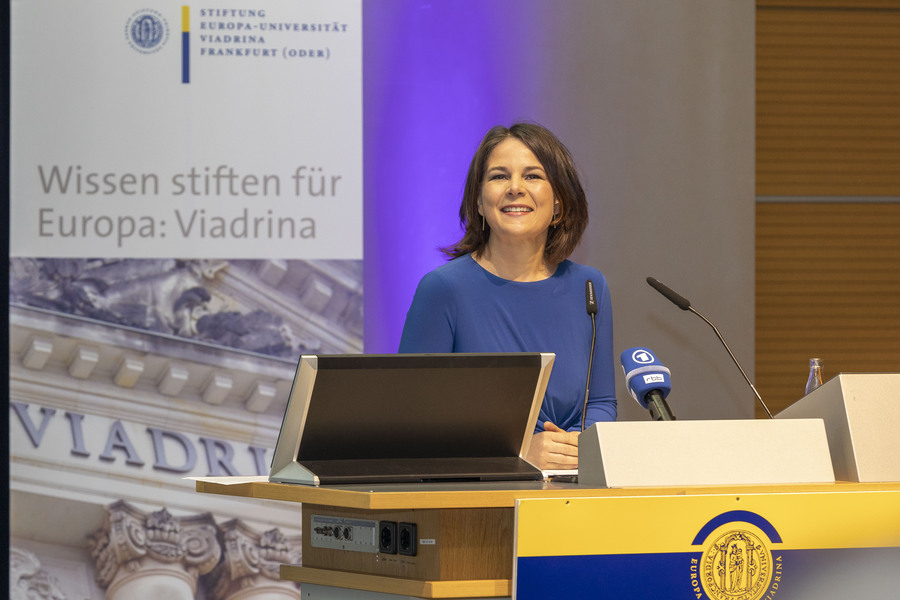
„Living Europe, strengthening Europe“ is the title of the speech that Foreign Minister Annalena Baerbock will give on Europe Day on 9 May 2022 in the Viadrina Audimax. In view of the Russian war against Ukraine, she says „Now we have to deepen Europe further. That means continuing to build a clear foundation of values and not only expanding, but also deepening together, as has been anticipated at this university for years.
Your visit is the prelude to the „Forum of European Citiesädldquo;. Numerous guests from European twin and Hanseatic cities as well as European academics will be discussing the topic „Ambivalences of Transformation“.
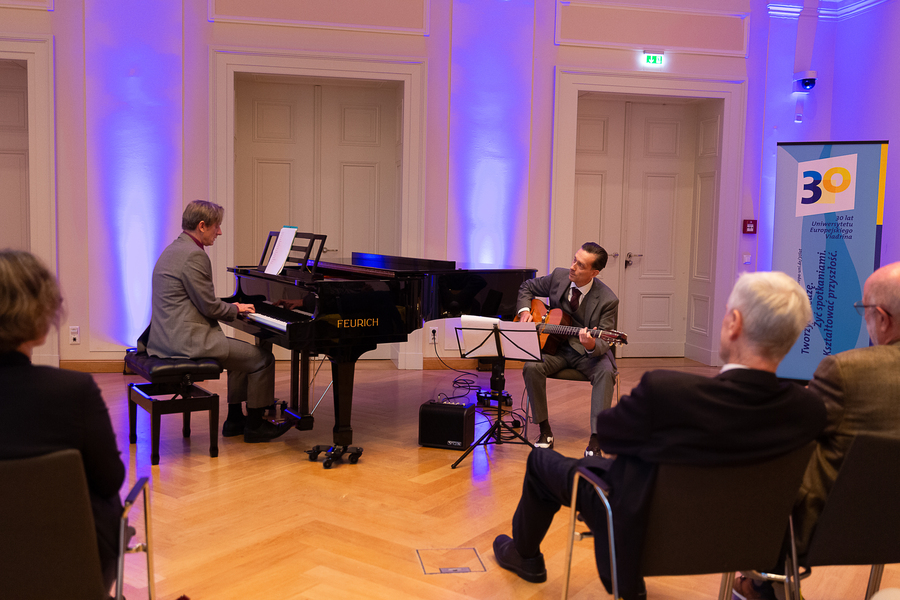
Buzzy music and a moving farewell will characterise the lounge concert on 20 September 2022. The Berlin duo „la grande bouche” will play in the Logensaal in honour of the Viadrina Circle of Friends, in which friends of the Viadrina have been involved for 30 years.
At the same time, the evening is the last public appointment of the outgoing Viadrina President Prof Dr Julia von Blumenthal. Lord Mayor and Chairman of the Circle of Sponsors René Wilke asks her to sign the city's Golden Book and says: "I am personally deeply grateful to you for what you have achieved, for your connection to the city and for all the advice and consultations in the background.
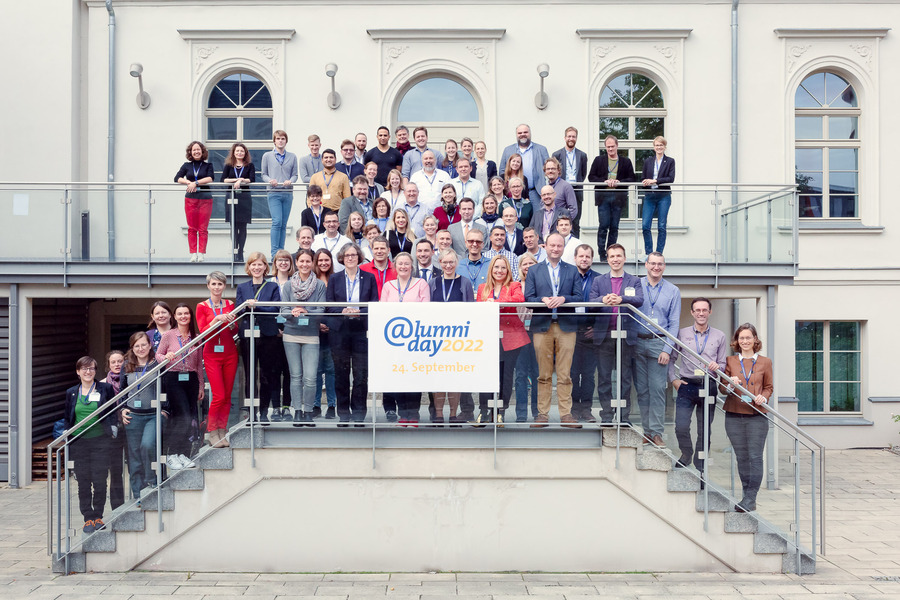
On 24 September 2022, former students will come together on campus to reminisce about their studies and find out about current developments at the Viadrina. After a tour of the city and a tram ride to the halls of residence, the programme includes a panel discussion on start-ups, digitalisation and Ukraine activities at the European University. The alumni will also tell each other about their very different career paths in short discussion rounds.
Member of the European Parliament and Polish opposition politician Róża Gräfin von Thun and Hohenstein will receive the 21st Viadrina Prize on 13 October 2022 . In her speech, Róża Thun talks about the biggest challenge the EU is currently facing: the war against Ukraine. „I know that many – especially in Western Europe – want to believe that this war is far away and that it is actually not their war. It really is high time to understand: It is our war! We have all been attacked by Putin; our cohesion, our values, our civilisation are in danger,
she warns.
The musical children's and youth project „Weimarer Dreieckchen“ is honoured with the Förderpreis.
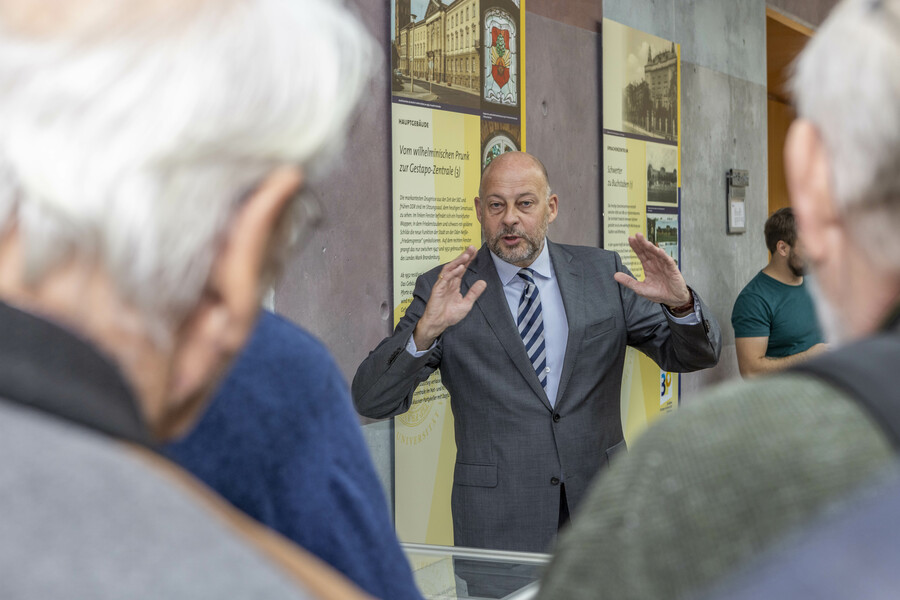
Electric filing cabinets, a „party cellar“ with a secret emergency exit, hidden memorial plaques to those who died in the First World War and long-gone coats of arms in the Senate Hall. All this is brought to light in a practical seminar by Viadrina historian Prof Dr Werner Benecke, which deals with the history of today's university building as part of the 30th anniversary of the Viadrina. The result is the exhibition „New Spirit in Old Walls”, which will open on 1 November 2022 in the Gräfin-Dänhoff building.
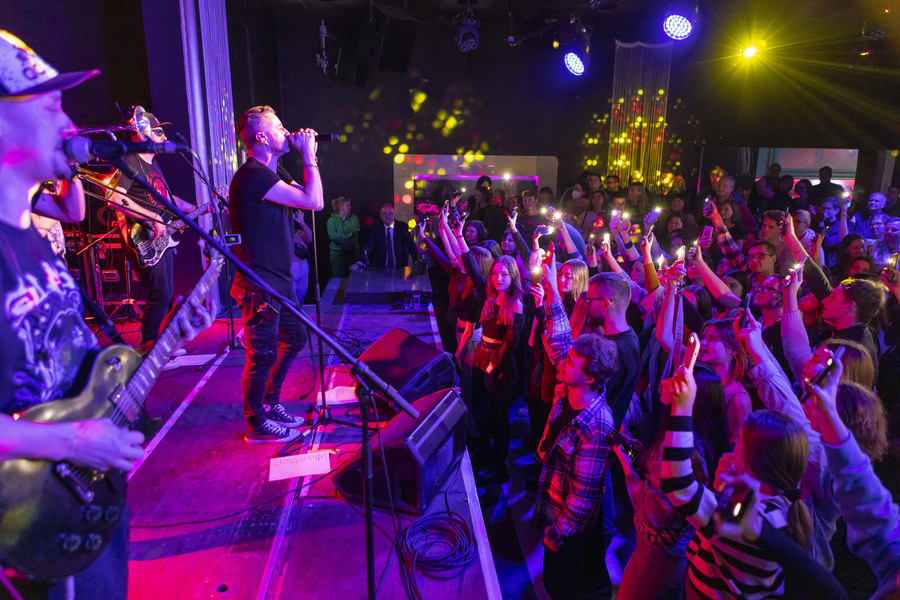
Exciting poetry reading, analytical literary discussion and wild party - all this is the evening with the Ukrainian poet and singer Serhij Zhadan on 5 December 2022 at Frankfurt's Club Kamea. At the invitation of Viadrina, Zhadan will end the tour with his band „Zhadan i Sobaky“ in Frankfurt (Oder) before returning to his native Kharkiv. The proceeds from the evening will benefit the National Karazin University of Kharkiv - one of Viadrina's four Ukrainian partner universities.
Press and Communications
- 59 Große Scharrnstraße, Rooms: Ground Floor 113b–117, 102
- 15230 Frankfurt (Oder)
- +49 335 5534 4515
- presse@europa-uni.de
- Team und Portfolio