
Writing Across Languages: An ERUA Traveling Seminar in Paris
From 19 to 22 January 2026, students from Europa-Universität Viadrina, Goethe University Frankfurt, Université Paris 8, and the C.E.R.P.E. (Centre d'Études et de Recherches pour la Petite Enfance) came together in Paris for the ERUA Traveling Seminar "Life Writing – Writing in Life: Autobiographical Writing in Multilingual and Transcultural Settings". The seminar was led by PD Dr. Andrea Gremels (Viadrina), Prof. Delphine Leroy (Paris 8), and Alessandra Casigli (C.E.R.P.E.) bringing together the disciplines of Transcultural Literary Studies, Educational Sciences, and early childhood practice. Built around both theory and practical experience, the seminar examined the relationship multilingual people have with writing, and aimed to help students develop their own writing practice across languages by drawing on their personal multilingual or migratory backgrounds. Mbalou Savane, a student at Europa-Universität Viadrina, attended the seminar. Here is her account of what happened.
The excursion to Paris was one of the most enriching academic and personal experiences of my studies. Beyond the academic programme, it became a lived example of multilingual and transcultural exchange.
When we arrived at Université Paris 8 on 19 January, our group from Viadrina and Goethe University gathered for a short recap. It helped me understand the theoretical framework of the course, especially the concepts of language portraits and multilingual life writing. Introducing ourselves by sharing our linguistic backgrounds immediately created a sense of openness, curiosity, and diversity.
Four Days in Paris
Joined by the Paris 8 students, multilingualism became a lively reality, and we spontaneously formed small translation groups. Here, I did not feel like a visitor; I felt welcomed into a shared intellectual space. Discussing language portraits and autobiographical writing in such a diverse group made theoretical concepts instantly tangible. It was not only about analysing texts, but also about recognising ourselves in them.
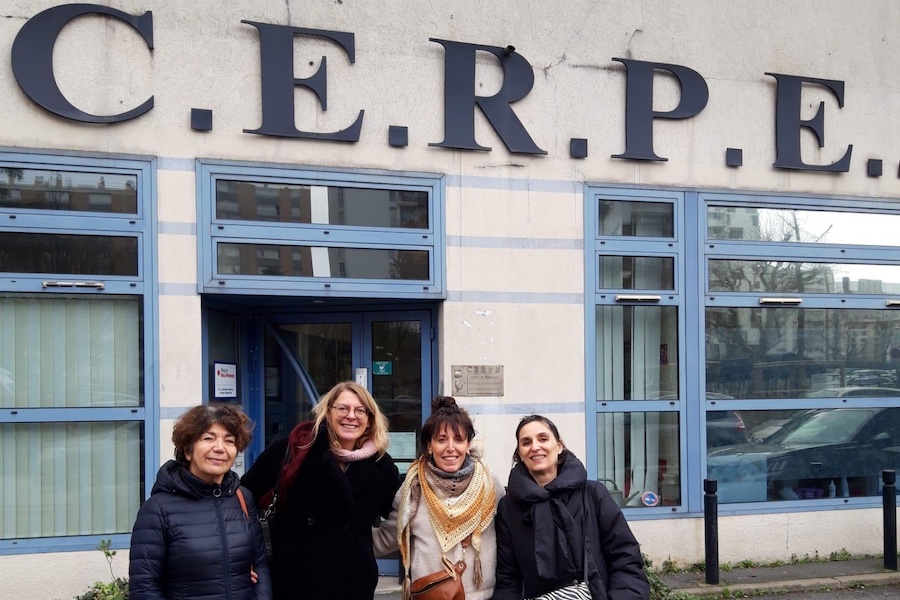
The next day, on 20 January, we visited the C.E.R.P.E. in Aubervilliers. The writing atelier and the collective analysis of autobiographical excerpts allowed us to reflect on how life writing can function as both personal testimony and social critique. We also watched the documentary Familles en errance (Families in Exile), presented by its director and doctor Christine Davoudian. The film opened up a discussion on the linguistic frontiers migrant women face in French hospitals, especially around pregnancy and childcare. It highlighted issues of displacement, vulnerability, and belonging, and strongly echoed my own experience of navigating multiple languages in different geographical contexts.
One of the most striking moments was the visit to the Cité internationale de la langue française at the Château de Villers-Cotterêts on 21 January. The guided tour offered a panorama of the linguistic history and diversity of the French language, focusing especially on France's colonial past in Africa, the Americas, and the Indian Ocean region. The exhibition presented French as “une invention continue” — an ongoing invention — and emphasised that no language exists in isolation. It challenged the notion of linguistic purity and instead celebrated hybridity and reinvention. Seeing a language such as French framed as dynamic and relational helped me rethink my own relationship to it: not only as a colonial inheritance, but also as a living language constantly transformed by its speakers.
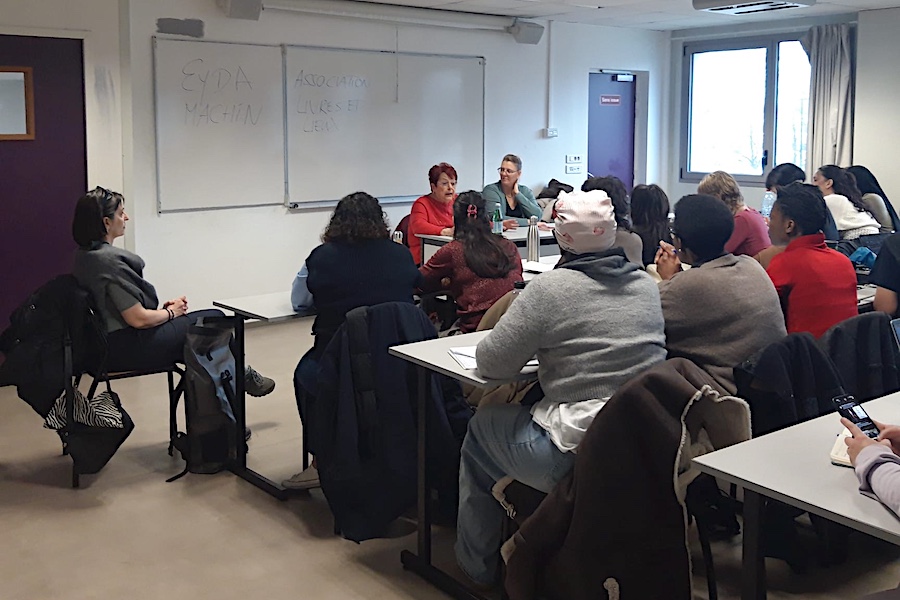
On 22 January, the Cuban-French writer Eyda Machín gave a reading from her autobiography Passerelles / Pasarelas (2010). It deals with her exile experience in France. With Machín, we discussed how life writing across languages is inherently intertwined with experiences of exile, migration, and vulnerability. Her insights gave concrete depth to everything we had been experiencing ourselves: navigating identities through language, inhabiting more than one linguistic space, and transforming personal migration into literary expression.
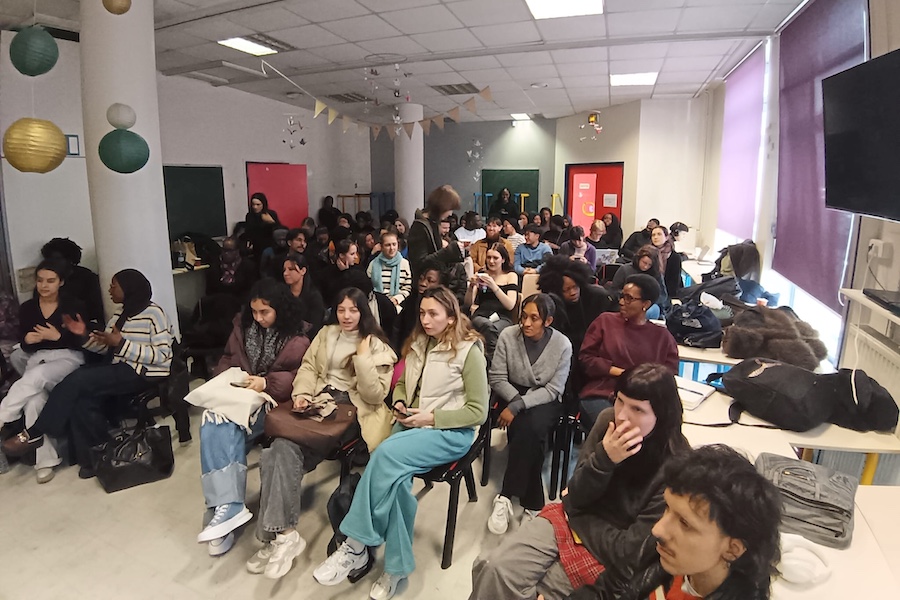
Impressions from the ERUA Traveling Seminar in Paris
Languages Coming to Life
During the seminar, what struck me most was not only the programme itself, but what happened naturally between the students:
Those of us with a French background, including myself, naturally stepped into mediating roles. We translated explanations, clarified discussions, and helped others follow the conversation. We constantly shifted between French, English, and occasionally even other languages such as Spanish. What struck me most was how organic it felt after a while. The collaboration was instant and natural, and it perfectly embodied the idea of translanguaging that we had discussed in the seminar — languages are not separated but intertwined in real-time communication.
Mbalou Savanne
The personal encounters mattered just as much. Every evening, we went out together, continuing our discussions informally, laughing, exchanging stories, and sharing cultural experiences.
On the last day, we summarised our feelings about the seminar. Words like belonging, bridge, movement, and identity emerged repeatedly. For me, the experience confirmed something I had felt throughout the whole week:
Languages are not separate systems we switch between mechanically. They are relational spaces through which we build community, negotiate identity, and create meaning together.
Mbalou Savanne
Mariam Umar Farooq, edited by Fritz Schlüter
Share article: