

Honest dialogue rather than simple answers – Viadrina at Berlin Science Week
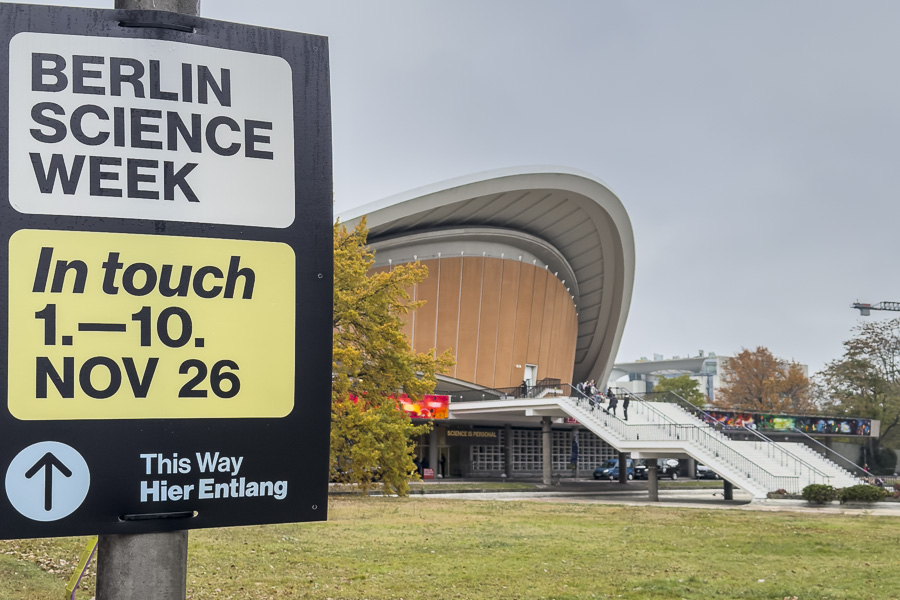
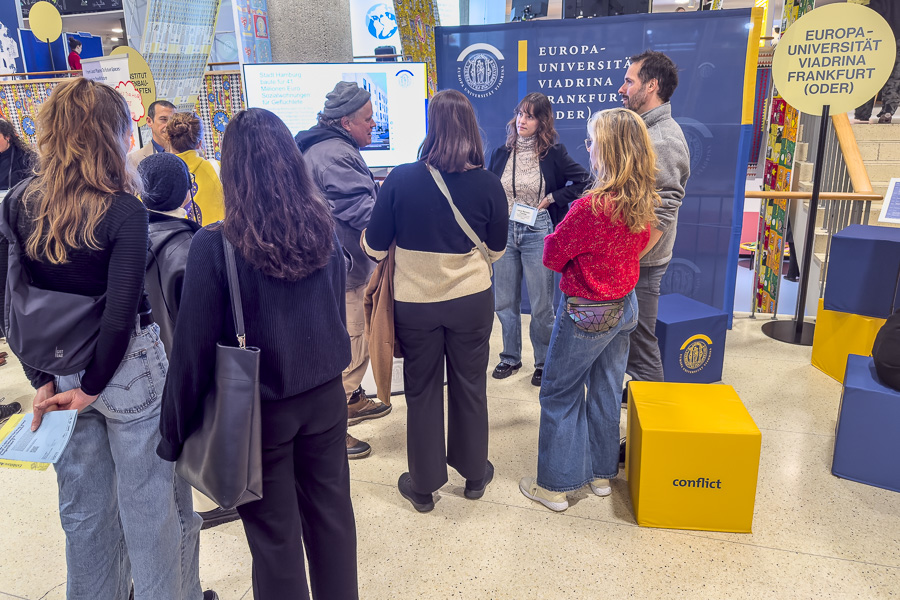
Three days, five topics, eleven researchers, countless discussions – that was Viadrina’s debut at Berlin Science Week. From 6 to 8 November 2026, researchers from Viadrina University hosted the ‘Conversation Lab for Europe’s Future’ at the festival centre in the Haus der Kulturen der Welt. The idea was a hit: without a break, visitors engaged with Viadrina researchers in a variety of formats to discuss pressing current issues on which conversations seem to be becoming increasingly difficult – ranging from right-wing extremism and disinformation to toxic geopolitics and the sense of security in local communities.
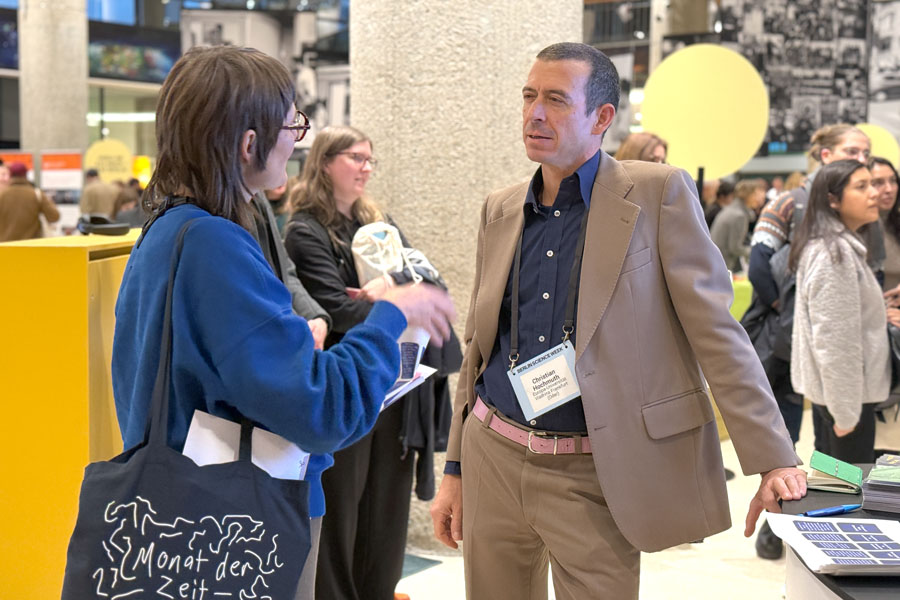
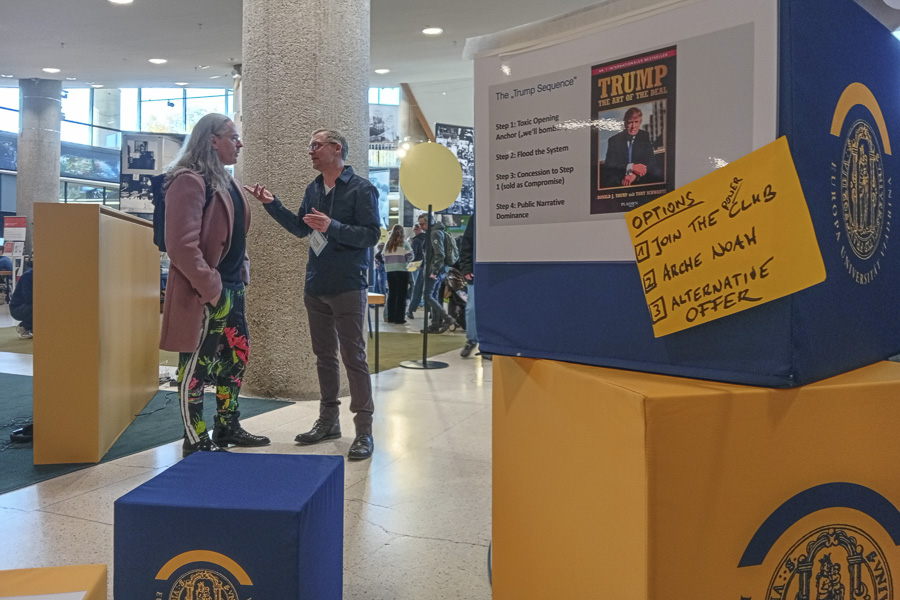
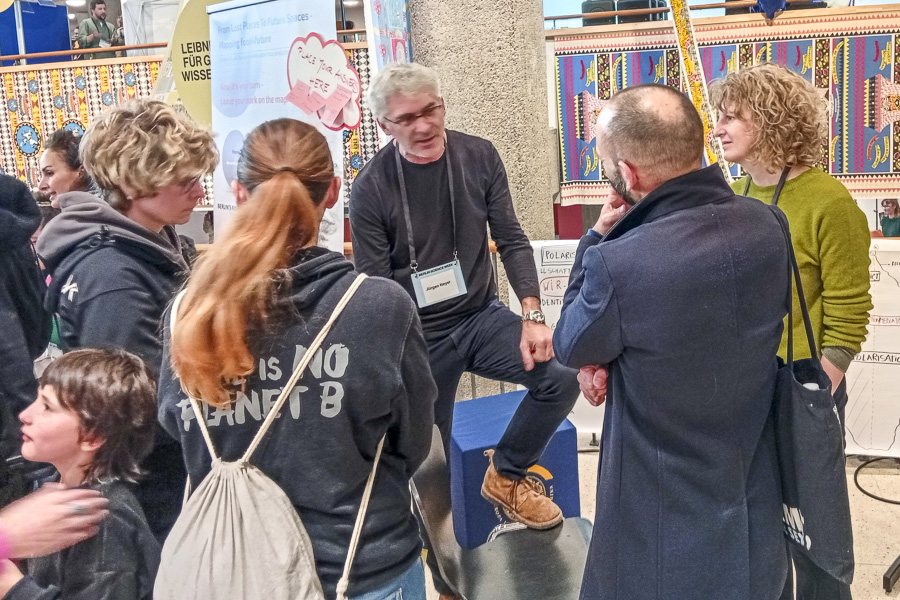
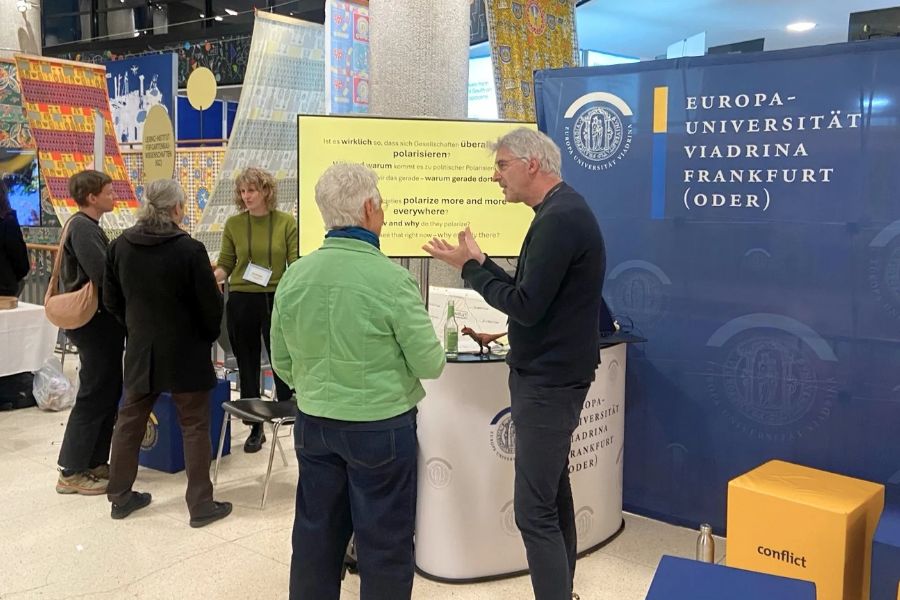
At around 1 pm on Saturday afternoon, Prof. Dr Lars Kirchhoff first needs a coffee and a throat lozenge. He has already spent three hours holding discussions in the bustling foyer of the Haus der Kulturen der Welt – about Trump and his greed for Greenland, peace negotiations on Ukraine in which Ukraine itself is not involved, and new alliances of the willing that must extend far beyond the EU. Time and again, interested members of the public stop to chat, and are surprised when Kirchhoff shows a genuine interest in their perspectives. “For me, the most valuable thing about these conversations is that there are many multipliers present, as well as many people with differing views,” says the director of the Institute for Conflict Management at Viadrina University. Researchers stop to chat just as much as those working in education, activists, families and people with an interest in politics. Even when views sometimes differ, the discussions remain constructive and respectful.
science-week-gallery
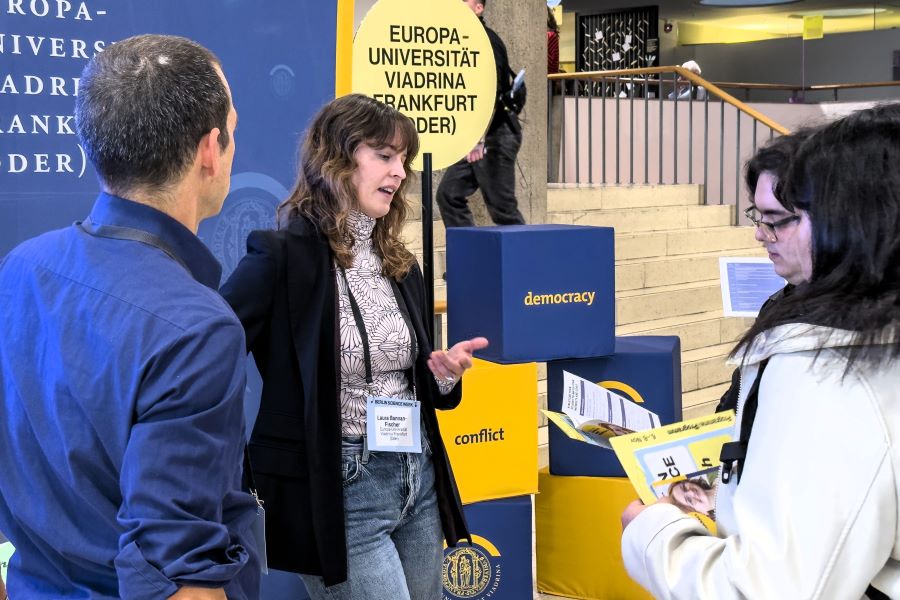
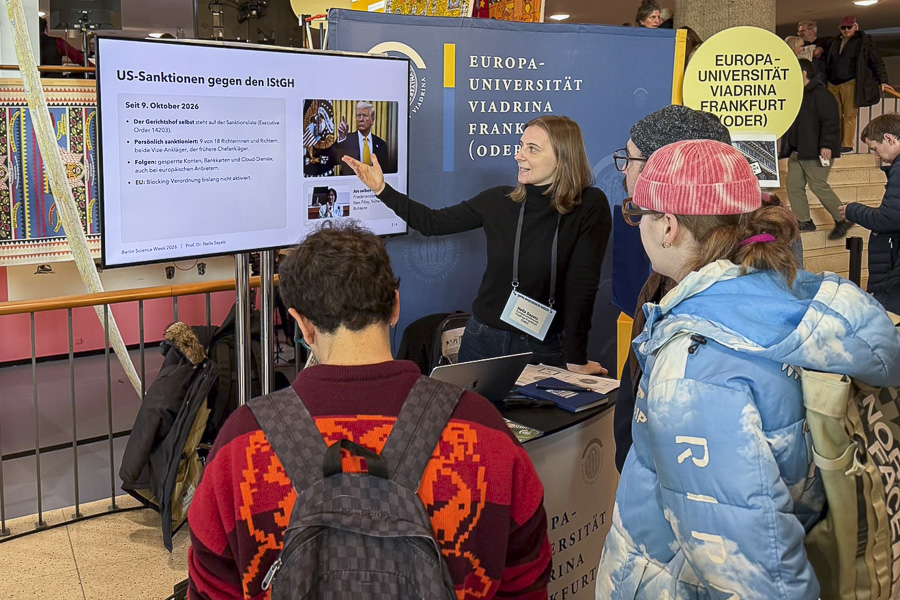
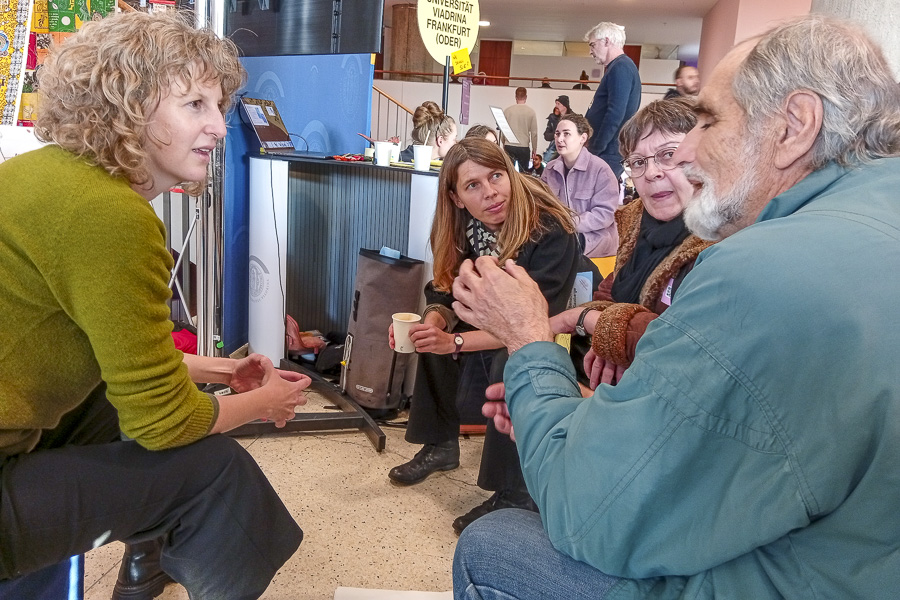
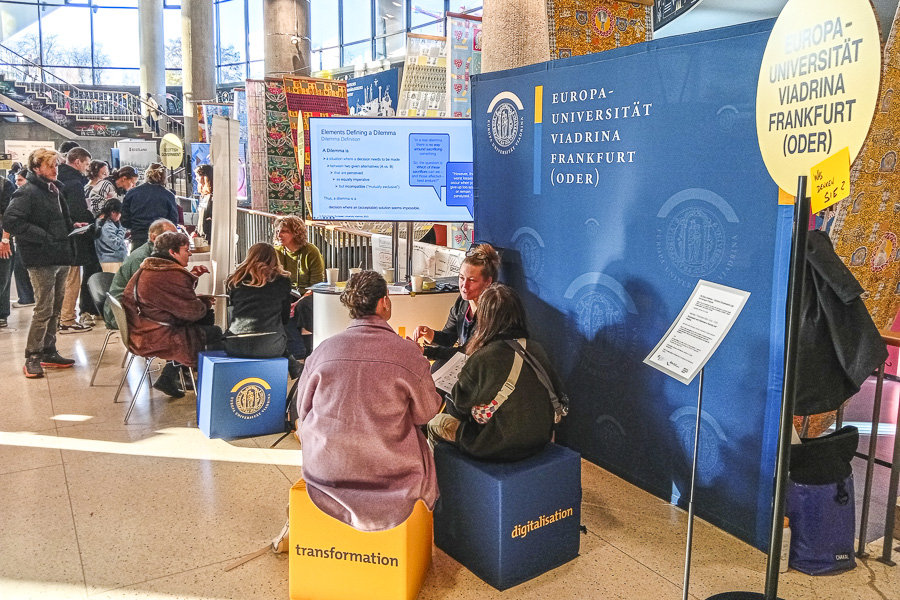
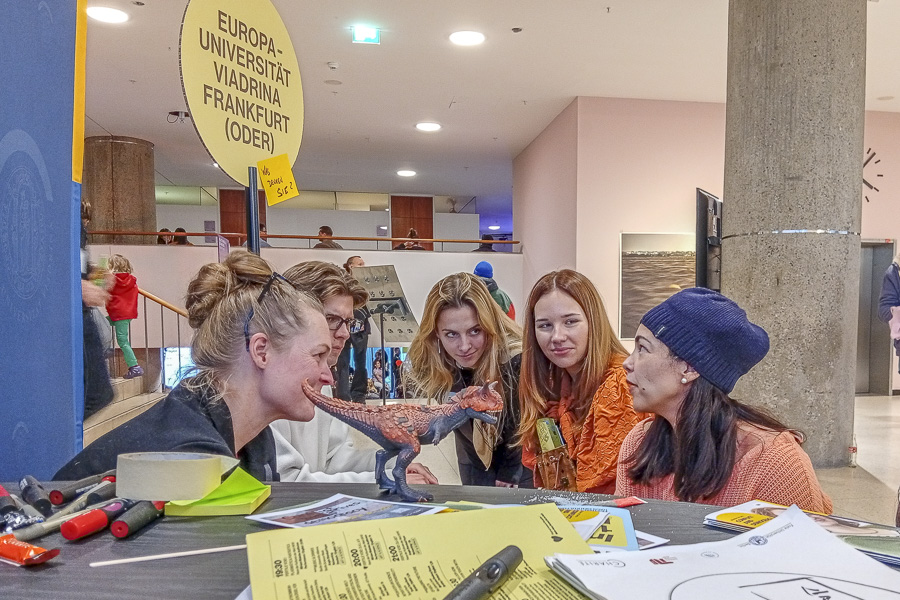
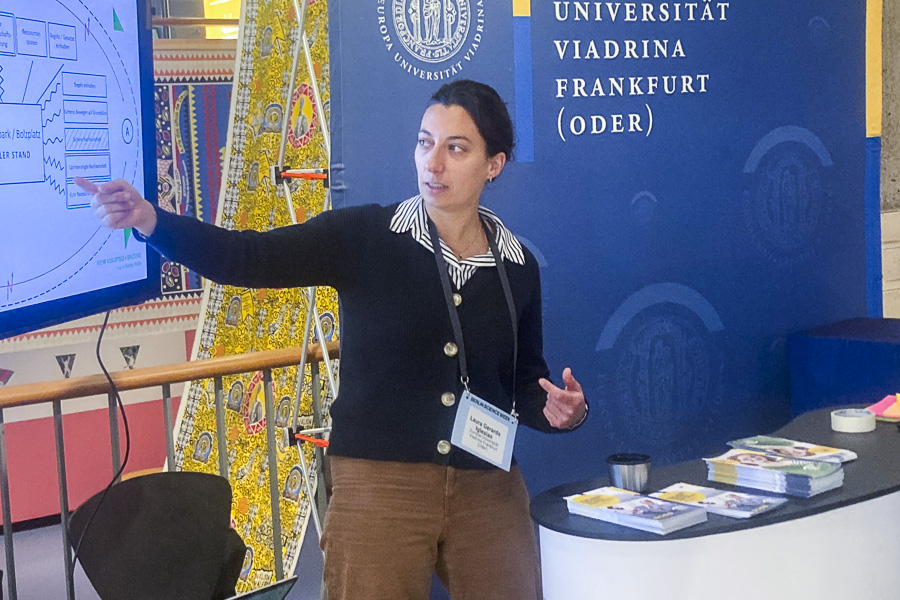
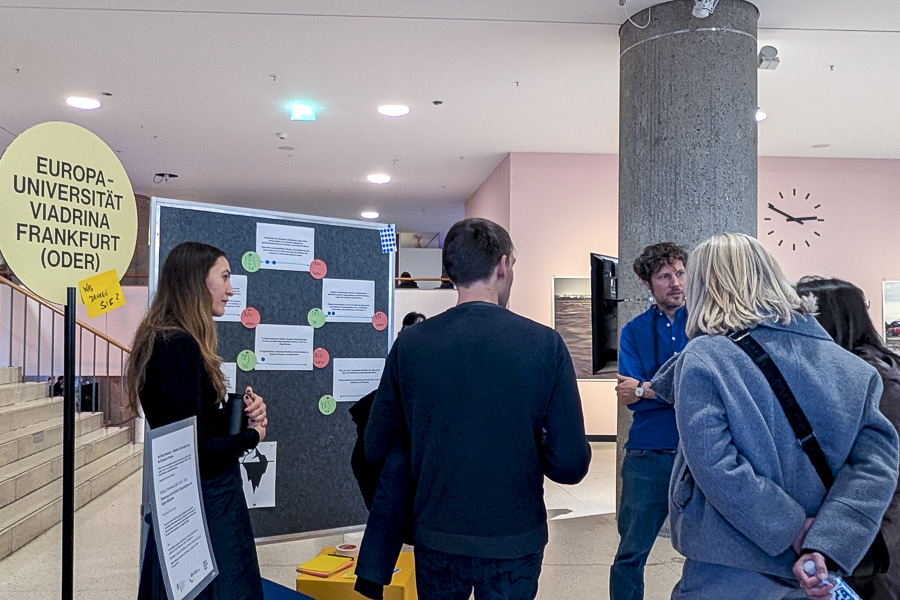
“What on earth is the International Criminal Court doing here?”, asks a young visitor Prof. Dr Nella Sayatz. The junior professor of International and European Criminal Law and Criminal Procedure engages the visitors in a discussion, using a short presentation to explain how pressure on the International Criminal Court is mounting. African member states complain that almost exclusively African crimes are being prosecuted. Arrest warrants, such as those issued against Vladimir Putin or Benjamin Netanyahu, are not being enforced. The US is imposing sanctions on the Court as an institution, as well as on individual judges. Their credit cards and bank accounts are being blocked, and their access to email accounts and profiles with American companies is being revoked. “And with all the atrocities happening around the world, can the world just stand by and watch?” asks a visitor. “Something is happening,” replies Nella Sayatz, launching into a more in-depth discussion. Simple answers are rare in the Conversation Lab; instead, there is an honest exchange of views.
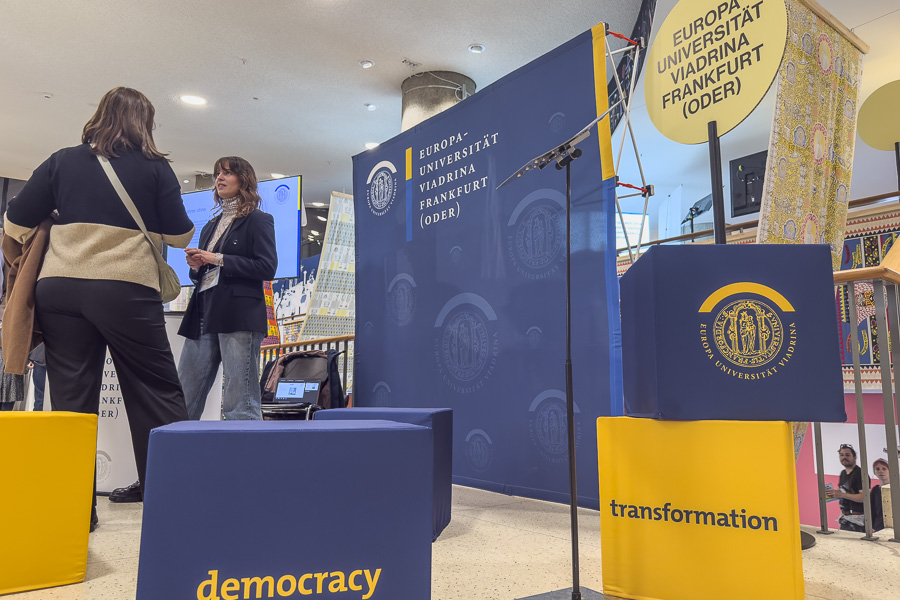
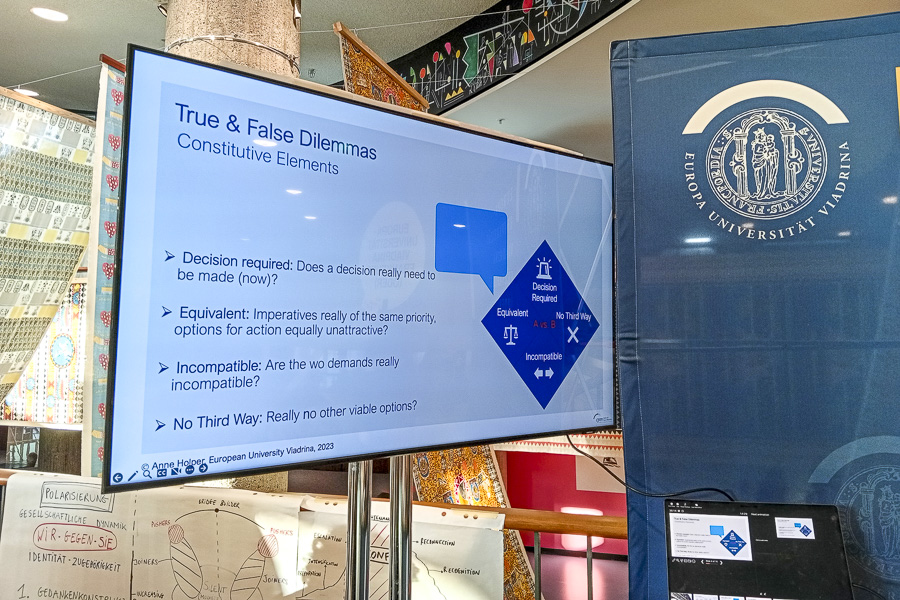
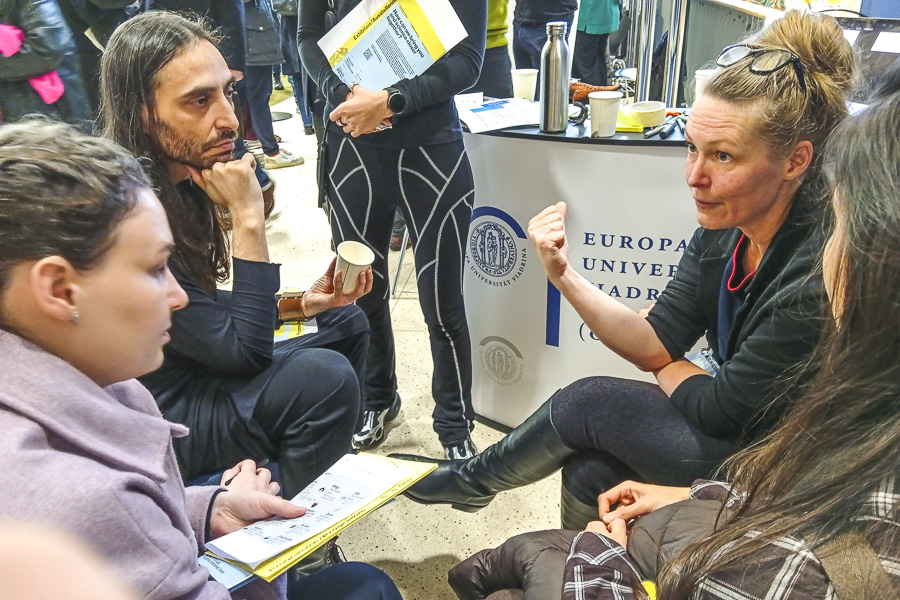
The discussion becomes particularly intense during the small group discussions on dilemmas led by Dr Anne Holper a little later. Time and again, the seats on the Viadrina cube stools around her are taken by visitors to Berlin Science Week. They bring examples of dilemmas, which the co-director of the Centre for Peace Mediation uses to illustrate how to deal with seemingly hopeless situations: finding out whether it is actually a dilemma at all, recognising that a decision always comes at a cost, and practising strategies to find ways out despite all the difficulties. Time and again, people stop to take photos of the slides on display, whilst in the discussion groups the knowledge is put into practice through dilemma coaching: Whether it’s the question of how to make the right staffing decision, or the dilemma of how Ukraine can tackle internal social conflicts without losing the unity essential for survival in a state of war.
What these three situations on Saturday have in common with the other discussion formats on Friday and Sunday is that conflict-laden issues are discussed informally and personally, with the visitors’ everyday knowledge playing just as important a role as the research and practical expertise of the Viadrina experts. “For me, the greatest reward was seeing how many visitors, after initial moments of surprise or hesitation, engaged with us in very deep and nuanced discussions that were inspiring for both sides,” says Anne Holper. Some of her conversation partners were genuinely grateful that they had found concrete guidance or clarification in their discussions with ‘the academic world’. The crowds were huge, the noise level at times “absurd”, and the discussion groups were thrown together at random; yet they still managed to have complex and personal conversations.
In addition to Lars Kirchhoff, Nella Sayatz and Anne Holper, the contributors to the Conversation Lab at Berlin Science Week included: Laura Bannan-Fischer, Dr Christian Hochmuth, Laura Gerards Iglesias, Else Keyers and Mario Clemens from the Institute for Conflict Management. Also taking part on site were: Prof. Dr Jürgen Neyer (Professor for European and International Politics), the economist Dr Lilo Meier and Niki Kasis from the Center for Teaching and Learning (ZLL).
Berlin Science Week has been taking place since 2016. This year’s theme was ‘In touch’, focusing on the personal side of science: how research touches our lives, how it changes us and how it connects us.
Frauke Adesiyan
Back to the news portal
Share article: