
“All This Talk About Values Is an Expression of the EU’s Legitimacy Crisis” – ValEUs Network Final Conference
Members of the ValEUs research and education network gathered at Viadrina for their final conference from 29 September to 2 October 2026. Since early 2024, representatives from 20 partner institutions across five continents have been researching fundamental European values and the ways in which they are being challenged. At the final conference, participants engaged in controversial debates on issues including the legitimacy of European values, current challenges facing the EU, visa restrictions for international students, and the role of universities in defending pluralist and humanitarian values.
The diversity of the topics discussed, and the intensity of the debates, led the network’s academic director and Viadrina political scientist Professor Timm Beichelt to one conclusion: “Engaging with values requires many different perspectives.” The opening of the conference demonstrated just how seriously this was meant – in a way that was both impressive and unsettling.
British analyst and author Hans Kundnani had been invited to give the keynote address, entitled “What Values Are European?”. Within the first few minutes, he made his position clear: “European values do not exist. The idea is incoherent, elastic and can mean anything.”
ValEUs Closing Conference Photo Gallery
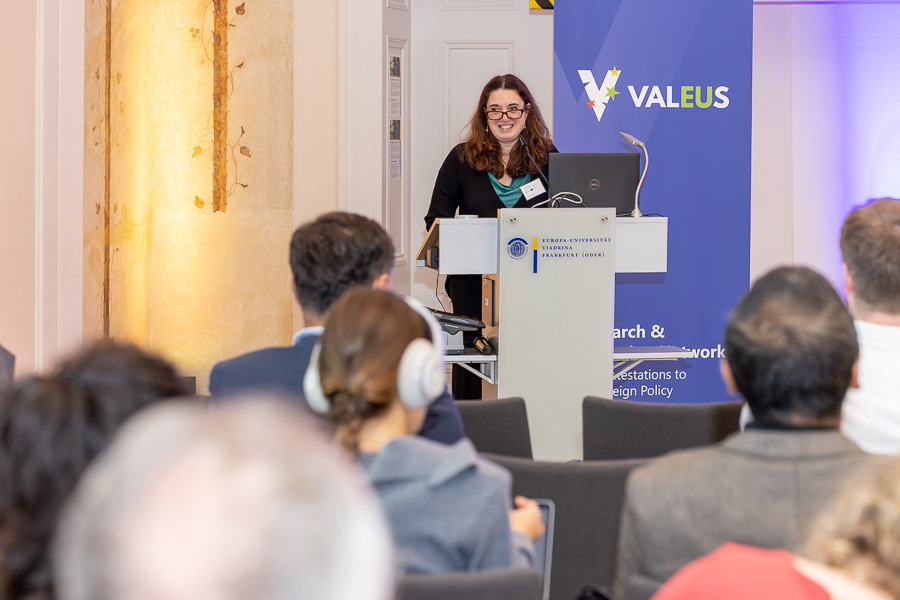
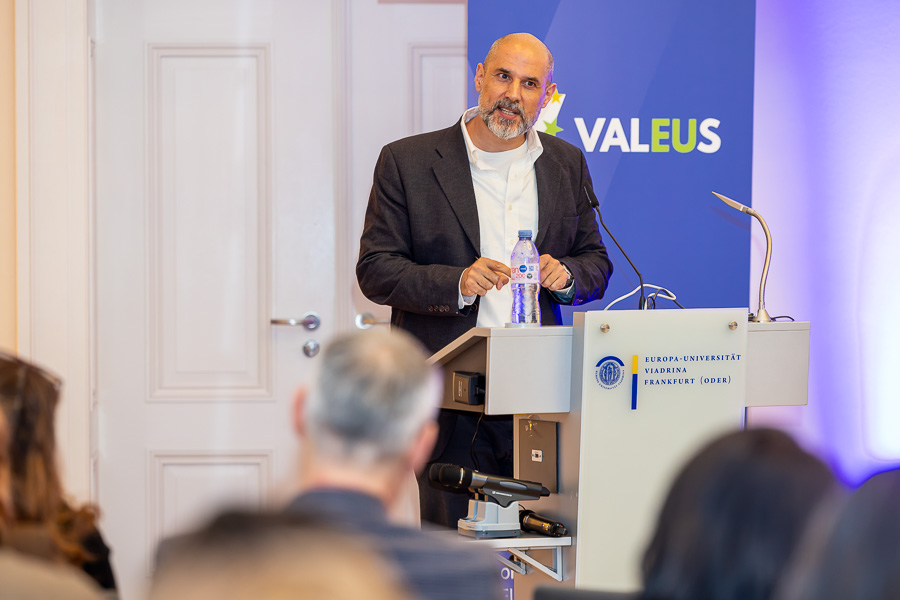
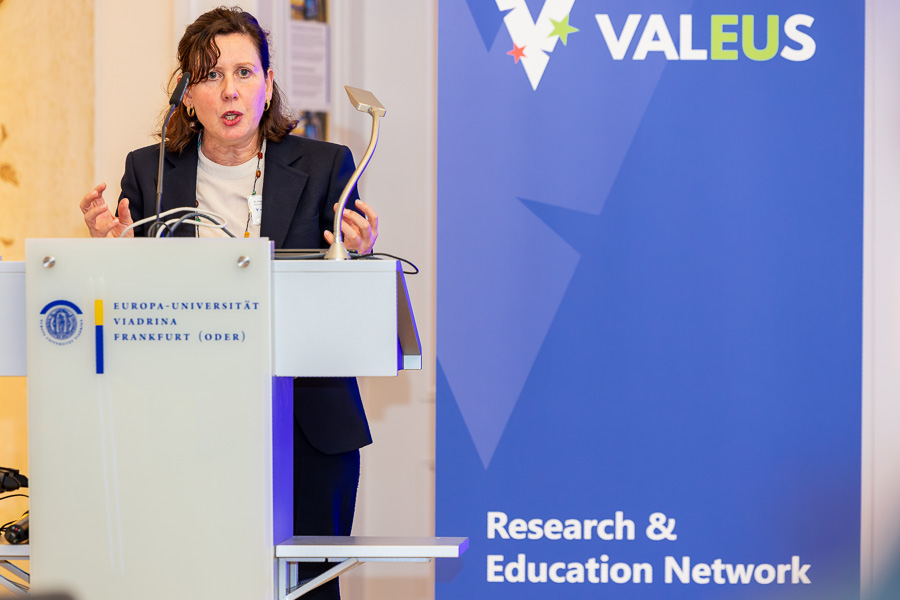
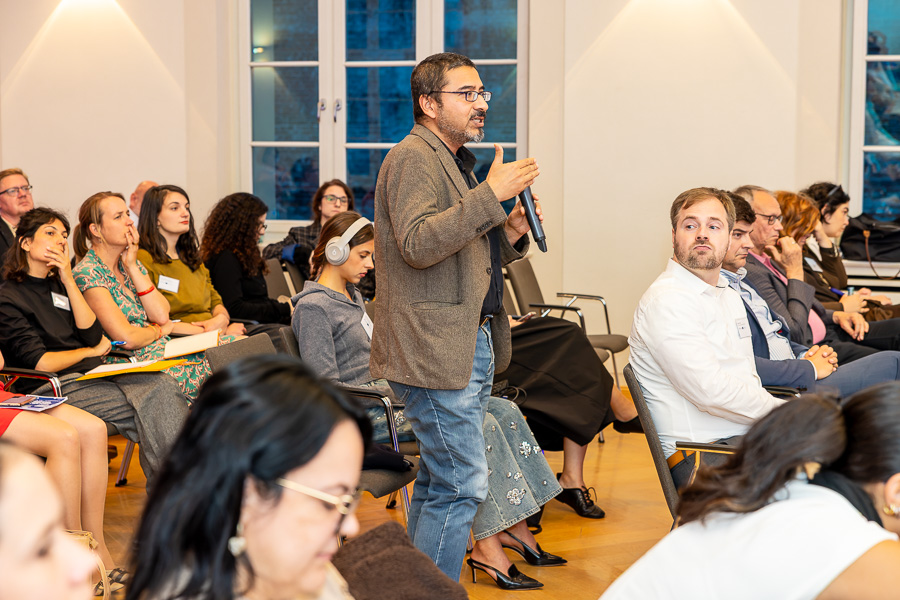
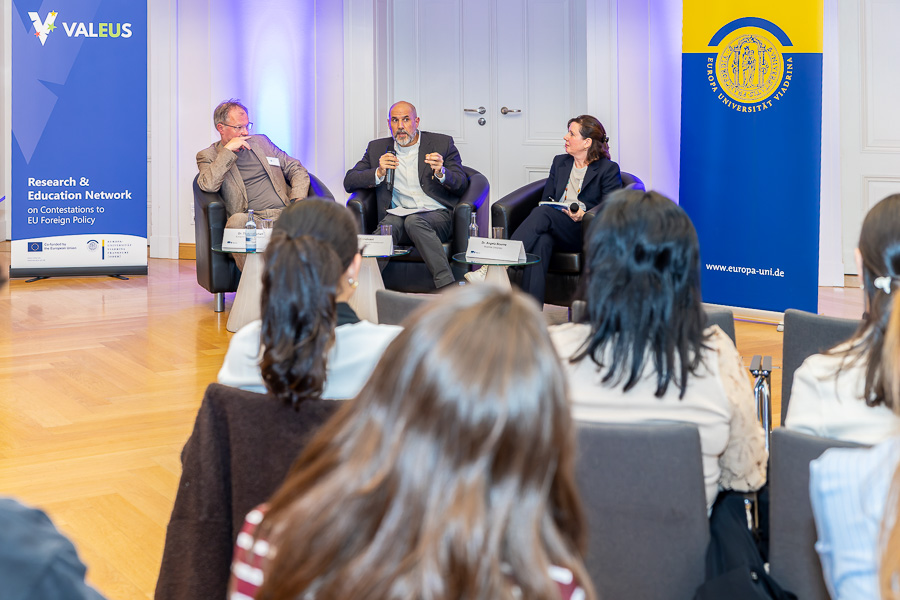
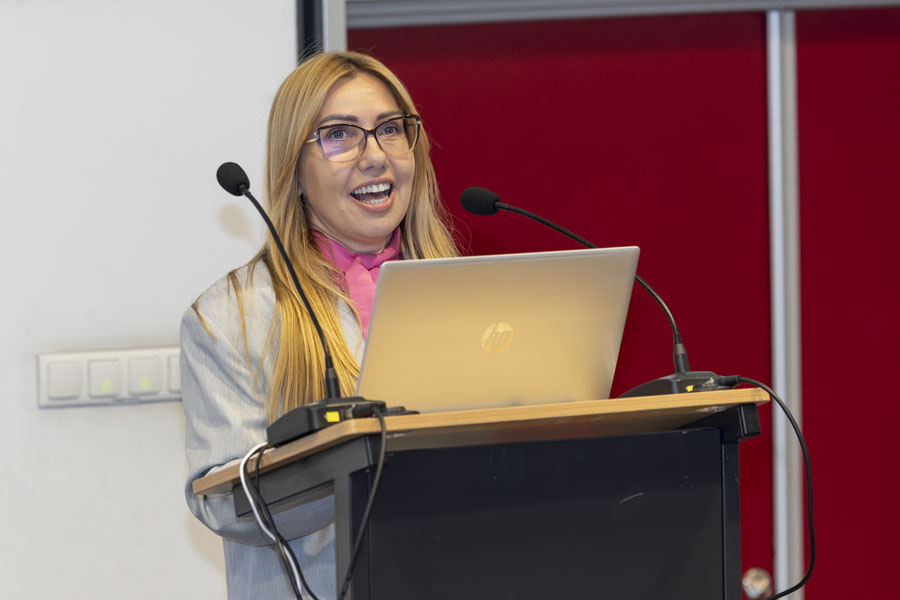
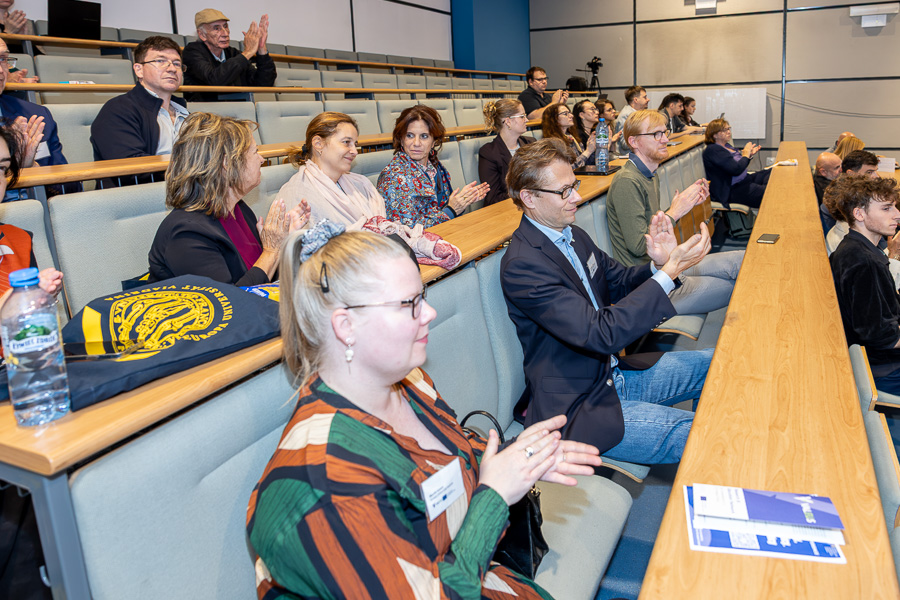
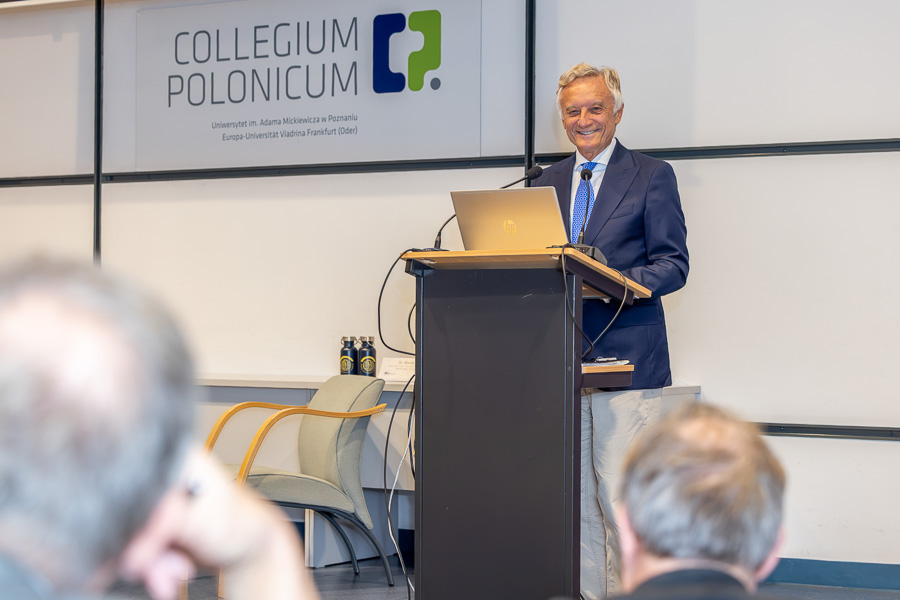
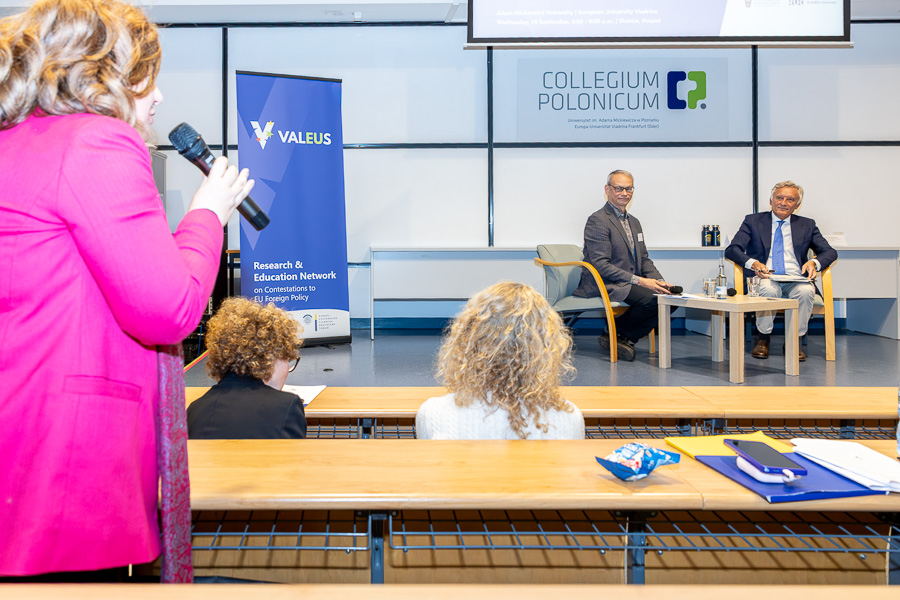
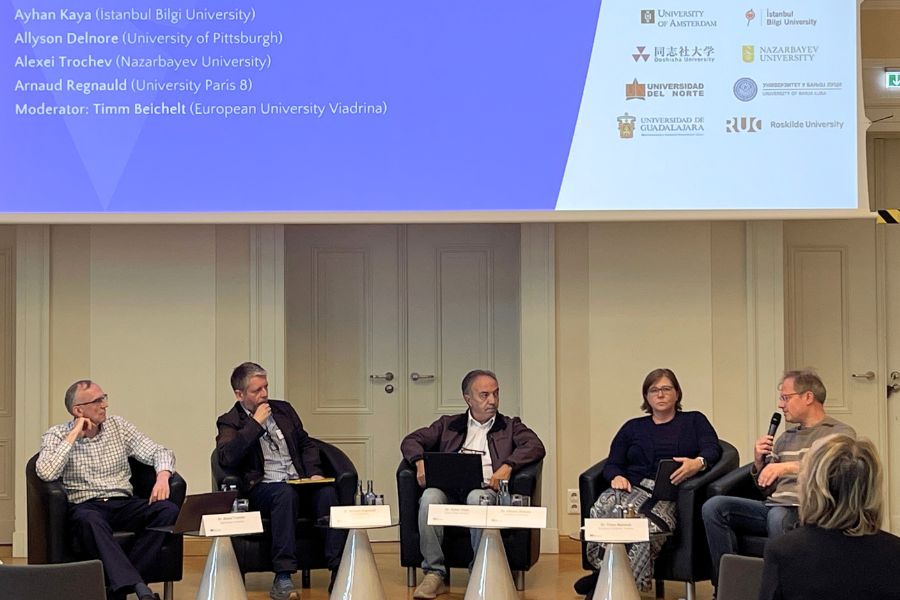
Kundnani went on to argue that democracy, human rights and the rule of law were neither originally European inventions nor principles to which European states consistently adhered. His remarks prompted more than a few audible sharp intakes of breath from the audience. Had Europe not exported more fascism than democracy to the world? And was European history not shaped at least as much by injustice as by the rule of law?
In Kundnani’s deliberately provocative formulation, European values were more wishful thinking than reality, not least because the EU itself failed to live by them. It maintained “very cosy relationships with despots” outside the EU, stood by while people died in large numbers in the Mediterranean, and applied different, racialised standards to human rights violations in Ukraine and Gaza. For Kundnani, “all this talk about values is an expression of the EU’s legitimacy crisis”.
Angela Bourne of Roskilde University, who responded to Kundnani’s forceful address, argued that European values did indeed exist. They did not have to be uniquely European, she said, and yes, they were sometimes instrumentalised. Nevertheless, her own research had convinced her of their existence.
Universities as places where academic freedom is defended every day
It was perhaps a deliberate choice that the word “European” was absent from the title of the conference’s final session. Instead, the discussion focused on “the role of universities in promoting pluralistic and humanitarian values”. The panel, which brought together representatives from Turkey, the United States, Kazakhstan and France, highlighted the political and financial pressures facing academic communities in all of these countries, and the ways in which they are attempting to remain spaces of openness and encounter. “Universities are places of civic mobilisation. They bring together people who would otherwise never meet,” said Ayhan Kaya of Istanbul Bilgi University, which had recently been temporarily closed by the state. In his view, universities are therefore also places where values are not merely asserted but reproduced. He sees this role as threatened when academic institutions are increasingly judged by their economic utility. “When market relevance becomes the most important criterion for knowledge, something fundamental is lost,” Kaya warned.
Allyson Delnore of the University of Pittsburgh described how quickly political change can affect universities. “We basically knew what was in Project 2025, but we could not imagine how quickly it would take effect,” she said, referring to the plans of the Trump administration. She spoke of a growing anti-intellectualism that focused particularly on so-called “wokeness” as an enemy image. She described her university’s efforts to preserve “a version and a vision of higher education that stands for social mobility and freedom of expression and serves as a vanguard of liberal democracy” as existential. It is a daily struggle for academic freedom that her colleague Arnaud Regnauld of Université Paris 8 also knows well – in the face of both financial and ideological resistance.
Alexei Trochev of Nazarbayev University spoke of the ambivalence of his own work. According to his university’s statutes, he is supposed to teach “critical thinkers”. In practice, however, he has to weigh very carefully just how critical discussions in his classes are allowed to become. Even apparently personal issues affecting his students – such as queerness or coming out – can at times become taboo subjects. Nevertheless, he describes the seminar room as a comparatively free space within Kazakh society.
What unites the conference participants is the desire to preserve these spaces of democratic exchange, encounter and freedom, regardless of their differing – and at times opposing – positions, and irrespective of whether their universities are located inside or outside the EU. “Perhaps we are naïve, but many members of the network believe that values are conveyed through exchange. And, incidentally, that also makes clear which values people cannot agree on,” says project director Timm Beichelt. In this respect, the conference was anything but a final full stop.
Looking back on three years of ValEUs with Professor Timm Beichelt
Professor Beichelt, how would you summarise the central question of the ValEUs project?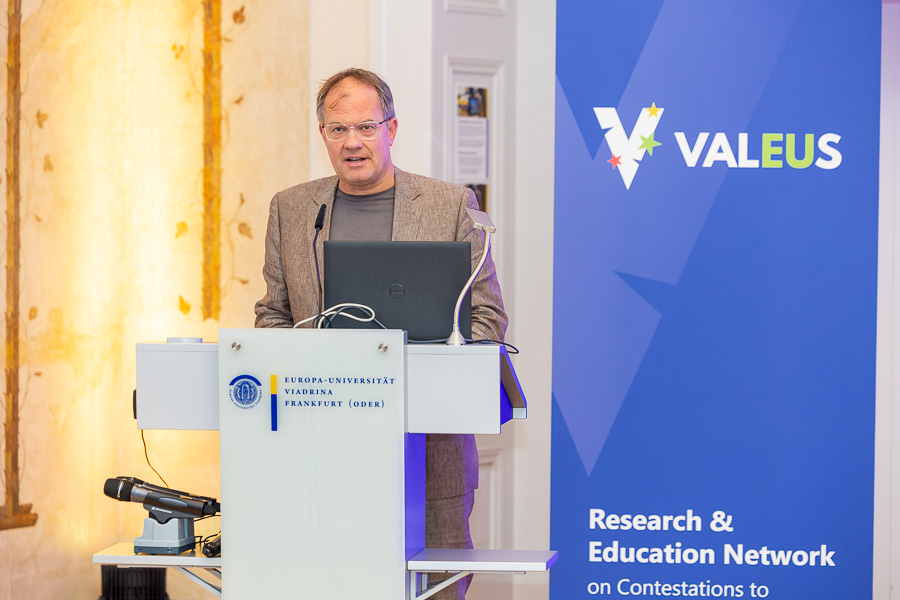
The central question concerns an inconsistency that has become increasingly apparent in recent years. On the one hand, actors at EU level repeatedly emphasise that the EU is a normative actor characterised by values such as democracy, openness, the rule of law and so on. Yet in many areas, we can see that this is clearly not the case. The consortium therefore asked what consequences it has for the legitimacy of a political entity when it repeatedly violates the very norms it proclaims. This seems particularly problematic in the case of an actor that has relatively few other pillars of legitimacy besides its credibility.
At the opening of the final conference, you invited Hans Kundnani to give a keynote in which he fundamentally called European values – the thematic core of your research network – into question. So do European values actually exist?
Values such as democracy, the rule of law, human rights or solidarity are European in the sense that they are set out as objectives in various documents associated with the Council of Europe or the European Union. The problem arises when the rhetorical formula is used as a normative frame, as Ursula von der Leyen, for example, frequently does. When “European values” are presented as something that the rest of the world should also aspire to, this is perceived as arrogant. First, because these values are not specifically European; and second, because they are not fully realised everywhere in Europe either.
To what extent did the highly international composition of the project enrich the work?
Unlike many other international activities, there is a recurring element when representatives of different universities meet again and again. The members get to know one another, and professional cooperation acquires a personal dimension. If people have argued about values during the day, they can check in with one another in the evening to clarify how certain remarks were meant. That often brings new aspects into the discussion that one had not initially considered.
Were there any findings or results that surprised you? Which questions remain open?
Especially at the beginning, I was quite surprised by how critical outside perspectives on the European Union often are. In a sense, this confirmed our initial suspicion: the more strongly the EU presents itself as a positive political force while at the same time failing to live up to many of those positive claims, the more it damages Europe’s reputation. Refugee policy in the Mediterranean, decades of delay in enlargement policy, or the constant imposition of conditions are all seen outside the EU as evidence of what is perceived as hypocritical behaviour on the part of the Union. We still need to think about how the EU should respond if its previous approach no longer works. Continuing to orient its actions around values in the same way as before is hardly possible, not least because there is often no agreement on them even within the EU. A shift towards ruthless power politics of the kind pursued by Russia and the United States is not an option either, while the EU’s weight in global trade is declining. There are therefore no obvious alternatives to the EU’s norm-oriented foreign policy.
In addition to research, the project also focused on teaching. Which formats were the most effective in your view, and why?
In European Studies, research and teaching are very closely intertwined. At many universities, not only at Viadrina, the student body is also becoming increasingly international. Against this background, the formats aimed directly at students and doctoral researchers were particularly successful. There were summer schools, workshops and a student publication series. Ironically, however, this is precisely the area in which it is becoming particularly difficult to continue activities. Within the European Higher Education Area, funding is available for student mobility. This applies much less to third countries, and even when students can afford to travel to European universities, they often do not know until the last minute whether they will receive a visa.
What will remain of the project when it comes to an end after three years in late 2026?
We have agreed to continue our cooperation beyond the end of the funding period. We can use Erasmus+ for this, but also conferences at which researchers in European Studies meet in any case. In that sense, I regard the ValEUs network as a success, because one of the aims of the funding was to create sustainable structures for exchange.
About ValEUs
The research and education network, whose full title is “ValEUs. Research & Education Network on Contestations to EU Foreign Policy”, has been funded for three years since January 2024 with €1.2 million from the EU’s Erasmus+ programme. Led by the European University Viadrina Frankfurt (Oder), it brings together research from different disciplines, teaching and public engagement. At its core is the question of how the European Union’s fundamental values are increasingly being challenged and what consequences this has for EU foreign policy.
The network consists of 20 partner institutions across five continents. Its partners include Université Paris 8 in France, Roskilde University in Denmark and the University of the Aegean in Greece – three universities that are members of the European Reform University Alliance, ERUA. Two of Viadrina’s Ukrainian partner universities are also represented: Karazin University Kharkiv and the Kyiv School of Economics. The European perspective is complemented by partners in the United States, Latin America, Kazakhstan and Japan.
Frauke Adesiyan; translated by DeepL and edited
Back to the news portal
Share article: