
Language, exchange, specialist knowledge – the third KIU Summer School offers participants a unique package
In early September 2026, 25 students, researchers and practitioners came to Viadrina to spend two weeks engaging intensively with the topic of Ukraine. The third KIU Summer School focused on national minorities, Ukrainian identity and the question of how Ukrainian studies can bring together different academic and professional perspectives.
They come from Germany, Switzerland, Turkey and Canada; they are studying or conducting research on Eastern Europe, working in cultural management, or dealing with Ukraine in their professional lives. What unites them is their interest in Ukrainian studies. They met at Viadrina University for two weeks to learn together, discuss and develop new perspectives on Ukraine.
Galerie Kiu Summer School
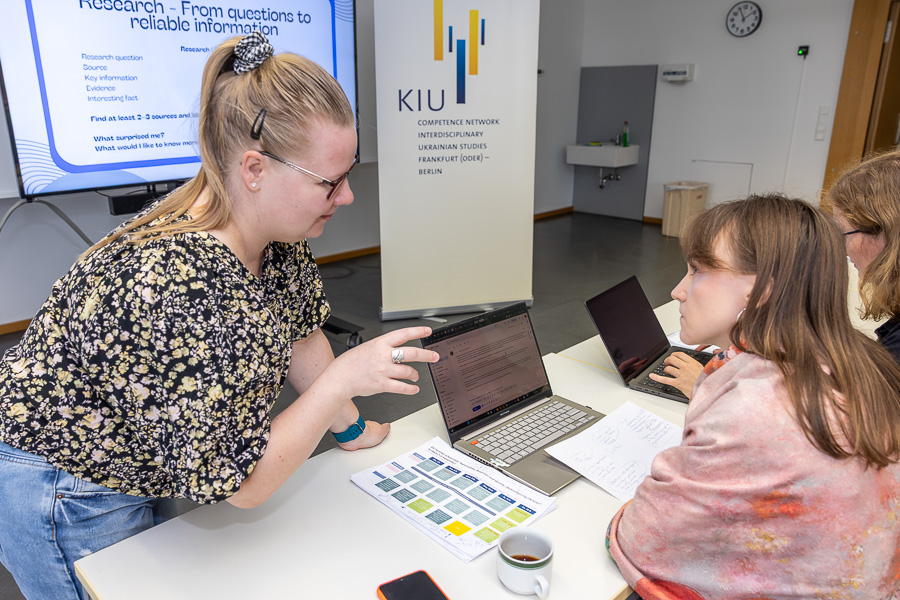
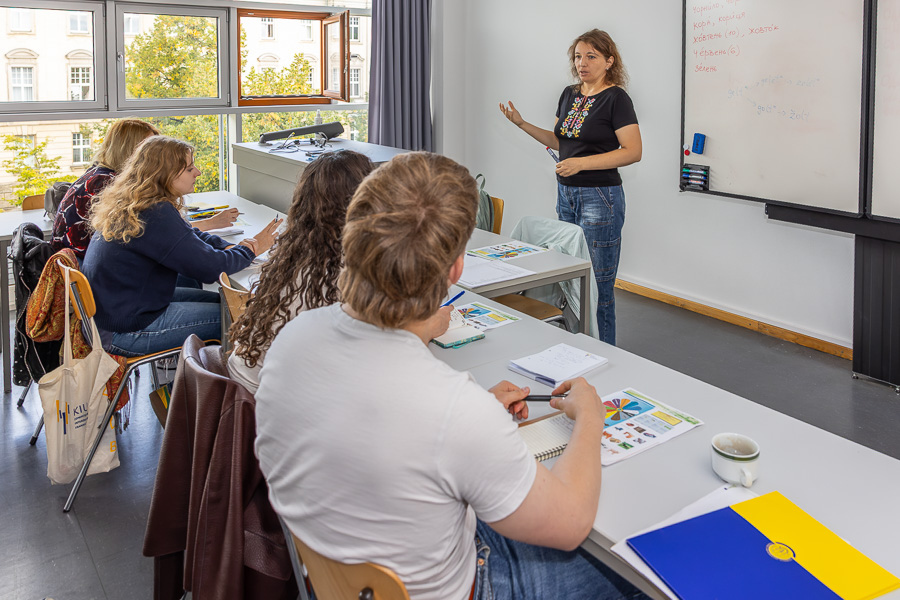
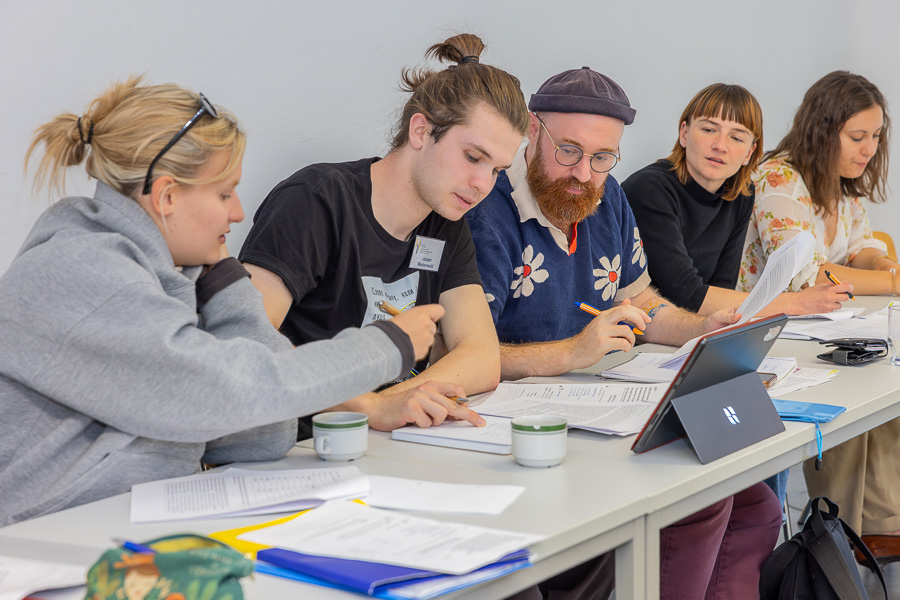
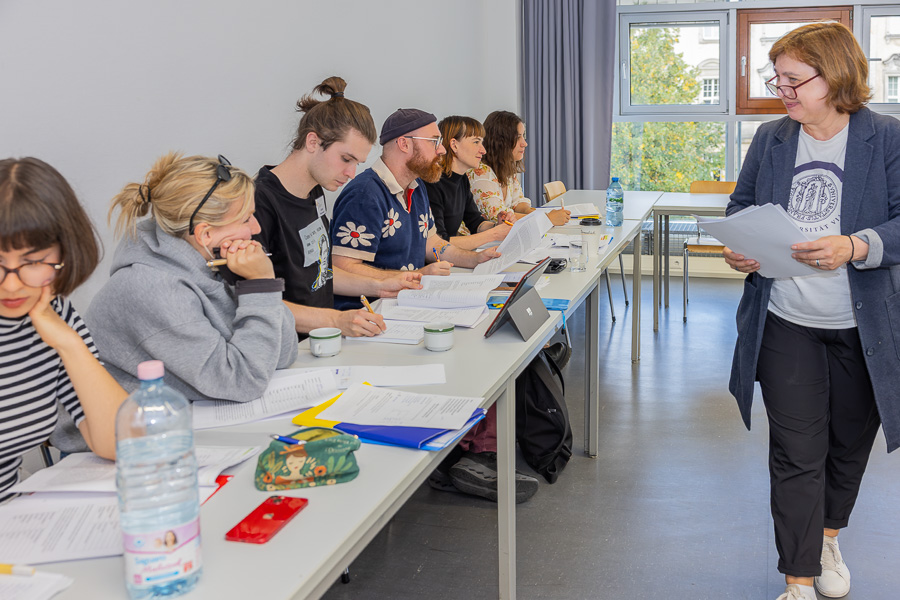
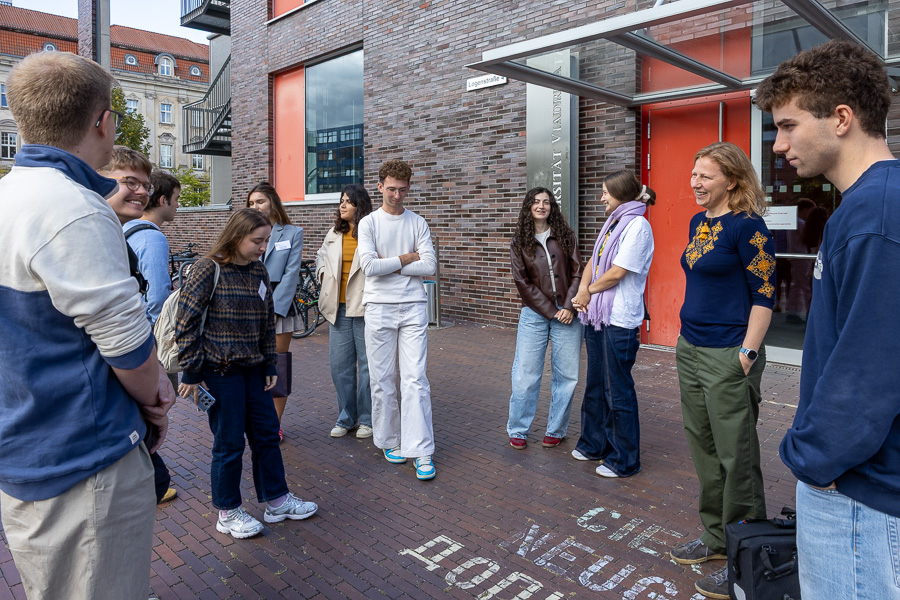
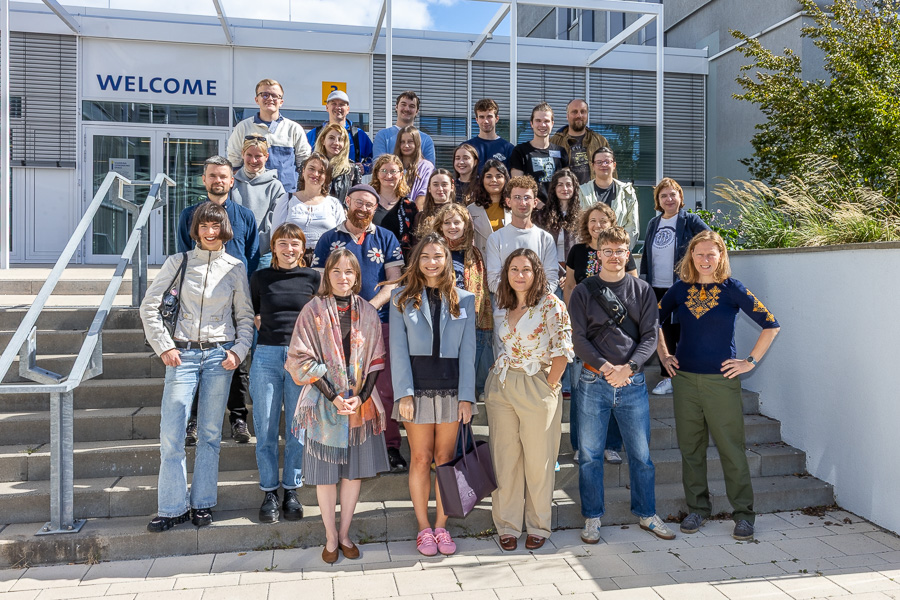
This year’s summer school organised by the KIU – Competence Network Interdisciplinary Ukrainian Studies focused in particular on national minorities in Ukraine and issues of Ukrainian identity. Seminars on the Crimean Tatars and the North Azov Greeks, events on the development of national and civic identities, and a workshop on possible peace negotiations between Ukraine and Russia were combined with daily Ukrainian language courses and excursions.
Dr Susann Worschech, KIU coordinator and organiser of the summer school, expressed her delight following the event: “I was deeply impressed by the enthusiasm, academic curiosity and passion of our participants to learn more about Ukraine, to learn Ukrainian and to discover the country’s diversity. For them, the two weeks were an intensive journey of reflection and discussion. This high level of interest also underlines Viadrina’s growing international profile in this field – and shows that here, on the banks of the River Oder, is a special place to explore the future of Europe from an Eastern European perspective.”
In total, around 120 people had applied for a place on the summer school. Ultimately, the KIU team was able to welcome 25 participants. The group was deliberately diverse: students from Germany, Ukraine, Switzerland and Turkey, who are interested in Eastern Europe and Ukraine, joined PhD students and professionals keen to incorporate their experience and knowledge of Ukraine into their own work.
For co-organiser Kirill Repin, the KIU Summer School is shaped to a large extent by its participants and the diversity of their experiences and perspectives: “This year, that was particularly important, as questions of identity were at the heart of the programme. I am glad that the Summer School succeeded in creating enough space to combine theoretical discussions, case studies from Ukraine and Germany, as well as personal stories and reflections, in an enriching way, without shying away from critical questions whilst remaining sensitive to the realities of the war facing Ukrainian society.”
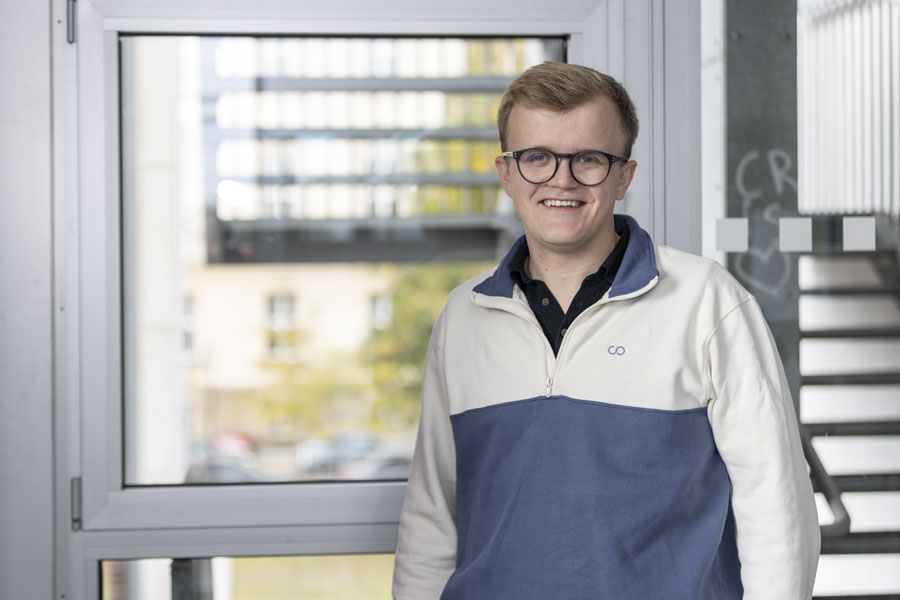
Moving beyond the feeling of being ‘this Eastern Europe geek’
It was precisely this mix of different academic and professional backgrounds that the participants perceived as a particular strength of the summer school. Paul Schönbein, a student at the University of Basel, describes the experience as follows: “What I particularly loved here was that there was such a mix in the group: We had people who were only just starting their Bachelor’s degree – perhaps in their third semester now – but also people who were already involved in research and writing their doctoral theses. I found that very interesting because, naturally, it leads to discussions that you might not otherwise have in everyday life. Sometimes, in your own university environment, you’re seen as this ‘Eastern Europe geek’, but here you come to a place where you meet people who are just as interested in the subject and where you can have really great discussions.”
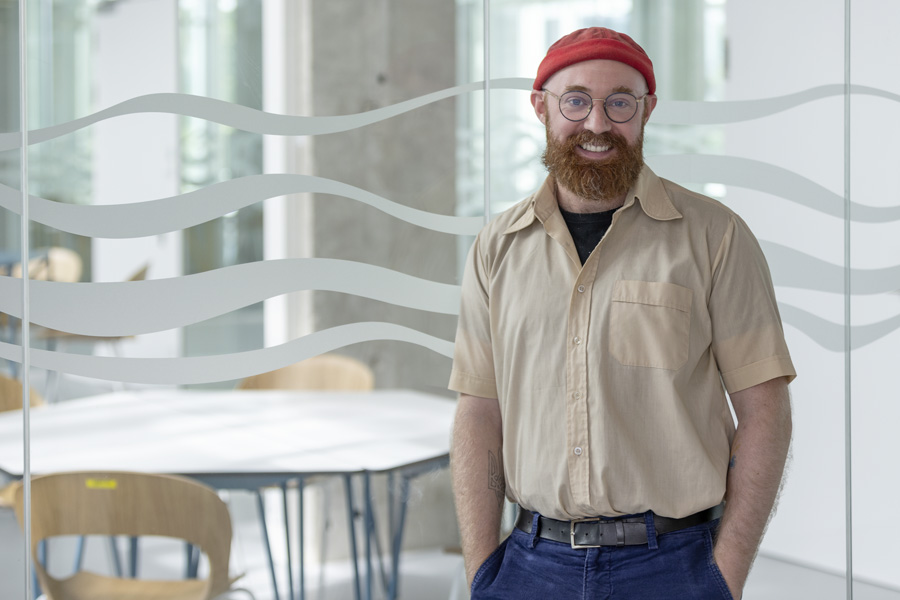
Ukrainian Studies is a relatively young yet dynamic field of research in Germany and Europe. For participants, this also means linking current developments to historical contexts. Liam McArdle, a student from Canada who is currently studying in Potsdam and regularly travels to Ukraine, describes what this mean to him today: “Ukrainian Studies means for me understanding, what's going on now, what's happened, and potentially providing a guideline for the future. What it means to live in hard times is one of the things that you can really learn, unfortunately, through Ukrainian studies all the way. And it gives you the tools to understand how to act in difficult moments.”
The combination of academic knowledge and professional practice played an important role for the participants. The recognition of the summer school as educational leave opened up the opportunity to link the course content directly to their own professional activities.
Learning Ukrainian as a particularly valuable part of the programme
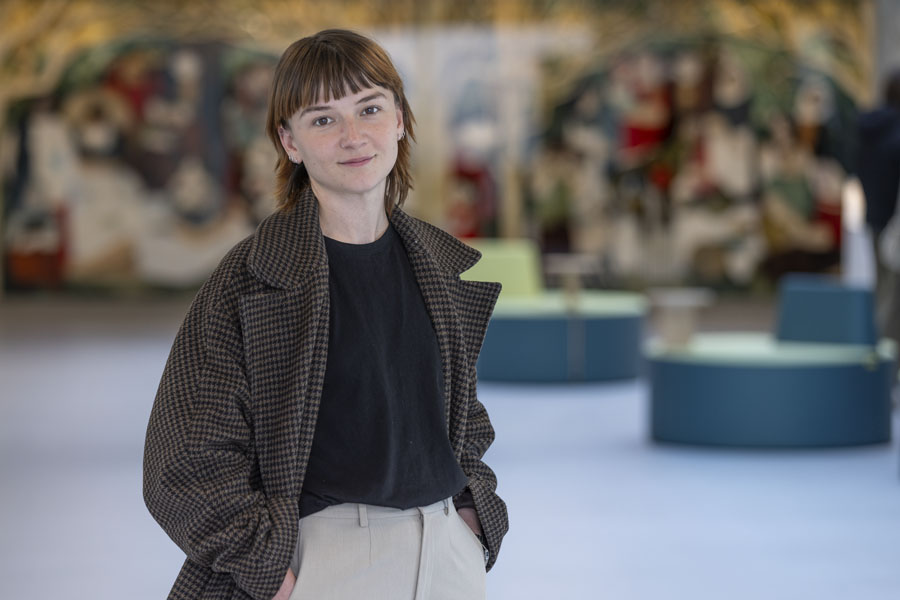
For Nathalie Isaak, who is pursuing a PhD in cultural management and teaching at the University of Cottbus, the link between the Ukrainian context and the language courses was particularly relevant: “In my doctoral research, I’m interested in how cultural management takes place in specific or fragile contexts, and what we can learn in concrete terms from people who work in Ukrainian museums and manage heritage and artefacts there. That is why I applied for this summer school with its specific Ukrainian context, where I can learn Ukrainian and also so much about minority cultures.”
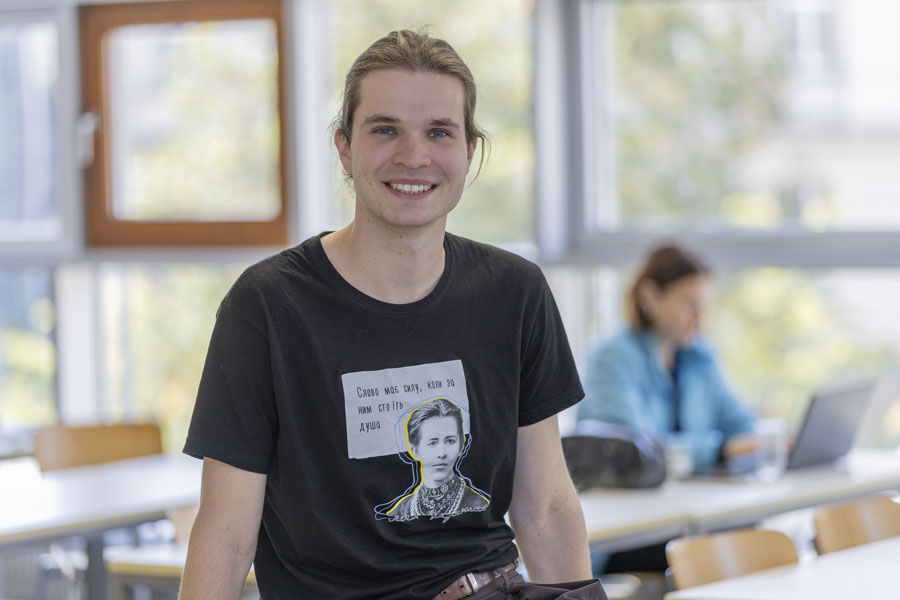
Alongside the specialist seminars, the daily Ukrainian language courses were a central part of the summer school. The opportunity to learn the language intensively and interactively over a two-week period was highlighted by several summer school participants as a particular highlight. “My personal highlight was definitely the language courses. I’ve been trying to learn Ukrainian through various means for a very long time. These two weeks here have really helped,” says Jasper Medenwand, who is writing his bachelor's thesis on Russian imperialism based on the Russian-Ukrainian war. For him, exploring the issue of national minorities in Ukraine was also particularly formative. This topic, which has so far received less attention in Germany, opened up new perspectives on the war and its historical dimensions: “What I’ve taken away in particular is that, in Ukraine, many minorities have historically been oppressed by the Russian side in various ways, and that this is still largely ignored in Germany. In Germany, the war in Ukraine is still somehow largely perceived as purely a matter between Europe and Russia, and there is a complete failure to recognise the extent to which historical oppression by Russia against Ukraine plays a part in it.”
Elmira Muratova from the European Centre for Minority Issues in Flensburg gave a seminar on the history and current situation of the Crimean Tatars in Ukraine. Dr Oksana Mikheieva, who served as a visiting lecturer at Viadrina last semester, spoke about the development of national and civic identities. Activist Olga Tsuprykova focused on preserving the identity of the North Azov Greeks, who formerly lived in the Mariupol and Donetsk regions, under the conditions of occupation.
More than just the history and culture of Ukraine
The thematic seminars were complemented by a workshop on conflicts and peace processes. Prof. Dr Lars Kirchhoff from the Institute for Conflict Management led a simulation of potential peace negotiations between Ukraine and Russia. The participants examined the interests and strategies of both sides and attempted to identify and explain these within a simulated negotiation process. What linked the various events and perspectives was the conviction that Ukrainian Studies extend far beyond the study of history and culture.
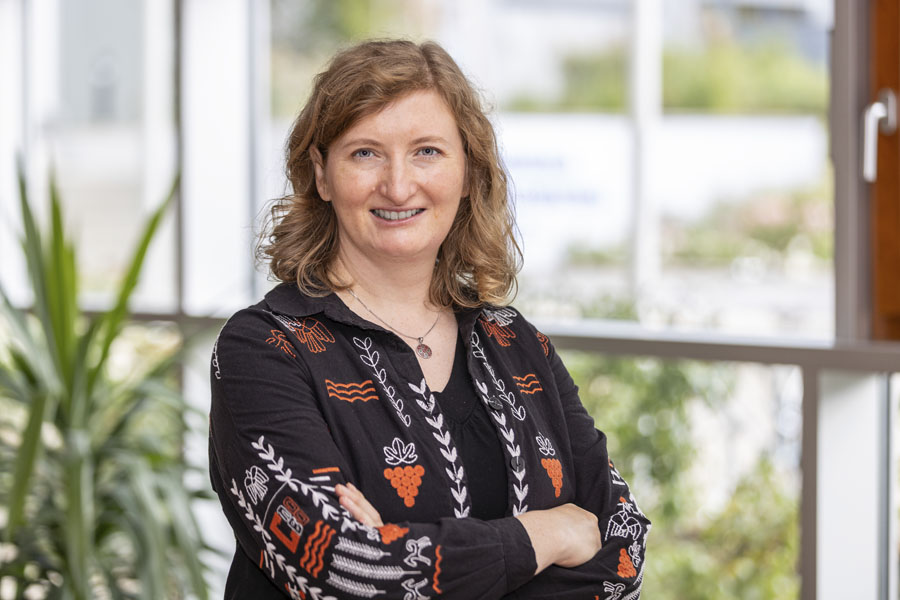
For Yuliya Biletska, who has been researching minorities for many years and is currently seeking to develop Ukrainian Studies in Turkey, it was precisely this exchange that formed an important part of her experience at Viadrina: “I came here primarily as a researcher and academic who has spent her whole life researching minorities and is currently seeking to develop Ukrainian Studies in Turkey. I will soon be teaching at Ankara University, and it was very valuable for me to see how the KIU operates and to exchange ideas with my colleagues here at Viadrina.”
Original text: Mariya Zoryk, translated by DeepL and edited
Back to the news portal
Share article: