

“Our aim is to foster self-efficacy” – Student conference on writing counselling
From 14 to 16 September 2026, 40 writing advisers discussed their work and current challenges at the Student Writing Peer Tutors’ Conference (SPTK) at Viadrina – ranging from artificial intelligence (AI) to ADHD. The conference, which takes place annually at various German universities, thus returned to Viadrina University, where it was first organised by students for students in 2008.
It is telling that a traditional quill on the conference poster symbolises writing. In the workshops here, laptops are not automatically opened – as is customary at other conferences; many participants write in paper notebooks using pens. During the breaks, they engage in lively discussions face-to-face and create diagrams using felt-tip pens, paper and scissors to illustrate their points. Even though many of the sessions at the three-day conference feature the buzzwords ‘AI’ and ‘digitalisation’ in their titles, artificial intelligence does not (yet) seem to have taken centre stage amongst the writing tutors.
gallery-writing-conference
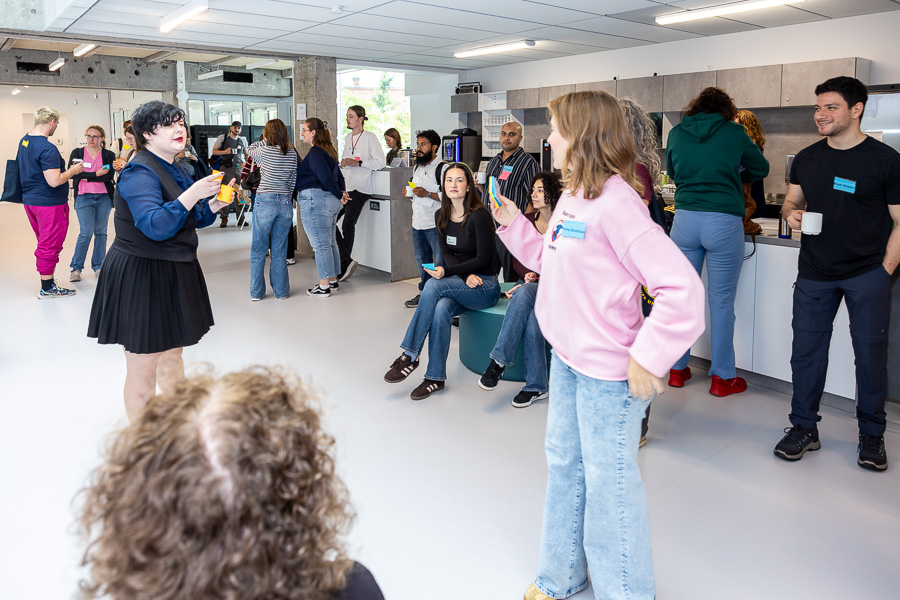
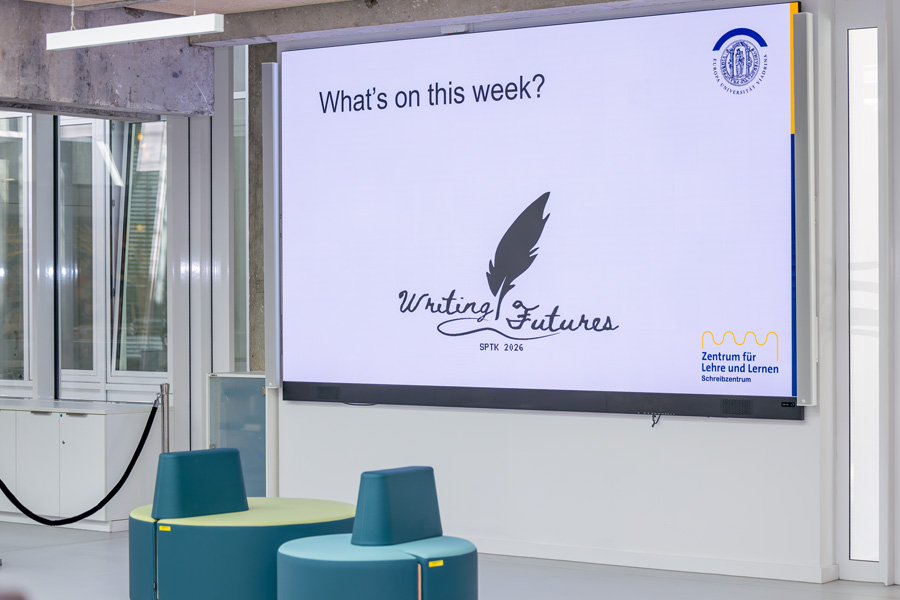
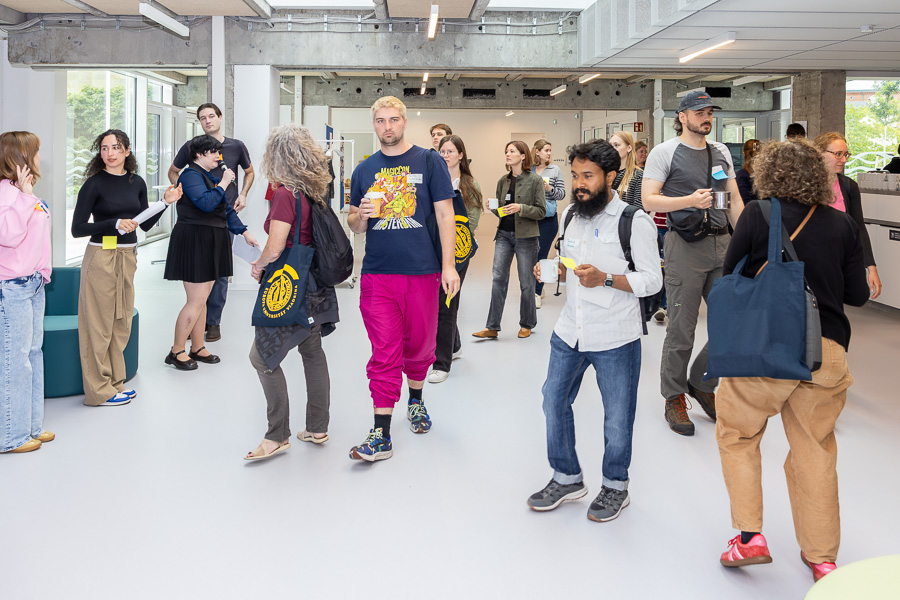
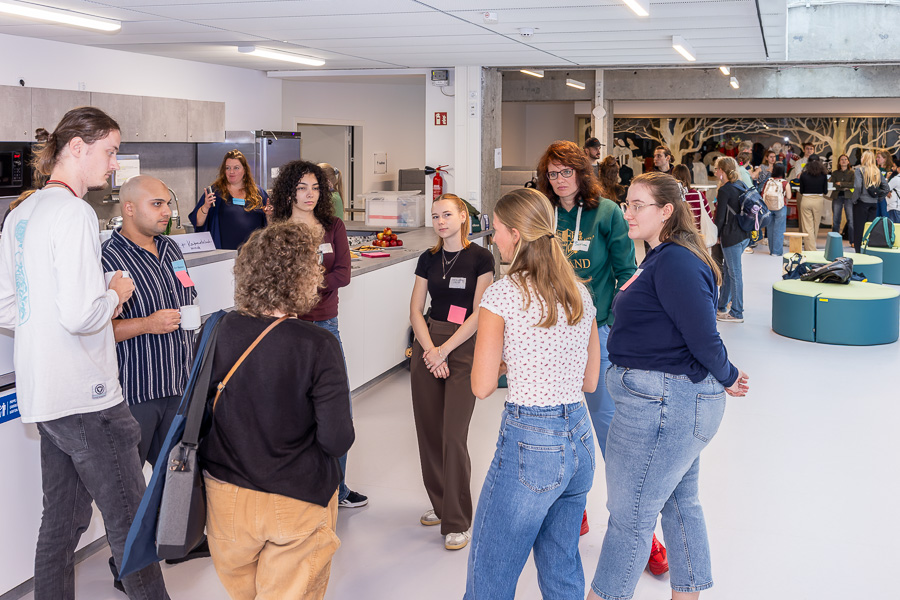
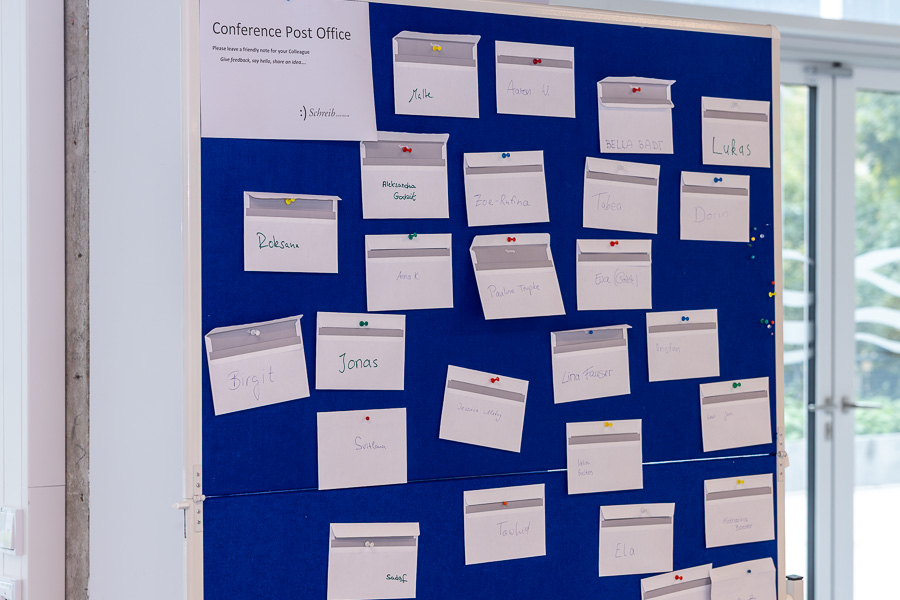
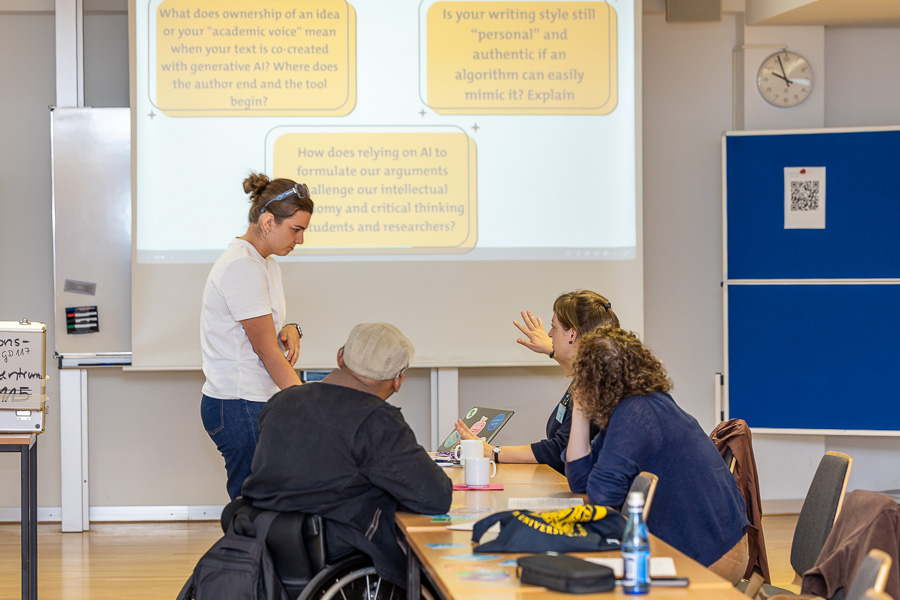
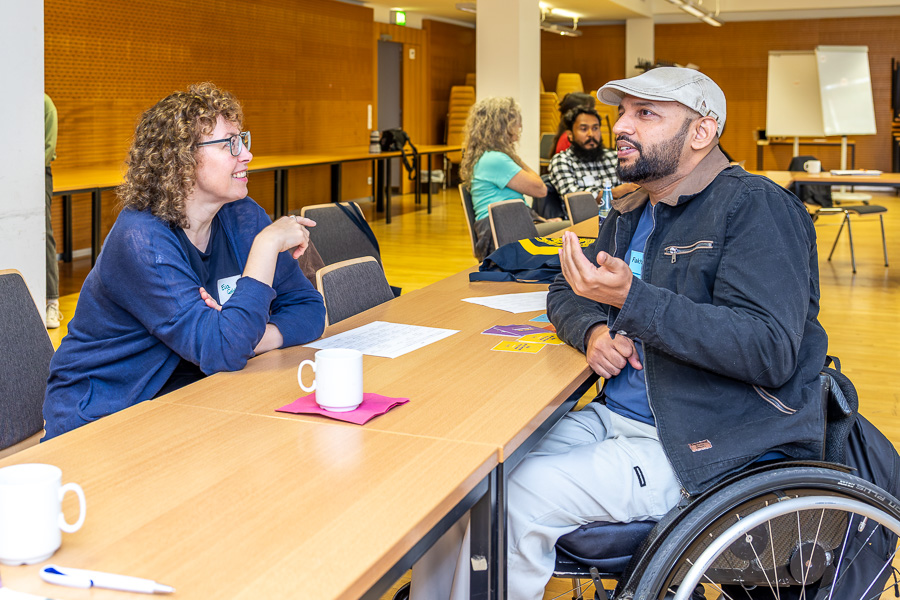
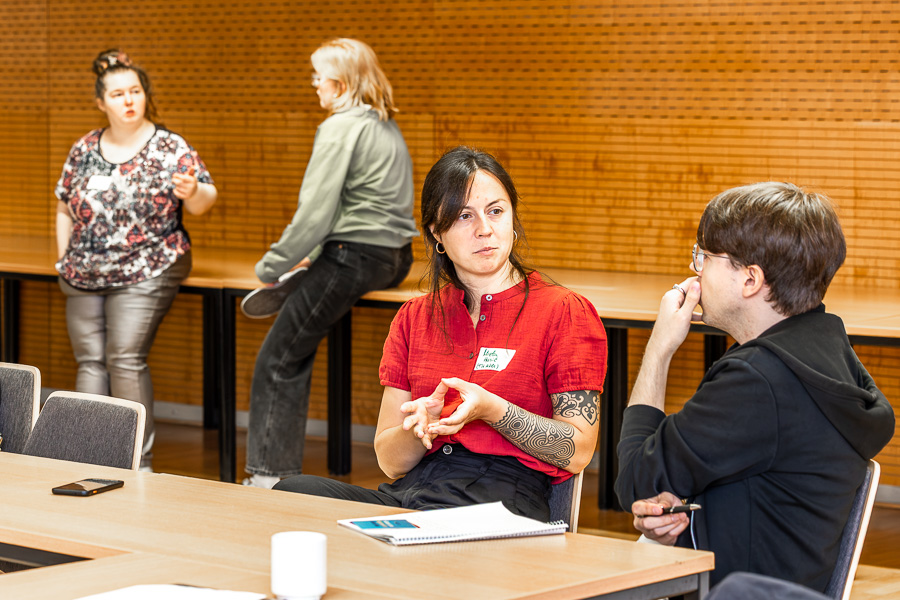
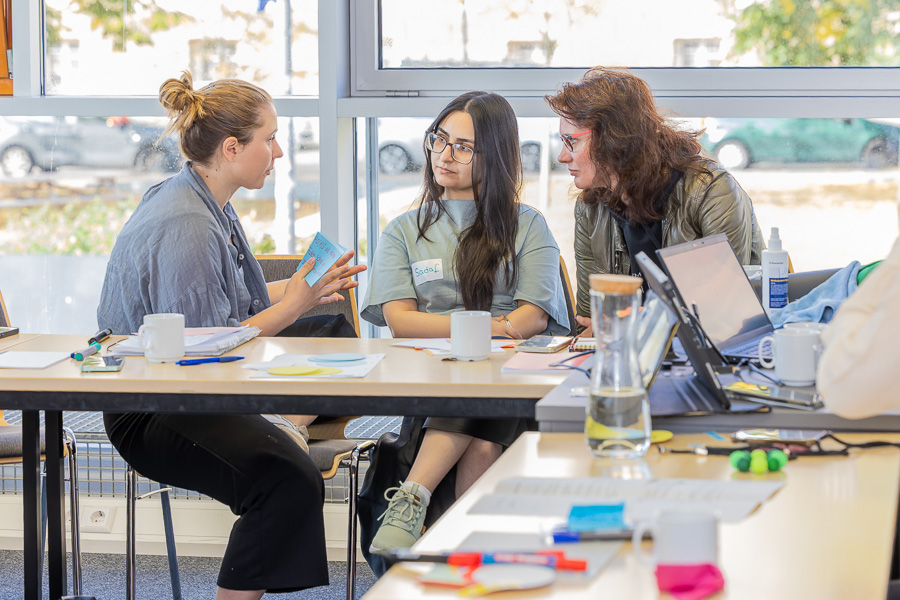
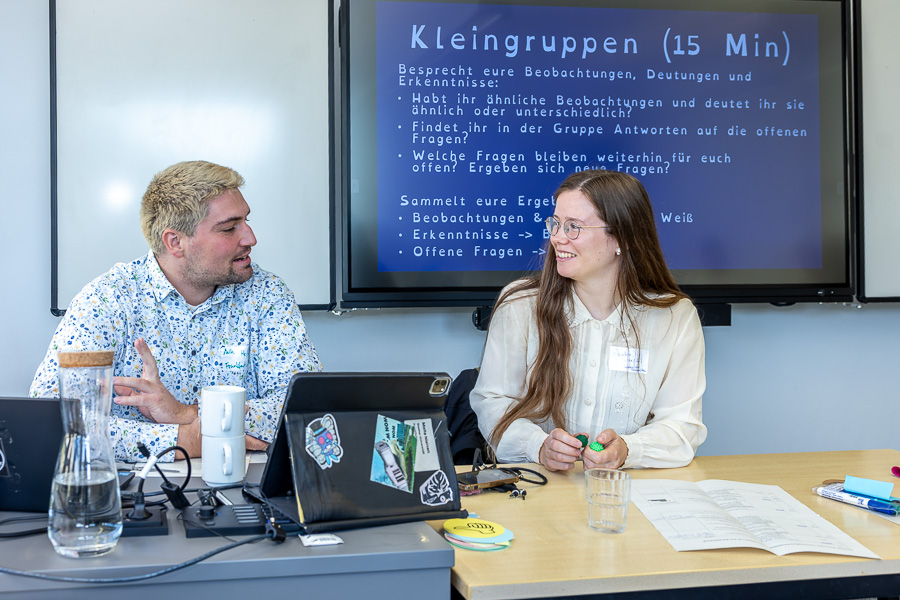
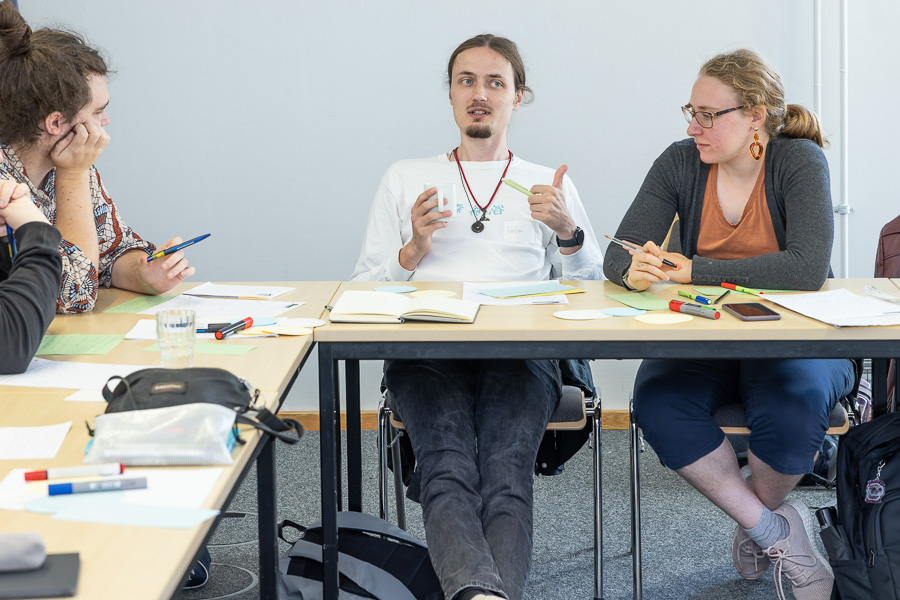
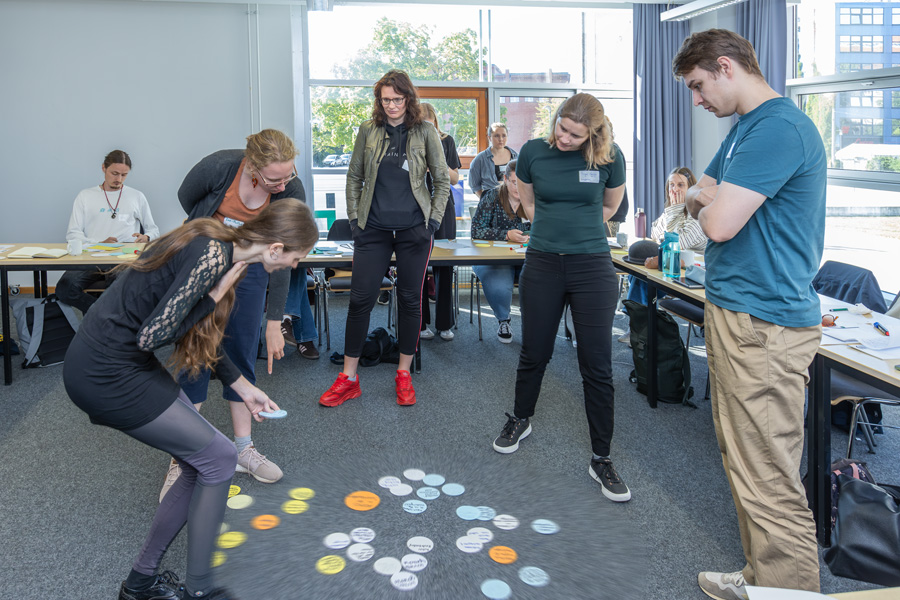
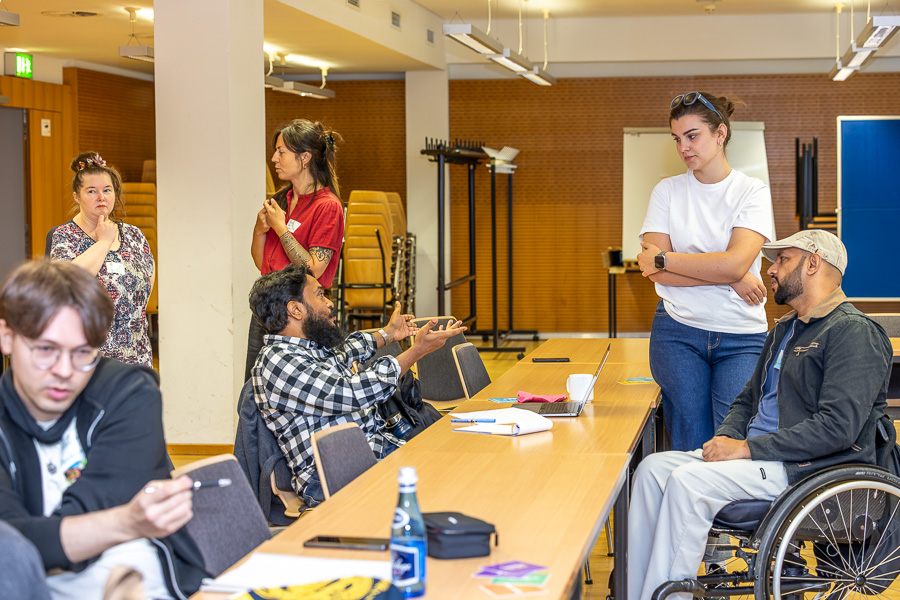
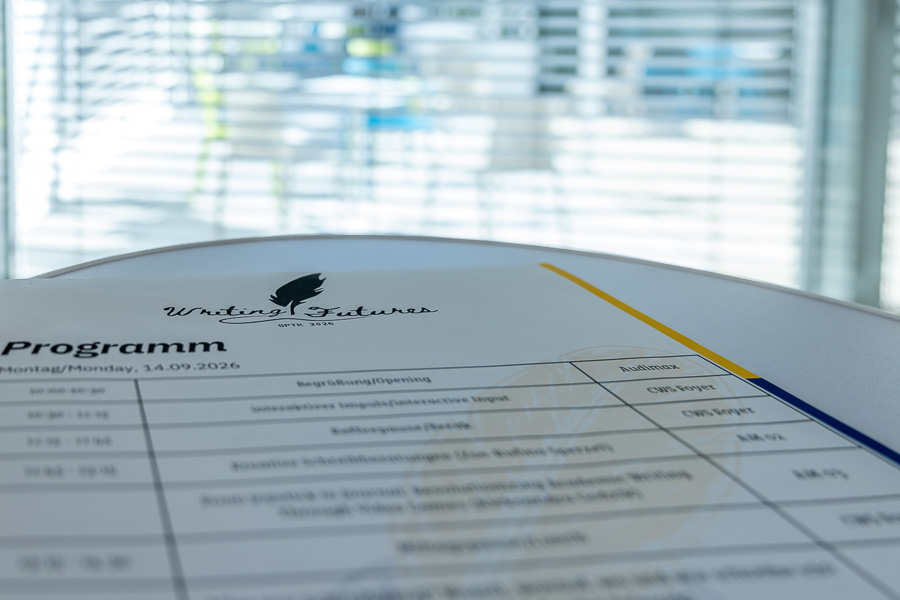
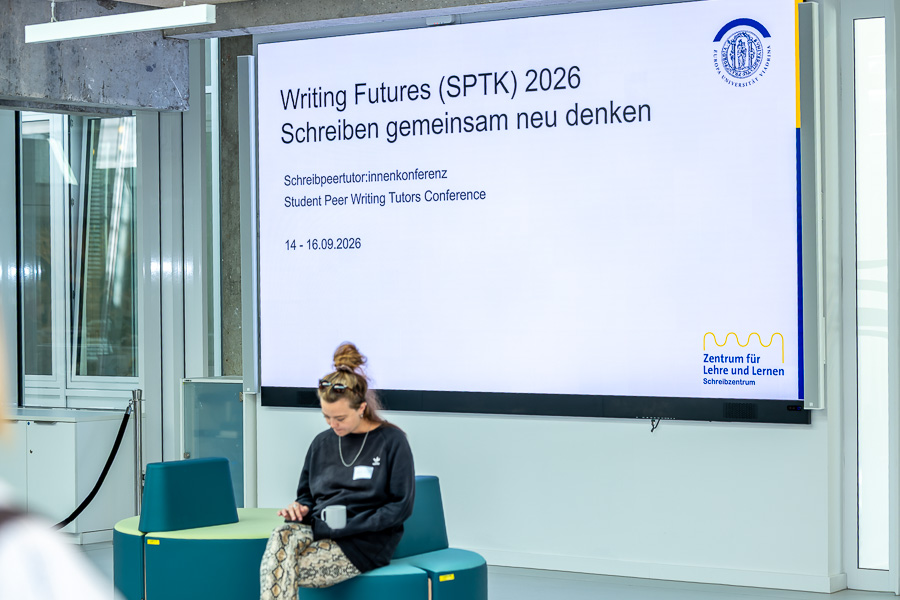
At events held in parallel, peer tutors share experiences of their day-to-day work, undertake professional development, and discuss individual cases and general issues. Topics include the exceptional emotional circumstances faced by students who come to the counselling service with their writing projects, how video games are revolutionising academic writing, and what writing centres of the future should look like.
On Tuesday morning, a ‘Shared Human Experience’ session on the topic of artificial intelligence and how it is changing academic writing takes place in a seminar room in the Audimax. Viadrina students Michalina Lorych and Fakhar Hanif lead the session, which follows a format developed by a student, in which participants exchange views on pressing questions in ever-changing groupings: “Does using prompts help you organise your thoughts?”, “How does AI influence your creativity?”, “Is there still such a thing as an authentic writing style if it can be imitated by AI?”. Many people here in the room particularly value independent, craft-based writing, but during the consultations they are also confronted by the students with a different, AI-influenced approach to writing. There are few clear-cut opinions or unshakeable convictions here, but all the more openness and a willingness to engage in discussion.
In the packed seminar room next door, colourful, labelled cards lie scattered on the floor. In small groups, the participants are discussing their experiences of ADHD symptoms in writing consultancy sessions. Malte Nielsen and Pauline Teupke from Goethe University Frankfurt am Main brought this topic to the conference; there is a great deal of interest. The participants’ observations are consistent: students attending the counselling sessions are restless, bounce their legs, jump from one topic to another, digress, and launch into a torrent of words. “ADHD disrupts the structure that gives us, as peer tutors, a sense of control,” says Malte Nielsen, summarising how the tutors feel during such sessions. He advises: “Our task is to restore self-efficacy, to enable people to take part in their own writing processes once again.” There is so much to discuss about how this can be achieved in practice that the group goes well over the workshop time limit.
Both examples illustrate the essence of the conference, which was developed at Viadrina almost 20 years ago: students supporting students in their role as peer tutors. “A successful example of student engagement and a model of success at Viadrina,” says Franziska Liebetanz, co-director of the Center for Teaching and Learning at Viadrina.

Tawhid Hasan, University of Heidelberg
I offer writing advice because I want to help others, and writing is a major problem for many students. Many read an enormous amount but then don’t know where to start writing. The world is full of facts, but choosing which ones to use is so difficult. In my experience, this isn’t taught sufficiently in German schools. There’s a lot of focus on interpreting texts, but how academic texts work – the ‘claim – evidence – reasoning’ structure… – that’s something many students aren’t familiar with.
With the use of AI, questions about how best to phrase a sentence are disappearing from writing consultations. What remains is the need for support in organising large amounts of text and knowledge. I’m cautiously optimistic about artificial intelligence. I hope we realise that we don’t actually need to write that much. We can present arguments in a much more concise and compact way, and we shouldn’t simply write for the sake of justifying our position.
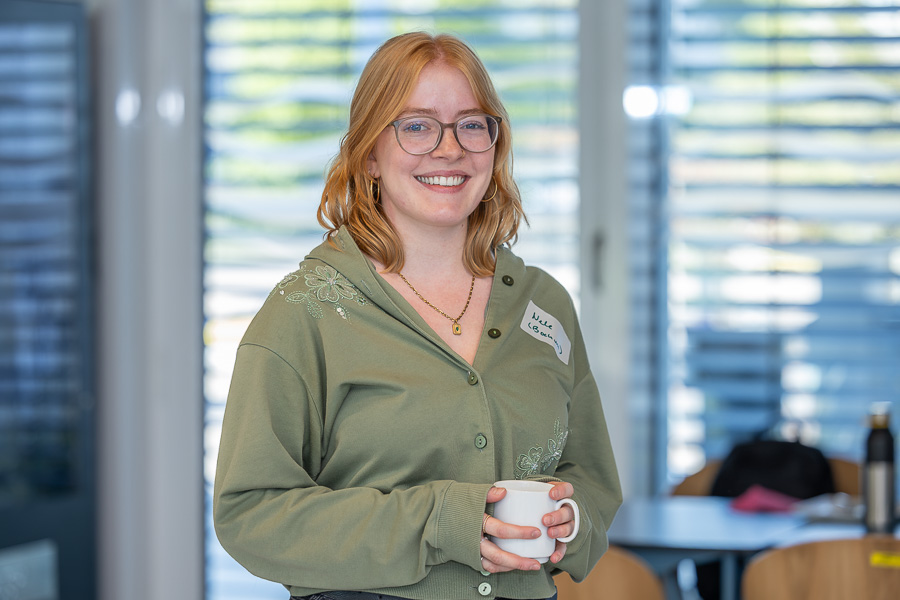
Nele Cehak, University of Bochum
Here at the Writing Café at the University of Bochum, we offer open consultation sessions; each session runs from 10 am to 4 pm. Students often come with questions about their research topics or because they’re struggling to find a common thread. Sometimes it’s about minor details, such as formatting page numbers in Word.
AI is playing an increasingly important role in advisory work. I have been asekd by students to to review texts partly written by ChatGPT. It’s a challenge to develop my own stance on this and to ensure it aligns with the university’s position. I don’t demonise AI and I think it can help with structuring, providing food for thought and, for example, suggesting headings. But I also see the risk: to what extent does it remain my text? With students, I see above all the fear that their texts will be deemed plagiarism.
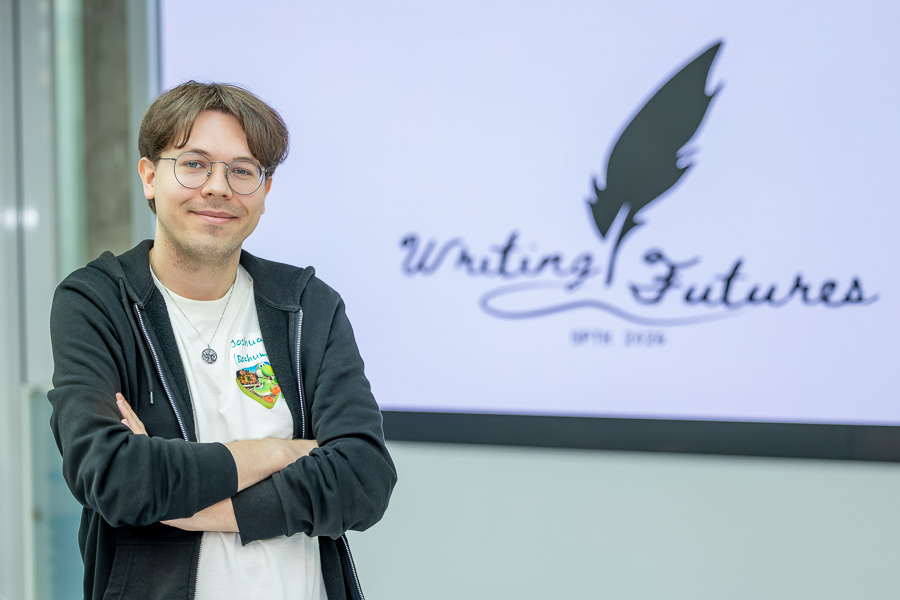
Joshua Lendel, University of Bochum
In the writing consultancy, we work according to the ‘minimalistic tutoring’ approach. We are not the leading experts; rather, we take a back seat, ask plenty of questions and, in an almost Socratic manner, encourage those seeking advice to further develop their text. I really enjoy this because it is so varied and fulfilling. Most sessions focus on narrowing down the topic, citing sources correctly or formulating ideas in an academic style – classic questions, really; AI hasn’t changed that much in that respect.
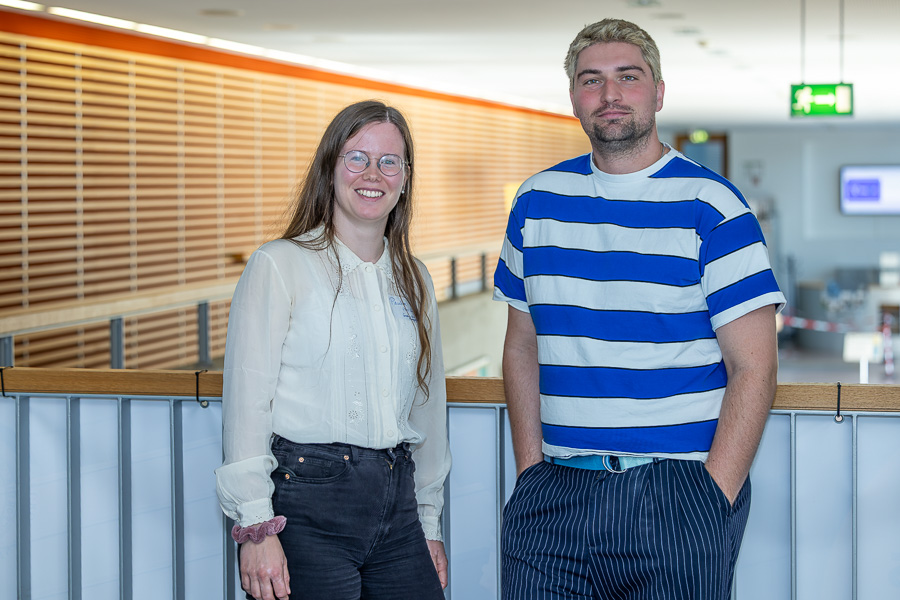
Pauline Teupke and Malte Nielsen, Goethe University Frankfurt am Main
We estimate that ten per cent of students have ADHD and, naturally, bring this challenge with them to the writing consultancy. This can quickly lead to the tutors feeling overwhelmed during counselling sessions. Sometimes we refer them to the psychosocial counselling service, but that does not help them with their writing. As a support service, we aim to level the playing field in the writing consultancy, but there is still very little knowledge about writing with ADHD at universities. That is why, through our project, we are frequently invited – including internationally – to share our experiences.
We see our role as identifying where gaps appear in the counselling structures; who is being overlooked. Students with ADHD often fall through the cracks in several respects.
Translated by Deepl and edited. Original german version: Frauke Adesiyan
Back to the news portal
Share article: