
When Research Sparks Conversation: Viadrina Researchers at the Long Night of the Sciences
How do companies make ethical decisions? How can artificial intelligence be designed around solidarity? What role can Germany play in Russia’s war against Ukraine? Who bears responsibility for climate damage – and are we currently witnessing a backlash against emancipation? At the Long Night of the Sciences in Berlin on 6 June 2026, Viadrina researchers demonstrated just how closely their research relates to the pressing questions of everyday life. In the main building of Humboldt-Universität, they engaged in conversation with the audience about responsibility, change and the major conflicts of our time.
Around 30,000 visitors attended the Long Night of the Sciences in Berlin, experiencing research through lectures, workshops, science shows and many other formats. Viadrina researchers also took the opportunity to present their current research topics.
Research that joins the conversation
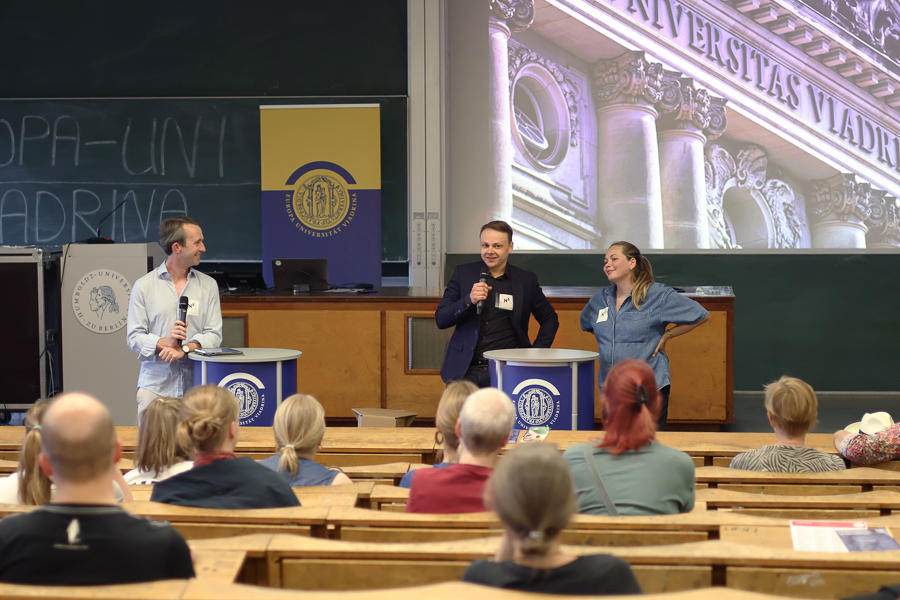
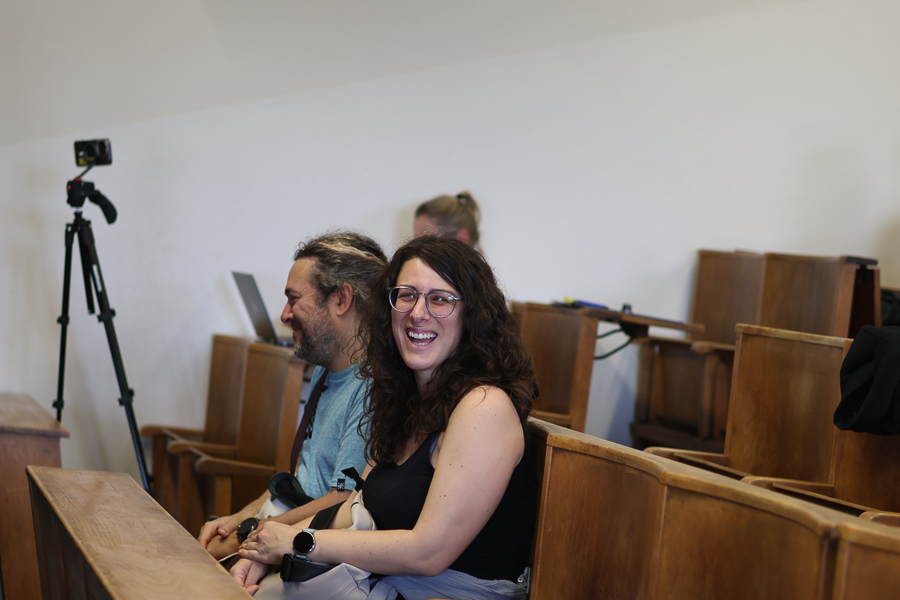

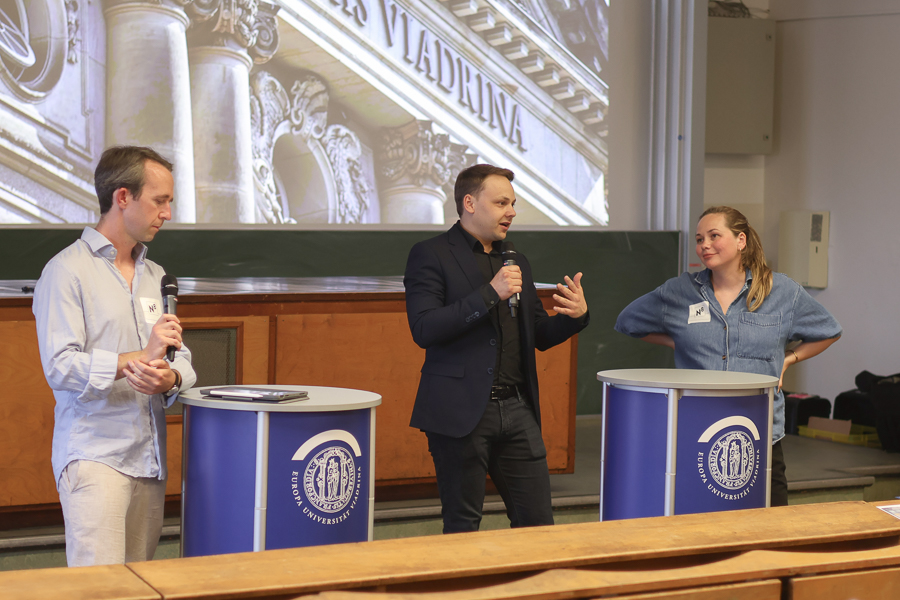
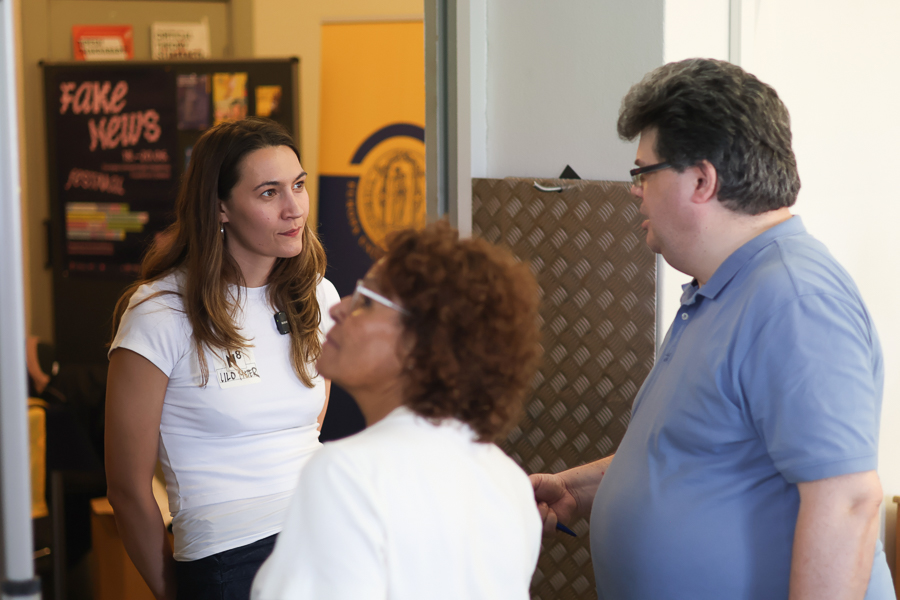
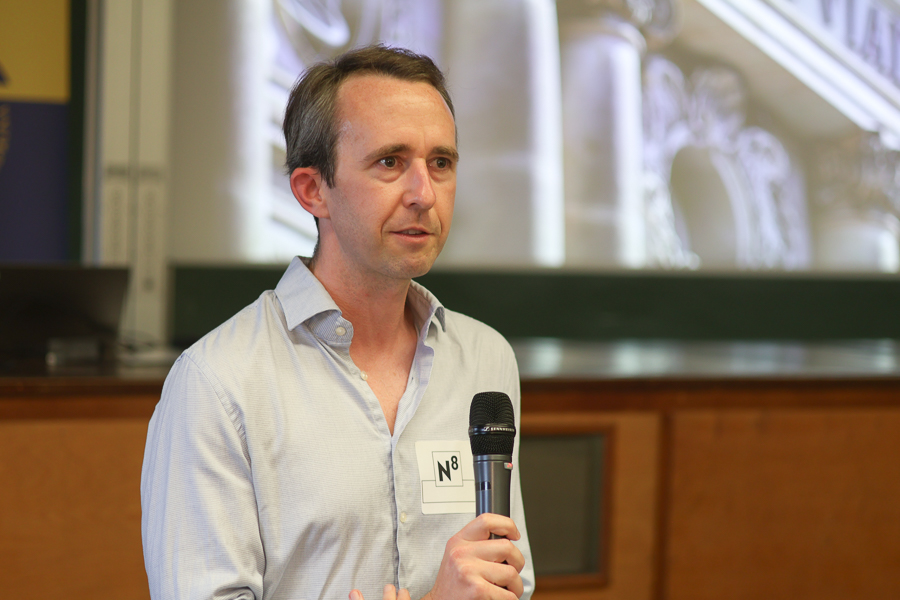
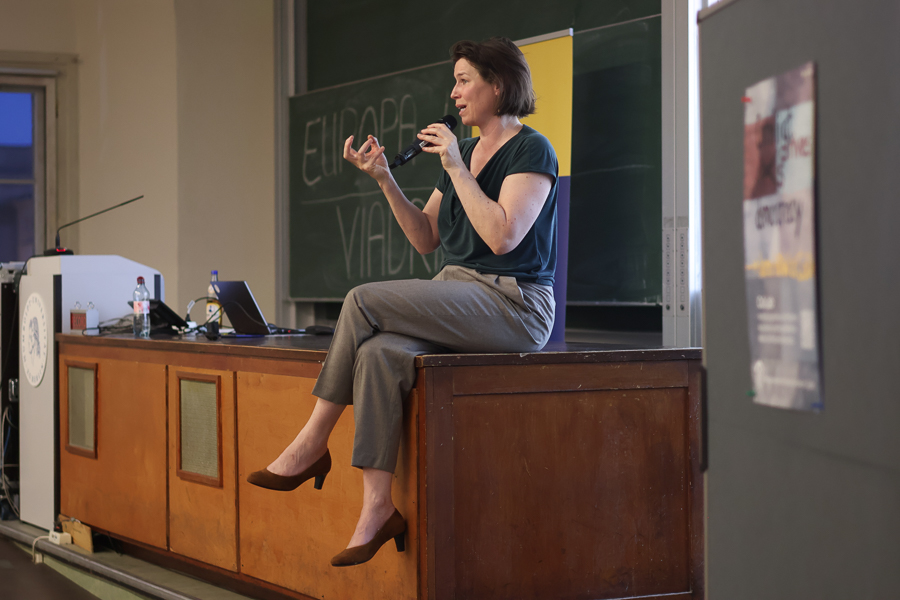
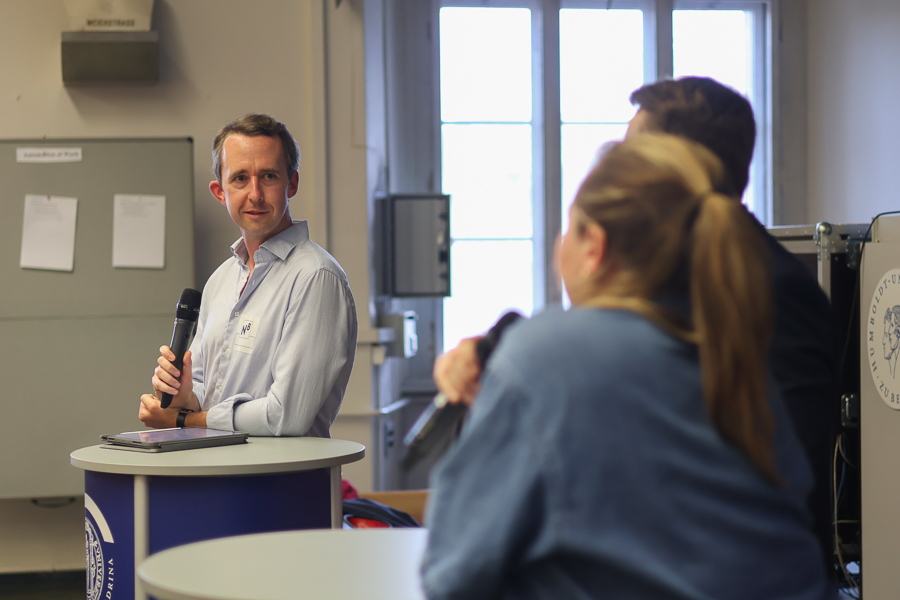
Prof. Dr Jan-Erik Schirmer (left) in conversation with John Peters and Francesca Mascha Klein
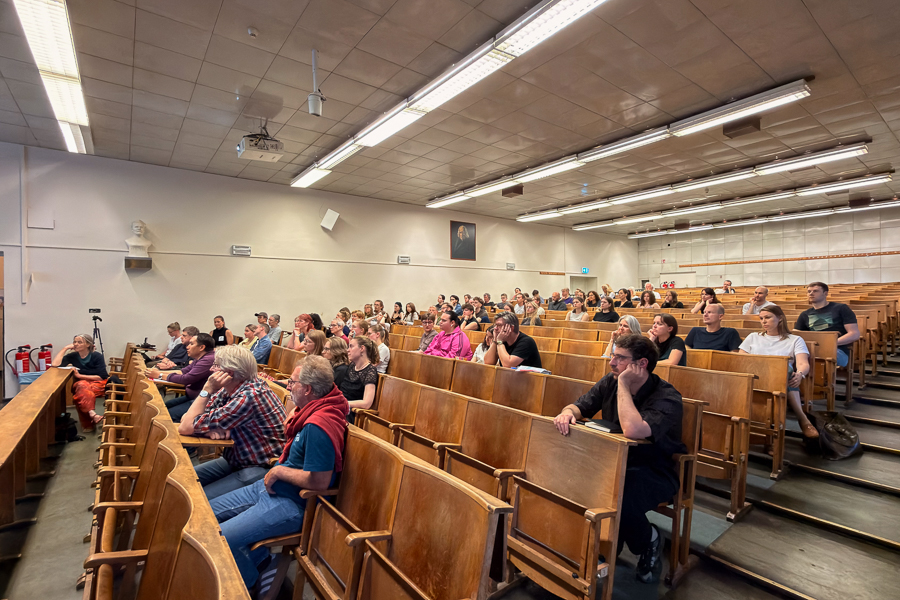
Visitors to the Viadrina programme at the Long Night of Science 2026 in Berlin
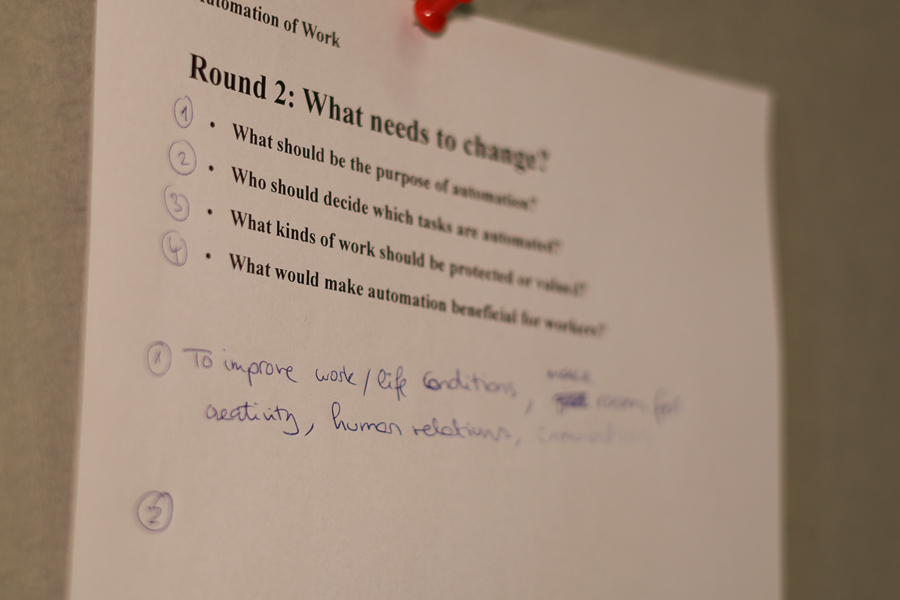
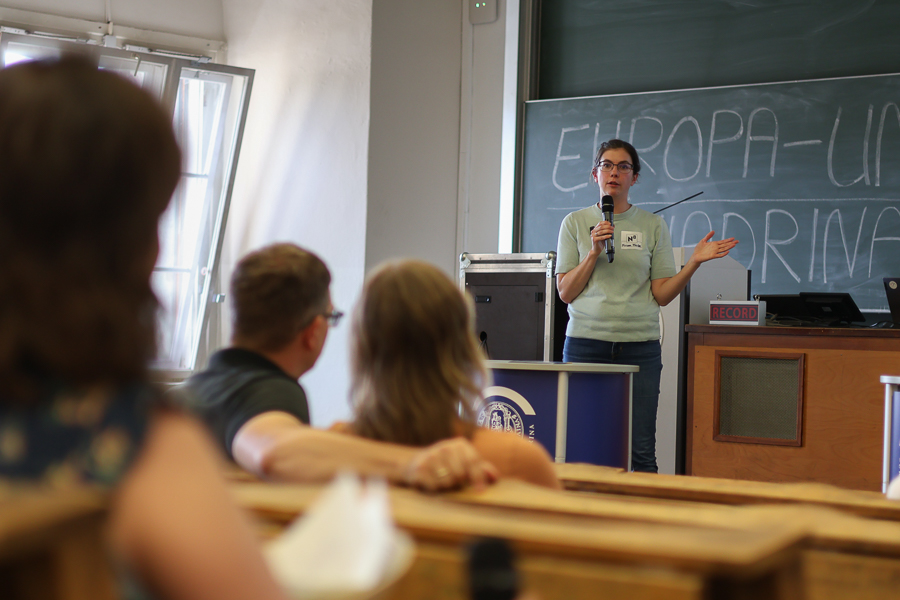
Notes from the English-language workshop ‘Imagining Alternative Digital Futures: Rethinking Work and Organisation with Technology’ by Dr Lilo Meier
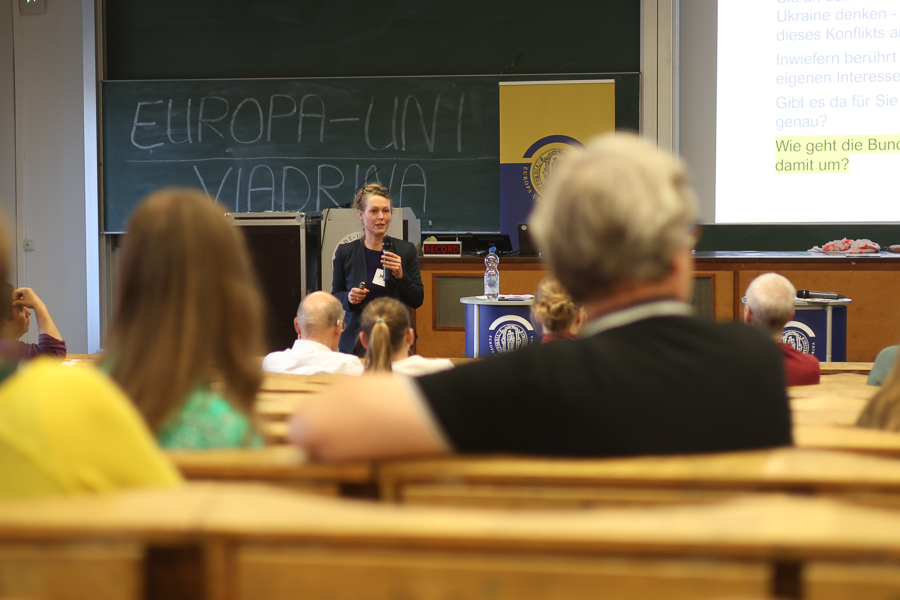
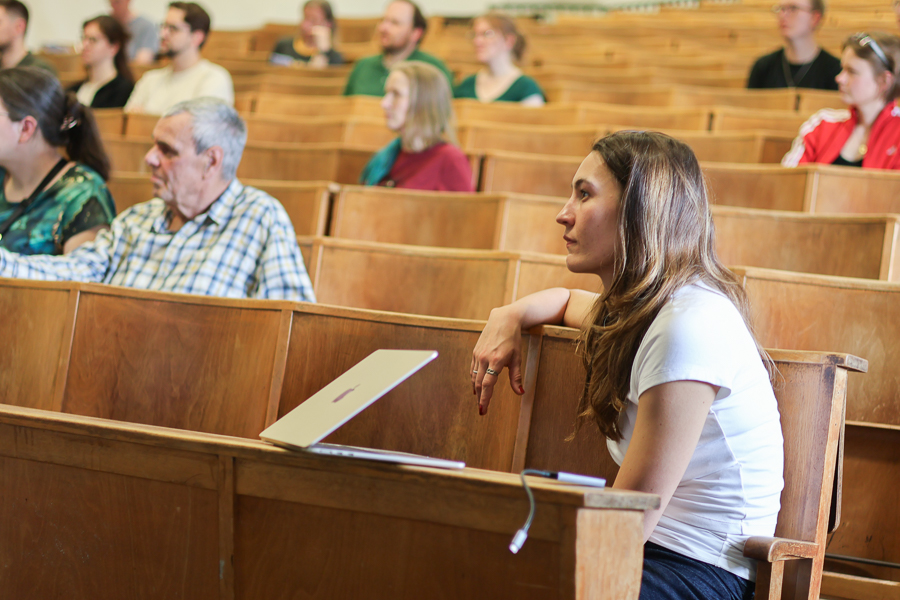
A glimpse over the shoulder of a visitor at the Long Night of Science 2026
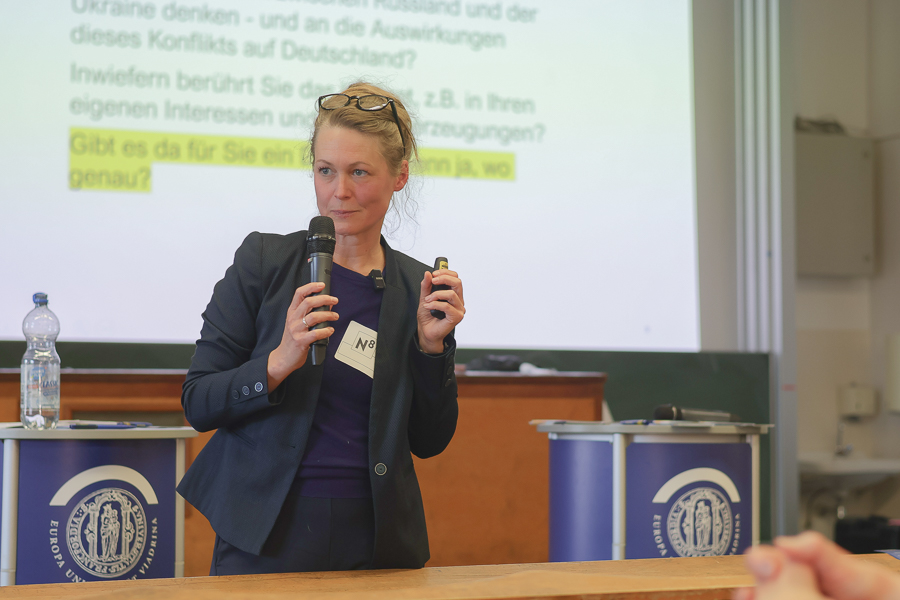
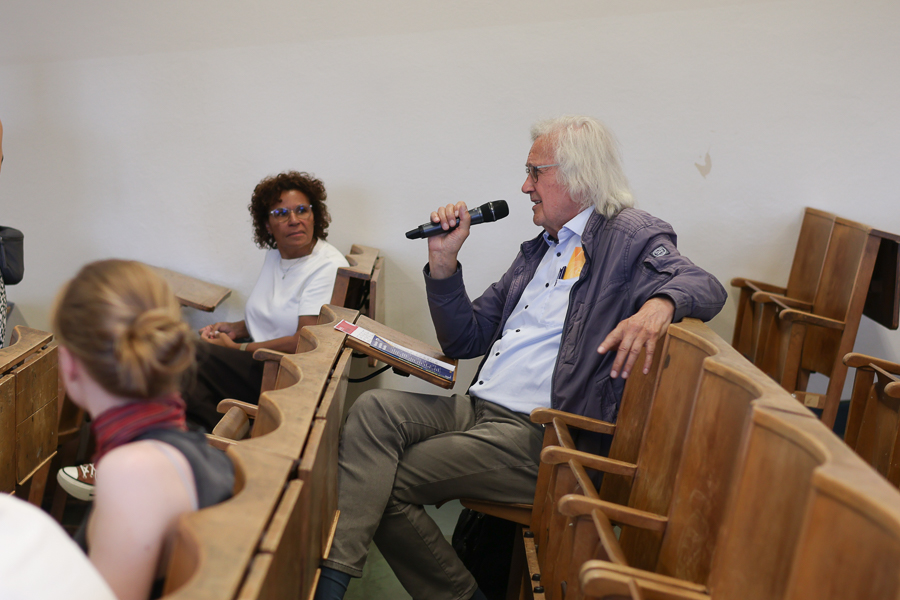
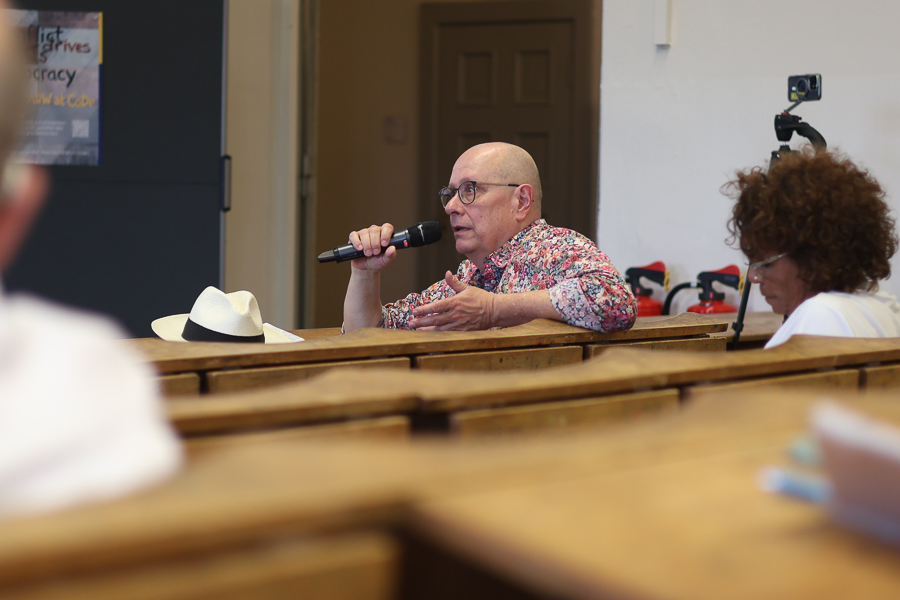
Comment from the audience during the talk ‘What can and should Germany do now in the Russian war against Ukraine?’
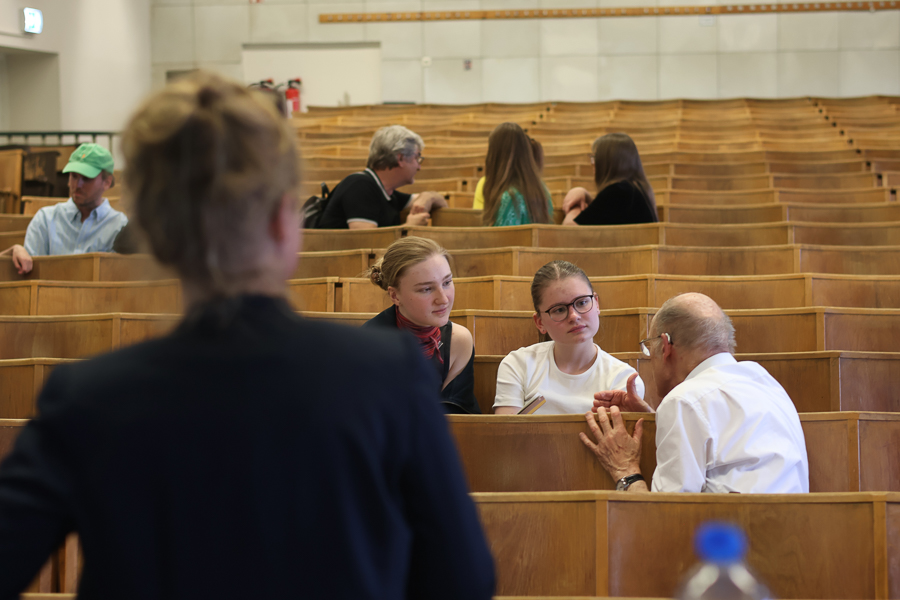
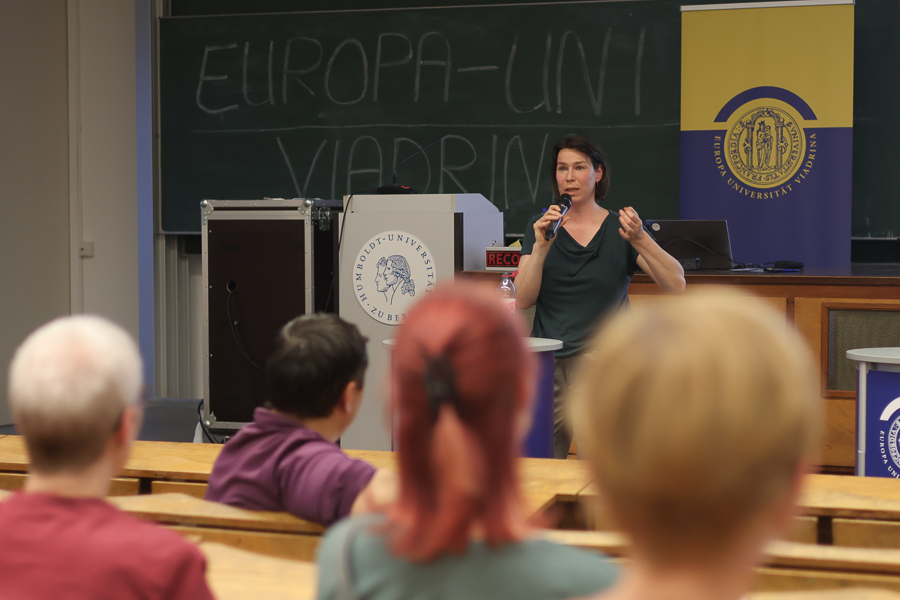
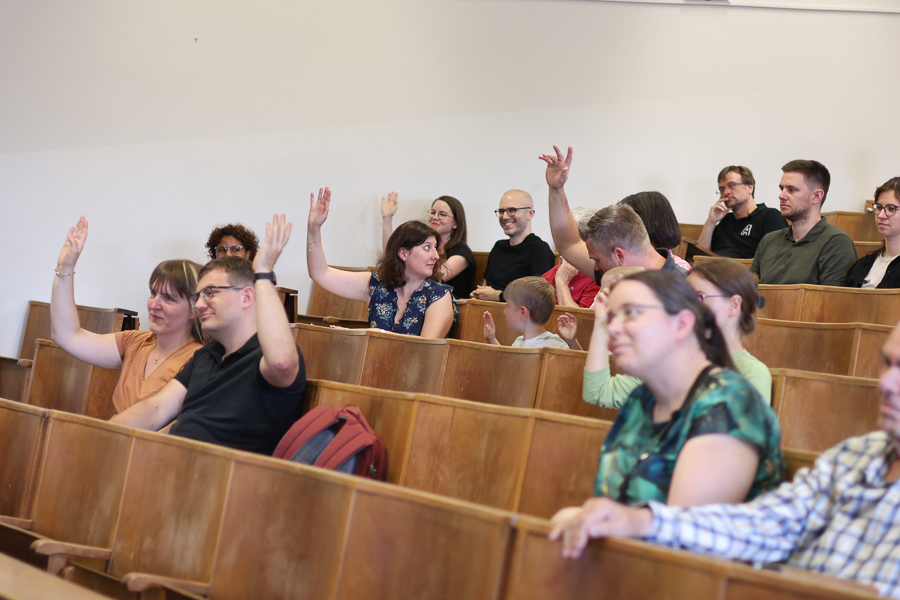
A packed lecture theatre at the Viadrina programme during the Long Night of Science 2026
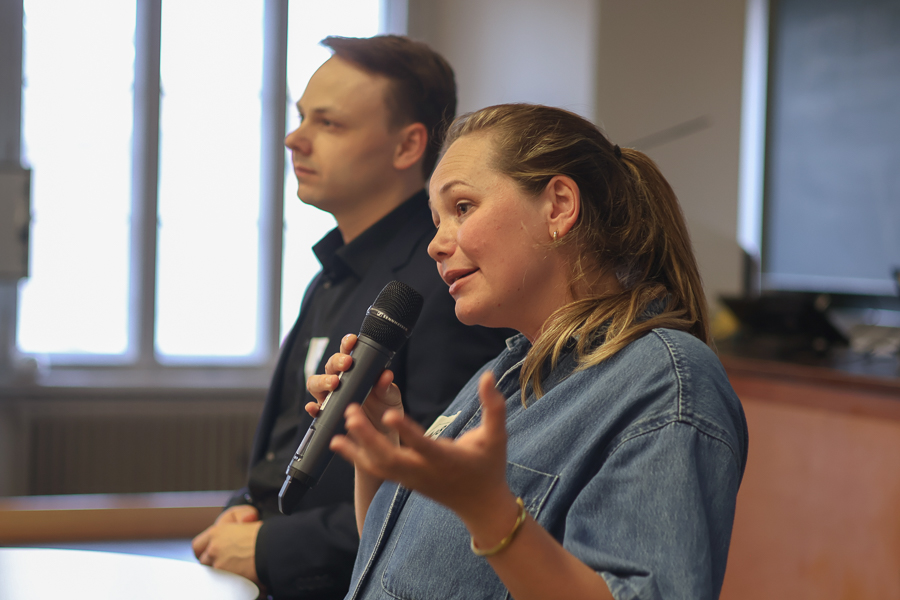
Prof. Dr Jan-Erik Schirmer (left) on the panel with John Peters and Francesca Mascha Klein
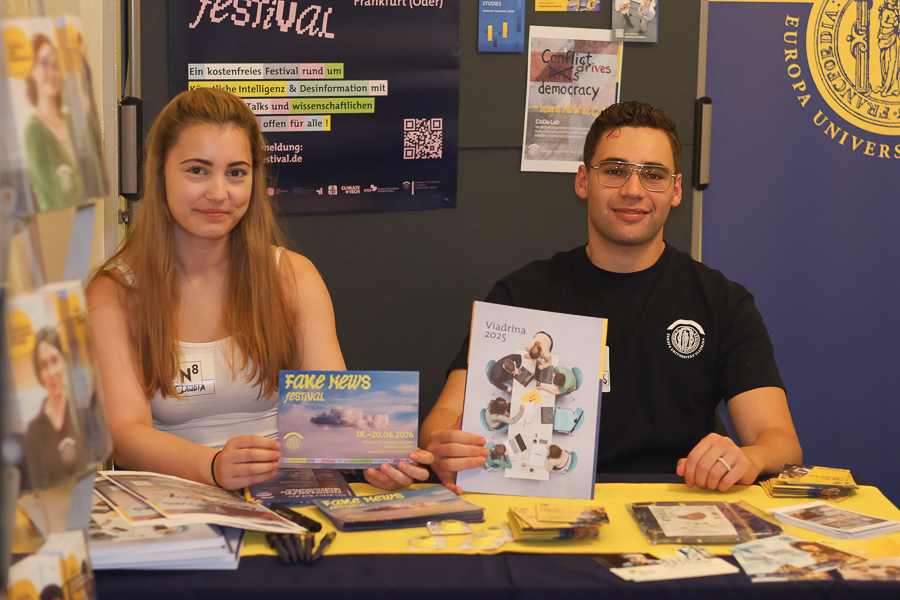
Viadrina ambassadors present the range of courses and events on offer at Viadrina
Prof. Dr Jan-Erik Schirmer at the panel discussion ‘Are companies liable for climate change?’
A comment from the audience on the question of what Germany can and should do regarding the Russia–Ukraine conflict
A look inside the engine room of corporate management
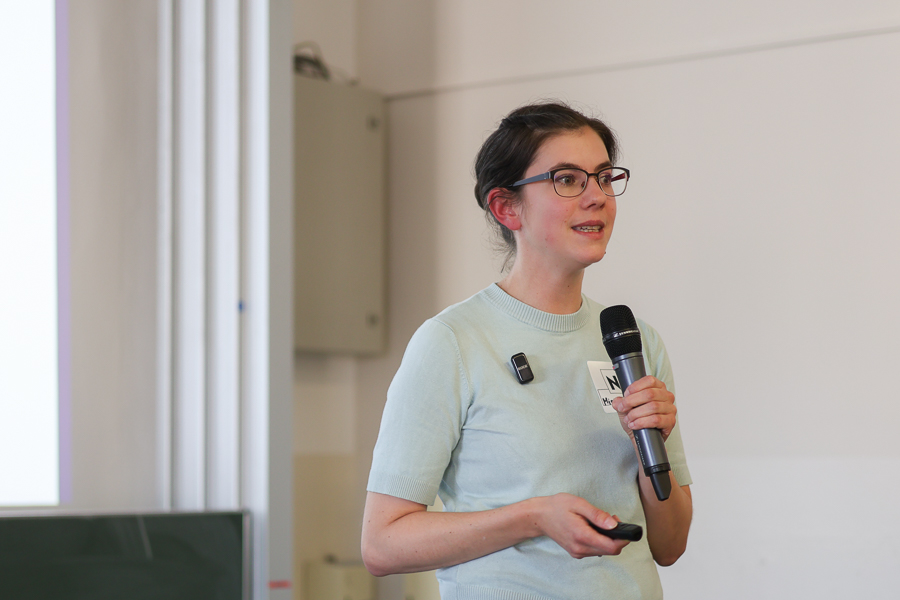
The Viadrina programme opened with Dr Miriam Maske, who has held the interim professorship in Business Administration, in particular Management Accounting and Control, at Viadrina since October 2025. In her interactive lecture, ‘Why Ethics in Companies Often Fails – Between Personality and System’, she invited the audience to take a look inside the ‘engine room of corporate management’. ‘Today, I am going to show you that business administration is about more than just profit, cost reduction and efficiency,’ the researcher said. At the heart of her research is the question of how decisions are made in companies and how responsible action can be enabled within organisations.
Using a number of thought experiments, Miriam Maske demonstrated how difficult it is to make genuinely objective decisions in a corporate context. Among other things, audience members were asked to put themselves in the position of a manager and assess how they would deal with employees who were high-performing, loyal or acting in breach of the rules. Her research findings make one thing clear: ‘We rarely make neutral decisions.’ Factors such as performance, personal affinity, loyalty, closeness or similarity influence decisions just as much as formal management tools, key performance indicators, bonuses or target agreements. Miriam Maske illustrated this particularly clearly using the so-called halo effect, whereby strong performance in one area can influence assessments in other areas. She also considered personality traits among managers and the tendencies associated with them.
Rethinking the digital future: Dr Lilo Meier on AI, work and platforms
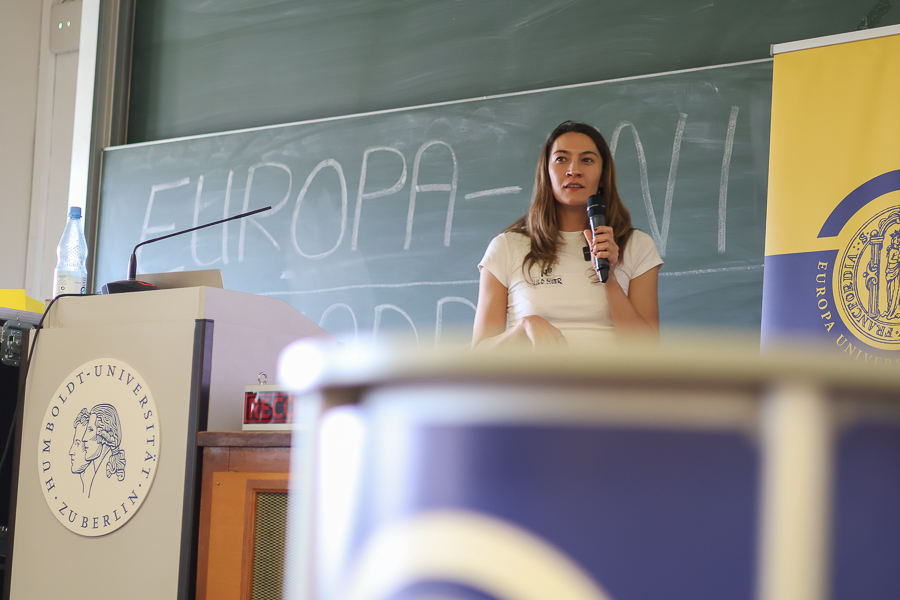
Dr Lilo Meier, a research associate at the Chair of Human Resources, Work and Management, explored how digital technologies and artificial intelligence (AI) affect work, organisations and societal visions of the future in her English-language workshop ‘Imagining Alternative Digital Futures: Rethinking Work and Organization with Technology’. Using a range of examples, she demonstrated that technological developments are always connected to wider social ideals, economic interests and specific working conditions. Among other things, she drew attention to the hidden costs of digital technologies, including resource consumption, raw-material extraction, data centres and poorly paid work.
At the same time, Lilo Meier invited participants to consider the idea that technology does not necessarily have to be geared towards maximising profit, increasing efficiency and exerting control. Examples such as platform collaborations, shared ownership, democratic decision-making structures and the use of digital tools to preserve languages highlighted alternative perspectives on digital work and organisation.
During an interactive part of the workshop, participants were invited to move between several stations and discuss their thoughts on problems, necessary changes and possible alternatives in the use of AI and digital platforms. By the end of the workshop, a cautious sense of optimism prevailed: research into alternative forms of digital organisation in particular shows that AI should not be understood solely as a self-learning system, but as a technology whose development and use can be shaped by society.
Germany’s role in the war against Ukraine: Dr Anne Holper on conflict, responsibility and scope for negotiation
Dr Anne Holper from the Institute for Conflict Management placed the question of how the war against Ukraine can be discussed – and what role Germany should play in it – at the centre of her interactive lecture. At the outset, she emphasised that the question ‘What can and should Germany do now?’ is not a conventional academic research question, but rather a highly political and personal matter requiring careful consideration. The Institute for Conflict Management conducts its research independently and prepares evidence to support decision-making by political and societal actors, the researcher explained.
After outlining the current military, societal and diplomatic situation, Anne Holper turned her attention to possible areas for negotiation and Germany’s particular role.
In several rounds of discussion, participants exchanged views on what concerned them most about the war and its consequences for Germany. Among the issues raised were feelings of helplessness, uncertainty and psychological strain, the need for reliable support for Ukraine, and the dilemma that pursuing justice can at the same time entail further violence. To conclude, Anne Holper and the audience collected suggestions for what Germany should or should not do next – ranging from offering Ukraine a perspective for EU membership and providing sustained support for reconstruction to the question of what perspectives and narratives might also need to be developed in relation to Russian society.
Climate liability as a legal thriller: Prof. Dr Jan-Erik Schirmer, John Peters and Francesca Mascha Klein on a precedent-setting climate case
Prof. Dr Jan-Erik Schirmer, holder of the Chair of Civil Law, Commercial and Corporate Law, Compliance and Sustainability, discussed whether individual companies can be held liable for the consequences of global climate change together with lawyer John Peters and Francesca Mascha Klein, legal adviser at Germanwatch. The discussion centred on the widely noted case brought by Peruvian farmer and mountain guide Saúl Luciano Lliuya against the energy company RWE. Jan-Erik Schirmer guided the audience step by step through the legal reasoning behind the case, presenting it almost as a legal thriller: How can specific damage in Peru be linked to the emissions of a German company? Where does responsibility begin if a business model operates within the law but demonstrably contributes to the climate crisis?
Using accessible comparisons from private law, Jan-Erik Schirmer explained why the case has implications far beyond the individual lawsuit. In the case of ‘farmer versus RWE’, the issues were considerably more complex and had to be considered in a global context. John Peters and Francesca Mascha Klein drew on their experience of the proceedings to explain why the claim against RWE was dismissed in this particular case, but why the judgment is nevertheless regarded as an important step: the court had established in principle that German companies can be held liable for climate-related damage. ‘And this judgment sent shockwaves around the world,’ Jan-Erik Schirmer said.
The decision could also give fresh impetus to further proceedings against major greenhouse-gas emitters, John Peters added. At the same time, the discussion highlighted the fundamental role that law can play in the climate crisis: ‘It creates rules to change behaviour, make responsibilities visible and give those affected new ways of taking action,’ Jan-Erik Schirmer said.
Is the gender order still in motion? Prof. Dr Sarah Speck on change and resistance
To conclude the Viadrina programme, Prof. Dr Sarah Speck, holder of the Chair of Comparative Cultural Sociology, turned her attention to changing perceptions of gender. She asked, ‘Is emancipation going into reverse?’ and offered a sociological perspective on current debates surrounding tradwives, renewed hostility towards queer people, violent masculinities, traditional family models and right-wing populist gender politics. Speck showed that the gender order is simultaneously changing and proving remarkably persistent: women have become more visible in politics, public life and paid employment, while unequal divisions of labour, the gender pay gap, patterns of violence and stereotypical forms of consumption and representation continue to exist. Using examples from everyday life – from gender-specific toys to the question of who takes on care work and housework within relationships – she illustrated how deeply gender orders are embedded in social routines.
The cultural sociologist described this development as a contradictory transformation: on the one hand, there is increasing plurality, demands for equality and changing ways of life; on the other, there are powerful forces of persistence and renewed attempts to restore traditional social orders. She examined perspectives rooted in theories of power, materialist approaches and cultural analysis, explaining, among other things, why ideals of equality within relationships do not automatically result in an equal distribution of care work. Against this background, Sarah Speck also discussed the public debate surrounding Christian Ulmen and Collien Fernandez as an example of how questions of relationships, violence and gender order are negotiated within society.
In the discussion that followed, the audience asked about ‘gender voting’, the influence of the MeToo debate on the gender order, the Nordic gender paradox, the question of violence in gender relations, and what equality might look like in the debate on compulsory military service. Sarah Speck summed up her position that evening as follows: the gender order remains ‘highly contested and highly political and, above all, in motion’.
Social sciences to get involved in: policy papers and biographies at the Centre Marc Bloch
At the Centre Marc Bloch, too, it became clear how social science research can have a practical impact. At an information desk, Dr Elsa Tulmets-Gerhardt, a research associate at Viadrina’s Chair of European and International Politics, presented work in the fields of policy advice and science communication and demonstrated how students develop policy papers, flyers and playing cards on topics including foreign and security policy, the United Nations, and the environment and climate.
Long Night of the Sciences at the Centre Marc Bloch
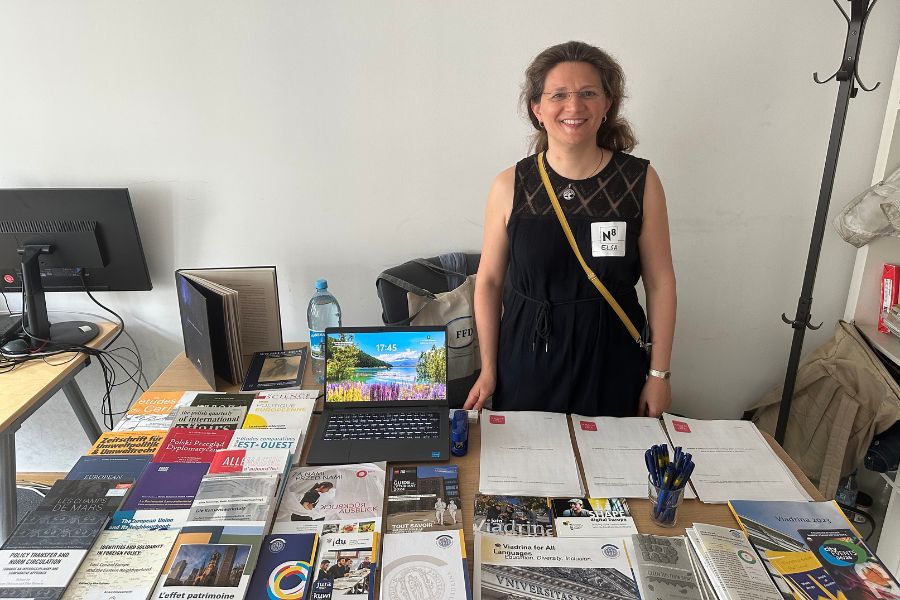
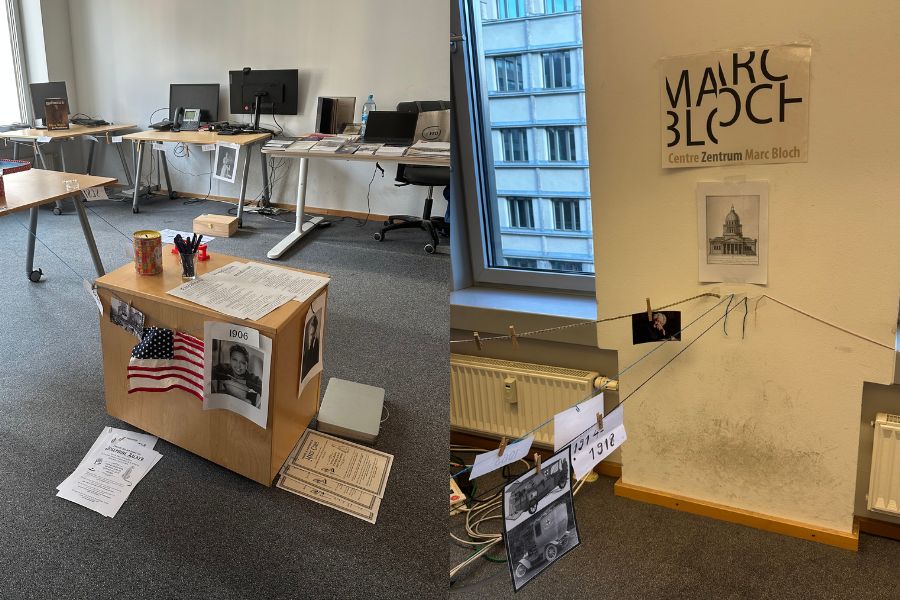
Social sciences you can get involved in: policy papers and biographies at the Centre Marc Bloch
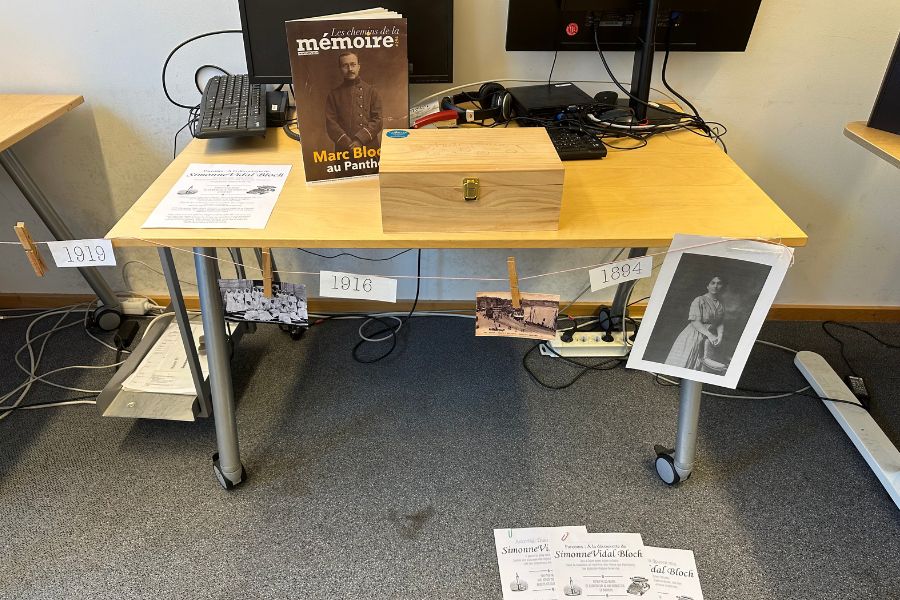
Another part of the programme was aimed particularly at younger visitors. Together with Aurore Wischmann, Elsa Tulmets-Gerhardt invited children to participate in a playful interactive trail exploring the biographies of women in the Panthéon. Through figures such as Marie Skłodowska Curie, Josephine Baker, Germaine Tillion and Simonne Vidal Bloch, the children gained insights into how the social sciences examine individual life stories and place historical biographies within their wider social contexts.
Text: Katrin Hartmann; translated by DeepL and edited
Back to the news portal
Share article: