
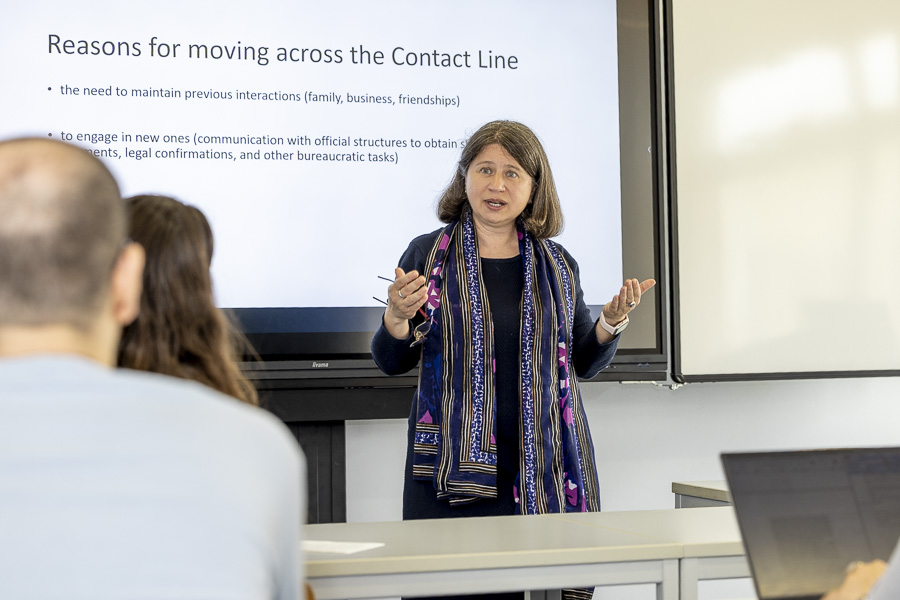
KIU guest professor Oksana Mikheieva teaches about border politics and everyday life in the occupied Ukrainian territories
Hours of waiting at checkpoints, constant checks on papers, fears for sick family members - sociologist Prof Dr Oksana Mikheieva has been researching the everyday lives of people in and from the occupied territories in Ukraine for many years. In the summer semester of 2026, she is teaching at Viadrina as a visiting professor at the KIU - Competence Network Interdisciplinary Ukrainian Studies on this topic and reaching students with her special teaching.
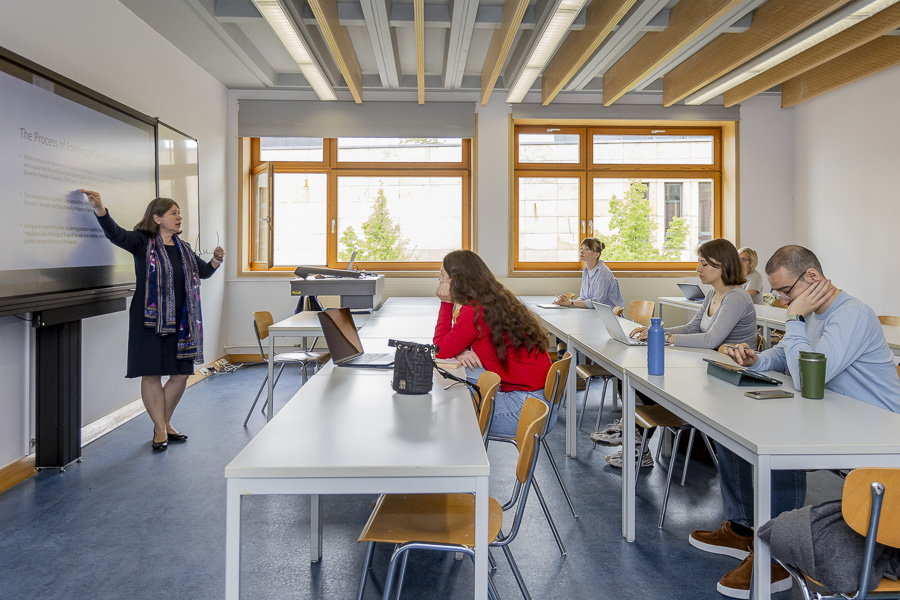
"I have too much material; there are hundreds of stories," says Oksana Mikheieva, looking at her watch as she has already run a few minutes over her seminar time. The sociologist has spent an hour and a half talking to her students about why people stay in the Russian-occupied territories of Ukraine, why others leave, and what unacceptable conditions they endure. Since 2013, she has been conducting interviews with Ukrainians who have been displaced in their own country - she has collected countless stories since then.
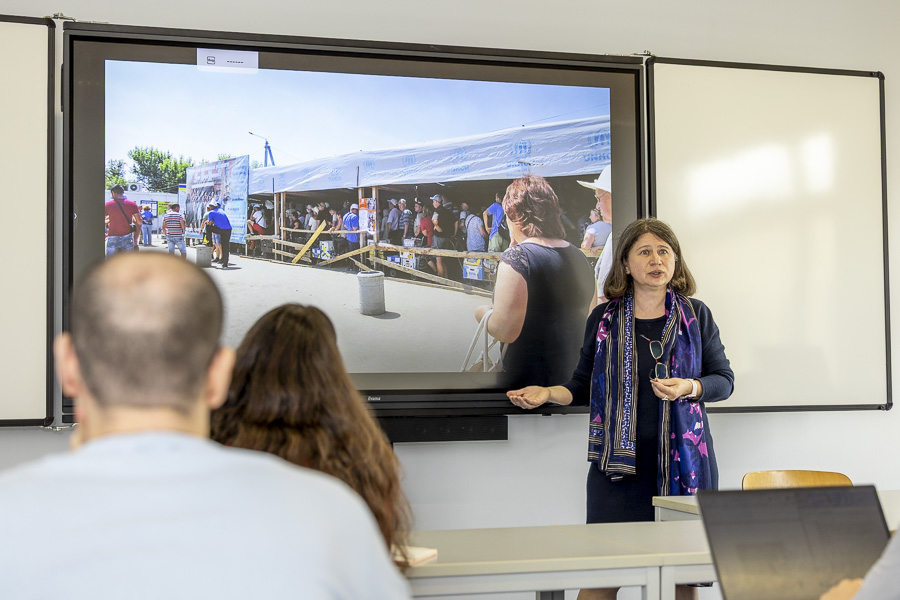
This enables her to talk to the students about how Ukrainians stay in occupied eastern Ukraine for example to care for their sick family members, because their passports have been taken away by the Russian authorities following pro-Ukrainian statements or because they have worked with Russians. She also reports on elderly people collapsing while waiting at checkpoints without protection from the heat. Or how a journalist cannot attend his mother's funeral because he is not allowed to enter the Russian-occupied territories. What is important to her in all these descriptions is to keep an eye on individual, often tragic fates and yet not remain in snapshots.
Theory of critical border studies
Her theoretical concept are the critical border studies. "They bring real people back into geopolitics. We not only look at the large political spaces, but also focus our attention on everyday life: how do people deal with the new borders, how are their lives changing, what experiences of violence are they exposed to?" says Oksana Mikheieva, outlining the theoretical approach she is practising with the students. The border is not seen as a line on the ground between two countries, but as a space with practices and experiences of people. Without the theoretical embedding, the statements from the interviews would only remain tragic - or entertaining - stories. By looking at everyday life as it changes as a result of violent border shifts, Oksana Mikheieva wants to illustrate "how major political projects change our lives".
Knowledge about Ukraine is growing
For Oksana Mikheieva, the current guest professorship is the continuation of a long association with Viadrina. She first taught at the European University in 2017 as part of the Viadrinicum summer school. She returned in 2020 for a research stay, which was extended several times. She is now affiliated with the Competence Network Interdisciplinary Ukrainian Studies and teaches two seminars within this framework. In all these years, she has observed major changes in the view of and knowledge about Ukraine. "In 2020, I was asked here whether there was a war in Ukraine. Something that had been obvious since 2014," she recalls, still somewhat stunned. Step by step, however, the German public has moved away from the Russian version of the story, she observes. "There are now strong voices here that are very relevant in the discourse about what is happening in Ukraine," says Mikheieva about the growing Ukrainian expertise at Viadrina. It is also essential to involve Ukrainian researchers in the production and dissemination of knowledge.
Valuable collaboration with students
She doesn't see herself purely as a knowledge broker; she also learns a lot herself in her seminars. "Working with students is the best part of my job," she says. "Sometimes they ask me something I've never thought of before," says Mikheieva. In the current seminar, for example, she benefits from the legal knowledge of one student; another contributes his regional expertise on developments in the Balkans. "I only have my own perspective. Understanding new perspectives in discussions is very valuable for me."
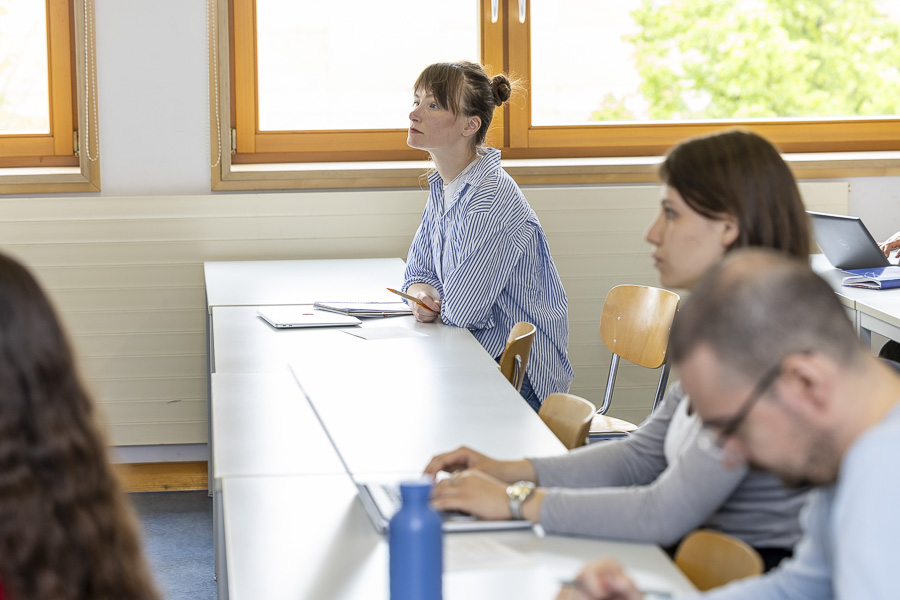
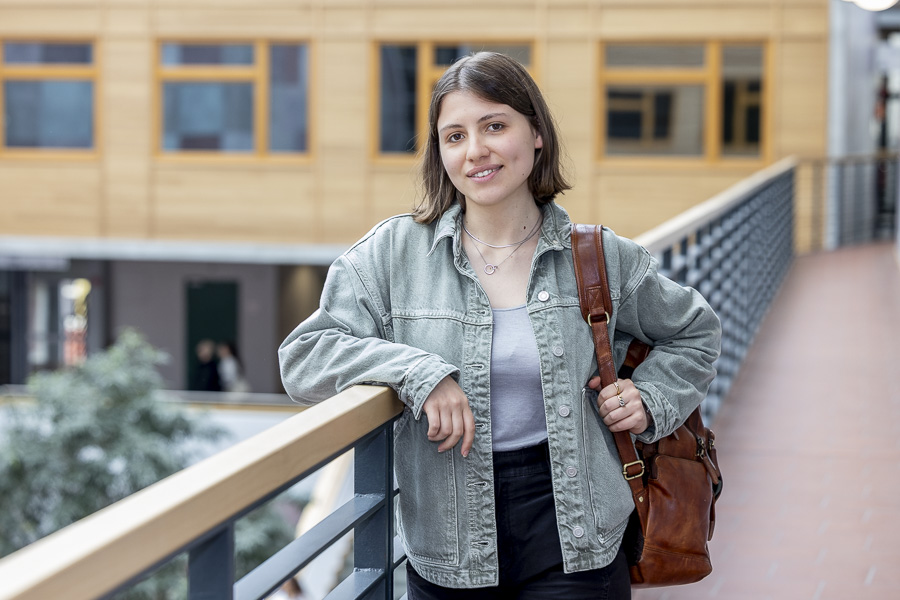 Her students also greatly appreciate this exchange. For Jeanne Lopata, who is studying European Studies as a German-French double master's degree, the choice of Oksana Mikheieva's course was a very conscious decision. "I want to take as many courses at the Viadrina that are related to Eastern Europe as possible. A lecturer from Ukraine gives you a completely different perspective," she says, emphasising how important it is for her to broaden her own Western perspective. What she appreciates most is Oksana Mikheieva's microsociological perspective. "In France, Ukraine is also an issue, but it is dealt with in a dehumanised way; people forget that we are talking about human beings," she says, taking a critical look at the discourse in her home country. She also likes the constant reminder from her lecturer to critically question categorisations.
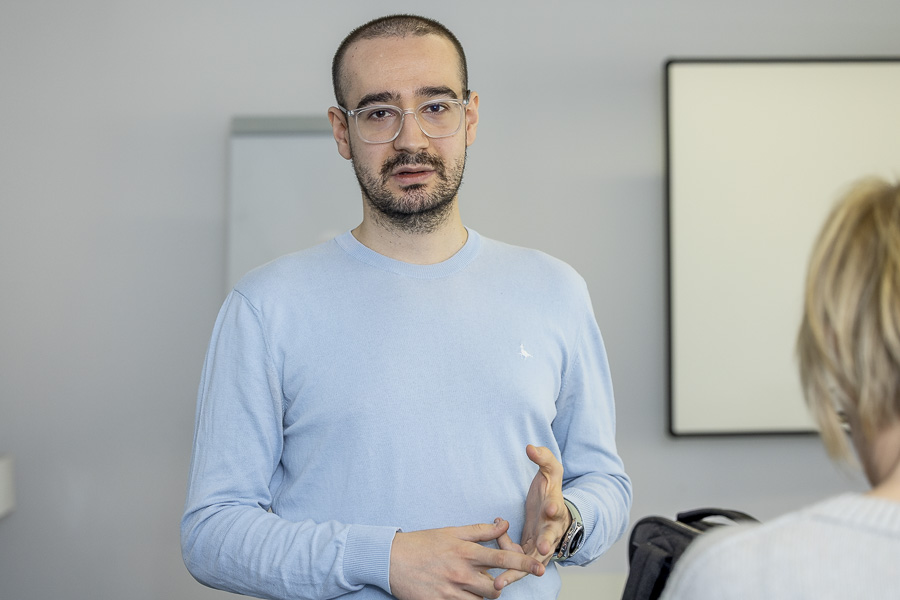 Said Sancakli, who is studying European Studies at Viadrina and Adam Mickiewicz University Poznań, also has a personal interest in Ukrainian studies. "For me, it's not really about the credits, but about the experiences and good conversations," he says. He himself has different cultural backgrounds and wants to learn to understand people and their cultures better. "What I really appreciate about this seminar is the combination of our lecturer's professional assessments and personal experiences," says Said Sancakli. He often talks to Oksana Mikheieva long after the seminar has ended.
Questions about own traumatic displacement
Oksana Mikheieva already had a close relationship with students during her first stays at the Viadrina. They were the ones who prompted her to write down her own traumatic experiences of displacement. "While I conducted so many sensitive interviews with people from eastern Ukraine, no one ever asked me about my experiences - until my students did," says the sociology professor, who taught and researched at the Donetsk State University of Management until 2013. Her students' interest led to the essay "How I became a displaced person", which she published on the Ukraine Verstehen portal in 2020. It was only long after the expulsion that she understood her own trauma. The violence she witnessed, the separation from her sons and her sick mother all left their mark. "People try to be very strong in the first period of migration; they want to control everything around them. But then, when your life stabilises a bit, you have problems because your body reacts," she reports with a mixture of personal openness and the expertise of the researcher that her students appreciate so much.
Frauke Adesiyan
Back to the news portal
Share article: