
“We need to talk” – but why, exactly?
How can we continue to have constructive conversations about highly contentious issues? How can people exchange opinions without trying to convert one another? Inspired by these questions, Philip Murawski, who runs the KUKURYKU cultural café in Frankfurt (Oder), and Laura Gerards Iglesias from Viadrina’s Institute for Conflict Management (IKM) developed the “We Need to Talk” format. Looking back, their assessment is mixed.
Philip Murawski was frustrated. Again and again, he would hear people from different political parties complaining about one another in his café, sense people becoming increasingly confrontational, and observe positions hardening. “I thought to myself: Come on, you’ve got such great people in your ranks — why don’t you just talk to each other?”
The idea: Constructive communication in everyday urban life
He had already experienced in 2024, as a participant in the Municipal Development Advisory Board, that dialogue can work despite differing views. Initiated by Gesine Schwan’s Berlin Governance Platform and moderated by the IKM, the process succeeded in bringing people into conversation. Wanting to carry this kind of communication into everyday life in the city, Philip Murawski approached the IKM and found a receptive partner in Laura Gerards Iglesias. “I thought it was a promising project for exploring how this kind of engagement could be continued without needing a large external player like the Governance Platform to come in from outside,” says mediator and IKM doctoral researcher Laura Gerards Iglesias.
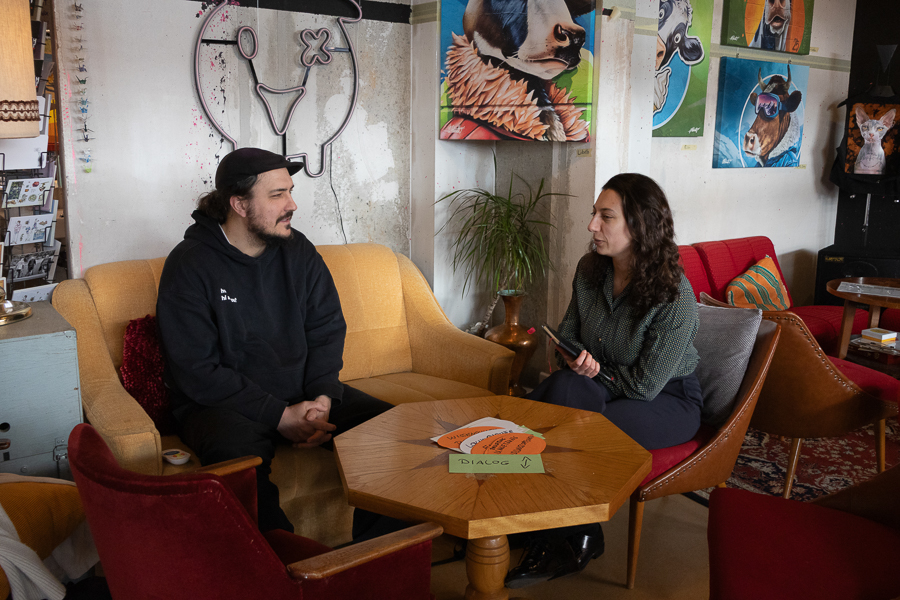
Philip Murawski and Laura Gerards Iglesias speaking at KUKURYKU
Valeria Lazareva
Together, they developed the “We Need to Talk” format, designed to bring together representatives from politics and the city to discuss topics that were intended to be as controversial as possible. The first event was held as “Safety in Frankfurt (Oder) and the real concerns behind it”; at the second edition, Lord Mayor Axel Strasser and other guests discussed the topic “Those People Up There!?”. “We wanted to choose topics with a certain degree of social sensitivity and bring different perspectives into the room,” says Laura Gerards Iglesias, summarising the basic idea behind the format.
Analysis meets civil society
What makes the collaboration distinctive is the combination of different strengths. Thanks to his extensive network in the city, Philip Murawski has a strong sense of which topics are particularly sensitive, while his café provides a protected space for people to meet. Laura Gerards Iglesias, meanwhile, contributes an analytical perspective and expertise in practice-oriented conflict mediation. “There is this image of universities looking down on society from above, judging and discussing it. But here at Viadrina, there really is very close contact with the city,” the IKM researcher quickly realised after joining the European University. Even so, bringing together the academic’s expectations and those of an engaged local community actor was not without its challenges. According to Laura Gerards Iglesias, it was “extremely valuable” that Philip Murawski was willing to combine his connection to civil society with the “complex array of analytical and systemic thinking”.
The underestimated desire to persuade
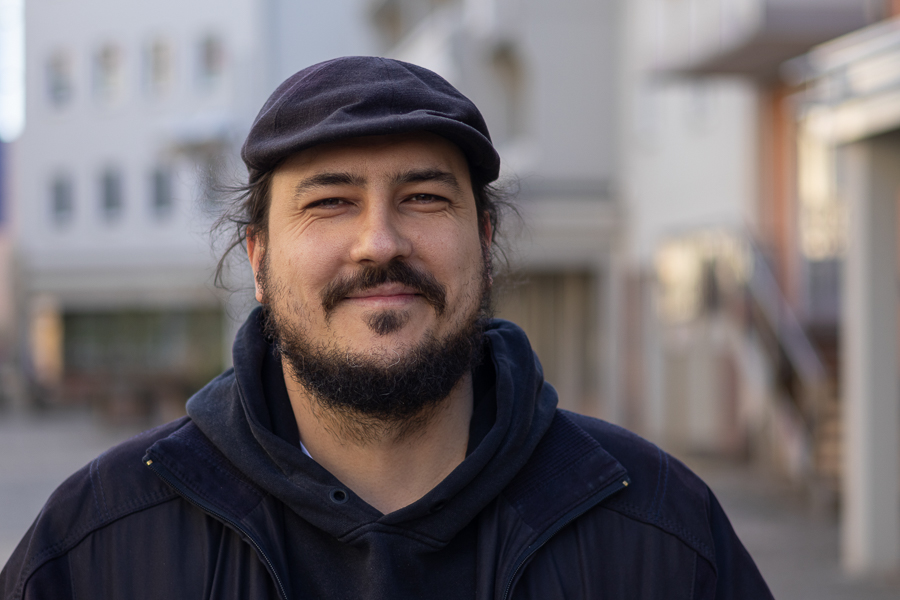
After two editions and a closing event, the pair draw mixed conclusions. The dialogue events were well attended and people did talk — although not as controversially as they had hoped. “When someone writes in an anonymous questionnaire that they dared to say something they would not normally have said, that makes me happy,” says Philip Murawski. Even though no extreme positions directly confronted one another, the conversations still broadened perspectives — for example, when a young feminist activist, a black doctor and a CDU politician discussed how safe they felt in Frankfurt (Oder).
At the same time, Murawski was frustrated “that we were unable to reach people with extreme positions”. While debates in Frankfurt social media groups are heated and often driven by people at the far ends of the spectrum of opinion, the positions represented at “We Need to Talk” were more moderate. One initial explanation is that KUKURYKU is perceived as a kind of living room for a left-progressive audience. “At the same time, it shows that the usual suspects are interested in publicity, which we deliberately did not provide. The people who came to us were those who genuinely felt a need to talk, rather than simply wanting to present themselves,” says Laura Gerards Iglesias, explaining the composition of the audience.
At the same time, she was surprised that some people attended the events without any interest in broadening their perspectives. “I completely underestimated how strong the desire is to convince the other side — particularly among people from the pro-democracy camp as well.”
For her, this also raises a self-critical question: “Why do we actually want to enter into dialogue with people who think differently from us?” During the preparation process, she and Philip Murawski repeatedly caught themselves pursuing a “hidden agenda”: trying to convince people who were critical of, or hostile towards, democracy that the free democratic basic order was a good thing. In that case, she says, it should hardly come as a surprise that people who genuinely think very differently do not attend. “They simply do not want to be converted,” Laura Gerards Iglesias reflects.
Identifying common pain points
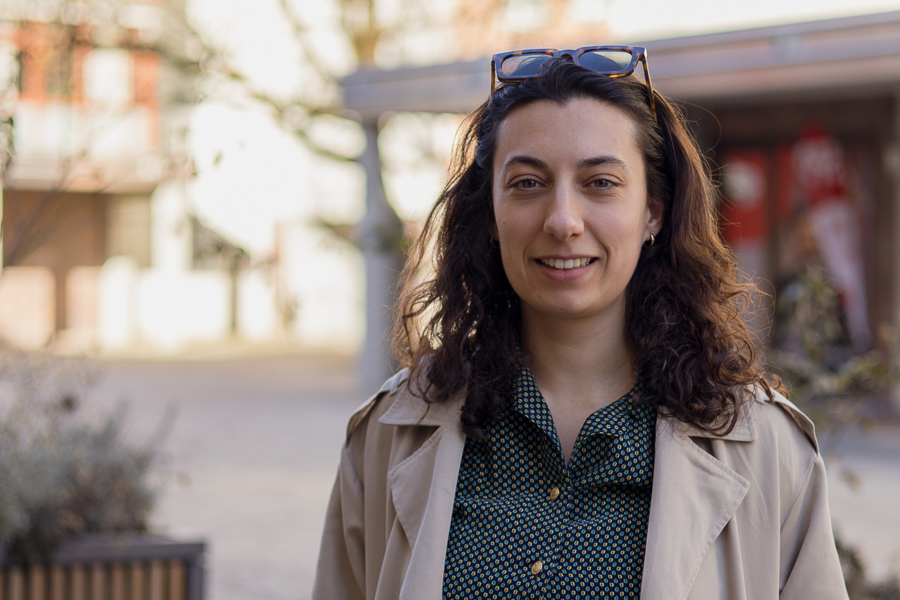
Alongside the need to engage honestly with the question “Do I want to persuade, or do I genuinely want to understand?”, Laura Gerards Iglesias draws a second lesson from the “We Need to Talk” format. In her view, dialogue needs a clear goal if it is to make it possible — and encourage people — to broaden their perspectives.
In another IKM project, she and her colleagues are currently building on this idea by identifying what they call “pain points”: issues that generate a strong emotional response among all sides because they touch on fundamental needs. “These points can provide common ground for different parties and create motivation to understand other perspectives,” she explains.
“For me, it comes down to listening and taking people seriously,” Philip Murawski says when asked about his formula for improving the way people talk to one another. “That alone can achieve a great deal. Even if you cannot convince the other person, over time it can still create a different way of relating to one another,” he says.
Frauke Adesiyan, translated by DeepL and edited
Back to the news portal
Share article: