
A call for an alternative to Trump-style power mediation – Lars Kirchhoff at the Science Salon
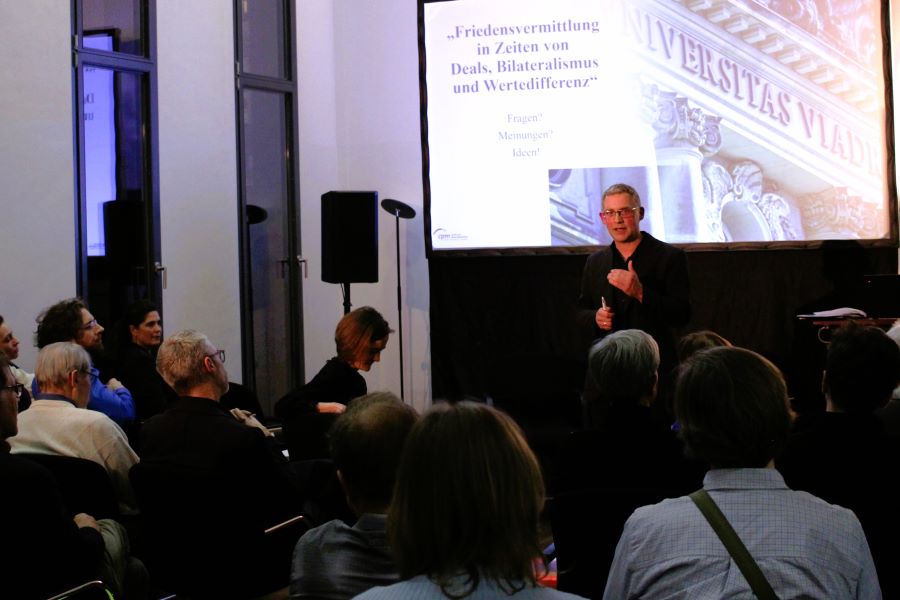
At the annual Salon Sophie Charlotte hosted by the Berlin-Brandenburg Academy of Sciences and Humanities (BBAW) on 17 January 2026, participants discussed how conflicts can be resolved. Viadrina conflict researcher Prof. Dr Lars Kirchhoff spoke at the well-attended event about how peace mediation can function under current geopolitical conditions. He warned against stepping into the “boxing ring made socially acceptable by Donald Trump”.
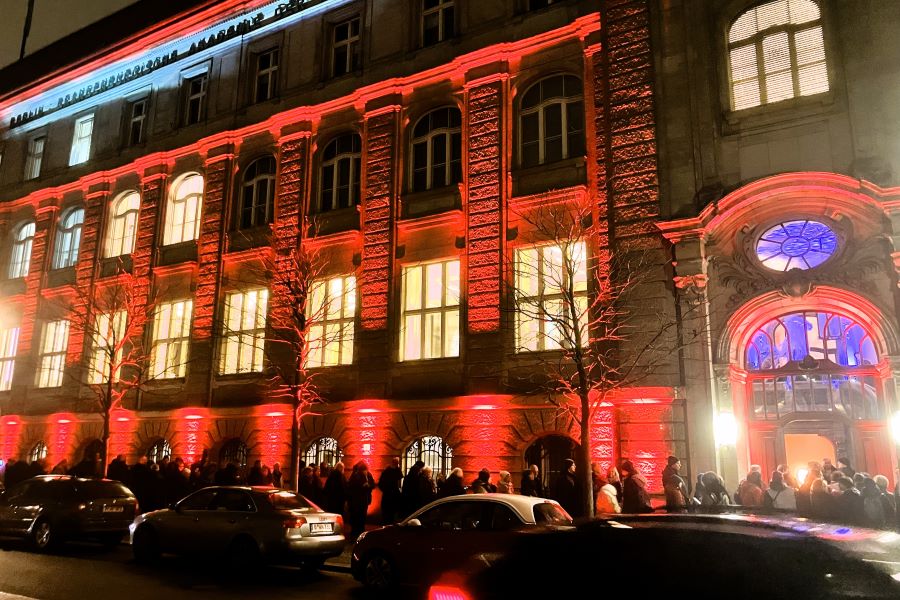
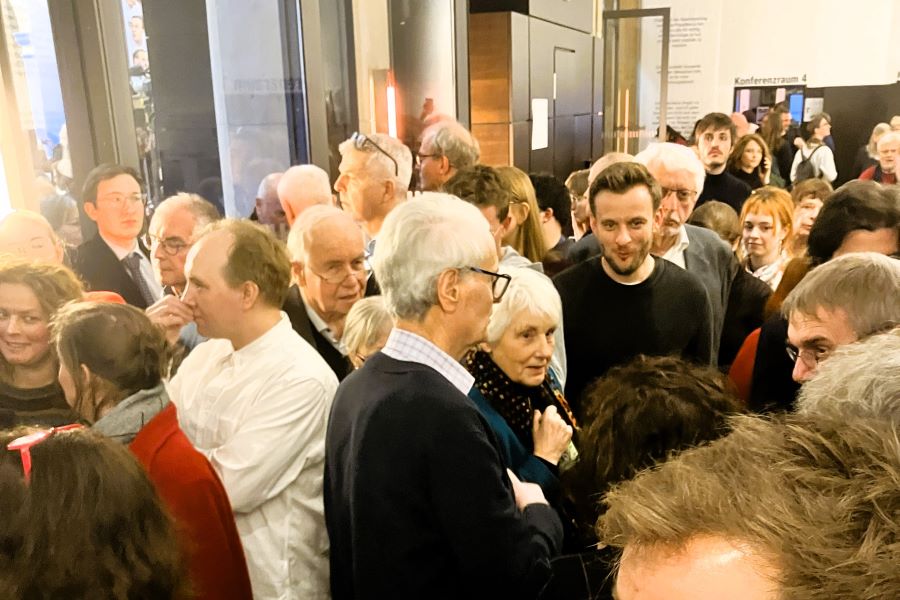
“Resolving Conflicts!” – the motto of this year’s Science Salon drew large crowds. A long queue formed outside the BBAW on Gendarmenmarkt, while the corridors of the Academy building were packed with visitors. In addition to the topic itself, this was certainly due to the prominence of the speakers from politics, academia and culture, including Boris Pistorius, Aleida Assmann and Steffen Mau. The room hosted by the German Academic Scholarship Foundation, whose invitation enabled Viadrina to participate in the Salon with Lars Kirchhoff, was also filled to capacity.
Geopolitics today: Unpredictable and short-term rather than careful and sensitive
At the event entitled “Peace Mediation in Times of Deals, Bilateralism and Diverging Values”, Lars Kirchhoff asked what future awaits the system of peace mediation that has been built up over decades under the pressure of US President Donald Trump, Putin’s war in Ukraine and the primacy of military power. Will it collapse, or will it establish itself as a genuine foreign-policy alternative to short-term deals?
Kirchhoff began by analysing just how profoundly the objectives of mediation processes have shifted under the new geopolitical realities. Instead of comprehensive agreements designed to secure peace over the long term, short-term, functional and transactional deals currently prevail. He also observes fundamental changes in the mediation process itself. Careful preparation, precise agenda-setting and sensitive negotiation of participation and decision-making procedures are being replaced by “navigating by sight”. According to Kirchhoff’s analysis, unpredictability as a guiding principle and Donald Trump’s extensive use of pressure have become the main ingredients for generating real movement.
Germany should establish an arena for complex mediation processes
In the discussion that followed on how Germany and the EU should respond to these changes, Lars Kirchhoff argued for an alternative to Trump-style power mediation. “A political approach based on power and disruption is so far removed from Germany’s post-war identity that entering the boxing ring made socially acceptable by Trump would be a mistake,” Kirchhoff said.
At the same time, he argued, simply waiting for conditions for peace mediation to improve again would not do justice to Germany’s role in Europe. For a genuine alternative, Kirchhoff believes Germany and the EU need to establish and actively shape an arena for mediation processes in which a core set of norms is respected, where sophisticated mediation processes are designed to transform conflicts in all their necessary complexity, and where actors advocate for positive peace without being naïve.
The conflict researcher concluded by saying: “For its own foreign policy, Germany must find a path – deliberately distinguishing itself from the United States – that takes German interests seriously and defends them, while at the same time refraining from breaking the will of other actors – states and civil societies – however demanding that may be.”
Viadrina expertise aligned with the BBAW annual theme “Resolving Conflicts”
In addition to sharing his expertise and establishing contacts with other actors from academia and practice, Lars Kirchhoff also saw his participation as an opportunity to draw the attention of a younger audience to the European University Viadrina as a place where conflict-management skills can be acquired: “The BBAW’s annual theme ‘Resolving Conflicts!’ overlaps with Viadrina’s profile in so many ways – from the Institute for Conflict Management (IKM) and the ViAPACS certificate programme to the new Master’s programme in Conflict and Democracy starting in the 2026/27 winter semester – that taking part in the Salon Sophie Charlotte was highly worthwhile.”
The cooperation with the German Academic Scholarship Foundation, with which the IKM has been working for years on conflict-related issues, was particularly natural.
Frauke Adesiyan, translated by DeepL and edited
Back to the news portal
Share article: