
Young people as changemakers in peace processes? – Professor Lars Kirchhoff marks the tenth anniversary of the UN Youth, Peace and Security Resolution
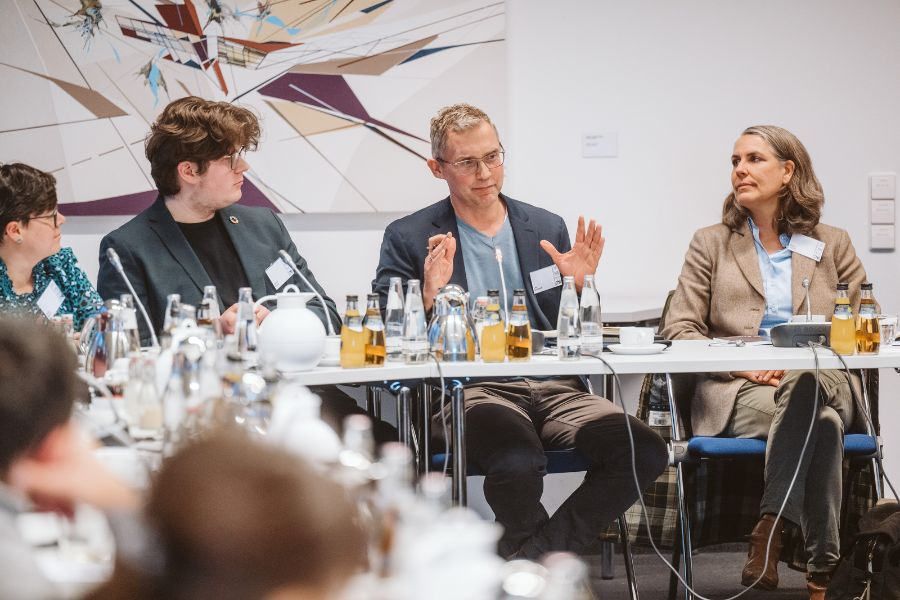
The UN resolution on Youth, Peace and Security (YPS) has now been in place for ten years. But what role do young people play in geopolitical negotiations amid the current paradigm shift in peace and security policy? Viadrina conflict researcher Professor Lars Kirchhoff discussed this question at a conference in Berlin on 9 December 2025. The event was organised by the Working Group on Peace and Development (FriEnt), in cooperation with the German Coalition for Youth, Peace and Security, to mark the tenth anniversary of the YPS Agenda.
Mr Kirchhoff, the aim of the conference was to take a critical look at the implementation of the Youth, Peace and Security Agenda. What is your assessment after ten years?
In the current situation – specifically, the primacy of power – the prospects for young people playing an active role in geopolitical negotiations have actually worsened in the short term. Rather than conflict transformation and positive peace, the focus is currently often on functional, medium-term, transactional deals, with deeper social dynamics playing a secondary role. However, if the aim is not positive peace but political co-existence based on economic logic, diversity – and consequently the relevance of young people in the negotiation of such deals – inevitably suffers.
Kauffmann
Are there any aspects that you view more optimistically?
Absolutely, at least in the long term. In principle, many governments, multilateral organisations and NGOs have long recognised that neither peace nor security can function as concepts without the participation of young people.
The concepts of peace and security cannot work without the active involvement of young people.
Lars Kirchhoff
The cornerstones of the YPS Agenda – specifically, youth participation, the protection of young people, the prevention of radicalisation, partnerships and reintegration – had gained significantly in prominence and relevance prior to Trump’s second term in office. The role of young people had gradually shifted from being perceived as ‘victims of violence’ to becoming genuine ‘changemakers’. A key factor in this was no longer treating the issue as an afterthought or a stand-alone topic, but rather analysing the specific relevance of young people within the traditional thematic areas of peace processes. And in some areas – from elections and disarmament to transitional justice and social reconciliation – the fundamental role of young people is virtually self-evident.
All this is currently being overshadowed, but it has not been forgotten in terms of policy. I am convinced that, after a brief period of Trump’s deal-making, peace processes will once again become more nuanced, simply because nothing sustainable can emerge otherwise. And even in the present day, which is primarily shaped by security policy, there is, as described, a hard core of functional arguments for involving young people, beyond all mere lip service.
What role can Viadrina play in this?
In such a multi-layered process, this is of course only a small role, but a twofold one: On the one hand, through the applied peace and conflict research established here at the Viadrina, we clearly and visibly advocate for the inclusion of all key actors in negotiation processes; this is, so to speak, the core of our methodological approach. Young people are fundamental to this; we champion this, for example, through our extensive collaboration with the Federal Foreign Office.
Secondly, the Viadrina offers a whole range of programmes enabling young people to acquire the specific methodological skills required for the necessary ‘participation on an equal footing’ in political negotiation processes. Together with the Federal Foreign Office, we have been offering programmes for young people from crisis and war-torn regions for many years. And at Viadrina itself, there are programmes such as the ViAPACS or the Master’s programme International Human Rights and Humanitarian Law, and, in the future, the new Master’s programme in Conflict and Democracy, which provide an excellent foundation for acquiring the necessary knowledge and methodological tools at an early stage to prepare for active political engagement.
More about the conference
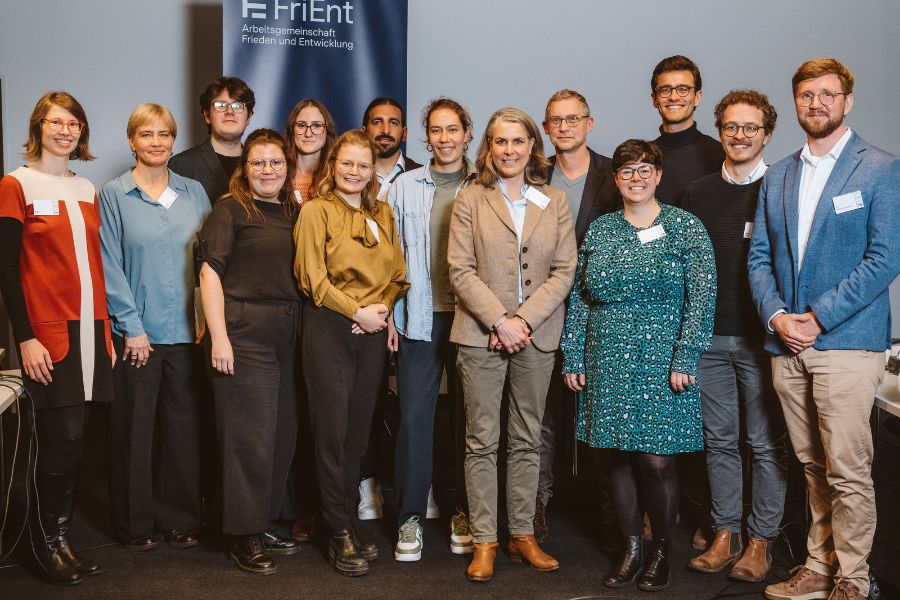
The Working Group on Peace and Development (FriEnt) organised a conference in December in cooperation with the German Coalition for Youth, Peace & Security to mark the 10th anniversary of the so-called YPS Agenda. The aim was to take a critical look at the state of implementation of the Youth, Peace & Security Agenda (UN Security Council Resolutions 2250 (2015), 2419 (2018) and 2535 (2020)). The event took place at the Friedrich Ebert Foundation’s premises in Berlin and was attended by representatives from numerous youth organisations. Following a keynote speech by Mahammad Agmaro from the German Society for International Cooperation in Jordan, the discussion centred on the implications of the paradigm shift in peace and security policy for the role of young people in geopolitical negotiations. Together with Prof. Dr Lars Kirchhoff, the discussion involved Dr Astrid Irrgang, Executive Director of the Centre for International Peace Operations (TZIF); Paul Klahre (UNOY Peacebuilders); Judith Böckle (Federal Chair of the Catholic Rural Youth Movement of Germany) and Robert Kalwis from the Youth Advisory Council of the Federal Ministry for Economic Co-operation and Development (BMZ).
Interview: Frauke Adesiyan; Translated by Deepl and edited
Back to the news portal
Share article: