
Between democracy skills and the regulation of tech giants – Viadrina’s first Fake News Festival
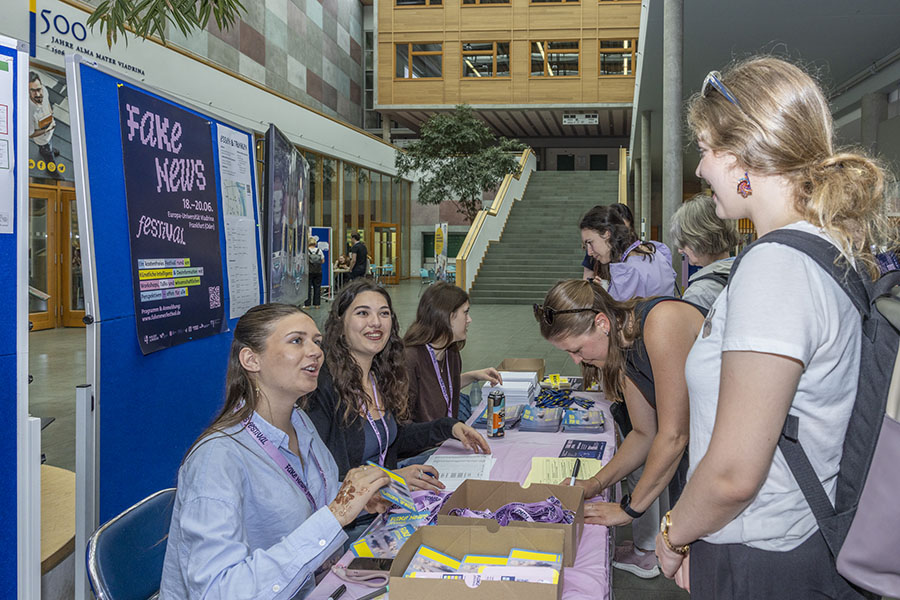
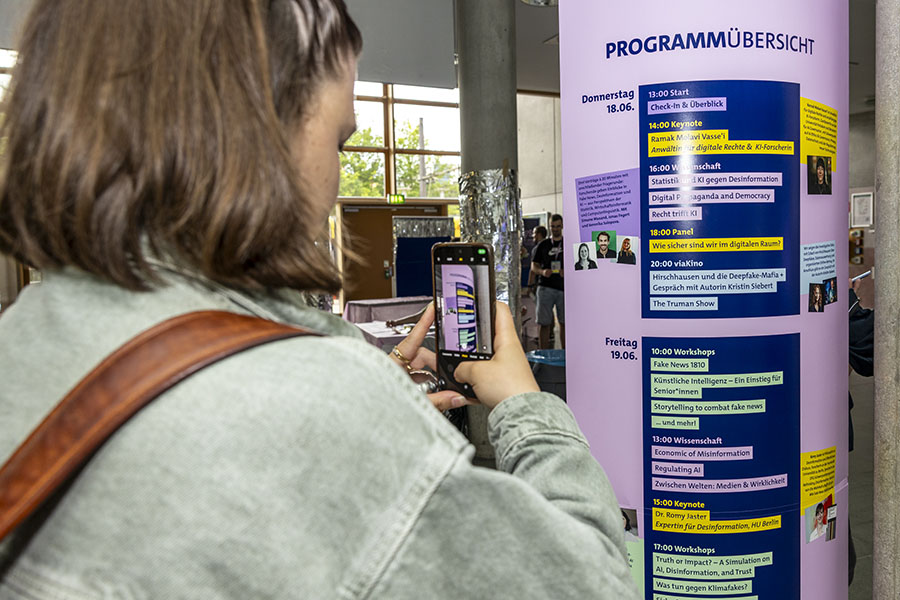
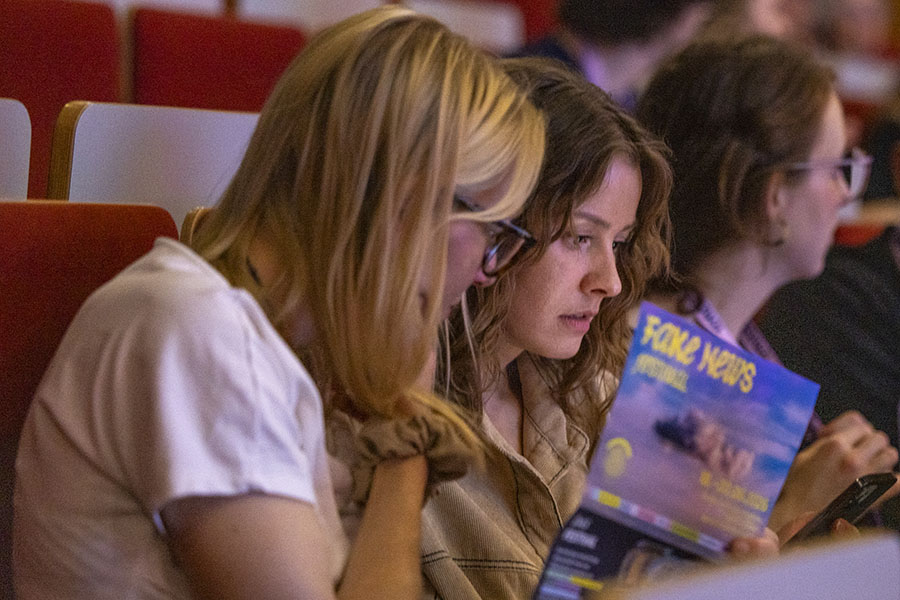
Three days, dozens of programme items, hundreds of participants – that was the premiere of the Fake News Festival from 18 to 20 June 2026. The programme featured high-profile keynotes and discussions, workshops for everyone, academic debate and entertainment. The concept developed by festival organisers Prof Dr Charlotte Köhler and Ira Helten – to offer content for people of different age groups, levels of prior knowledge and interests – proved successful. Together, they discussed the major societal challenges of our time amid disco balls and tinsel.
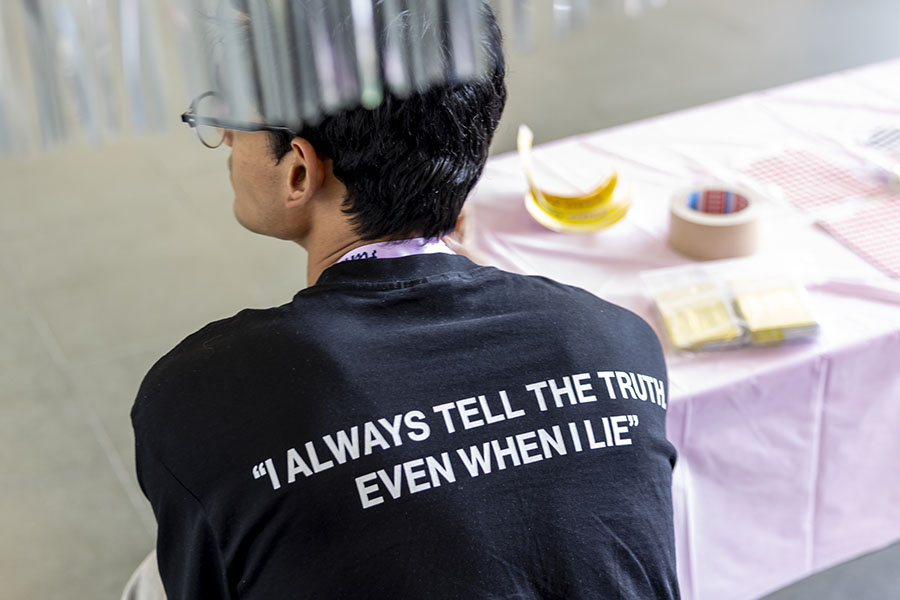
“don’t ask ai – ask a professor” – the glittering sticker was everywhere at the festival: handed out at the reception, laid out at workshops, stuck around campus and proudly worn on shirts and laptops. Given the impressive number of experts from a wide range of fields, visitors did not actually need to ask artificial intelligence in order to make progress in discussing the pressing questions of our time: What harm do fake news cause, and how can we counter them? Are there even more important societal challenges hidden behind the dominant topic of AI?
Fake News Festival
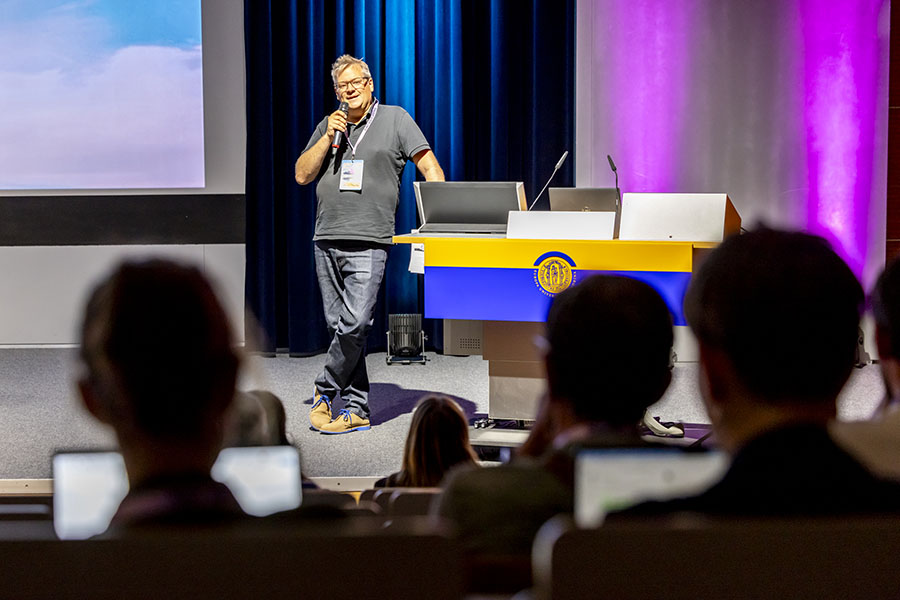
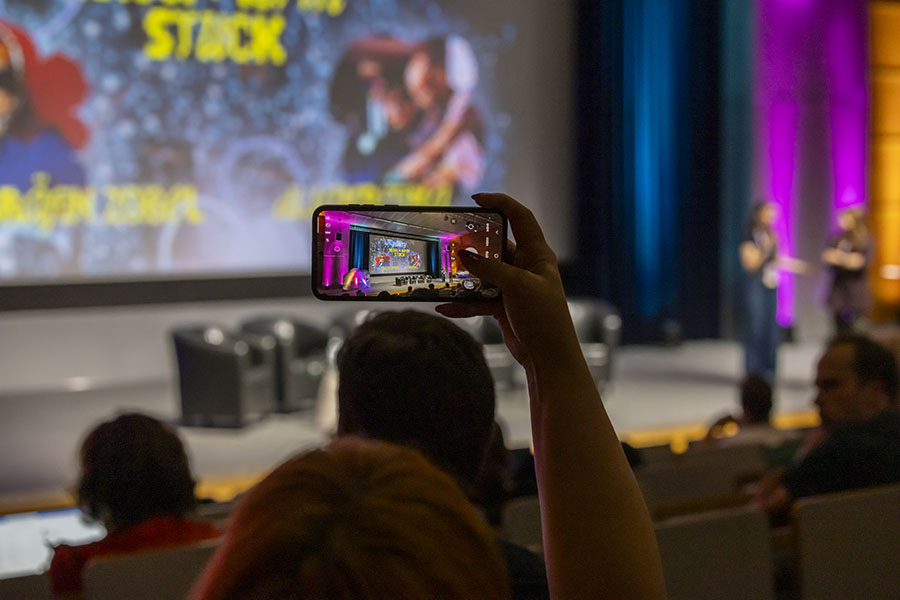
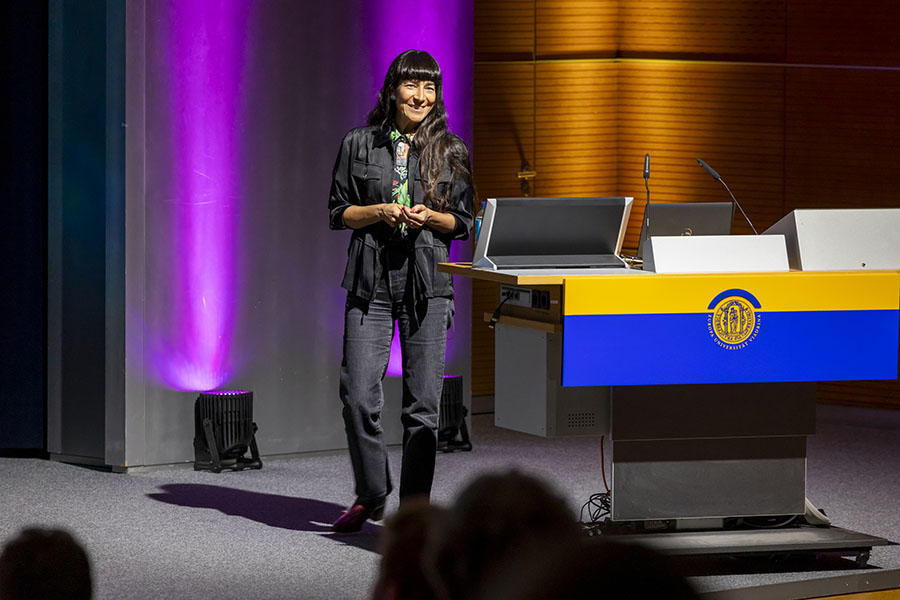
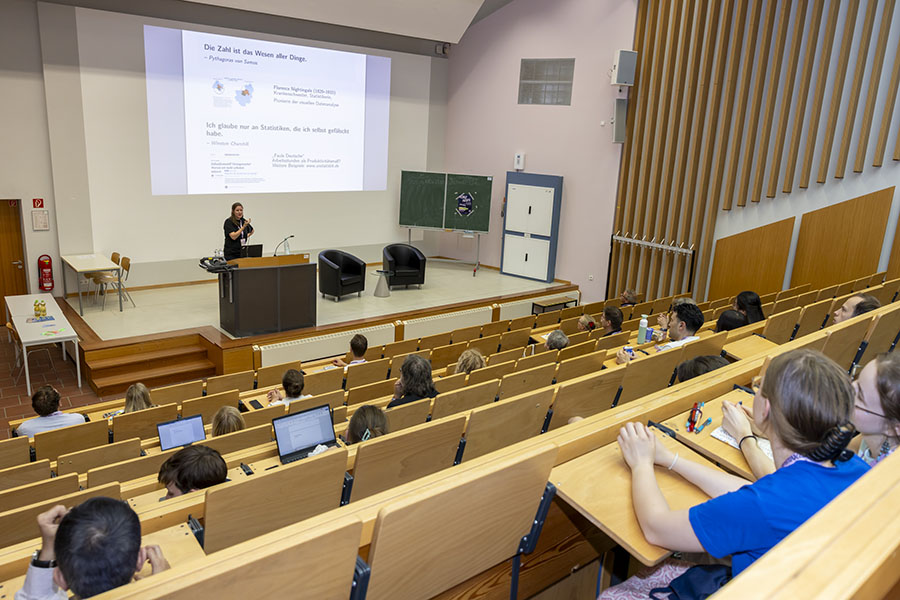
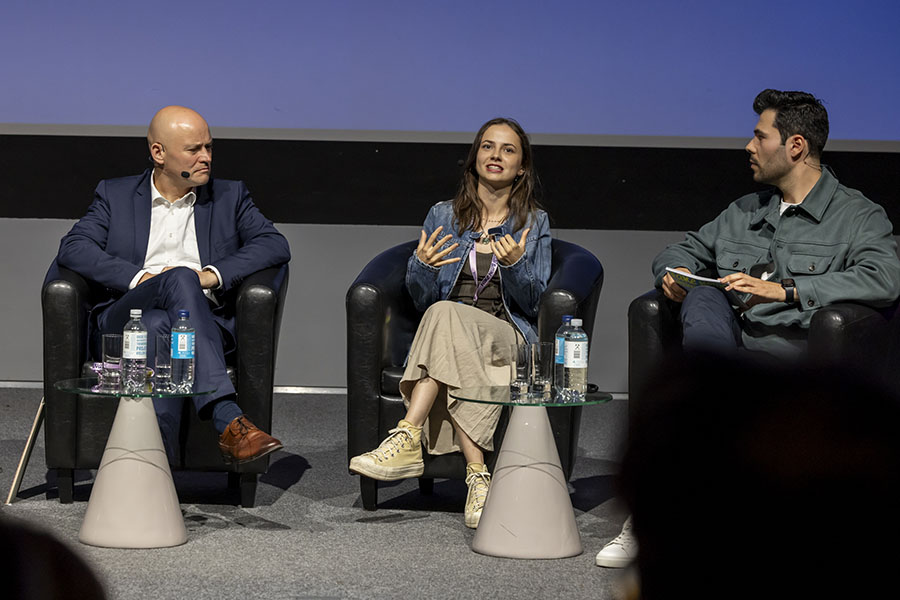
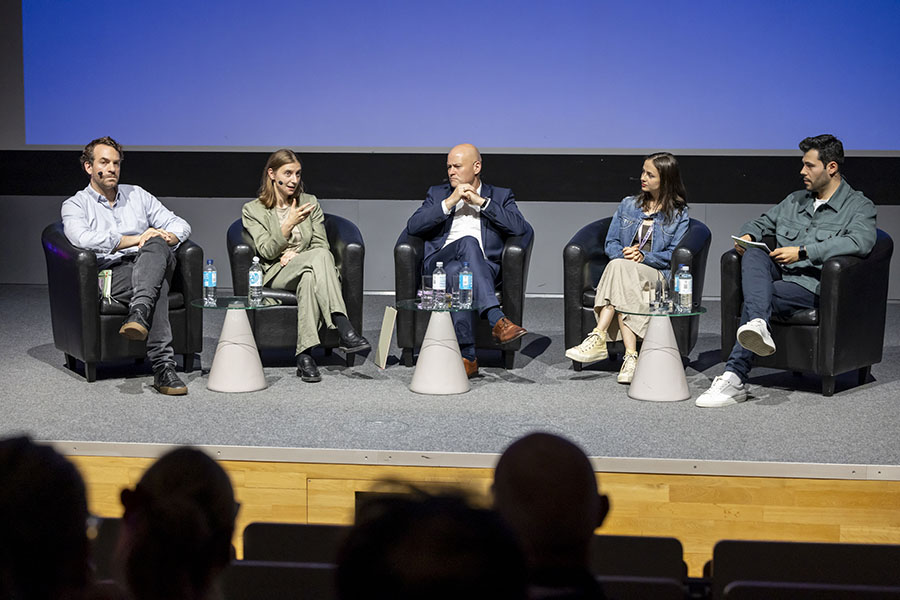
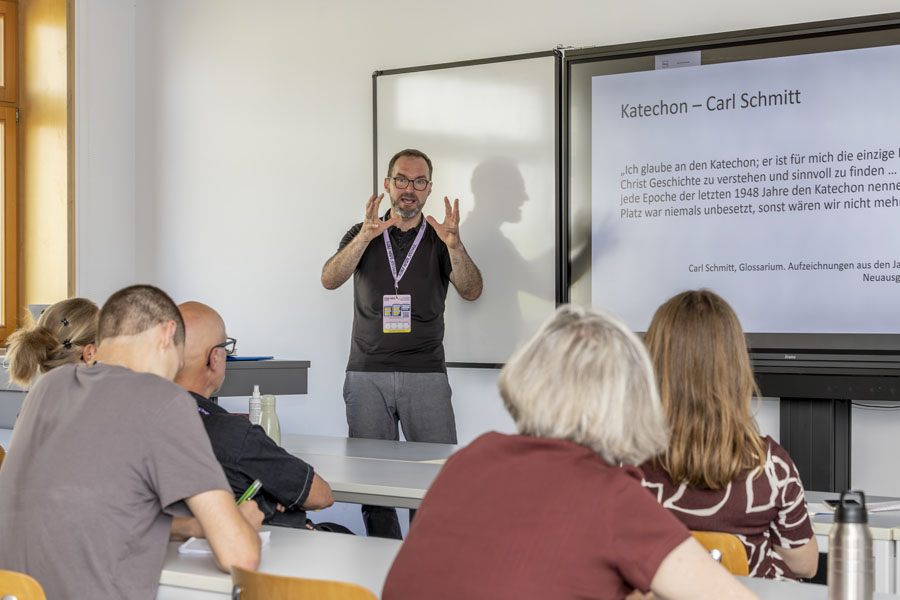
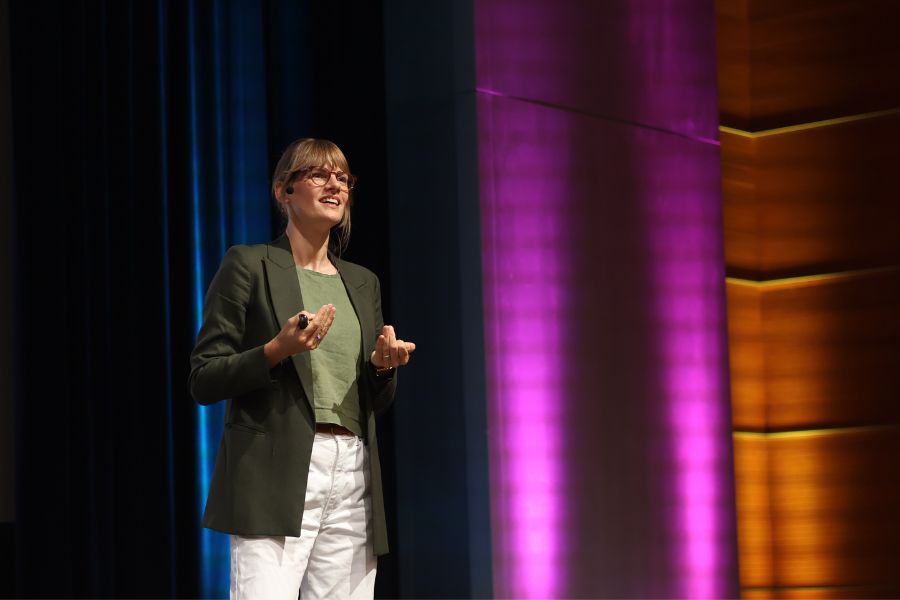
Panel discussion on deepfakes featuring Dr Jörg Treffke, State Secretary at the Brandenburg Ministry of the Interior and Local Government, Theresia Crone, activist and columnist, and moderator Riccardo Vaccaro
Panel discussion on deepfakes with Dr Jonas Fegert, Prof. Dr Nella Sayatz, Dr Jörg Treffke and Theresia Crone
Can we still distinguish between AI and reality? And does it even matter?
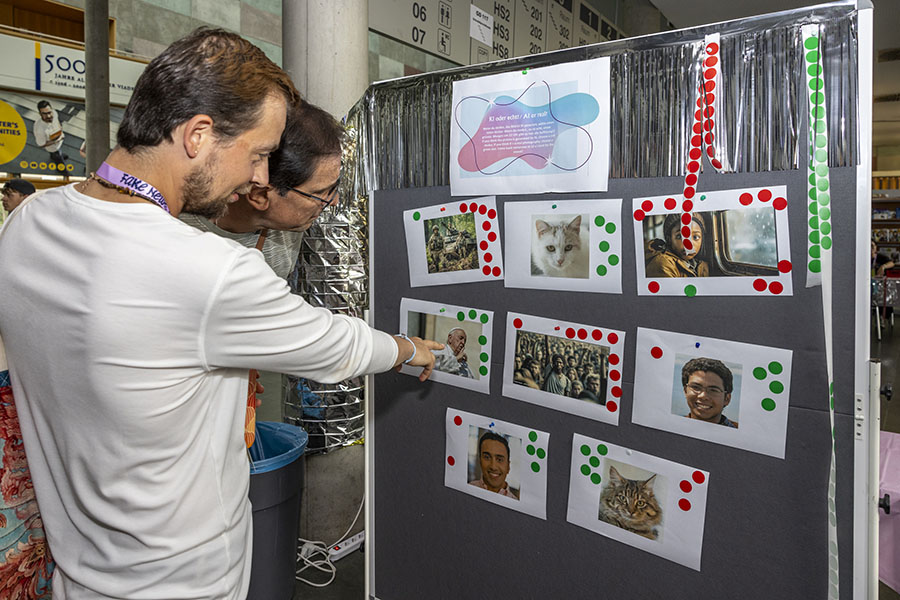
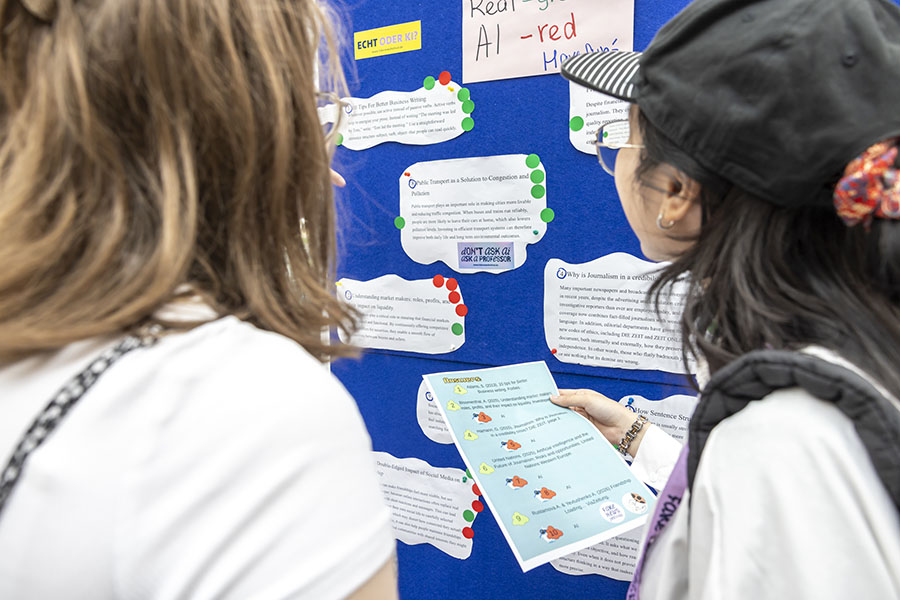
Real or AI? Festival visitors encountered this guessing game again and again. Looking at photos, videos and texts, they puzzled over the question: how am I supposed to recognise the difference any more? Dr Jonas Fegert, who among other roles is head of the Digital Democracy & Participation research group at the Karlsruhe Institute of Technology, offered a surprisingly straightforward piece of advice during a panel on deepfakes: “If something seems strange to you, trust your gut feeling.” From his research, he knows full well that there are fake video contents that can only be exposed using highly sophisticated technology – for example, by measuring the breathing and pulse of the person in the video. There is no cure-all method for people to identify fakes, not least because the technology is improving at a rapid pace. On the other hand, many users are also misled by so-called cheapfakes that are actually quite obvious. “There is often a discrepancy: you know something is not right. That is something we need to practise,” said Jonas Fegert.
Practising precisely this critical approach was one of the aims of the festival programme, which the organising team around Prof Dr Charlotte Köhler and Ira Helten deliberately designed for a broad audience, from school pupils to pensioners and from researchers to practitioners. “Whether you like AI or not, we all come into contact with AI-generated content. Seventy per cent of all online content is AI-generated or AI-manipulated,” Charlotte Köhler emphasised at the opening of the festival. This explosive increase in such content and its widespread reach was also identified as problematic by legal scholar Ramak Molavi Vasse’i in her keynote on possible AI regulation. “We can no longer trust the tools built into our own bodies,” she said, referring to the ever-improving quality of AI-generated content.
Are we letting tech giants off too easily?
For Ramak Molavi Vasse’i, calls for greater media literacy do not go far enough when it comes to dealing with AI. Instead of looking to users to solve the problems created by AI, she argues that developers and corporations should be held accountable. “The burden of regulation should lie where the responsibility lies – and where the profit lies,” she said in her keynote, while also admitting that reality is far removed from this ideal. One reason for this is that the corporations were significantly involved in shaping the labelling requirements that will apply in the EU from August 2026. She therefore advocates for “slow AI”, in which the pace of development is slowed down so that control mechanisms can be tested. She also calls for untenable applications – such as those used to create nude images – to be banned, business models to be regulated and the privileges of social media platforms to be reviewed.
The demand for more regulation was also made abundantly clear during the panel on deepfakes. Theresia Crone, who herself has been affected by sexualised deepfakes and campaigns for stronger regulation, said during the discussion: “I would like to see more courage from us as a society in standing up to the platforms. They profit from the spread of disinformation and from the fact that our data are not secure.” Viadrina legal scholar Prof Dr Nella Sayatz stressed that in cases such as those of Theresia Crone or Collien Fernandez, calls for changes to criminal law do not go far enough. Victims often primarily want “it to stop” and for images or videos not to be disseminated any further. “This is about platform responsibilities and legal regulations in order to achieve a rapid effect,” said Nella Sayatz. Victim protection, she argued, must be at the centre of legal debates.
Are we focusing on the right questions?
Theresia Crone also pointed out that 95 per cent of deepfakes are pornographic content and that 99 per cent of them affect girls and women. She therefore considers a societal debate about sexual violence against girls and women to be more central than the debate about AI. The activist thus touched on an idea that came up repeatedly throughout the festival: is AI the problem, or does it reveal and amplify the major challenges and divisions in today’s societies?
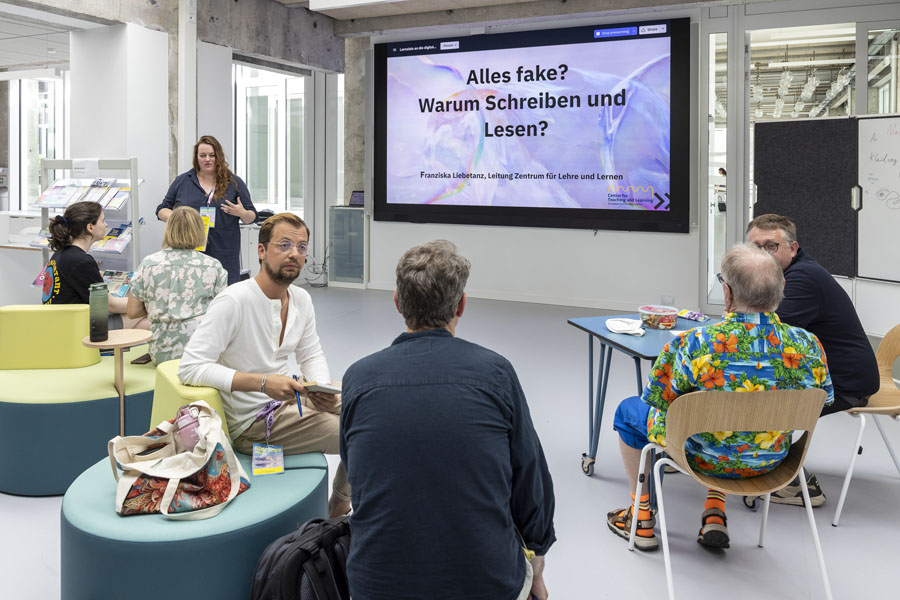
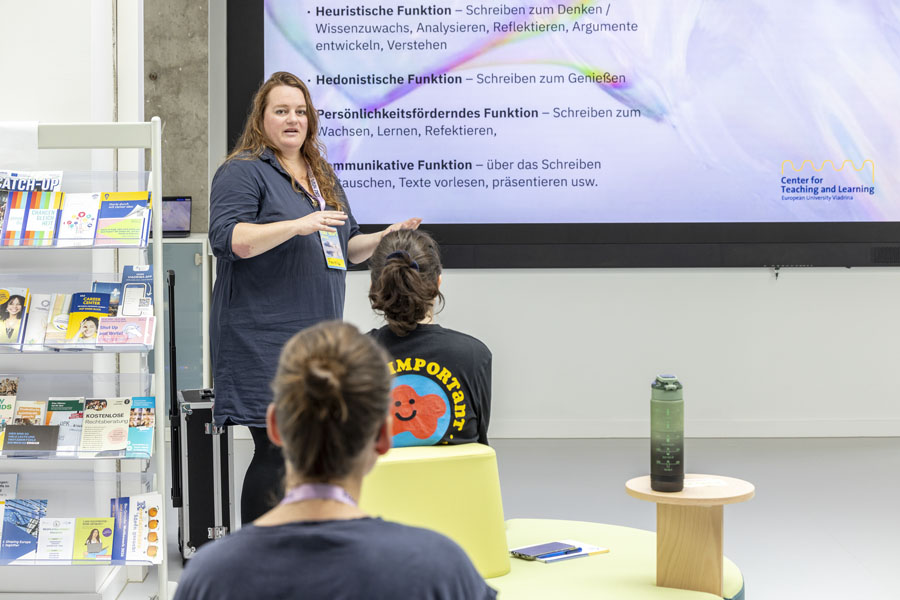
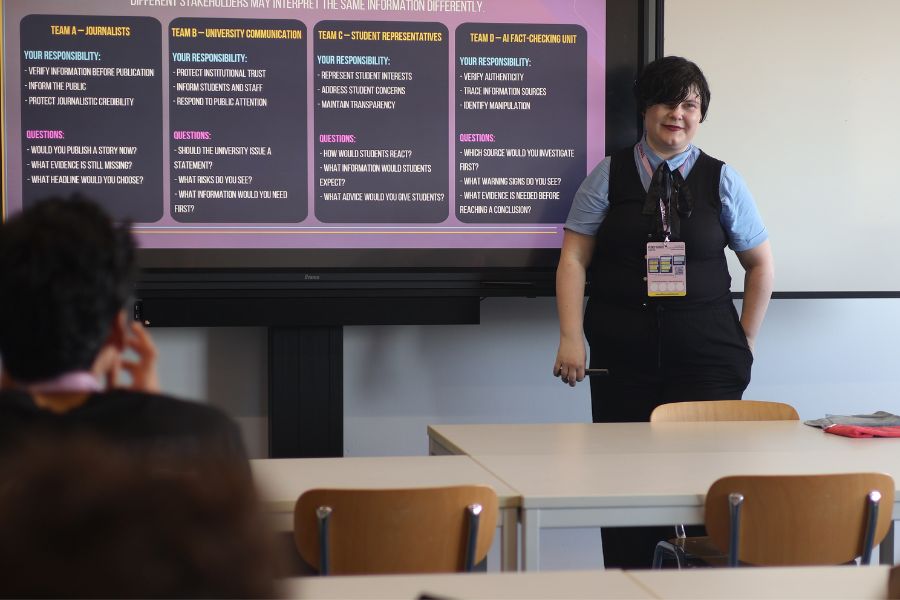
This idea also arose in the workshop led by Franziska Liebetanz, co-head of the Centre for Teaching and Learning at Viadrina. Together with the engaged participants, she discussed the topic “Everything fake? Why write and read?” Her clear answer was: “For me, writing and reading skills are also democracy skills.” In light of ChatGPT and similar tools, when the abolition of seminar papers is being discussed, she believes this is the wrong path: “After all, a term paper has more functions than simply testing knowledge! I ask myself how I can get my students to engage deeply with discourses, to reflect and to take on different perspectives.” If AI is now overturning all forms of teaching and assessment, while education policy and university leaderships are hopelessly lagging behind developments, this points to problems that existed even before AI: “AI exposes the weaknesses in the education system.”
What are the take aways of the Fake News Festival?
Despite all the concerns and criticism, many of the festival’s dozens of events were characterised by a hands-on spirit and offered pointers on how to deal with AI in an active and self-confident way. Theresia Crone emphasised the importance of critical thinking: “That is the basis for all AI skills. What helps against fake news is self-efficacy – starting with children and young people – and democratic skills.”
Alongside many thought-provoking insights, materials and new contacts, festival visitors also took away the realisation that disco balls, dance music in lecture theatres and tinsel do no harm when spending three days engaging with the major, thought-provoking societal questions of our time. “This topic does not belong only in lecture theatres; it belongs on the streets, in the spaces in between, everywhere in the city,” said Viadrina Vice-President Prof Dr Jan-Hendrik Passoth when opening the Fake News Festival. Viadrina, he said, has a clear position that academia must take responsibility. “The Fake News Festival is a wonderful example of that,” Passoth said.
A conversation with the organisers
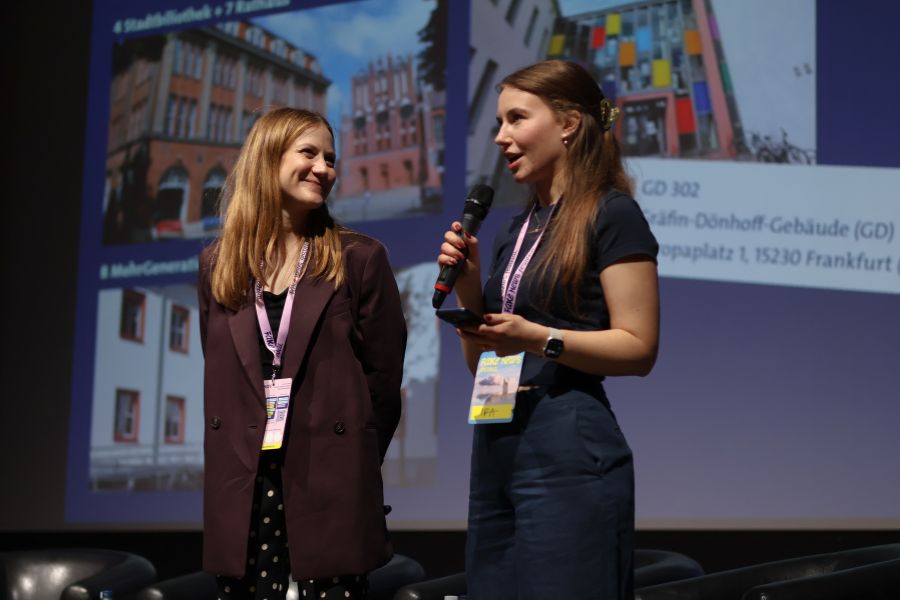
What was the best part of organising this festival, and what was the hardest?
Charlotte Köhler: Our core festival organising team consisted of just two people – which, of course, isn’t very many. That definitely meant we had to put in some extra hours in the evenings and at weekends, but we had a lot of fun doing so.
It was brilliant that the people we approached for the programme agreed straight away and were keen to get involved. That goes for our speakers, the people who developed a workshop especially for the festival, and, of course, all our partners in the city and the region. This not only made the organisation easier for us, but above all showed us just how many wonderful people there are who care just as much as we do about AI, fake news and disinformation, as well as the risks associated with them.
Ira Helten: The best thing about the preparations was the positive feedback on the announcement and the concept. One of the main goals from the very start was to ensure that this topic didn’t remain confined to an academic ivory tower, but actually reached everyone who might be affected by it – in other words, everyone. It was a bit of a challenge to actually cover and reach all these different target groups. I was particularly pleased that we managed to do so.
What were your favourite moments during the festival?
Charlotte Köhler: I had a very special moment during our panel discussion. I was sitting in the audience and only then did it really sink in that the five people sitting on stage were actually the very people we’d spent so much time talking to and planning with over the past few months – and that they were now truly part of our festival.
I also particularly enjoyed chatting to the visitors and hearing about the issues that concern them, where they’re from and why they’re attending the Fake News Festival.
Ira Helten: It’s hard for me to pinpoint a single moment from three days of a packed programme. But what sticks in my mind is the audience: people of all ages were in the room, from schoolgirls to older people from the city, the region and beyond. And although we had to contend with heat and rain for three days, it didn’t dampen anyone’s spirits. Added to that were our students’ creative ideas. At its core, the festival was a team effort supported by the organising team, the university, the students and all the partner venues across the city.
Did your concept work out?
Charlotte Köhler: Absolutely! We had a huge number of visitors – from different towns, age groups and with very diverse backgrounds. It was fascinating to see which programme items and workshops they chose and how they talked about them afterwards when they’d learnt something new.
It was also great to see how differently the participants experienced the festival. Some were there for all three days and took part in almost all the programme items. Others might have just attended one workshop that took place in the city. Some came to the university after a workshop in the city. And some people from the university may have visited the Town Hall, the Mikado, the City Library, the Adult Education Centre or BLOK O for the first time thanks to the festival.
Will there be a follow-up?
Charlotte Köhler: There were certainly plenty of requests for a Fake News Festival 2.0. We’ll take that on board and see what’s possible :-)
Translated by DeepL and edited
Back to the news portal
Share article: