
Viadrina honours graduates of the Master’s programme in International Human Rights and Humanitarian Law
With a festive ceremony on 6 May 2026, the graduates of the Master’s programme in International Human Rights and Humanitarian Law at the European University Viadrina were officially honoured. Ten graduates from Austria, Germany, India, the Philippines, the United Kingdom, Afghanistan, Ireland, Pakistan and Denmark successfully completed their studies. Family members and friends accompanied the graduates on this special day.
In his welcoming speech, the previous programme director Prof. Dr Gerard C. Rowe addressed current human rights violations worldwide and the future significance of the graduates' work.
Picture gallery
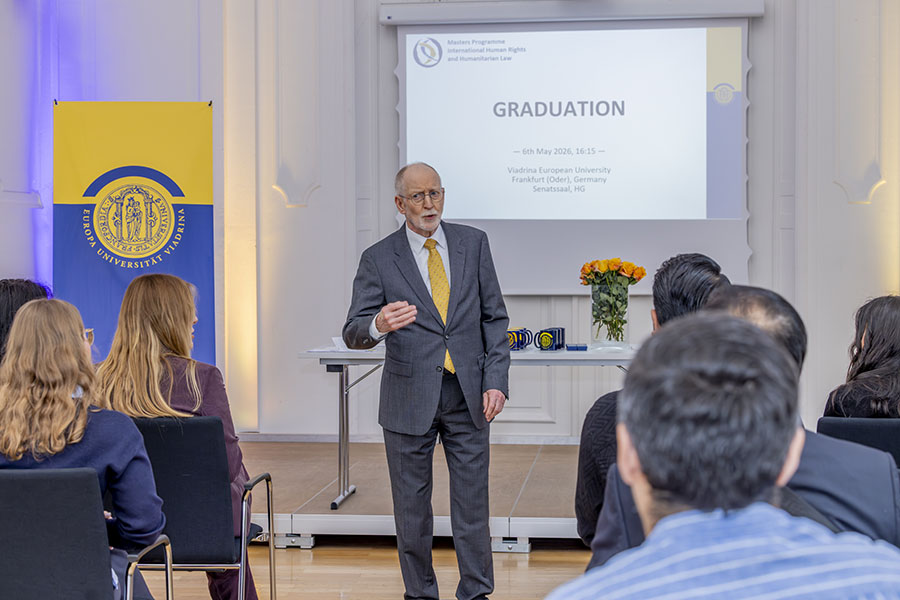
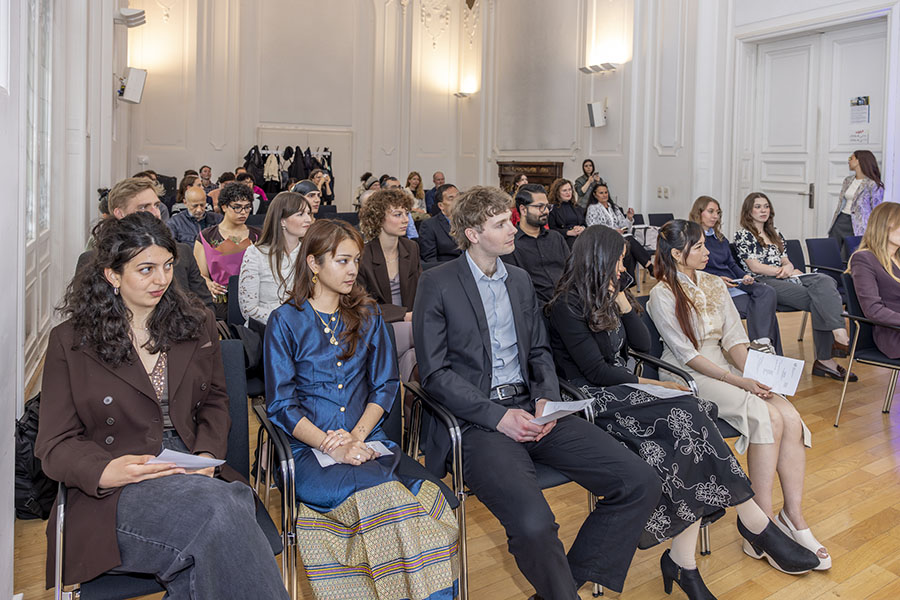
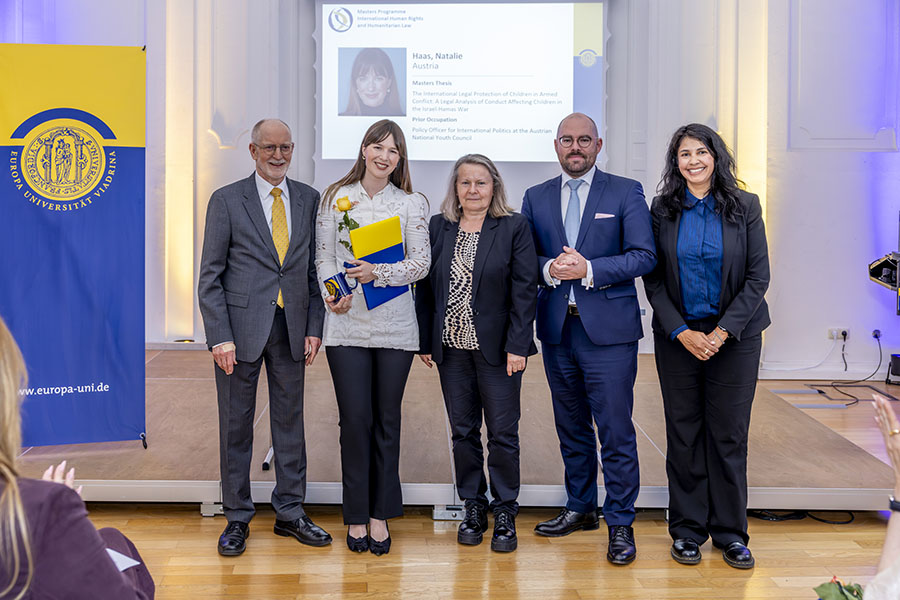
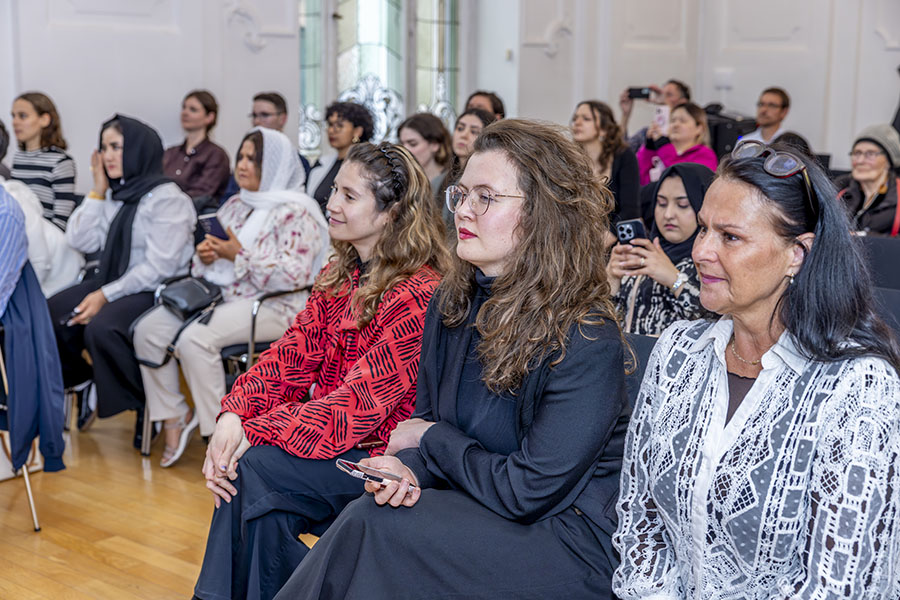
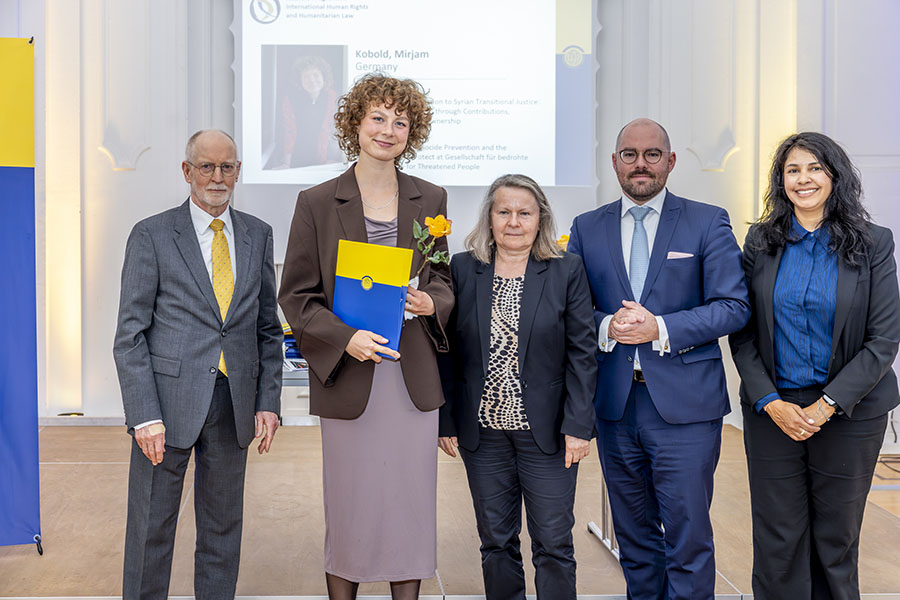
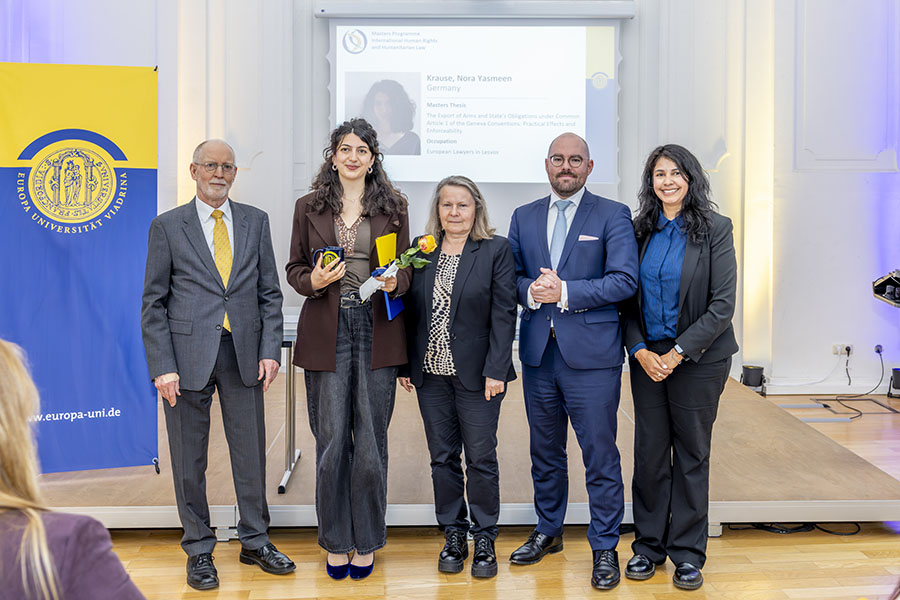
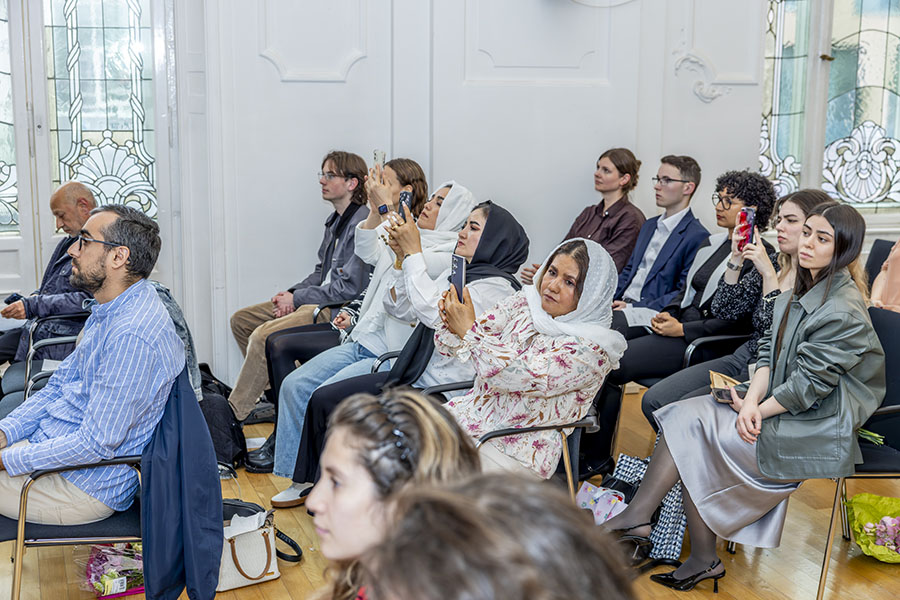
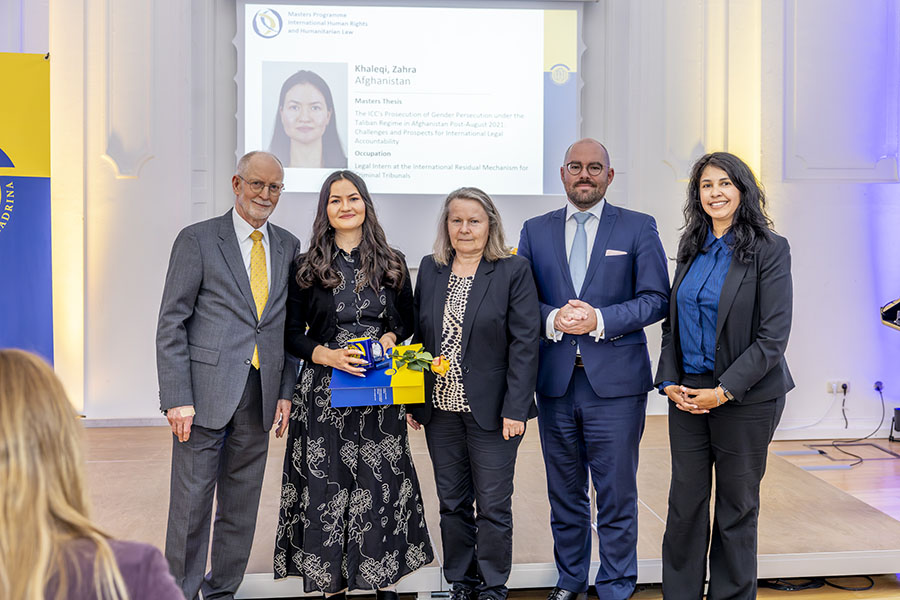
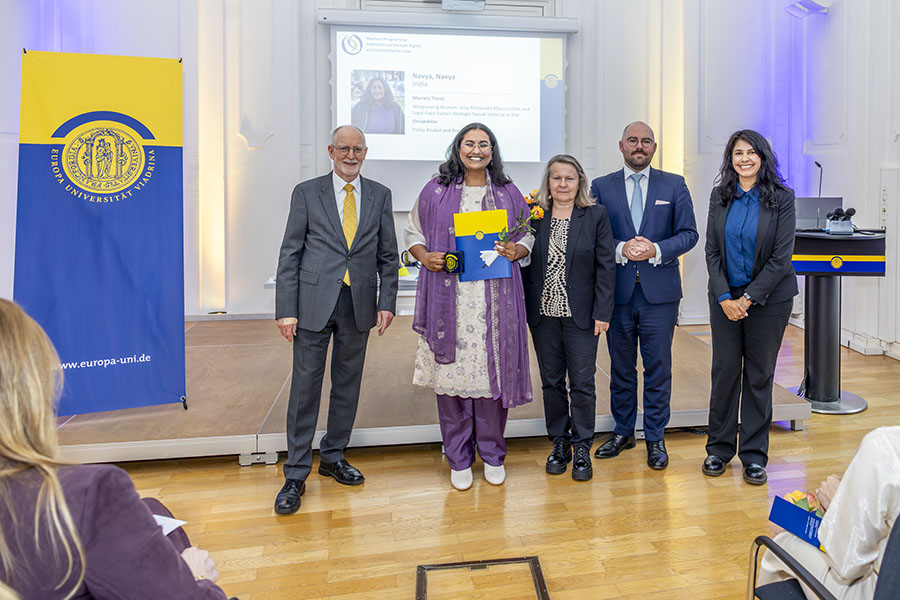
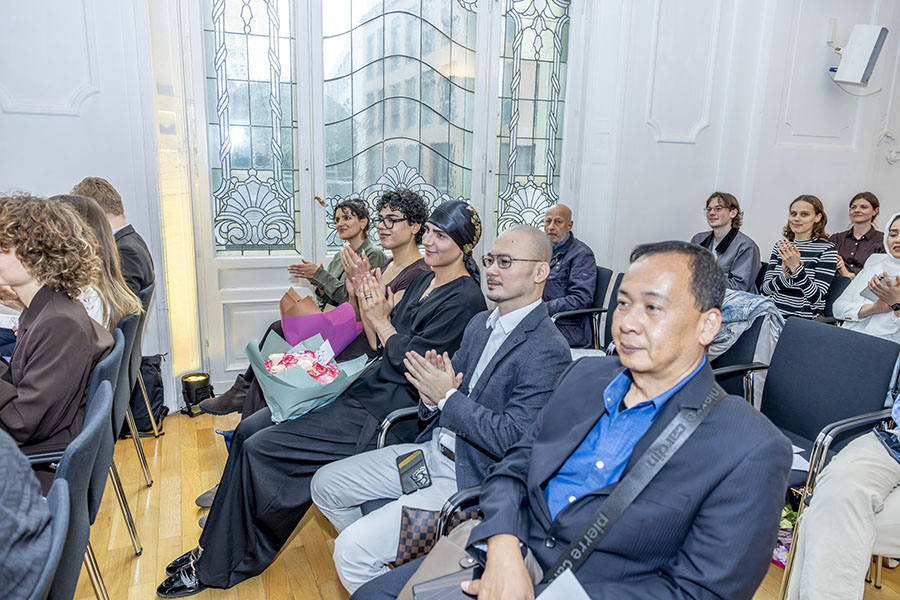
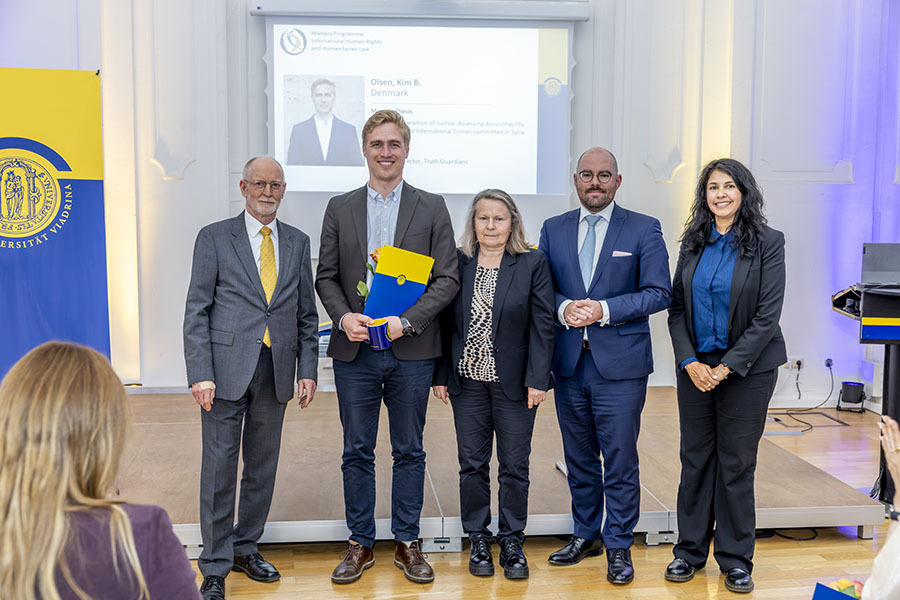
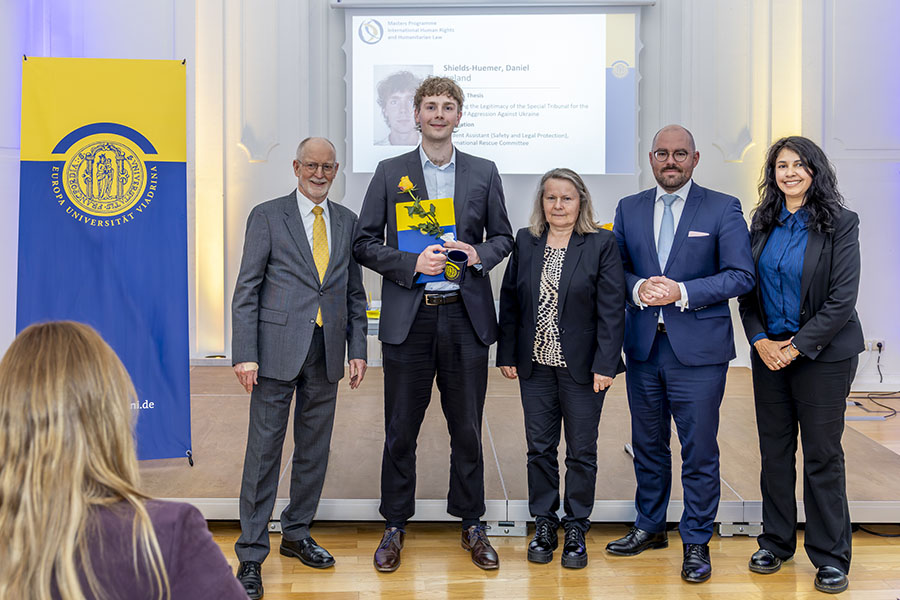
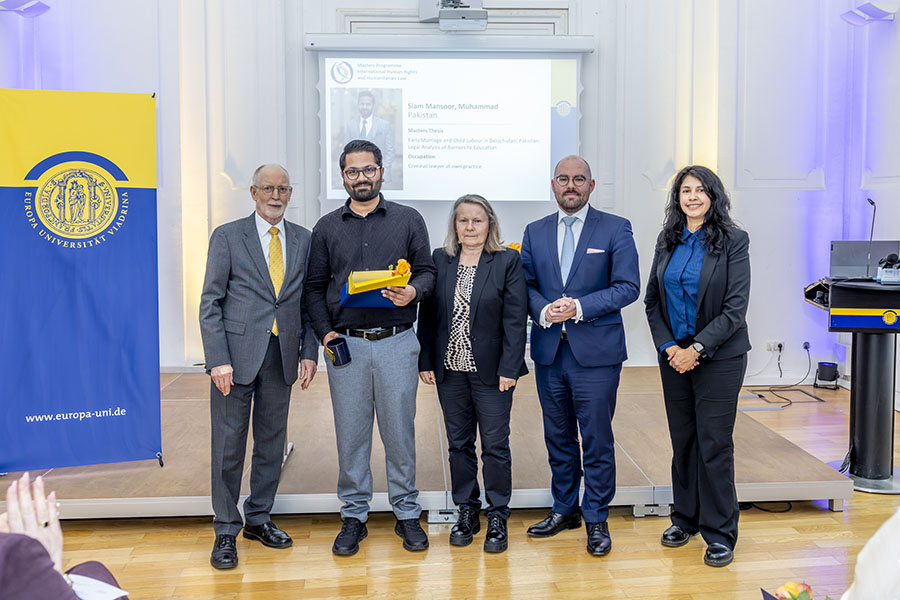
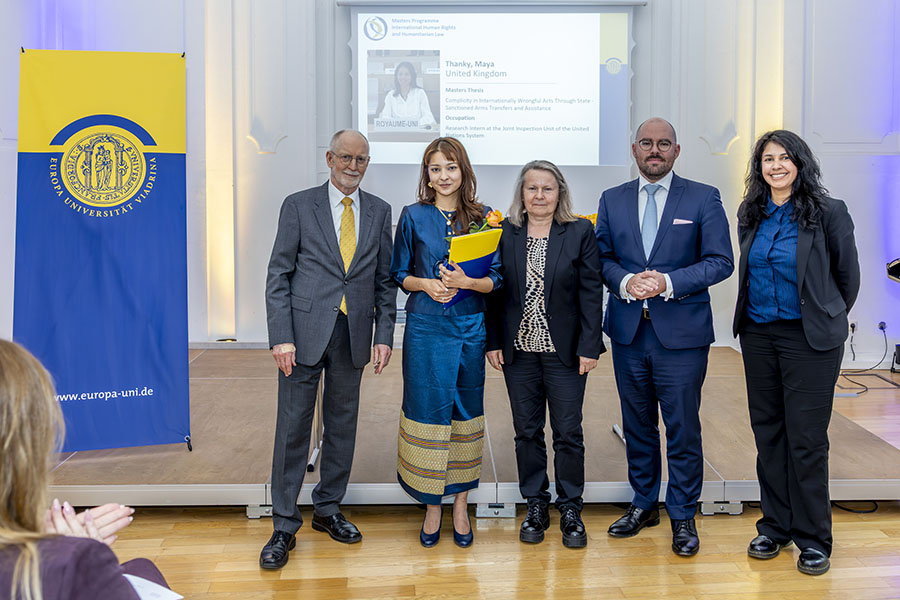
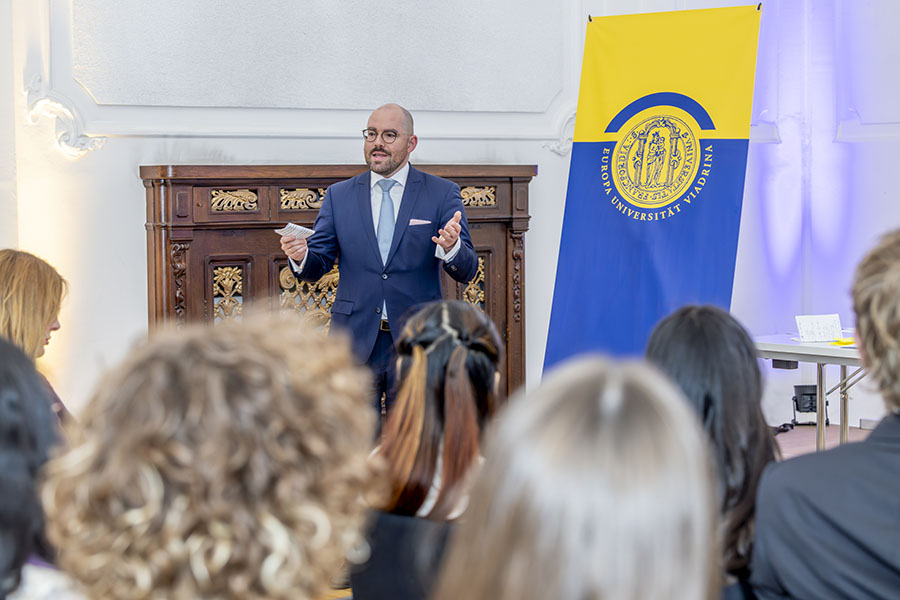
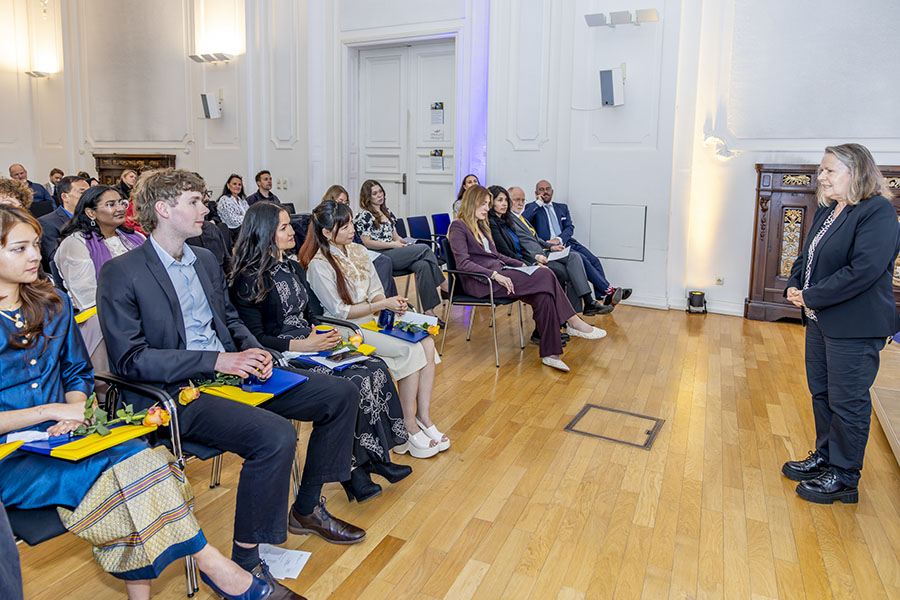
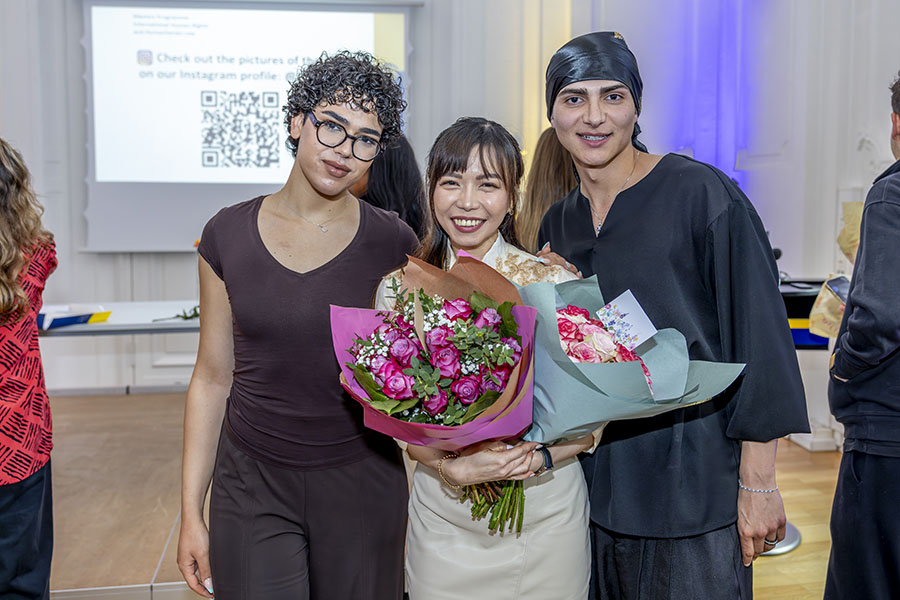
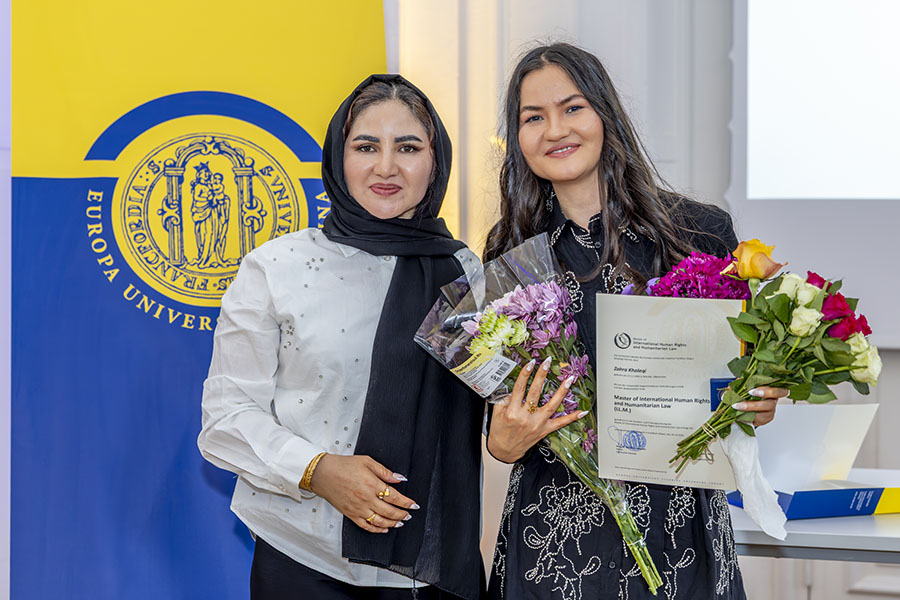
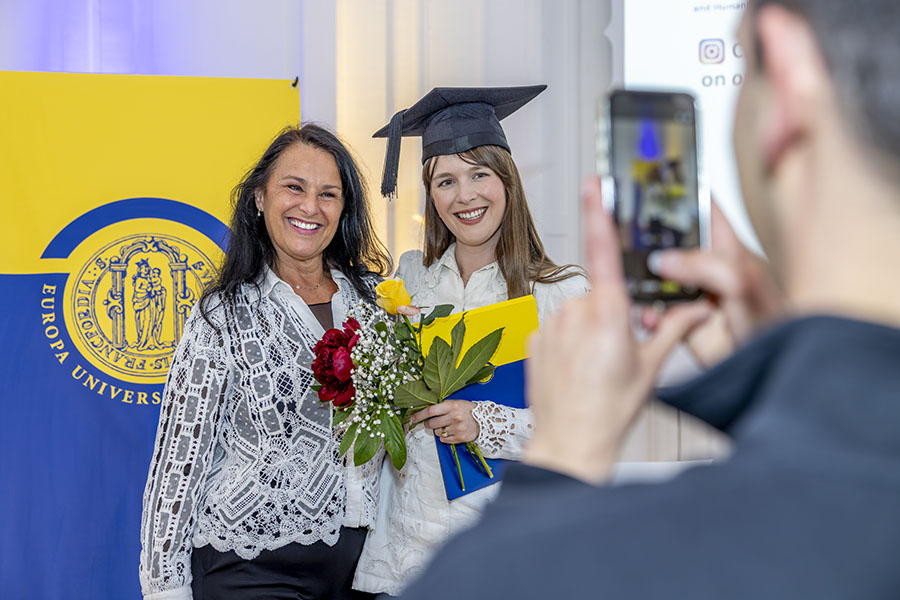
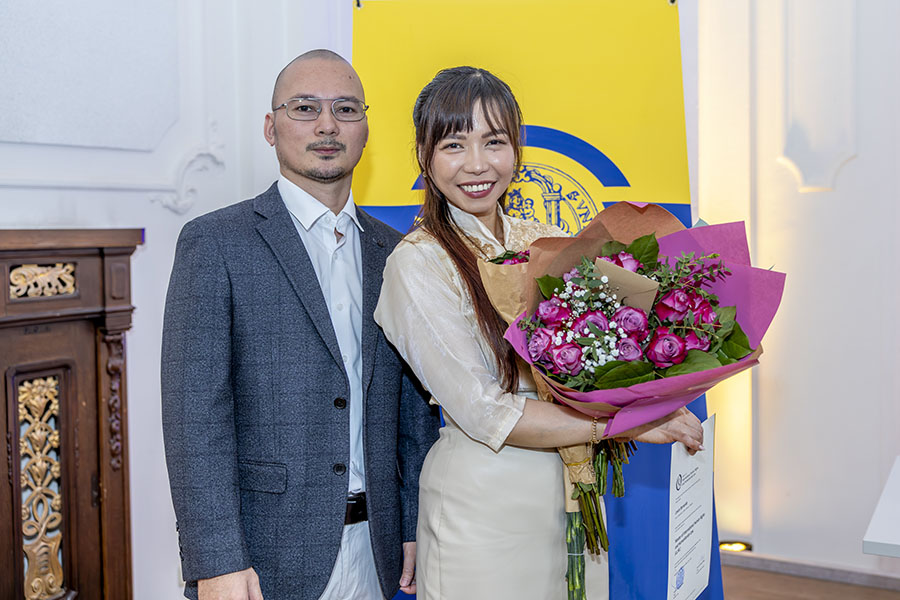
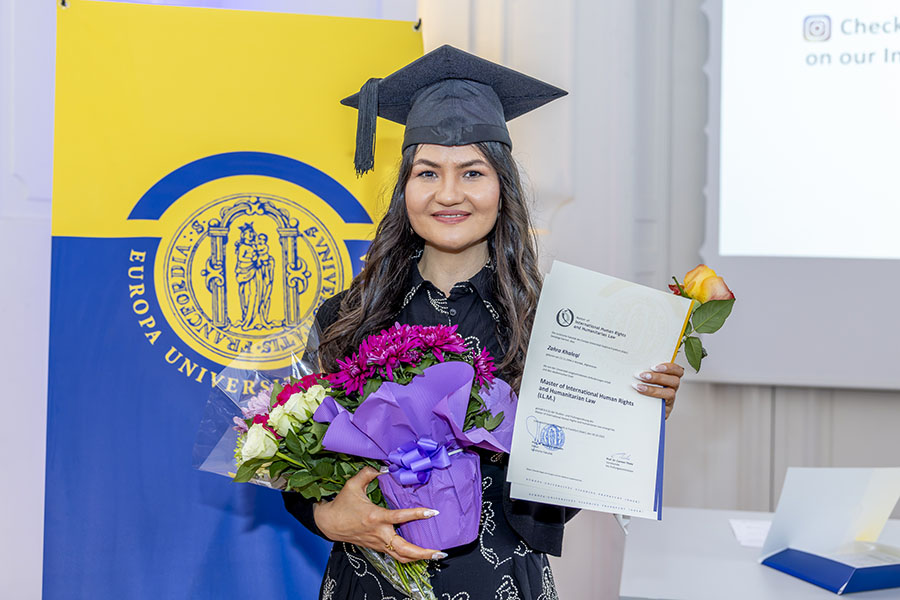
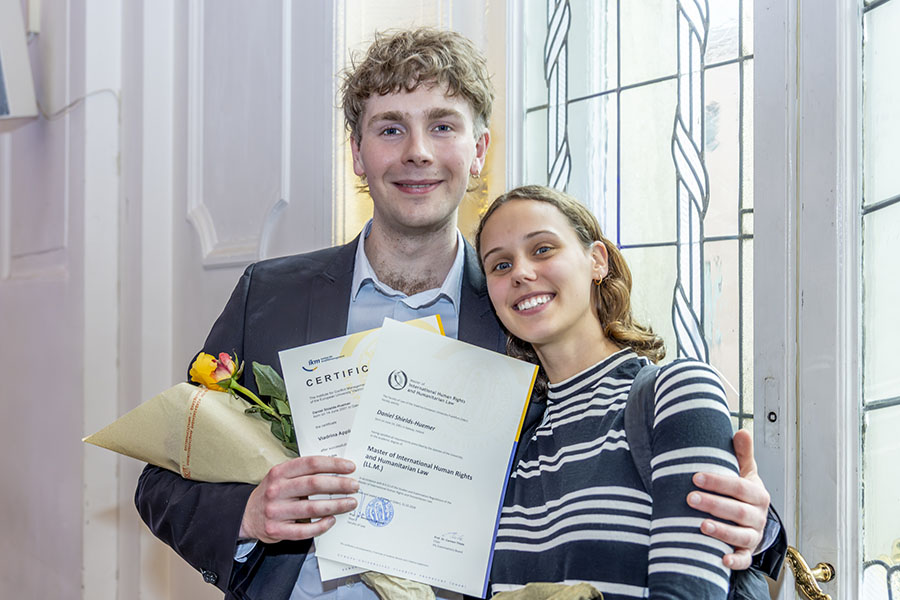
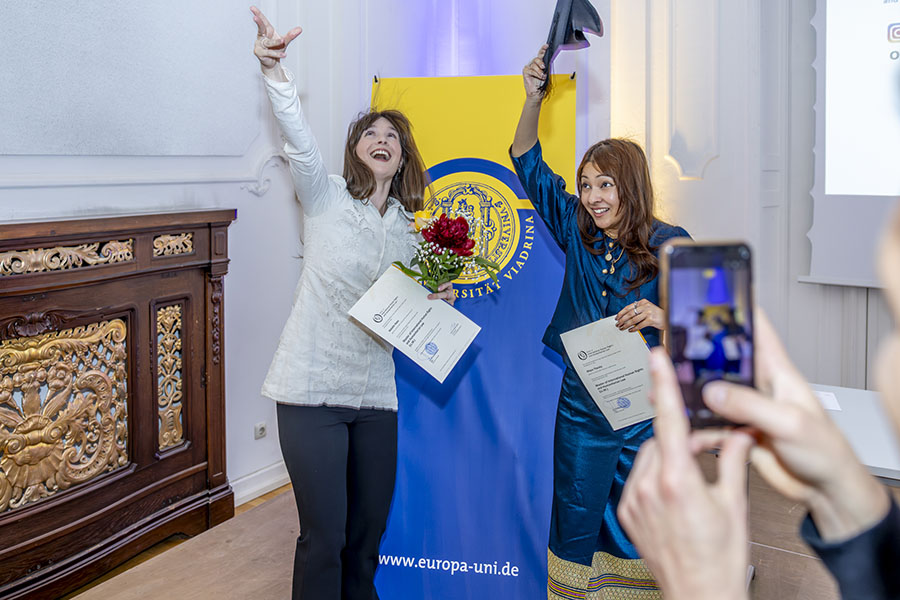
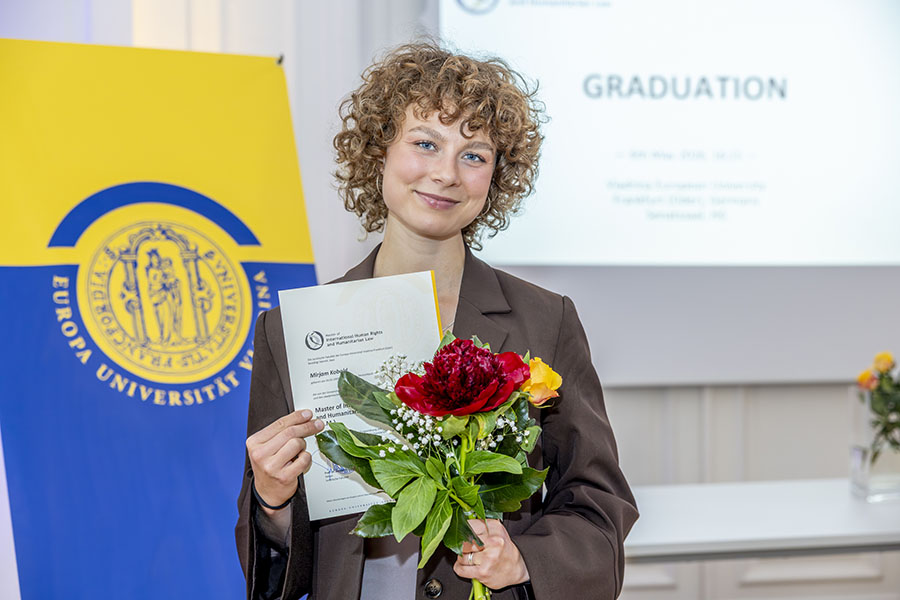
After the certificates were awarded, Prof. Dr Markus Beham, who is now the academic director of the study course, congratulated the graduates. Prof. Dr Carmen Thiele, also a member of the academic management team, looked back on the history of the study course. The programme arose from the desire of former participants of the summer school "The European System of Human Rights Protection" to acquire in-depth knowledge in the field of human rights and international humanitarian law as part of a Master's degree programme. Her chair has been offering the summer school for many years.
Following the ceremony, graduates, family members and teaching staff came together at a joint reception.
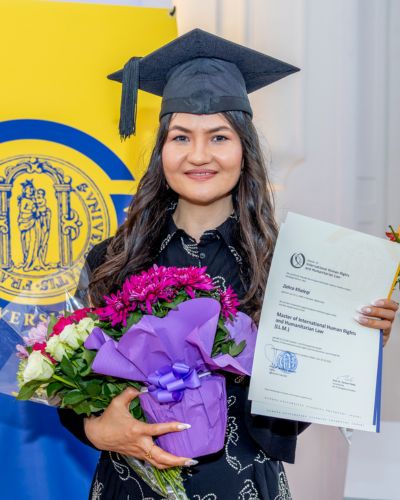 Zahra Khaleqi from Afghanistan, working as a legal intern at the Office of the Prosecutor at the International Residual Mechanism for Criminal Tribunals in The Hague.
What interests you most in the field of international human rights and international humanitarian law?
I am more interested in the enforcement mechanism aspect of International Humanitarian Law. A law is only as strong as its application, so I am focused on the transition from 'law on paper' to 'accountability in court.' I'm interested in how we bridge the gap between documenting war crimes in real-time and successfully prosecute them in international forums to ensure justice for victims.
What is the most important thing you have learnt here and will take with you into your professional life?
At the Viadrina University, I learned that the International Human Rights Law (IHRL) and International Humanitarian Law (IHL) are not separate silos. I learned how the violation of a human right scales into a war crime or a crime against humanity during conflict, and at my job, I will apply this by understanding how broad patterns of state-sponsored violence are distilled into individual criminal responsibility to end impunity and enhance accountability.
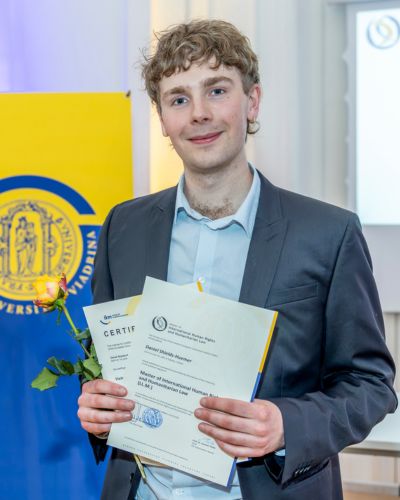 Daniel Shields-Huemer from Ireland works in the Safety and Legal Protection Team of the International Rescue Committee in Berlin.
What interests you most in the field of international human rights and international humanitarian law?
What interests me most is the tension between the universal, binding nature of international legal frameworks and their often selective application and enforcement in practice. In today’s climate of increasingly brazen departure from established international legal norms, I am particularly interested in how international protection frameworks can maintain their legitimacy when double standards and inconsistent enforcement continue to compromise its credibility. I am especially drawn to understanding how these disparities can be addressed to ensure international law is applied more consistently and effectively in practice.
What is the most important thing you have learnt here and will take with you into your professional life?
The most important thing I have learned is how to critically analyse the gap between international legal principles and the realities of their implementation. This programme has provided me with the theoretical knowledge and analytical groundwork to assess current challenges in international human rights and humanitarian law, while also deepening my understanding of how international legal frameworks can be invoked at the domestic level to drive meaningful change. This is something I will carry forward into my work, particularly in applying international legal principles in practical contexts to strengthen rights protection.
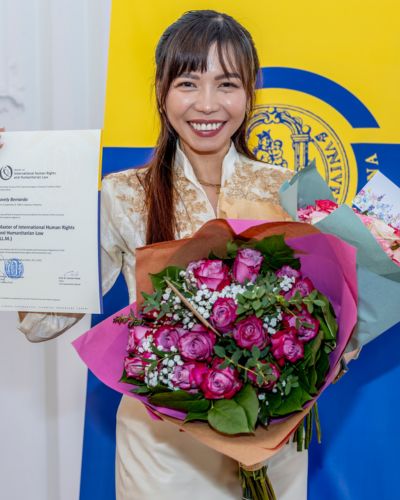 Lovely Bernardo from the Philippines, working as Legal Communications Officer at ICBUW-International Convention on the Ban of Uranium Weapons
What interests you most in the field of international human rights and international humanitarian law?
What interests me most is that it directly deals with the protection of human dignity during the darkest moments of humanity. I became interested in International Humanitarian Law because my home country, the Philippines, has experienced numerous non-international armed conflicts, particularly during the Battle of Marawi.
Witnessing the devastating effects of conflict made me realize that war is not only a national issue, but a global humanitarian concern. Through this program, I came to understand that when armed conflicts are left unaddressed, countless lives are destroyed, children's dreams are shattered, and entire communities are left in grief and suffering. This field inspires me because it seeks to place humanity, accountability, and protection at the center of conflict and crisis.
What is the most important thing you have learnt here and will take with you into your professional life?
The most important thing I have learned from this program is the value of empathy and understanding despite differences in opinions, perspectives, and backgrounds. Coming from diverse cultures and experiences, my colleagues and I did not always agree on every issue or argument. However, we learned to listen to one another, to place ourselves in each other's shoes, and to engage with respect and openness.
This experience taught me that meaningful dialogue and mutual understanding are essential not only in academic spaces, but also in resolving global conflicts and humanitarian challenges. I will carry this lesson with me into my future career because I believe that if more leaders approached differences with empathy and understanding, the world could become a more peaceful and humane place.
Translated by DeepL and edited
Back to the news portal
Share article: