

Kevin Kühnert and Jana Costas debate work, power and growing inequality
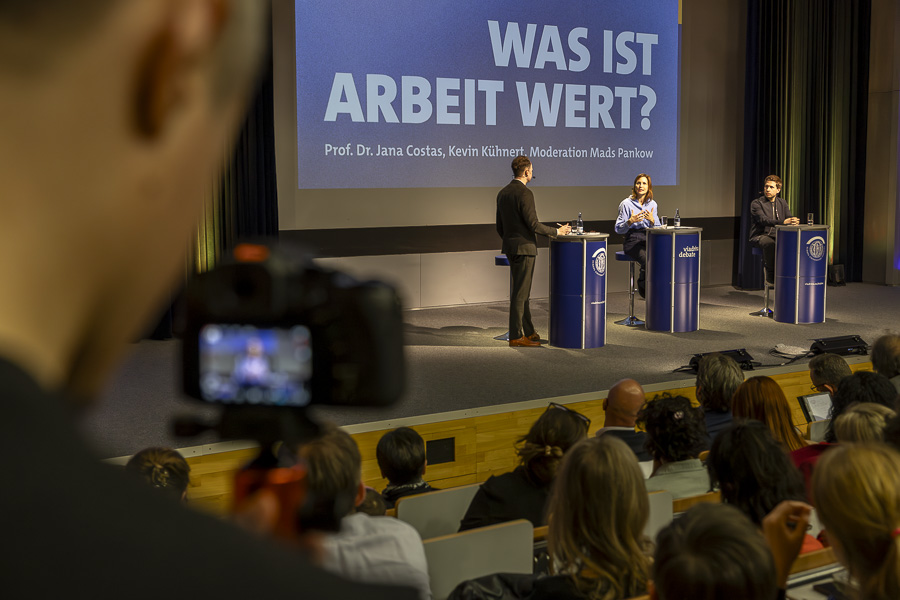
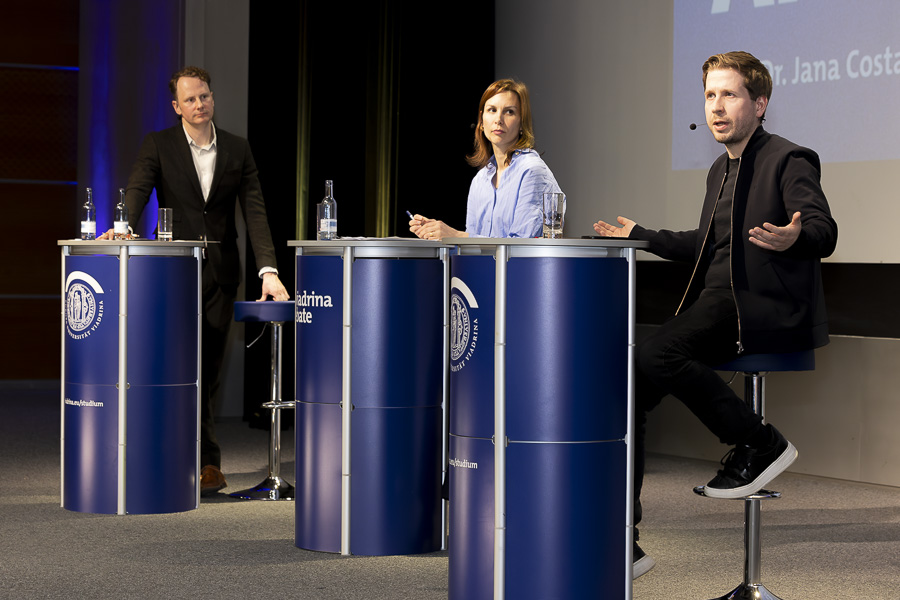
What is the significance of labour in times of the platform economy, financial markets and social change? Former SPD General Secretary Kevin Kühnert (now Head of Taxation, Distribution and Lobbying at finanzwende e.V.) discussed this topic together with Viadrina economist Prof. Dr Jana Costas at the Viadrina Debate on 15 April 2026 to kick off the summer semester. The discussion with the audience centred on the questions of how working environments are changing, why traditional promises of advancement are becoming fragile - and who benefits from change.
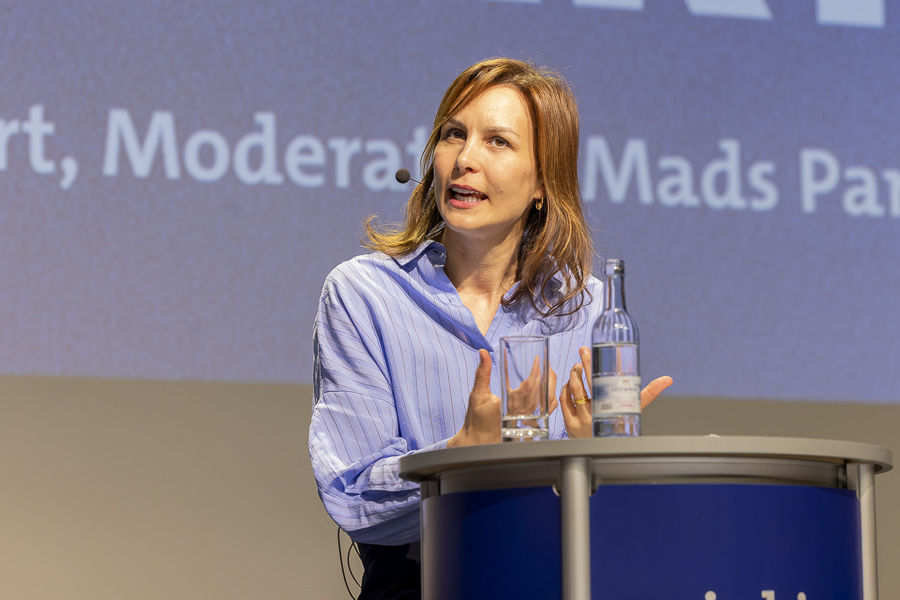
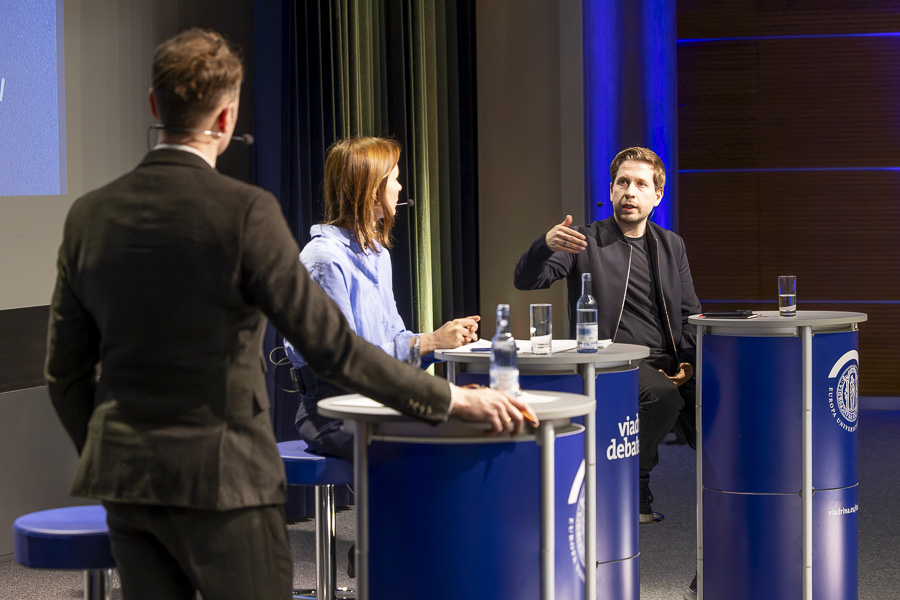
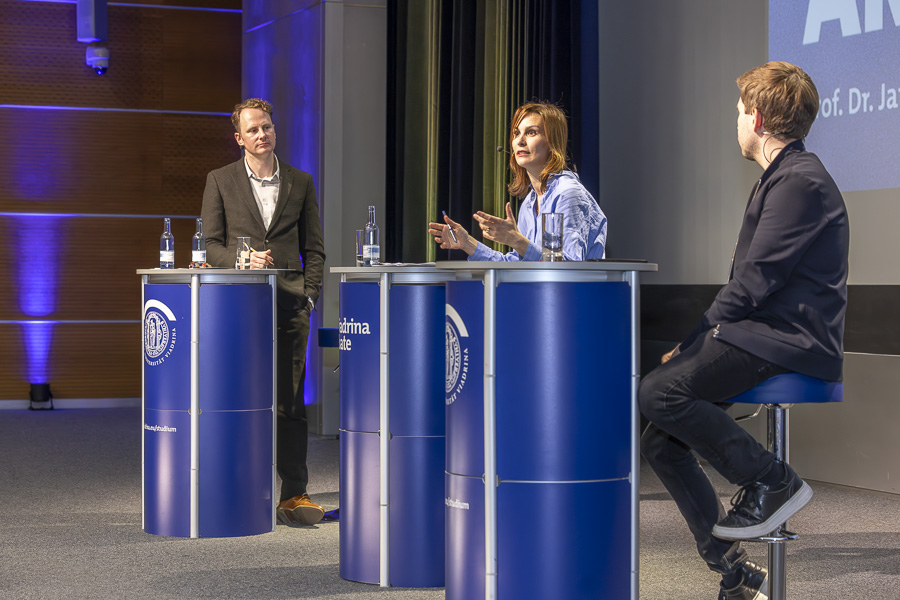
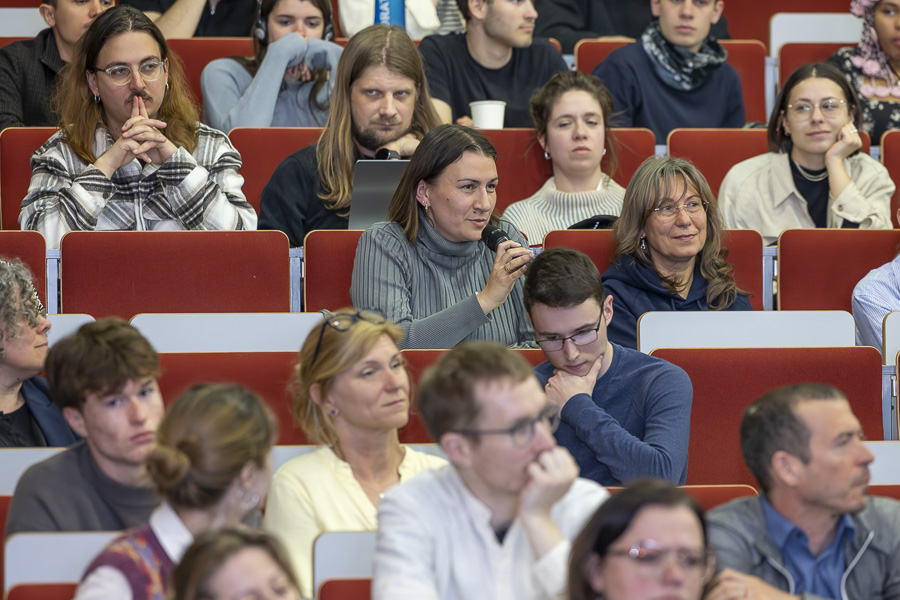
A wild ride through all areas of macro- and microeconomics, anecdotes from a call centre and a cleaning team at Potsdamer Platz, global tech companies with political ambitions and the hard-earned home in Saarland that helps to stabilise democracy: On this afternoon, the Viadrina was exactly the right place for those who wanted to explore the value of work. In the packed Audimax, moderator Mads Pankow cheerfully led the audience through the multi-layered topic area, which was tackled by Viadrina economist Prof Dr Jana Costas and the former General Secretary of the SPD, Kevin Kühnert.
Picture gallery: Viadrina Debate with Kevin Kühnert and Jana Costas
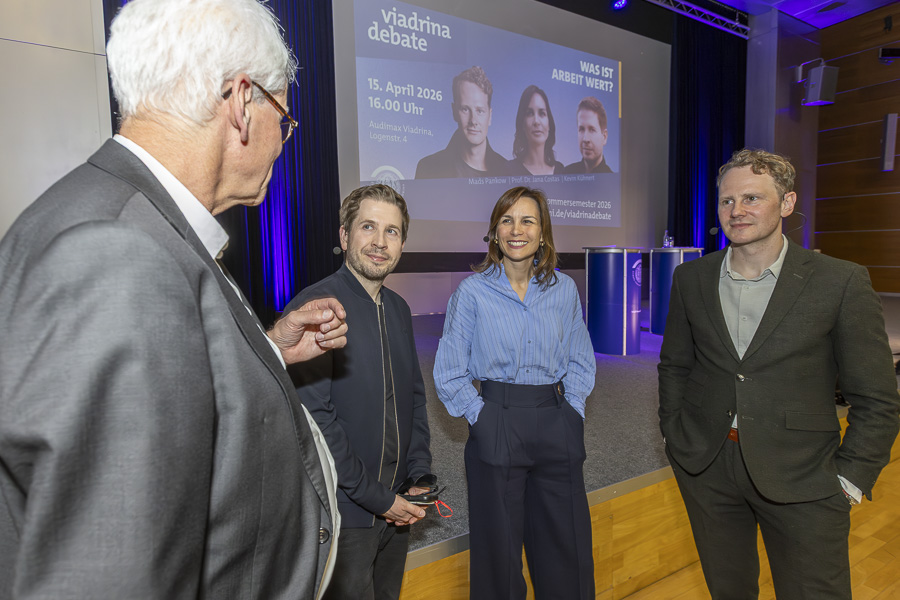
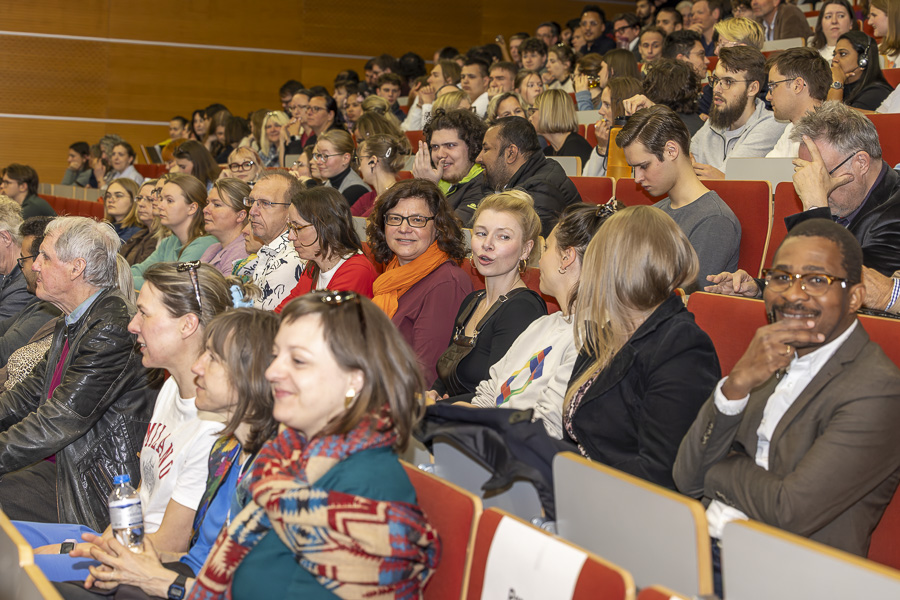
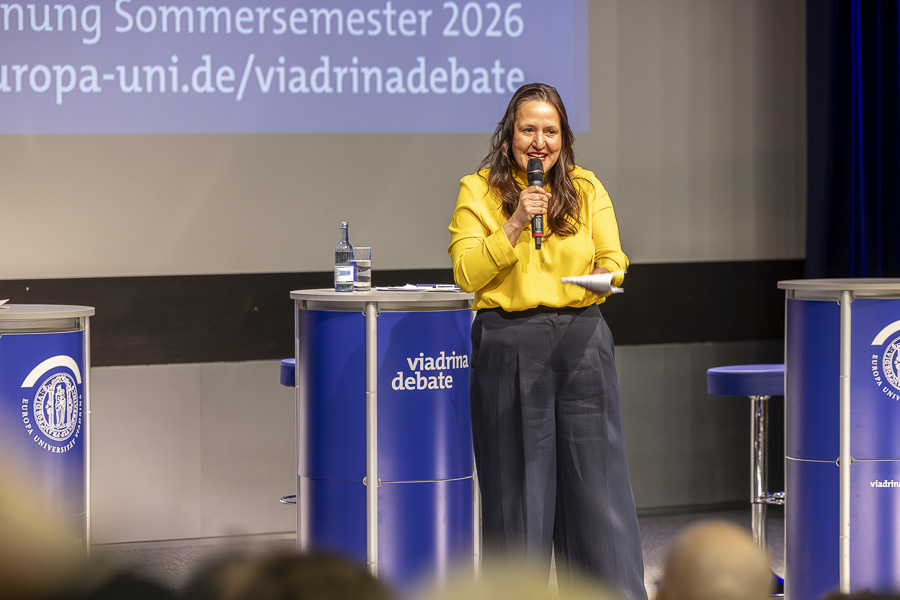
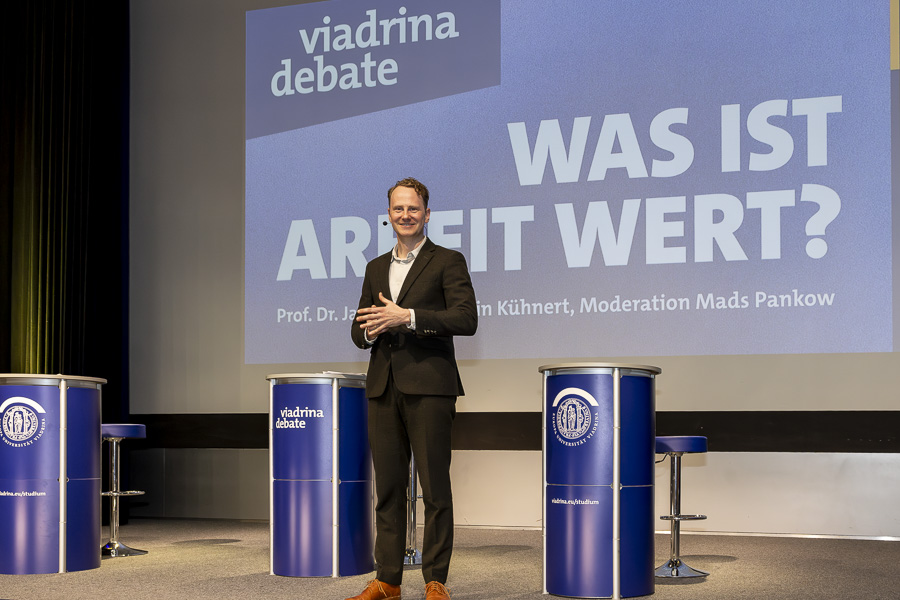
From cleaners to Silicon Valley: dispute over the value of work
In the middle of it all and visibly excited about the reunion with her political party comrade and pub quiz companion Kühnert: Brandenburg's Science Minister Manja Schüle. "What is the value of work?" she asked and explained: "This is not a theoretical question. It's a question of power." Ultimately, it is the students in the room, among others, with whom the future of work begins. Viadrina President Prof Dr Eduard Mühle also encouraged the students to take a critical look at how value creation works and how wealth will be distributed in the future. The Viadrina Debate provides a space for critical enquiry.
The debate centred on the topics of wealth and distribution, recognition and visibility. Jana Costas reported on the six months in which she accompanied a cleaning team as a researcher. The stigmatisation of cleaners is reflected in the marginal hours of their work, in the precarious forms of employment with fixed-term and part-time contracts and also in the social judgement of the people. "This probably also has something to do with the connection to dirt, because cleanliness is rarely noticed, rather when it's not clean," says Costas. Kühnert was also able to report from his own experience of work that had little to do with meaningful fulfilment. He once worked in a call centre where it was all about how many phone calls you could make in an hour. "But you didn't take this work home with you - unlike professional politicians," he reported.
What are the take aways of the Viadrina Debate?
"Invisible work is often paid less." (Costas)
"Society subsidises the wage gaps of others for whom the salary is no longer sufficient for everyday things such as rent or health." (Kühnert)
"Income inequality is not the same as wealth inequality." (Costas)
"It is often no longer enough to get more from wealth through hard work alone. Wealth is often not generated through labour, but through capital gains from shares, foundations, holding companies..." (Kühnert)
"Technology should not be perceived as deterministic, it is not simply there. It depends on how we use it, how we understand it. It is our job as a university to promote critical judgement in this regard." (Costas)
"Hourly pay doesn't fill a fridge; it's the monthly wage." (Kühnert)
Video copyright & production: https://easylivestream.de
Wouldn't it then make sense to stop exchanging life time for money? "At least that's what people keep suggesting to me on Insta: shouldn't we just buy all the shares and let them work for us?", Pankow pointed out. "Companies from which I buy shares also have to be productive and creative, i.e. they have to produce something," Kühnert replied. It was more of a social and political decision whether to secure prosperity through a solidarity system or through private provision. However, not everyone can afford the latter. With its high standards in terms of pay and social security, Germany is often accused by large corporations of no longer being globally competitive. But perhaps this argument could be turned around and seen as a locational advantage, asked Kühnert.
Jana Costas pointed out that, contrary to other claims, the volume of labour in Germany has increased, as more and more women are also working for pay. And yet this increased productivity is not reaching the working population as much. It is often individual companies that benefit from this. Kühnert appealed for companies such as the large tech corporations from Silicon Valley with their influence on state institutions to be broken up: "Not to destroy them, but to make them functional again in a market economy sense."
Which questions remain unanswered - by the moderator, the audience, the panellists themselves? Either because they are too complex or because they still need to be negotiated:
- Is a democratic environment and a social security system actually a locational advantage or not?
- How do you achieve recognition in certain occupational groups if this cannot naturally be imposed by the state? Especially as recognition and pay are not necessarily interdependent.
- How do we counter the stagnation in births in Germany? Should it even be the job of women to take on this responsibility?
- Does the further development of AI really threaten our work, or can it be a good thing through regulation and containment?
- Will Kevin Kühnert be competing with Manja Schüle in the next Potsdam pub quiz in three weeks' time?
Text: Heike Stralau, Translated by DeepL and edited; Fotos: Heide Fest, Video copyright & production: https://easylivestream.de
Back to the news portal
Share article: