

At the heart of the Viadrina Coworking Space
Viadrina's coworking space will be officially opened on 15 April. After five years of construction and a number of structural challenges, the campus will have one more innovative learning, working and meeting space. Shortly before the opening, Peggy Walter from Viadrina's Technical Building and Construction Management tells us about the special features of the building, its future use and where traces of history can be discovered.
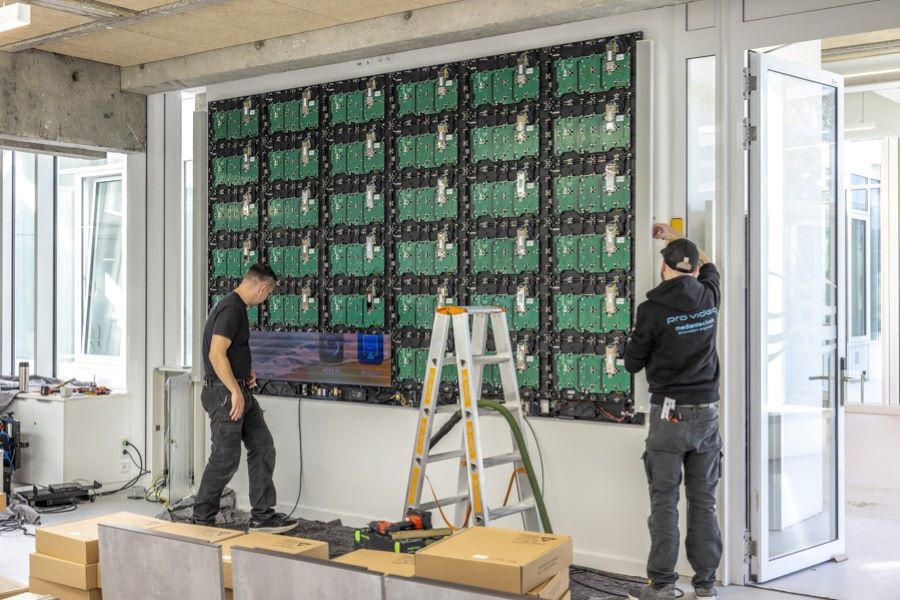
Clipboard and mobile phone - this is Peggy Walter's standard equipment just a few days before the opening of the Viadrina Coworking Space. The architect and member of Viadrina's Technical Building Management team is currently pulling all the strings when it comes to the final work in the newly designed learning and meeting space on campus. As she walks through the approximately 1,500 square metres of light-flooded rooms between concrete and glass walls, screwdrivers whir in the kitchenette. Tiles are being laid on the terraces and technicians are clicking one LED tile after another onto the huge screen in the entrance area. "When I come here in the morning and see the construction workers, the sun rises for me," says Peggy Walter.
gallery coworking
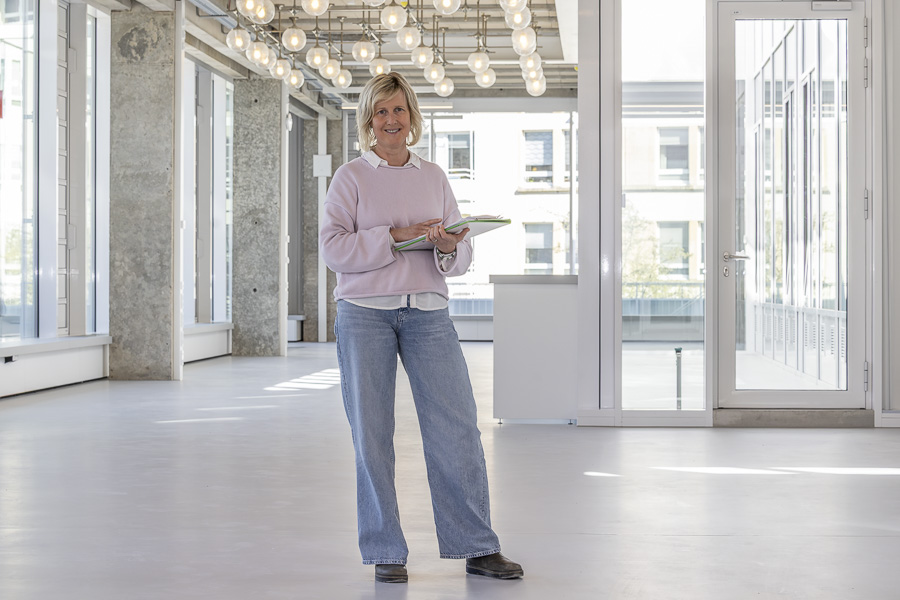
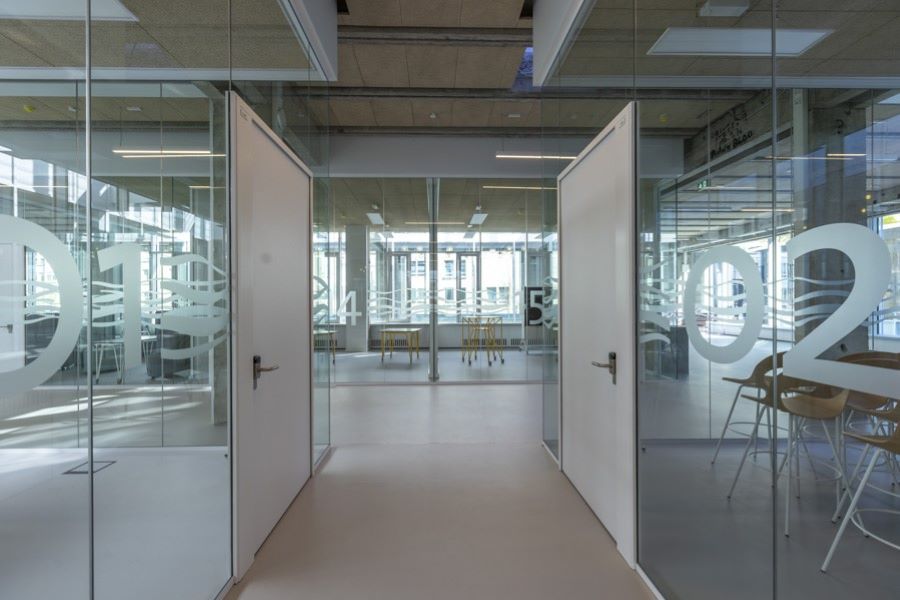
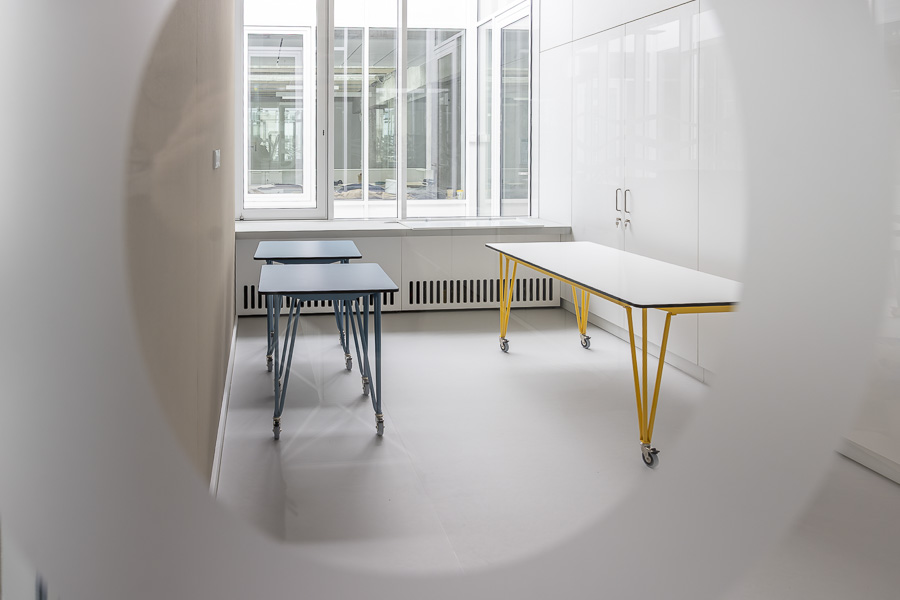
The glass carrels are workspaces for one to 25 people and can be booked by students and employees.
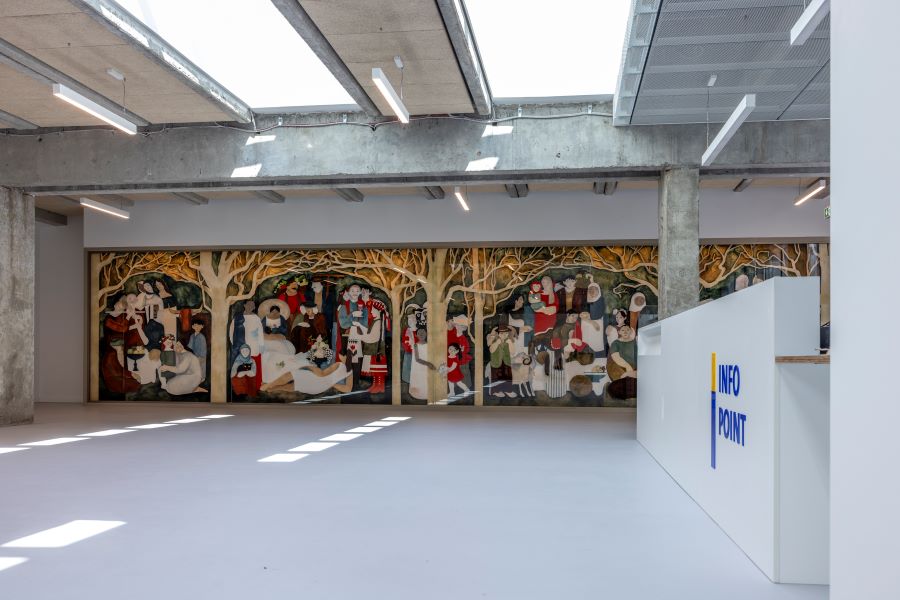
Next to the Info-Point in the entrance area, the friendship of nations painting behind glass by Eberhard Hückstädt shines.
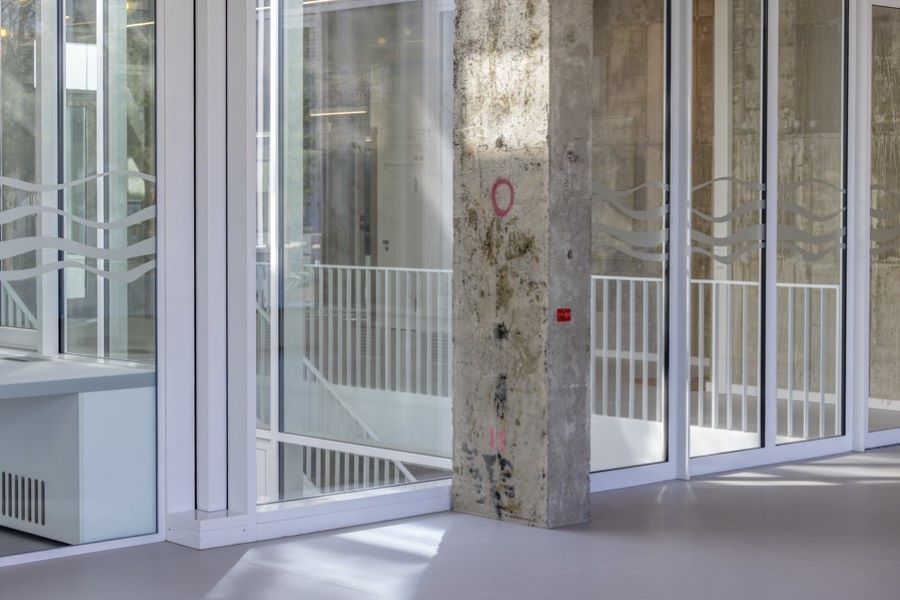
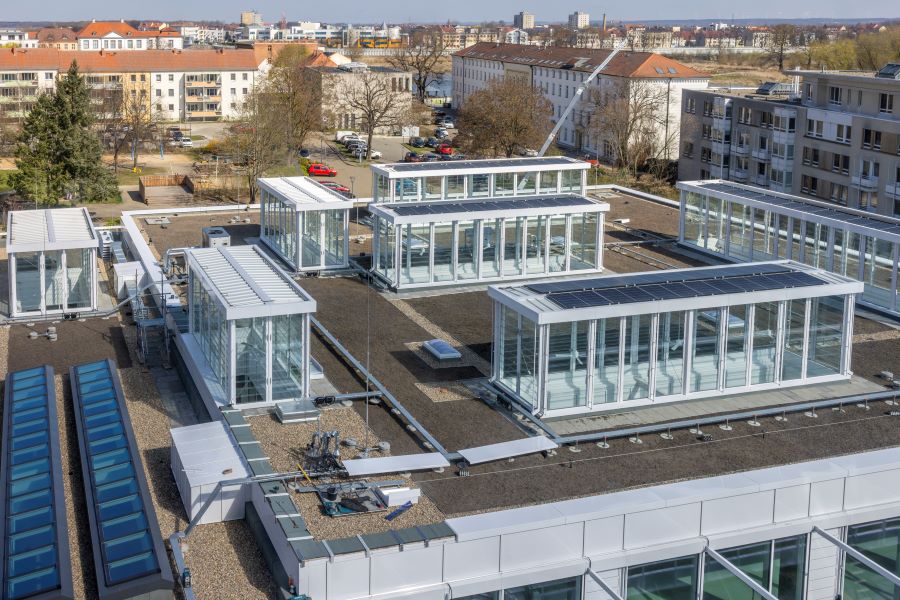
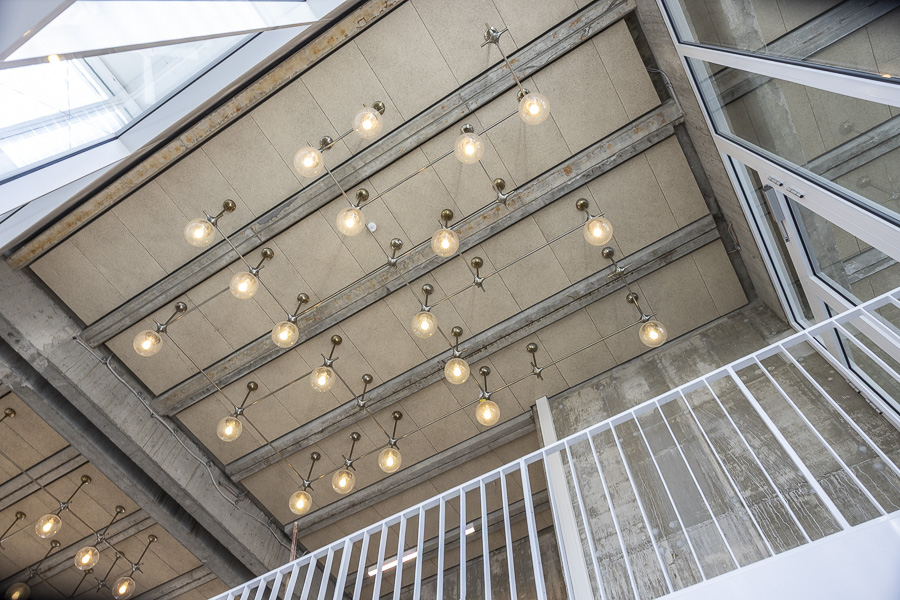
In general, the coworking space is great luck for her. "Constructions in existing buildings is my passion. Creating new places in old buildings and then also for young people - that's the best thing for me," says Peggy Walter. This combination of old and new is obvious as soon as you enter the Coworking Space. Glass surfaces alternate with exposed concrete. Seven light shafts that protrude high up from the roof are particularly striking. They allow light and air to penetrate the space, which previously seemed rather dark. The largest of the boxes, which will later be planted with plants, has a footprint of three by 13 metres. In contrast to these airy, modern elements, the architectural company deliberately decided to leave the reinforced concrete skeleton of the building visible, which was constructed at the end of the 1970s as a district party school. In several places, you can discover handwritten data on the concrete in thick pencil, left by the construction workers in 1976.
Even more conspicuous are the globe lights and the large back-glass picture in the entrance area, which refer to the GDR history of the building. Peter Rockel's rod lighting system with 137 illuminated lamps dominated the room, which was used as a canteen until the early Viadrina years. Peggy Walter danced under them at her graduation ball when the building was part of a congress hotel. The new arrangement in several smaller ensembles demanded a lot from the architects during the planning period, as did the electrical company during the installation. Another eye-catcher is the reverse glass painting by Eberhard Hückstädt, on which he captured the understanding of international friendship from 1978. During the remodelling, it was packed in wooden boxes. Now it has been cleaned by a restorer and is back on the wall in its entirety. "These elements are certainly an enrichment for the students, but I also hope that they will attract some Frankfurters to the Coworking Space because they will remember its former use," says Peggy Walter about the lights and the picture.
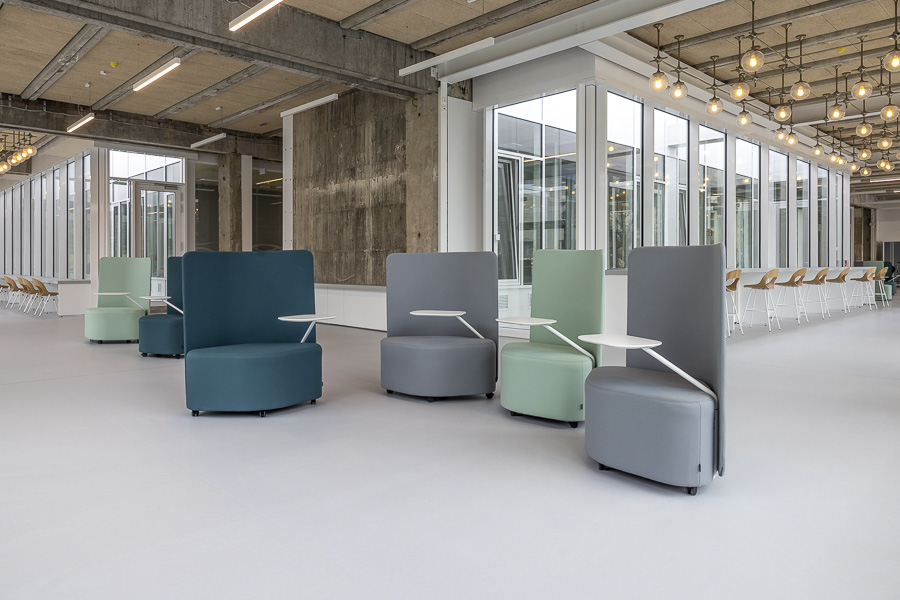
In future, the spacious entrance area will be a public meeting space with seating and a drinks machine for everyone. Behind it is an area dedicated to studying and socialising. In future, laptops can be opened up at long standing and sitting tables; people can read, discuss, develop ideas and work together on armchairs here. In addition to the open areas, 15 so-called carrels are also available. Students can rent these glass cubicles, which offer space for one to 25 people. Here too, furniture can be flexibly moved and extended to meet different learning and working requirements. "This is the heart of the Coworking Space, a place where new forms of learning are possible and exchange is encouraged," says Peggy Walter, summarising the idea behind it.
Exchange is also the focus of an area of the building dedicated to start-ups. The protected start-up area with flexible offices, a shared room and a maker space with various devices such as 3D printers and plotters is available to creators participating in the Viadrina Founders Center programmes.
There are several reasons why so much time has passed between the architectural competition, which was won by Berlin-based Scheidt Kasprusch Architekten in August 2019, and the opening of the Coworking Space in April 2026. Demolition work had begun in 2021; construction then started in March 2022. Among other things, the contract with a shell construction company had to be cancelled after excessive demands were made. Water damage caused by the opening of the roof for the light wells also led to a setback. Due to the long construction period as well as rising energy costs and construction prices, the costs for the remodelling are 17.5 million euros instead of the estimated 14 million euros. They are largely being covered by the state of Brandenburg.
The challenges fade into the background for Peggy Walter as she walks through the new rooms and visualises how they will be brought to life by Viadrina students and other people from the city. Visitors can get a first impression of how people will learn and work here in the future at the opening ceremony on 15 April from 5.30 pm (following the Viadrina Debate).
Translated by DeepL and edited
Back to the news portal
Share article: