
"When things get politically difficult, we keep the gates open" - Kuwi graduate Luisa Rath-John manages the Goethe-Institut in Los Angeles
She studied and did an internship in South Africa, taught German in India and coordinated the programme work of the Goethe-Institut in Central Eastern Europe in the Czech Republic - today Luisa Rath-John manages the Goethe-Institut in Los Angeles. She explains why studying Cultural Studies has opened up the world to her and what challenges she is mastering in Los Angeles far away from the film sets. She also gives current students advise for an international career.
On the day of the interview, Luisa Rath-John is sitting in the morning in her sun-drenched home in Los Angeles; it is already dark in Frankfurt (Oder). Ahead of her lie a meeting with German honorary consuls from the surrounding area, an online meeting with colleagues in New York and a jour fixe with her team. In between, long, sometimes exhausting car travels through the Californian metropolis. It's a typical day for Luisa Rath-John since she took over as director of the Goethe-Institut in L.A. in 2024. For a long time, the East Brandenburg native could never have imagined that she would one day have an international career and settle in new countries. "I was very attached to my immediate surroundings," she recalls, naming one of the reasons for studying Cultural Studies at the Viadrina. She chose an internship in South Africa for her compulsory stay abroad: "The world opened up for me during my Bachelor's degree." In South Africa, she realised that she wanted to discover much more of the world.
gallery-luisa-rath-john
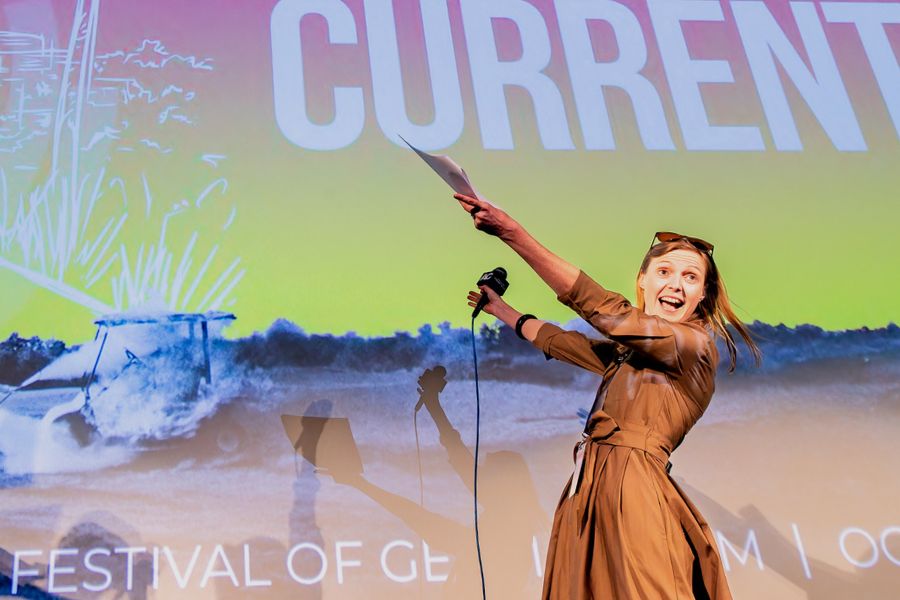
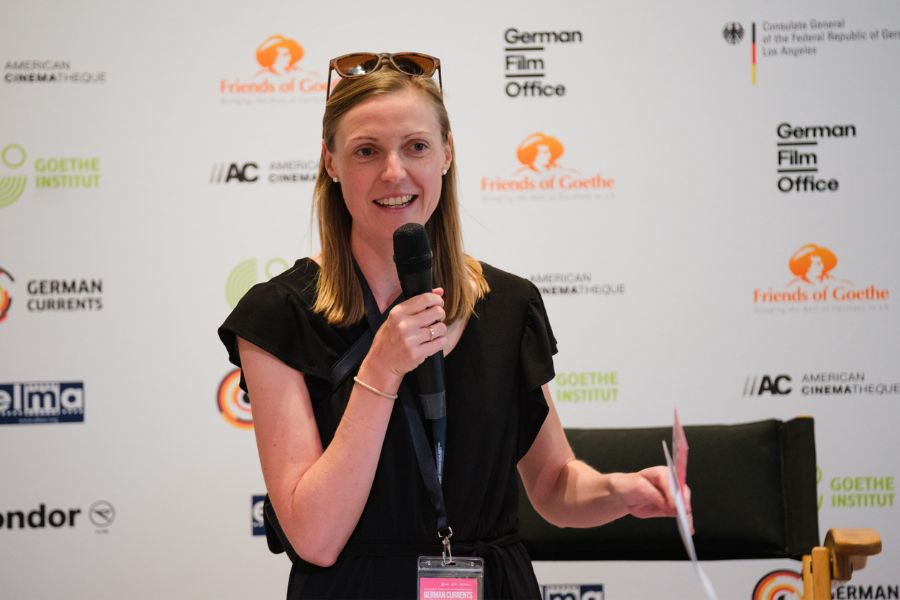
Luisa Rath-John at the opening ceremony of the GERMAN CURRENTS Film Festival 2025 at the Aero Theatre in Santa Monica.
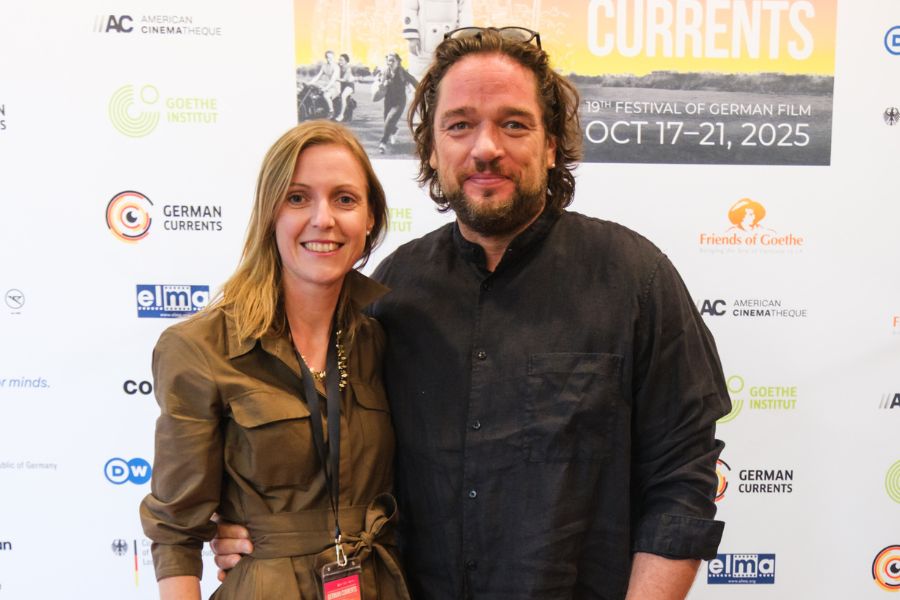
At the GERMAN CURRENTS film festival, Luisa Rath-John also meets acting stars, like Ronald Zehrfeld here in 2025.
The Neighborhood Interpretive Centre with partners such as Allegra Padilla and Byron Jose is also part of the Goethe-Institut in L.A.
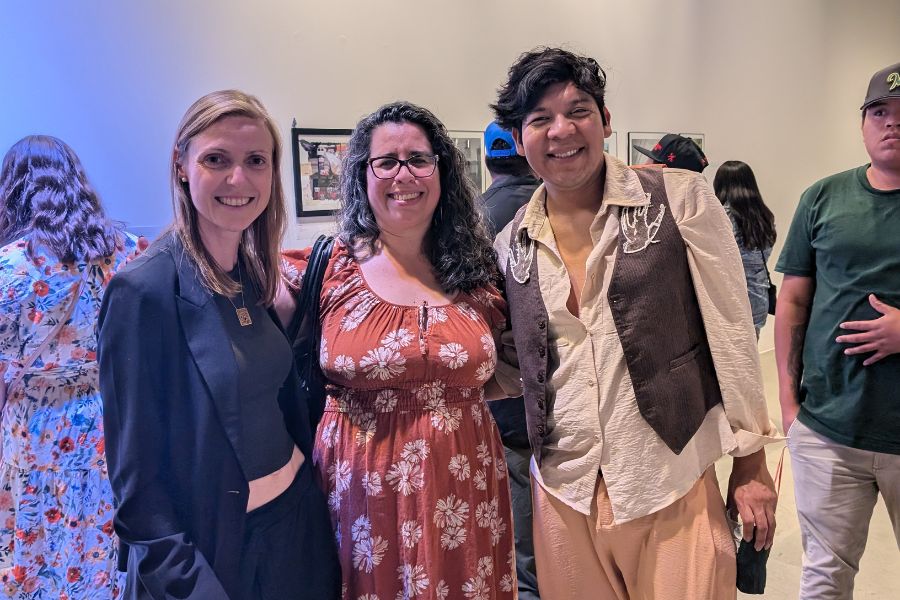
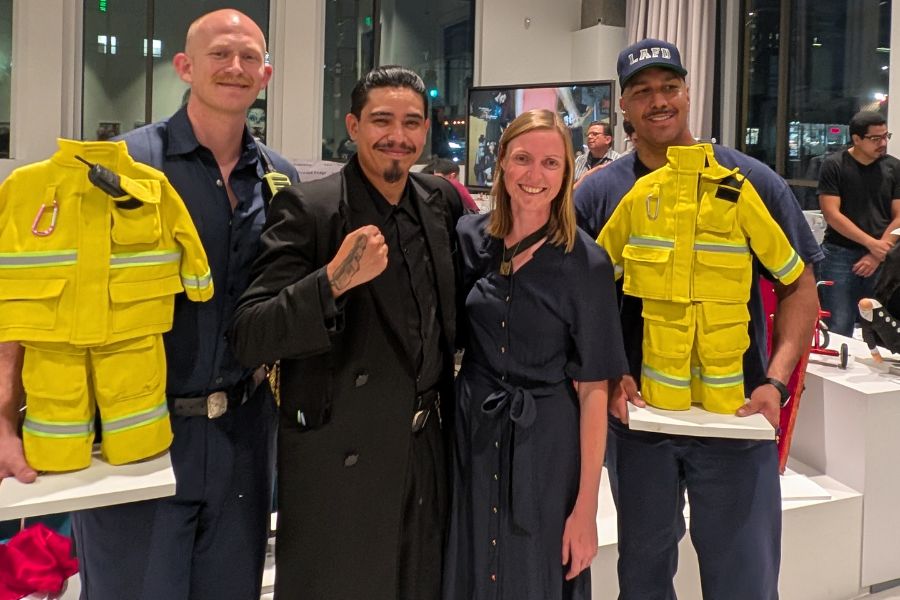
At the opening of the Puppetmaster's Playground exhibition, Luisa Rath-John met Cain Carias alias Puppetmaster213 and representatives of the Los Angeles Fire Department.
She stayed at the Viadrina, studied a Master's degree in "Literaturwissenschaft: Ästhetik - Literatur - Philosophie" and went back to South Africa for a year abroad. By now it was clear: she didn't just want to travel, she wanted to live in other countries - "with everything that entails". She entered the international professional world with a traineeship at the Goethe-Institut in Munich, followed by positions in Tel Aviv and Prague. After a private break with her South African husband and their now two-and-a-half-year-old son, the latest challenge was the management of the Institute in Los Angeles.
The devastating fires in L.A. in January 2025, Trump's second term in office, raids by the immigration authorities ICE, ever new diplomatic scandals from Venezuela to Greenland - these are politically and socially gruelling times for a job in the USA. All the more reason for cultural exchange, says Luisa Rath-John. "Right now you realise what an important role we play. When it is more difficult to maintain dialogue at a political level, we keep gates open and have the opportunity to bring people together," is her basic view of the work at the Goethe-Institut. Yes, it is also about German courses and teaching German culture. Above all, however, Luisa Rath-John sees her job as bringing people into dialogue with each other and creating new things together.
One example of this is the Neighbourhood Interpretive Center project. Away from the palm trees on Venice Beach and the villas of Pacific Palisades, the institute is located in a "thoroughly challenging neighbourhood", as Luisa Rath-John puts it. Homelessness, drugs and gangs are part of everyday life here. When the institute moved here in 2021, it was clear: "We can't land here like a UFO and have no connection to what's around it." Especially as the diverse neighbourhood also has "incredible creative potential" that needs to be tapped into. Collaborations with local artists and activists are therefore just as much a part of the institute's work as a German film or discourse programme. There will also be new projects at the Goethe-Institut L.A. in 2026 with actors from the neighbourhood. The institute director is also looking forward to a major project on 50 years of punk and the next edition of the annual German Currents Film Festival, which will celebrate its 20th birthday in 2026.
It is important to Luisa Rath-John that the Goethe-Institut is not just about conveying German culture, but also about creating space for free art and critical questioning as well as collaboration with various groups. She is concerned to see how the institute's neighbourhood has changed following the ICE raids. There are hardly any street vendors left, they have been arrested, deported or are simply afraid to go out on the street. On the other hand, there are many large and small cultural institutions that are not intimidated by the anti-diversity pressure under Trump and allow and utilise freedom. The Goethe-Institut is also one of them, for example when it hosted an event with Laurentia Genske. A group that campaigns for queer issues in the Latino community was also involved in the discussion about the film "Zuhur's Daughters" about two Syrian trans girls. "That felt delicate and very important at the same time, just a few weeks after Trump's DEI decrees," recalls the Viadrina graduate, referring to Trump's initiative to restrict efforts to promote diversity, equality and inclusion.
Luisa Rath-John will probably stay in Los Angeles for a few more years before moving on to the next station according to the Goethe-Institut's rotation principle. But she has no such long-term plans for now. In the meantime, she keeps in touch with her home in East Brandenburg with video calls, even if the time slots for this - between sunrise on the Pacific and sunset on the Oder - are short.
Three questions for Luisa Rath-John
What did you learn during your studies at the Viadrina that is still useful to you today?
The flexibility in thinking! That I can familiarise myself with new things and think my way into them and approach tasks creatively. That's almost more important than the content I've learnt. But it has also helped me, for example in Prague, where we invited certain authors that I read during my studies to events.
And what aspects of your international career did your degree programme fail to prepare you for?
I had little contact with bureaucratic issues during my studies; however, they increasingly make up our work and limit us to a certain extent. I also learnt and continue to learn how to be in a management position in practical situations. I certainly learnt to be very open to other cultures during my studies. But experiencing this in practice is something completely different. You have to experience for yourself what it means to move to another country, what challenges you have to deal with, but also what enrichment and happiness it brings.
What advice would you give to current students who dream of an international career?
One of the most important prerequisites is that you enjoy what you do, that you have passion - and a certain lightness of touch! When I applied for the traineeship at the Goethe-Institut, I was very relaxed because I thought: it's not dramatic if they don't take you on. This attitude has served me well so far. Especially in this day and age, there are so many opportunities and paths that you shouldn't focus too tensely on just one option. Experimentation and a light touch are essential in order to feel successful.
Translated by DeepL and edited
Back to the news portal
Share article: