
European energy policy meets local company
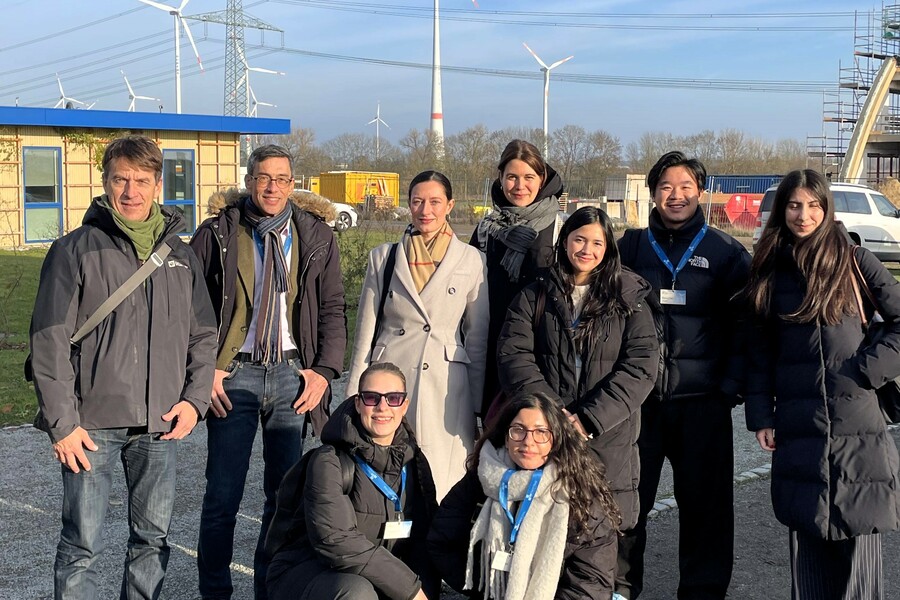
Students on the course "The institutional environment of international companies" were able to compare theoretical analyses directly with the energy industry on 27 November 2025 when they visited the headquarters of Brandenburg-based energy company ENERTRAG AG in Dauerthal. The excursion, led by Prof Dr Albrecht Söllner and Meike Joseph from the Chair of International Management, gave participants direct insights into the transformation of a key industry.
During the excursion, the students learnt about the Uckermark combined cycle power plant, wind turbines, hydrogen technology and the digital operations management system. The visit illustrated how ENERTRAG combines wind and solar power, storage and hydrogen production to create an overall system that serves the grid and thus provides a technological response to the growing demands of European energy policy.
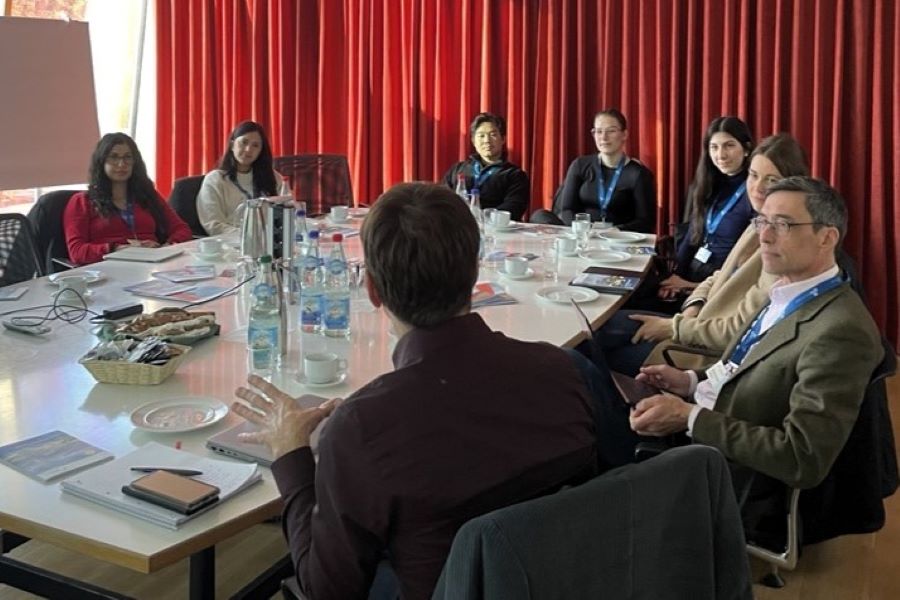
One focus of the course is analysing European policy measures that are directly relevant to ENERTRAG's business. As part of the excursion, the students presented their research findings on key EU initiatives in the energy sector and discussed their significance for the company's business model with Nocco Grüning and Stefan Seum from ENERTRAG.
Student analyses of EU energy initiatives for hydrogen and wind power
Isabell Andric, Nadia Khamenehi and Huy Ta Quang analysed the EU's IPCEI (Important Project of Common European Interest) hydrogen initiative, which aims to support the development of an integrated hydrogen economy across Europe. The students showed how state co-financing reduces investment risks, enables the expansion of electrolysis capacities and strengthens ENERTRAG's role as a producer and system integrator.
Selin Özdenlik and Anne Voigt presented the EU Wind Power Action Plan of 2023, which defines wind energy as the main pillar of climate-neutral energy supply and includes measures such as accelerated approvals, fairer tender designs, securing skilled labour and better financing options. The students noted that ENERTRAG benefits directly from these improvements due to its technological focus, systemic expertise and regional roots, but at the same time is exposed to political uncertainty at national level, which can make long-term investments more difficult.
The contributions made it possible to link regulatory developments and entrepreneurial strategies - a core objective of the course. Albrecht Söllner emphasised the importance of the excursion: "Institutional framework conditions have a profound influence on the strategies and business models of companies. Experiencing on site how ENERTRAG translates European energy policy into concrete projects is an invaluable learning experience for the students." Meike Joseph adds: "The students' contributions have shown how well they can analyse complex EU instruments and apply them to real business situations."
Back to the news portal
Press and Communication
- Große Scharrnstraße 59, 15230 Frankfurt (Oder)
- Rooms: Main Building 114-117, 102
- +49 335 5534 4515
- presse@europa-uni.de
- Website
Share article: