
Democracy in practice: Viadrina conflict researcher Lars Kirchhoff hosts the Local Development Advisory Board
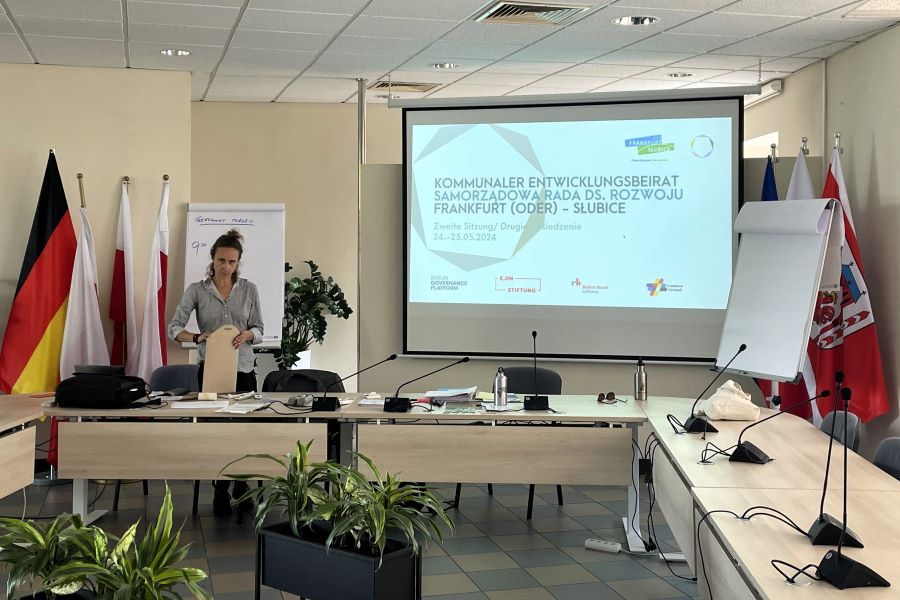
Since April 2024, the “Frankfurt (Oder) – Słubice Municipal Development Advisory Board” has been working on perspectives for the cities' future challenges. The participatory initiative, launched by former Viadrina President Gesine Schwan and the Berlin Governance Platform, brings together politicians and administrators with key figures from the business sector and civil society. Viadrina conflict researcher Lars Kirchhoff is facilitating the overall process alongside Kristin Horn. In this interview, he talks about the work being carried out within this binational committee.
In a nutshell: What is the approach of a Municipal Development Advisory Board, and what expertise does Viadrina have to offer for such a process?
A Local Development Advisory Council – KomEB for short – is a body comprising 35 to 40 people who are intended to represent the full spectrum of life in a local community and who, through facilitated dialogue, develop guiding principles and recommendations for action for policymakers. A KomEB opens up a space for policy-making and civic engagement that is designed to encourage genuine debate, but also genuine cooperation. The aim is to involve all groups, particularly when it comes to critical issues for the future and complex transformation processes, rather than pursuing policy ‘from above’.
And this is precisely where the Viadrina’s specific expertise comes into play: both the topic of transformation in general and German-Polish cooperation in particular are key areas of focus for the Viadrina. Furthermore, working transparently with diverging interests and dealing openly with controversies are methodological hallmarks of applied conflict research at Viadrina, as it has become established over the past 20 years. The ability to facilitate ‘honesty-promoting’ moderation and to deal with conflicts transparently was certainly a key reason behind the enquiry from Frankfurt’s Lord Mayor, René Wilke, as to whether the role of local facilitator could be taken on by Viadrina’s Institute for Conflict Management.
photo gallery
What is the specific remit of the KomEB in Frankfurt (Oder) and Słubice?
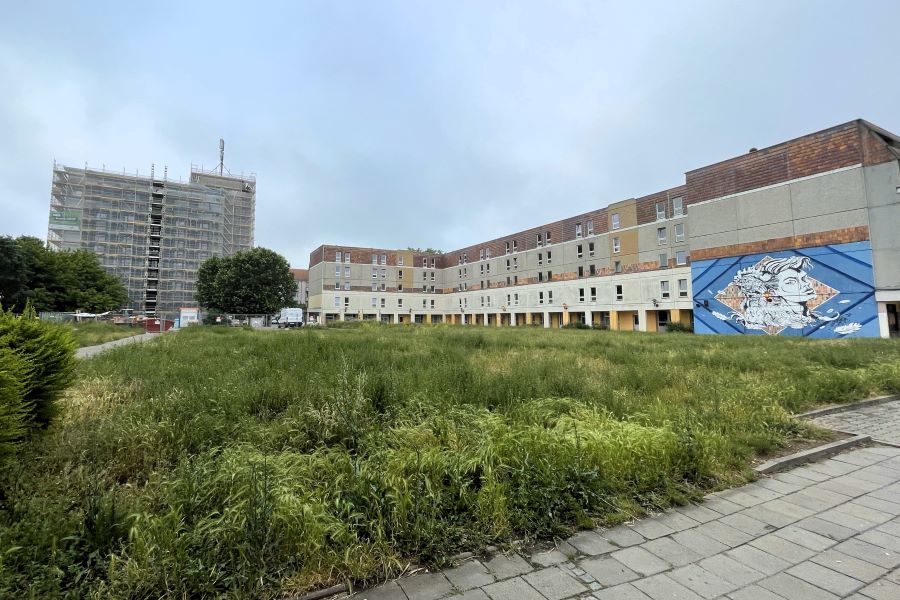
To begin with, in abstract terms: in accordance with the resolution passed by the City Council in April 2024, the KomEB is developing a vision for the medium- and long-term use of the Slubicer Straße site (around the ‘Zukunftsplatz’) in the form of a detailed recommendation paper. This, in turn, is to form the basis for the future development of the site. In addition, the committee is to develop specific ideas for the interim use of the site, supported by the local community.
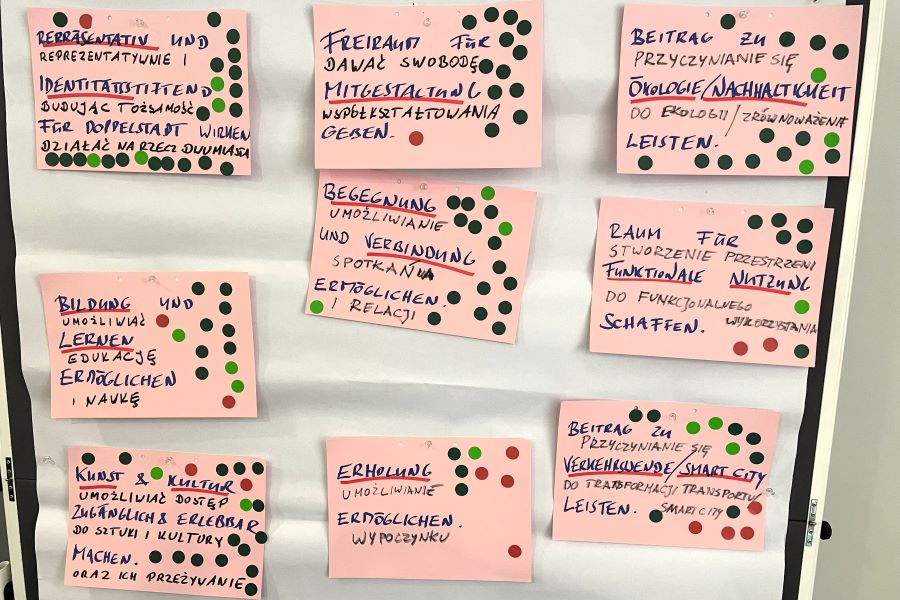
In two public consultation events, we addressed the following questions in concrete terms: How can we create meeting spaces that are actually used? Should the area be sealed off and/or built on, or should it not? What will happen to the existing buildings; is residential use desirable? Should the design make a bold architectural statement, or should a pragmatic use prevail? Which groups’ needs should be primarily reflected in the future use of the site? How much commercial activity is compatible with a use focused on the common good? What role do art, education, ecology and sustainability play? To what extent should the River Oder and the Oder Promenade be taken into account? What does a realistic funding plan look like? And how significant is the German-Polish dimension in the whole project?
What is the composition of the KomEB, and what role does Viadrina play in the whole project?
A diverse steering group has selected around 35 representatives from politics, public administration, business and civil society on the basis of a comprehensive stakeholder mapping exercise. Each political group was entitled to appoint one person, as was a broad spectrum of organisations on both the German and Polish sides. The aim was to create as accurate a representation of the cities as possible, in order to enhance the quality and informed nature of the discussions, as well as the representative character of the committee – even though it cannot, of course, make any decisions. Viadrina University was identified as a key element of the city. In addition to my role as local moderator, two further members of the university staff – Vice-President Janine Nuyken and Ukraine expert Stefan Henkel – are on board the KomEB. The participatory process is a good example of how the Viadrina promotes regional knowledge transfer, cooperates closely with the city and networks with the wider urban community.
Can you share some impressions from the first two meetings?
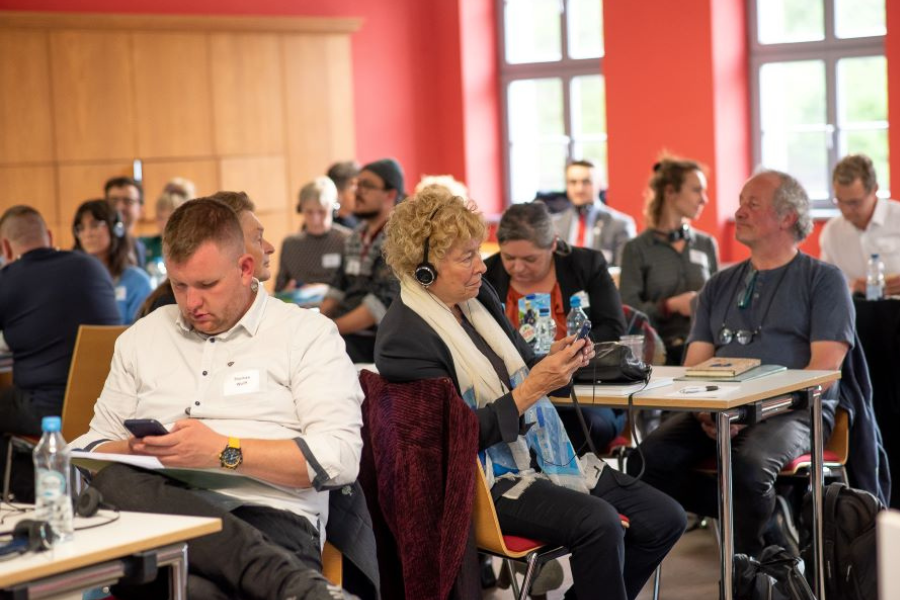
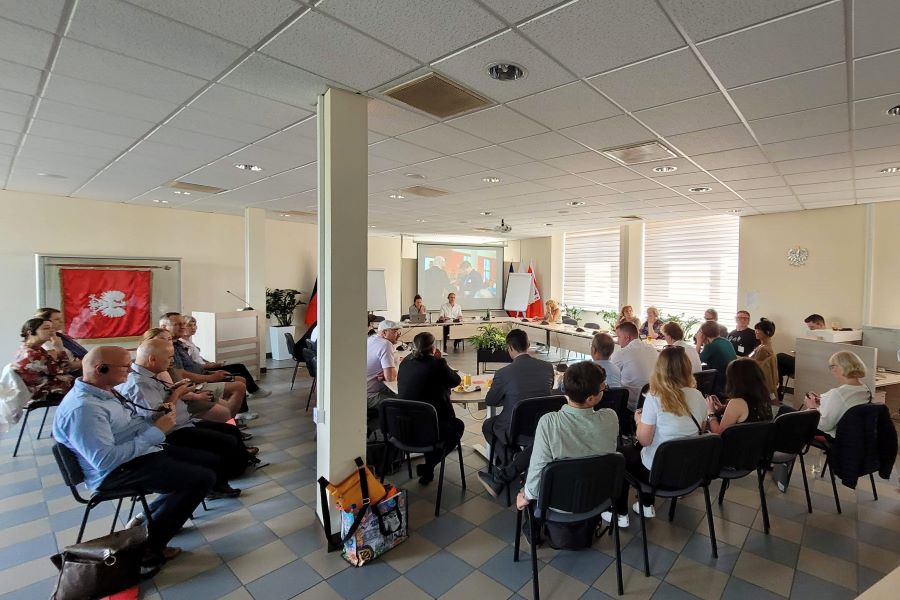
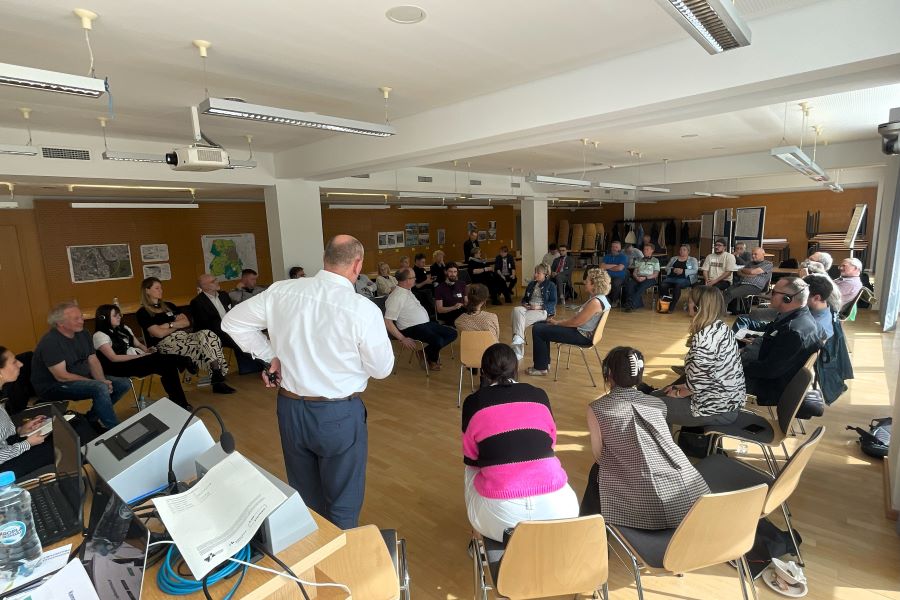
I found the blend of seriousness regarding the content and a light-hearted atmosphere at the two one-and-a-half-day meetings particularly noteworthy. A dual framework proved invaluable in this regard: Gesine Schwan explained the democratic theory behind the Municipal Development Advisory Boards to the newly appointed members in great detail. This level of complexity was not only reasonable but crucial to the motivation of those involved. And through his contributions to the discussions and his visits during the meetings, René Wilke made it clear that this is by no means a case of pseudo-participation: politicians want to know exactly what local people expect from the area, and the results will genuinely be acted upon.
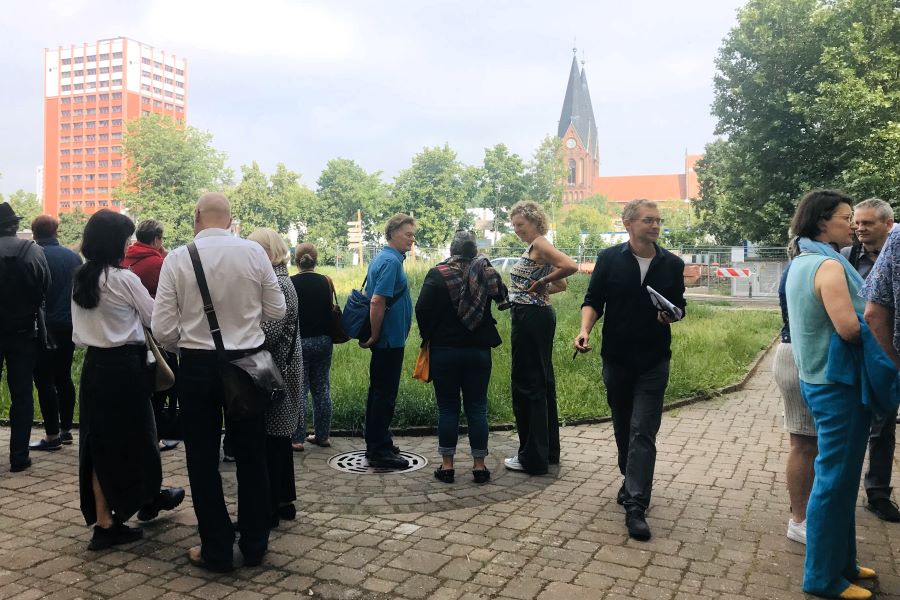
Whilst there was still a certain sense of feeling one’s way – both on the part of the local people and with regard to the concept – during the first session, the second session was already relatively hands-on: the site was visited and inspected, and conflicts were openly identified. It was also particularly impressive for many to spend half a day working in the town council in Słubice. This was valuable for the much-cited ‘equality’ in the project.
And finally, it is simply a joy to see a 17-year-old Polish schoolgirl and a German pensioner in his seventies working together on questions about the future, or how the rather clearly defined visions of the future held by artists, the business community and the planning authority come together in a genuine dialogue.
What happens next between now and the end of the year, and what will the outcome look like after the four meetings in total?
In the run-up to the next advisory board meeting in early September, there will be additional events as part of the ‘Summer Dialogues’, at which interested members of the public – particularly school pupils – can contribute their ideas for the Slubicer Straße area. The advisory board members themselves will also be able to contribute ideas and scenarios that they have developed following such intensive engagement with the site, particularly regarding the issue of temporary use. At the final meeting in October, the final report will be agreed upon and subsequently presented to the city council. It will then be up to politicians and the administration to take the results into account and actively incorporate them into the subsequent processes. This has worked well so far in the pilot municipalities; it would also be politically unwise to ignore such well-considered ideas, developed through a process that takes diversity into account.
Your interim conclusion: What have been the biggest insights, surprises or lessons learnt so far?
Of the many possible insights, I’ll mention three. Firstly: the excellent technical and substantive collaboration with our Polish partners is a real blessing to the success of the process and a genuine unique selling point for our city. Without the excellent simultaneous interpreting, for example, or the battle-tested network of the German-Polish Cooperation Centre, such focused, precise work on genuinely complex issues would be unthinkable.
Secondly, and this comes as no surprise in terms of the issue itself, but in terms of its scale: If one really dares to enquire into the reasons behind certain demands and engage in in-depth dialogue at this level, polarising or polemical tones very quickly come to an end, even on the most sensitive issues. In other words: Clearly articulated interests provide a far better basis for cooperation – and thus for social cohesion – than rigid, polarising demands. The outcome of the process will be more than tangible; it is simply the methodological path to it – the pursuit of consensus, the active incorporation of objections, and so on – that is a new experience for many.
And thirdly, it came as a real surprise just how impressive and vast the area in question is when you wander across it with a coffee in hand, knowing that something new is set to emerge here. To jointly develop such a large site – covering over 18,000 square metres – with such great symbolic significance right in the heart of the city centre is a huge opportunity for our cities, one that is more than worth the effort.
Interview: Frauke Adesiyan; Translated by Deepl and edited
Back to the news portal
Share article: