

EN: University of Macerata: "...you’ll come back with a lot of memories and personal growth"
International Business Administration (MA)
Preparation
Preparing for my exchange semester in Italy was thankfully not too stressful, especially from an administrative point of view. Since Italy is in the European Union and I already held a valid German residence permit, I didn’t need to apply for a visa. That made the process much more convenient. My health insurance with TK (Techniker Krankenkasse) was also valid within the EU, so I didn’t have to look into getting separate travel or medical insurance either (Editor's note: It is important to check your health insurance coverage and, if necessary, consider seperate travel or medical insurcance).
The application process itself was very straightforward. I just carefully followed the instructions provided by both Viadrina and the University of Macerata. Everything was well-organized and smooth. I didn’t face any major difficulties, which made the experience less stressful and more exciting.
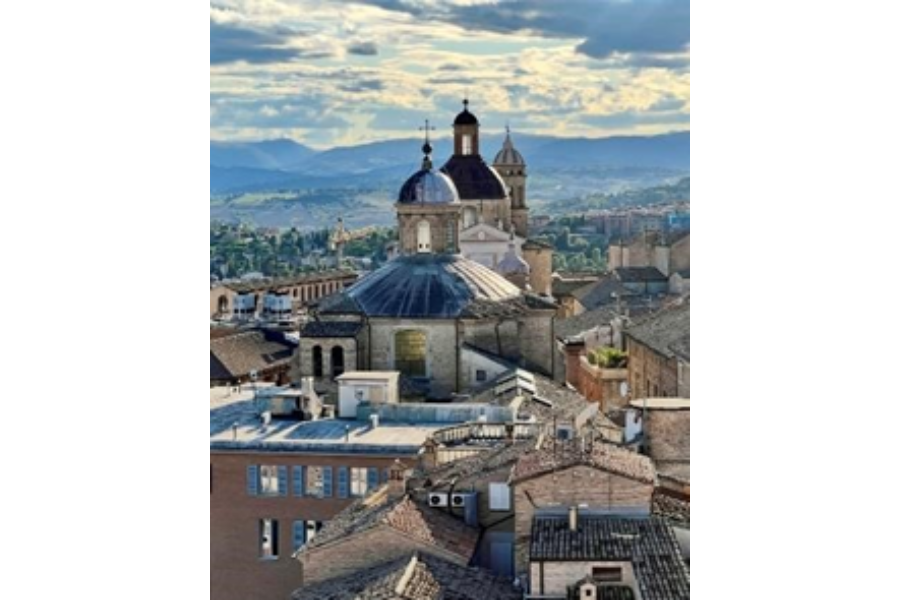
Privat
When it comes to arriving in Macerata, the university did offer a number of welcome events. I’m not entirely sure if these were mandatory, but I would definitely recommend attending them. They’re a great opportunity to meet new people and get to know the town and university better. There was also an obligatory Italian language course for those who didn’t pass the entry-level placement test. That course required arriving a bit earlier than the semester start, which is something to plan ahead for.
In terms of support, there was a Buddy program, although my experience with it was limited. It existed, but I didn’t find it as organized or engaging as I expected. However, most people were quite friendly, and if you made the effort, you could find a support network and connect with other exchange students through ESN (Erasmus Student Network) events, even if these were not as frequent or interactive as I would’ve liked.
Accommodation
Accommodation in Macerata can be a bit of a tricky situation. The university itself doesn’t directly run the dorms, but they are affiliated with a third-party provider that manages them. After getting accepted, I received an email with instructions on how to apply for housing. It's extremely important to act quickly because spaces are very limited. I knew several students who didn’t apply in time and some that did apply in time and still had to search for private apartments – not always successfully or affordably.
I ended up staying at Villa Lauri, one of the student residences. The rent was around €275–€350 per month depending on the type of room, which is quite affordable for Italy. The downside, though, is its location. Villa Lauri is about a 45-minute walk to the city center or university buildings. Alternatively, there’s a bus, but it costs about €3 for a round trip, and the schedule is irregular. Public transport is not included in your student status, unlike the semester ticket in Germany, which I really missed.
My advice would be to apply early and aim to live as close to the city center as possible. It will make your daily life much easier, especially since there’s no centralized campus – university buildings are scattered throughout the town.
Despite the inconvenience, I will say that Villa Lauri was modern, clean, and quiet. If you’re someone who appreciates a peaceful environment and doesn’t mind a bit of a walk (or some extra costs for buses), it’s not a bad option. But for those who want to be closer to the action and social life, the city center is the way to go.
Studying at the University of Macerata
The university experience at Macerata was a unique blend of academic learning and cultural immersion. As I mentioned earlier, there isn’t one central campus – buildings are located throughout the town, so walking around is a part of daily life.
Most classes did not have mandatory attendance, which gave students a bit of flexibility. This was helpful, especially when managing travel or personal plans. I took a variety of courses including International Marketing, International Trade Law, International Business Strategy, Development Economics, and Academic Writing. Since I was doing a double degree, I had to take specific required courses, but in general, exchange students are free to choose classes across different faculties. That freedom was really appreciated.
Exams were usually scheduled on set dates, but what I liked was that you often had multiple chances to pass or improve your grade. If you failed or just wanted a better result, you could simply show up at the next exam session. This took away a lot of the pressure compared to the “one-chance-only” style in some universities.
Language support was also available. The university offered Italian courses to help exchange students integrate better, and they were quite helpful. While most classes for international students were in English, having some knowledge of Italian definitely improved the overall experience.
Academically, I found the university to be solid. The courses were informative, and I genuinely learned a lot, although you do need to be ready to self-study. Professors were helpful, but there’s a strong expectation that you manage your own workload. Overall, the university staff were supportive and did a good job looking after international students. Whenever I had issues or questions, they were always quick to help.
Day-to-Day Life and Free Time
Living in Italy as a student is amazing in many ways – the culture, the food, the weather, and the relaxed lifestyle all made a big impression on me. However, I also had to be realistic about budgeting and transportation.
The overall cost of living in Macerata was manageable. I would recommend budgeting around €600–€800 per month, depending on your housing and lifestyle. Rent was the biggest expense, followed by groceries and transportation. Public transport costs added up since there was no semester pass like in Germany. Every trip had to be paid for individually, which was a bit frustrating.
Free time in Macerata can be what you make of it. The town is small and charming, and there are plenty of cafes, bars, and small restaurants to hang out in. Because Macerata is a bit isolated geographically, traveling to other cities can take time – but it’s totally doable. Train connections are decent, and you can plan weekend trips to places like Rome, Florence, or Bologna. One major perk: the Adriatic Sea is only 30 minutes away, so beach trips are popular among students.
During my free time, I mostly hung out with other exchange students, explored the region, or took part in events organized by ESN. I do wish there were more consistent or organized activities, but if you’re proactive, you’ll find ways to stay busy and enjoy your surroundings.
Conclusion
Looking back, my time in Macerata was an incredible experience overall. The best parts were definitely living in Italy, experiencing the culture, making new friends, and studying subjects I was genuinely interested in. Traveling around Italy was also a major highlight – even if Macerata was a bit out of the way, it still served as a base to see some amazing places.
On the downside, I found the organization – both from the university and regarding accommodation – to be somewhat lacking. Finding a good place to live was stressful, and public transport was a bit inconvenient. Also, social integration could be hard at times due to cultural differences and limited ESN activity. Especially since the ESN in Italy rarely had any Italian students show up, some events needed membership status or to pay a fee. It made me miss the ESN in Germany.
Still, I’d absolutely recommend this experience to future exchange students. Just go into it prepared, be flexible, and keep a positive mindset. You’ll come back with a lot of memories and personal growth.
Beitrag teilen: